

What if the “affordable” choice of a quick patch-up is actually the most expensive mistake you could make for your Melbourne home? It’s common to feel hesitant about a full tile re roof, especially when you’re worried about structural weight or being overcharged for work that feels unnecessary. However, there comes a point where a structural reset is the only way to stop the cycle of damp ceilings and rising maintenance bills.
We know you want a home that’s safe and dry without the stress of constant repairs that never seem to solve the underlying issue. It’s natural to feel confused by the difference between a restoration and a replacement, but getting the right information helps you make a choice based on facts rather than fear. You’ll learn the reality of re-roofing timelines, the importance of VBA registration for your peace of mind, and how a new roof provides a far better long-term ROI than repeated restorations. We will break down the common myths, compare the long-term value of your options, and explain the safety standards every Melbourne homeowner needs to know.
Key Takeaways
- Learn why a complete tile re roof provides a permanent structural reset by replacing old tiles, battens, and sarking to ensure your home remains leak-free.
- Discover the truth behind common myths, including why simply painting over a damaged roof is never a reliable solution for long-term protection.
- Compare the performance and colour-fastness of terracotta and concrete tiles to choose the best material for Melbourne’s unique weather conditions.
- Understand the essential safety and compliance steps, such as VBA registration and proper site setup, that protect both your family and your investment.
- Identify the specific signs that your roof requires a full replacement rather than a temporary restoration to maximise your property’s value and safety.
Demystifying the Tile Re-roof: Restoration vs Replacement
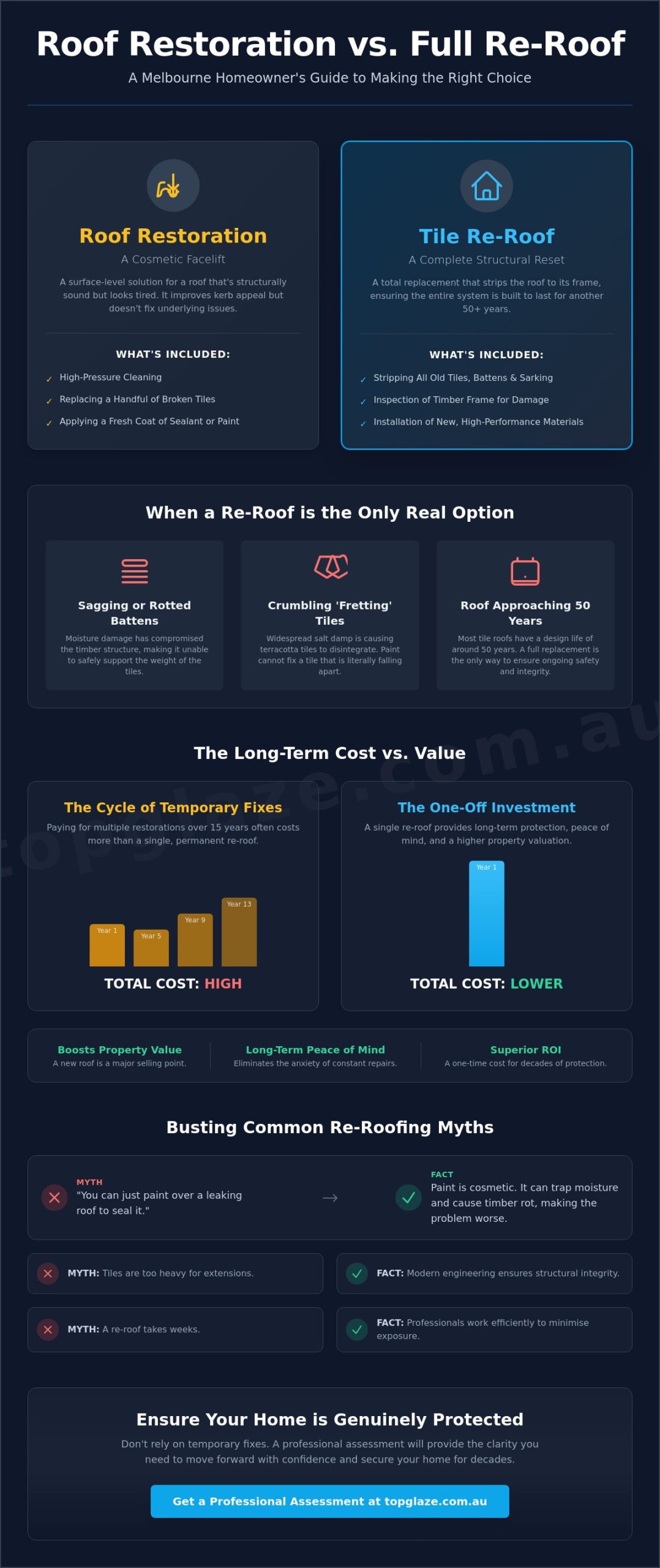
Many Melbourne homeowners use the terms “restoration” and “re-roofing” interchangeably, but they represent very different levels of care for your home. A roof restoration is essentially a high-quality facelift. It involves pressure cleaning, replacing a handful of broken tiles, and applying a fresh coat of sealant or paint. While this is a great way to improve kerb appeal, it doesn’t address what’s happening underneath the surface. It is a surface-level solution for a roof that is still structurally sound but looks a bit tired.
In contrast, a tile re roof is a complete structural reset. We strip the roof back to its bare rafters, removing every old tile, batten, and layer of sarking. This process allows us to inspect the timber frame and install modern, high-performance materials from the ground up. Understanding the different types of roof tiles available today is the first step in deciding which path is right for your property. We don’t just swap the old for the new; we ensure the entire system is built to last another half-century.
Older roofs often fall victim to the “Law of Diminishing Returns.” You might spend a few thousand dollars on a restoration this year, only to find a new leak next winter because the underlying battens have shifted or the sarking has perished. Eventually, these temporary fixes cost more in total than the one-off investment of a full replacement. The goal is to move away from the anxiety of constant maintenance and toward a home that is genuinely protected.
When is a Re-roof the Only Real Option?
There are times when a restoration simply won’t cut it. If your timber battens have suffered moisture damage and are starting to sag or rot, they can no longer safely support the weight of the tiles. In older Melbourne suburbs, we often see widespread “fretting” in terracotta tiles. This is a type of salt damp where the tile begins to crumble and flake away; paint cannot fix a tile that is literally disintegrating. Most tile roofs have a design life of roughly 50 years. If your roof is approaching this milestone, a full replacement is usually the only way to ensure safety.
The Cost-Benefit Ratio of Total Replacement
It’s easy to focus on the immediate price tag, but the long-term math tells a different story. Paying for multiple restorations over 15 years often exceeds the cost of a single re-roof. Beyond the direct costs, a new roof significantly boosts property valuation. In the competitive Melbourne market, buyers look for “set and forget” homes. Knowing the roof is brand new removes a massive point of negotiation for potential buyers. Finally, there is the peace of mind factor. While a patch repair might only carry a 12-month assurance, a full replacement offers long-term protection that a simple coat of paint can never match.
Busting 5 Common Myths About Tile Re-roofing
Homeowners are often bombarded with conflicting advice, making it difficult to distinguish between a genuine solution and a temporary patch. Misinformation can lead to expensive mistakes that compromise the safety of your home. We’ve identified five of the most persistent myths regarding a tile re roof to help you make a decision based on facts rather than hearsay.
- Myth 1: “You can just paint over a leaking roof to seal it.”
- Myth 2: “Tile roofs are too heavy for modern home extensions.”
- Myth 3: “A re-roof takes weeks and leaves the home exposed to rain.”
- Myth 4: “Switching from tile to metal is always a cheaper upgrade.”
- Myth 5: “New tiles look out of place on a heritage Melbourne home.”
Many people believe that a fresh coat of paint will solve their leakage problems. This is a dangerous misconception. If you are concerned about the longevity of your home, a professional roof replacement assessment can provide the clarity you need to move forward with confidence.
The Truth About Roof Painting and Leaks
Paint is a cosmetic finish, not a waterproofing membrane. While a restoration can improve the appearance of your home, it cannot fix structural failures or porous tiles that have reached the end of their lifespan. Sealing old, porous tiles with thick paint can actually trap moisture inside the material, preventing the roof from “breathing” and potentially causing the timber battens underneath to rot. Professional re-roofing is the only permanent solution for a roof that has lost its ability to keep out the rain.
Weight and Structural Integrity
Modern concrete and terracotta tiles are engineered for high performance and efficiency. There is a common worry that tiles are too heavy for newer home additions, yet most Melbourne homes built with tiled roofs are already structurally rated to carry this load. Existing timber rafters were designed with the weight of tiles in mind. A qualified roofing contractor will always conduct a thorough assessment of your timber rafters before work begins, ensuring your home remains stable and safe for decades to come. If you choose to stay with tile, you maintain the thermal mass benefits that help keep your home cooler in summer and warmer in winter.
The belief that your home will be left open to the elements for weeks is also incorrect. Experienced teams work in manageable sections, only removing what can be replaced and made watertight within the same day. This methodical approach protects your ceilings and belongings from Melbourne’s unpredictable weather patterns.
Choosing the Right Materials for the Melbourne Climate
Melbourne’s climate is a unique challenge for any building material. From the biting winds off Port Phillip Bay to the intense ultraviolet exposure of a Victorian summer, your roof takes a beating every single day. When planning a tile re roof, selecting the right material is the most significant decision you’ll make for the long-term health of your home. It’s about more than just kerb appeal; it’s about choosing a material that can withstand “four seasons in one day” without compromising on safety or efficiency. If you’re also considering changing roof materials entirely, our complete guide for Melbourne homeowners walks you through every step of the transition process.
In suburbs like Brighton or Camberwell, maintaining the architectural integrity of the streetscape is essential. We focus on matching the character of these established areas while upgrading the underlying technology. A critical part of this upgrade is the installation of heavy-duty sarking. This reflective foil layer sits beneath your tiles, acting as a barrier against radiant heat and providing an extra layer of moisture protection. It’s a small addition that makes a massive difference to your electricity bills and internal comfort. Without it, your home is far more susceptible to the temperature swings that define life in Victoria.
Terracotta: The Heritage Choice
Terracotta remains the “forever” tile for many Melbourne homeowners, particularly in coastal or established eastern suburbs. These tiles are crafted from natural clay and undergo a process called vitrification, where they are fired at extreme temperatures to create a glass-like finish. This means the colour is literally baked into the tile. It won’t fade or peel, even after decades of exposure to Australia’s harsh UV rays. While they are a premium investment, their ability to resist salt spray makes them the logical choice for bayside properties. You’ll only need to worry about periodic maintenance of the ridge capping and pointing to keep the system watertight.
Concrete: Modern Versatility and Strength
Modern concrete tiles have evolved significantly, offering a range of profiles that suit everything from mid-century builds to contemporary architectural designs. They are incredibly dense and grow stronger with age as the concrete continues to cure. This makes them exceptionally resistant to impact, which is a vital feature during Melbourne’s notorious spring hailstorms. Many new concrete options now feature “cool roof” technology, using specialised pigments in the coating to reflect solar radiation. This helps keep your roof space cooler and reduces the load on your air conditioning. If you’re looking for a blend of modern aesthetics and rugged durability, concrete is a high-performance contender that fits almost any budget. For homeowners in terraces or cottages where heritage guidelines apply, our guide to metal roofing for inner-city Melbourne explores how modern materials can satisfy both council requirements and long-term performance needs. If you’re weighing up the full range of options available to you, our detailed metal roof vs tile roof comparison for Melbourne homeowners breaks down the thermal performance, cost, and durability of each material side by side.
The Professional Tile Re-roofing Process: What to Expect
Understanding the steps involved in a tile re roof removes the anxiety of the unknown and ensures you can plan your week with confidence. A professional replacement is a methodical sequence designed to protect your home while enhancing its structural integrity. It isn’t a rushed job; it is a disciplined process that transforms your property from the rafters up.
- Stage 1: Site setup and safety rail installation. Safety is the first priority. We install perimeter guard rails to comply with Victorian health and safety regulations before any work begins.
- Stage 2: Careful removal and disposal. Old tiles and debris are stripped away and removed from your property. We focus on eco-friendly disposal methods to minimise the environmental impact.
- Stage 3: Timber inspection and sarking. This is the most critical phase. We inspect the existing timber rafters for any signs of rot or sagging. We then install new, treated timber battens and high-grade sarking to provide a modern thermal and moisture barrier.
- Stage 4: Loading and laying. New tiles are delivered and positioned across the roof to distribute weight evenly. Our team then lays the tiles with precision alignment to ensure a perfect fit.
- Stage 5: Final pointing and site clean. We apply flexible pointing to the ridge capping for long-term durability. Finally, we conduct a thorough site clean, leaving your garden and driveway exactly as we found them.
Safety and Victorian Regulations
In Victoria, a “guard rail” is non-negotiable for any roofing work conducted at a height of over two metres. This is a legal requirement under the Victorian Building Authority (VBA) standards to protect workers and homeowners alike. Engaging a VBA-registered company ensures that your project complies with the National Construction Code. For any domestic building work costing over $16,000, a building insurance certificate is a legal necessity. This provides you with a Certificate of Compliance, which is a vital document for your home insurance and future property value.
Minimising Disruption to Your Daily Life
Most residential projects are completed within 3 to 5 days, depending on the size and complexity of the home. Professional teams manage weather risks by only uncovering sections of the roof that can be re-tiled and made watertight by the end of the day. We take specific care to protect your landscaping and ensure site access remains clear for your vehicles. If you are ready to secure your home with a team that values precision and safety, you can organise a roof replacement assessment with our experienced specialists today.
Why Top Glaze Roofing Systems is Melbourne’s Trusted Choice for Tile Re-roofing
Choosing the right team for your tile re roof is about more than just finding a competitive price. It’s about partnering with a business that understands the specific demands of the Melbourne environment, from the salt spray of the Mornington Peninsula to the heritage requirements of the inner east. With over 30 years of local experience, Top Glaze Roofing Systems has encountered every tile re roof challenge imaginable. Our reputation is built on the calm certainty that comes with decades of stable, local presence. We don’t just work in these communities; we are a reliable fixture within them.
We take a strict “no-shortcut” approach to every project we undertake. While some might suggest leaving old battens in place to save time, we know that a roof is only as strong as the structure supporting it. Every project includes a rigorous structural check and the replacement of old timber battens to ensure your new tiles have a perfectly level, secure foundation. This commitment to excellence is why Top Glaze Roofing Systems provides a 10-year warranty on our workmanship. We value long-term relationships over quick wins, and we want you to have total peace of mind for the next decade and beyond.
The Top Glaze Roofing Systems Difference
Our identity as a local, family-owned business means we treat your home with the same care we would our own. We combine this neighbourly reassurance with industrial-grade expertise to deliver results that last. Here is what sets our service apart:
- Premium Australian-made materials: We prioritise the use of high-quality materials designed specifically for the harsh Australian sun and unpredictable Victorian storms.
- Highly trained, licensed tradespeople: You won’t deal with “cowboy” contractors. Every member of our team is a professional who respects your property and follows all safety protocols.
- Comprehensive service: Our expertise doesn’t stop at the tiles. Top Glaze Roofing Systems provides a full-service approach that includes checking your guttering, fascia, and leaf guard systems to ensure your entire water catchment system is working perfectly.
Your Next Steps to a Secure Home
Moving from a leaking, stressful roof to a secure, high-performance home should be a low-stress journey. When you receive a quote from Top Glaze Roofing Systems, it will be detailed and transparent. A professional assessment should clearly outline the scope of work, the materials being used, and the timeline for completion. We believe in answering your questions before you even have to ask them, providing the clarity you need to make a smart decision for your property. If you are ready to stop the cycle of temporary repairs and invest in a permanent solution, we are here to help. Organise your free Melbourne roof inspection today and take the first step toward a leak-free future.
Secure Your Home with a Permanent Roofing Solution
Protecting your home from the unpredictable Melbourne weather requires more than just surface-level maintenance. We have seen how a complete tile re roof provides a vital structural reset, replacing worn-out battens and sarking to create a watertight barrier that lasts for decades. By choosing high-quality materials and avoiding the myths of quick-fix coatings, you are making a smart investment in your property’s longevity and kerb appeal.
Our team brings over 30 years of local Melbourne experience to every project, ensuring your roof is handled by licensed and insured Victorian roofing specialists. We prioritise transparency and safety, which is why we provide a 10-year warranty on all residential projects to give you total peace of mind. You don’t have to settle for the anxiety of recurring leaks when a permanent solution is well within reach.
Get a Professional Quote on Your Melbourne Tile Re-roof
Your home is your sanctuary, and we are ready to help you ensure it remains safe and dry for your family’s future.
Frequently Asked Questions
How much does a tile re-roof cost in Melbourne?
The total investment for your project depends on several factors, including the size of your home, the pitch of the roof, and your choice of materials. Every property presents unique challenges, such as site access or the condition of the underlying timber. We provide detailed, transparent quotes after a physical inspection to ensure you understand every aspect of the work without any hidden surprises.
Can I stay in my house while the roof is being replaced?
You can absolutely remain in your home while we complete the work. Our teams operate in manageable sections, only removing what we can replace and make watertight within the same day. This methodical approach ensures your daily routine is minimally disrupted while your property remains protected from the elements throughout the tile re roof process.
Which is better for Melbourne weather: terracotta or concrete tiles?
Terracotta tiles are often preferred for bayside suburbs due to their natural resistance to salt spray and UV fading. Concrete tiles are a versatile alternative that offers high impact resistance against Melbourne’s spring hailstorms. Both materials provide excellent durability when installed with high-quality sarking and professional precision to withstand Victoria’s “four seasons in one day.”
Is it better to switch from tiles to a metal roof?
Switching to a metal roof is a popular trend, but it isn’t always the best choice for every property. Tiled roofs offer superior thermal mass, which helps regulate indoor temperatures more effectively during extreme Victorian summers. You should consider the architectural style of your home and the specific insulation benefits of each material before making a final decision on a full replacement. If you own a period home in a high-density area, our dedicated resource on metal roofing for inner-city Melbourne properties can help you weigh up the compliance requirements and long-term performance of each option.
How long should a new tile roof last?
A professionally installed tile roof should easily last 50 years or more with basic maintenance. Terracotta tiles are known for their exceptional longevity, often remaining functional for over 75 years. The key to this lifespan is the quality of the underlying battens and sarking, which we replace during a full tile re roof to ensure the entire system has a stable foundation.
Does a new roof require a council permit in Victoria?
A building permit is generally required in Victoria if you are changing the roofing material or performing structural work. For a like-for-like replacement of tiles where no structural changes occur, a permit might not be necessary. However, all work must comply with Victorian Building Authority standards, and any domestic building work costing over $16,000 requires a building insurance certificate by law.
What is the difference between re-roofing and restoration?
Roof restoration is a cosmetic process involving cleaning, painting, and minor repairs to extend the life of a structurally sound roof. Re-roofing is a complete structural replacement where we strip the roof back to the rafters. If your tiles have become porous or the timber battens are starting to rot, a full replacement is the only reliable way to ensure long-term safety.
Will a new tile roof improve my home’s energy efficiency?
Modern roofing systems significantly improve energy efficiency by incorporating high-performance sarking and reflective technology. This reflective foil layer acts as a barrier against radiant heat, keeping your home cooler in summer and warmer in winter. By reducing the load on your air conditioning, a new roof can lead to noticeable savings on your electricity bills over time.


