

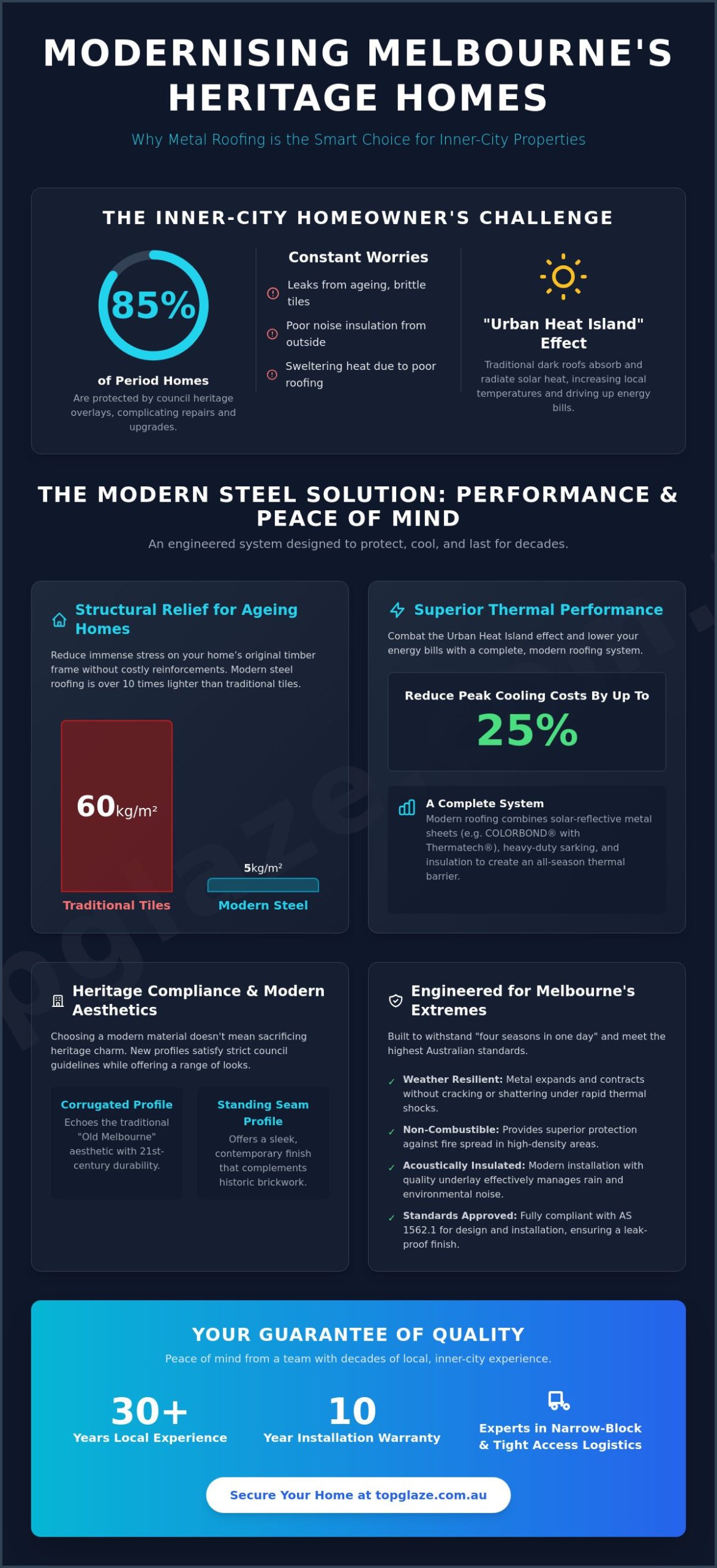
Did you know that approximately 85% of period homes across Melbourne’s inner-city suburbs are currently protected by heritage overlays? It’s a statistic that often surprises homeowners until they try to organise a simple repair and find themselves tangled in council paperwork. You likely value the unique character of your terrace or cottage, but you’re also tired of worrying about leaks, high-density noise, and the sweltering heat that often comes with older roofing materials. We understand that you need a solution that respects the past while providing the absolute security of modern engineering.
This guide explains why choosing metal roofing inner city melbourne has become the gold standard for homeowners seeking long-term durability and thermal efficiency. You’ll discover how to achieve a leak-proof finish that satisfies the latest Building and Plumbing Commission (BPC) standards and fits within strict heritage guidelines. We will walk you through the practicalities of construction in high-density areas, from managing narrow street access to choosing materials that can reduce your cooling costs by up to 25% during a Victorian summer. It’s about giving you peace of mind that your home is protected for decades to come.
Key Takeaways
- Understand how modern steel profiles meet strict Australian Standards (AS 1562.1) to offer a more durable, low-maintenance alternative to aging terracotta tiles.
- Learn how the combination of solar-reflective coatings and high-quality sarking creates a thermal barrier that keeps your terrace cool during Melbourne’s intense heatwaves.
- Resolve concerns about council compliance and noise with expert insights into heritage-approved materials and modern acoustic insulation for your metal roofing inner city melbourne.
- Gain clarity on the logistics of narrow-block construction, including how to manage pedestrian safety and tight access requirements for a seamless roof replacement.
- Discover the long-term peace of mind provided by a 10-year warranty and the seasoned perspective of a local team with over 30 years of experience in your community.
Why Metal Roofing is the Modern Standard for Inner-City Melbourne
For decades, the skyline of Melbourne’s inner suburbs was defined by heavy terracotta and slate. While these materials have their own history, the shift toward metal roofing inner city melbourne is a practical evolution driven by performance and structural necessity. Modern steel roofing must meet rigorous Australian residential standards, specifically AS 1562.1, which governs the design and installation of Metal roofing systems. This standard ensures that every sheet and fastening can withstand the unique environmental pressures found on the CBD fringe.
One of the most significant challenges for residents in suburbs like Richmond or South Melbourne is the “Urban Heat Island” effect. In these high-density areas, hard surfaces like roads and traditional tiled roofs absorb solar radiation, trapping heat and raising local temperatures. Modern metal roofing reflects more sunlight than traditional materials. This choice directly impacts your home’s internal climate, making it easier to maintain a comfortable temperature without overworking your air conditioning.
The structural integrity of your home is another key factor. Many Victorian-era terraces rely on original timber frames that have supported heavy loads for over a century. A traditional tile roof can weigh up to 60kg per square metre, whereas a steel roof weighs approximately 5kg per square metre. By choosing a lighter material, you significantly reduce the stress on your home’s ageing timber structure, often eliminating the need for expensive structural reinforcements during a roof replacement. If you want a detailed breakdown of how these two materials compare across every performance category, our guide on metal roof vs tile roof for Melbourne homeowners covers the full picture.
The Aesthetic Evolution of the Melbourne Terrace
Choosing a modern material doesn’t mean sacrificing the heritage charm of a Carlton or South Yarra streetscape. Corrugated profiles remain a staple because they echo the traditional “Old Melbourne” aesthetic while providing 21st-century durability. We’ve seen a rise in standing seam profiles for new infill developments in Fitzroy and North Melbourne. These sleek, vertical lines offer a contemporary finish that complements the brickwork of neighbouring heritage buildings. It’s a balance of respecting the past while building for the future.
Resilience Against Melbourne’s “Four Seasons in One Day”
Melbourne is famous for rapid weather shifts that can see a 20-degree temperature drop in a single afternoon. These fluctuations cause brittle materials like terracotta to expand and contract rapidly, which often leads to hairline cracks and eventual leaks. Metal is far more resilient to these thermal shocks. It doesn’t crack or shatter under pressure. In high-density urban zones, the fact that steel is non-combustible provides an extra layer of safety, offering superior protection against the risk of fire spread in tightly packed streets. Whether it’s a summer hailstorm or a winter gale off Port Phillip Bay, a well-installed metal roof remains a reliable shield for your home.
Thermal Performance and Energy Efficiency in Urban Zones
Solar absorptance is a critical factor for anyone living in a terrace house or a shared-wall cottage. Tightly packed homes have limited surface area for heat to escape, meaning your roof often dictates your internal comfort. A high solar absorptance rating indicates that your roof is acting as a radiator, pumping heat into your living spaces long after the sun has set. According to academic research on roof performance, the material and coating you choose can significantly alter the thermal load on your building. By choosing metal roofing inner city melbourne homeowners can lower their peak cooling costs by approximately 15% to 25% compared to traditional dark tiles.
A high-performance roof is a complete system. It is not just the top sheet. We always recommend combining the metal profile with heavy-duty sarking and insulation blankets. Sarking acts as a secondary skin that reflects radiant heat and provides a vital waterproof barrier. When you layer this with a high-quality insulation blanket, you create a thermal buffer that works year-round. It keeps the heat out in January and traps warmth inside during a July cold snap. This system approach ensures your home remains efficient regardless of the season.
The Role of COLORBOND® Steel in Melbourne Homes
Most Australian-made steel roofing now features Thermatech® technology. This specialised coating is designed to reflect more of the sun’s heat, even in darker colours that are often required by local council heritage codes. Choosing the right palette allows you to balance thermal efficiency with the aesthetic requirements of your suburb. These finishes are also engineered to withstand Melbourne’s harsh UV levels and the salt spray common in areas like Port Melbourne or South Melbourne. If you are considering a transition to these modern materials, a professional roof replacement can be tailored to meet both your energy goals and heritage obligations.
Condensation Management in High-Density Living
High-density living presents unique challenges for moisture control. In narrow inner-city homes with shared walls, ventilation is often restricted, which can lead to condensation build-up under the roof sheets. This is where anti-condensation foils and foil-faced blankets become essential. They prevent water vapour from turning into liquid droplets that can damage your ceiling or encourage mould growth. In older Carlton and Brunswick cottages, managing this moisture is the best way to protect the original timber lath and plaster. This is a vital step in ensuring your new installation provides a healthy, dry living environment for decades.
Addressing the Noise and Heritage Myths
A common concern for those considering metal roofing inner city melbourne is the memory of the “old tin roof.” We often hear from residents who worry that a summer storm will sound like a drum kit in their living room. This is a myth rooted in the past. Older structures often featured thin, uninsulated corrugated iron sheets nailed directly to rafters. Modern residential steel systems are integrated with high-quality acoustic blankets and sarking. These layers don’t just stop leaks; they absorb impact energy. When properly installed, a steel roof can actually be quieter than a tiled one, as it doesn’t have the gaps that allow external street noise to penetrate the roof cavity.
Another frequent misconception is that metal is “too modern” for a heritage streetscape. In reality, corrugated steel has been part of Melbourne’s architectural DNA since the 19th century. Local councils and Heritage Victoria frequently prefer specific metal profiles because they maintain the lightweight, slender look of the original Victorian and Edwardian designs. Transitioning from heavy, brittle tiles back to a high-performance steel profile often restores the home’s intended proportions while providing the security of a 21st-century material.
Heritage Overlays and Council Compliance
With approximately 85% of period homes in Melbourne’s inner suburbs affected by heritage overlays, navigating council requirements is a standard part of our process. Most local councils, including the City of Melbourne and Yarra, have specific guidelines on material finishes. While shiny “zinc” finishes might be restricted, “galvanised” look-alike coatings or specific heritage-grade palettes are often mandated to preserve the historic character of the street. Obtaining a planning permit is typically required for any external changes. We focus on ensuring your roof replacement meets these strict aesthetic codes while adhering to the latest Building and Plumbing Commission (BPC) standards.
Acoustic Insulation for Peace and Quiet
Creating a sanctuary in busy suburbs like Richmond or Prahran requires more than just a waterproof barrier. It requires sound management. Modern build-ups utilise a combination of foil-faced blankets and bulk insulation that significantly lower decibel ratings. This setup dampens the sound of heavy rain and hail, turning a potential distraction into a gentle, distant hum. The pitch of your roof also plays a role in how sound is perceived. Steeper pitches on traditional terraces naturally shed water faster, which, when combined with an acoustic blanket, ensures that your home remains a quiet retreat from the urban bustle outside.
Logistics: The Reality of Roofing on a Narrow Inner-City Block
Installing metal roofing inner city melbourne involves more than just technical skill; it requires meticulous logistical planning. Unlike suburban projects with wide driveways and ample space, inner-city sites often feature “zero-lot-line” construction where the building sits directly on the property boundary. This leaves no room for error. We prioritise site safety and pedestrian protection, especially in high-traffic areas where footpaths are used by hundreds of people daily. It’s our responsibility to ensure the public remains safe while we work on your home.
Removing old, brittle terracotta tiles from a narrow block is a delicate operation. We use specialised equipment and debris chutes to ensure that old materials don’t damage neighbouring properties or vehicles parked in tight laneways. Logistical planning for material deliveries and skip bins is essential. We coordinate these movements to minimise disruption to the street, often scheduling arrivals to avoid peak school or commute times. This methodical approach removes the anxiety often associated with major home renovations in crowded suburbs.
Managing Shared Walls and Boundaries
In suburbs like Carlton or Richmond, many homes share a party wall. Ensuring a watertight seal between your new steel roof and your neighbour’s existing tiles is a critical step. We utilise custom-folded flashing to bridge these gaps, providing a secure transition that prevents water ingress. Clear communication with your neighbours is a core part of our process. It helps manage expectations and ensures the project proceeds without unnecessary tension between households. We treat your neighbour’s property with the same respect as your own.
Access and Crane Requirements
Narrow laneways and overhead power lines are standard features of the Melbourne CBD fringe. Managing these requires specific expertise and an understanding of “No Go Zones” around electrical infrastructure. We often need to secure council permits for road closures or footpath occupation to safely position cranes or scaffolding. For residential works, the City of Melbourne and surrounding councils have strict requirements for the “Occupation of the Public Domain.” We handle the technical side of these applications to ensure your roof replacement complies with all local safety regulations. It’s about getting the job done right without the stress of council fines or safety mishaps.
Choosing Top Glaze Roofing Systems for Your Melbourne Roof Replacement
Selecting the right team for metal roofing inner city melbourne requires finding a partner who understands the unique architectural fabric of our suburbs. With over 30 years of experience, Top Glaze Roofing Systems has encountered every possible challenge, from the narrowest laneways in Collingwood to the strictest heritage overlays in South Yarra. This long-standing stability allows us to act as a seasoned mentor for homeowners, providing calm certainty throughout the entire replacement process. We don’t just install roofs; we provide a proven method for protecting your most valuable asset.
Every metal installation we perform is completed by licensed roof plumbers. This is a non-negotiable standard for our team. In Victoria, specialised licensing ensures that your roof is not only aesthetically pleasing but also meets all hydraulic and structural requirements. To reinforce this commitment to quality, Top Glaze Roofing Systems provides a 10-year warranty on our workmanship. This removes the anxiety of future leaks or failures, offering you the peace of mind that comes from knowing a reliable local fixture stands behind their work. We position ourselves as a trusted veteran in the industry, focusing on excellence and longevity rather than quick fixes.
Our Process: From Assessment to Final Inspection
Our journey begins with a thorough initial inspection. We take the time to understand the specific needs of older Melbourne homes, identifying potential structural issues before they become expensive problems. Top Glaze Roofing Systems organises all necessary permits and safety requirements on your behalf, including the complex council applications for road or footpath occupation. During the project, we maintain a strict standard of site cleanliness. We respect your property and your neighbours, ensuring that the work area is kept tidy and safe at all times. We believe that a professional service is defined by respect for the homeowner’s environment.
Local Expertise You Can Trust
As a family-owned and operated business, Top Glaze Roofing Systems is deeply committed to the local community. We value reputation and long-term relationships, which is why we only use premium Australian-made materials. By choosing BlueScope steel, you are investing in a product designed for our specific climate and UV conditions. This local expertise ensures your home remains a safe, durable sanctuary for decades. Our goal is to make the transition to a new roof as seamless and low-stress as possible. If you are ready to secure your home’s future, Book your free Melbourne roof assessment today and speak with an expert who understands the reality of inner-city roofing.
Secure Your Inner-City Home for the Decades Ahead
Navigating the complexities of heritage overlays and high-density logistics doesn’t have to be a stressful experience. By choosing metal roofing inner city melbourne, you are investing in a solution that respects the architectural history of your suburb while providing modern thermal performance and leak-proof security. Whether you’re managing the tight boundaries of a Richmond terrace or the strict council requirements of a Carlton cottage, the right materials and expert installation ensure your home remains a quiet, energy-efficient sanctuary.
With 30+ years of Melbourne experience, our team of licensed Victorian roof plumbers understands exactly how to handle the unique challenges of the CBD fringe. We stand behind every project with a 10-year workmanship warranty, giving you the long-term peace of mind you deserve. Don’t leave your roof to chance. Get a Free Expert Quote for Your Inner-City Roof and let us help you protect your home with the seasoned authority it requires. We look forward to helping you restore the beauty and resilience of your Melbourne property.
Frequently Asked Questions
Do I need council approval for metal roofing in inner-city Melbourne?
Yes, a planning permit from your local council is typically required if your property is subject to a Heritage Overlay. This is common across the City of Melbourne and City of Yarra. While a simple repair might not need approval, a full transition to metal roofing inner city melbourne usually requires a permit to ensure the material and colour profile respect the historic character of the streetscape. We recommend checking with your council’s planning department before starting.
Is a metal roof noisier than a tile roof during a Melbourne storm?
Modern metal roofs are remarkably quiet when installed with high-quality acoustic blankets and sarking. The old “tin roof” noise is a thing of the past because the insulation layers absorb the impact of rain and hail. In many cases, a well-insulated steel roof can actually provide better sound dampening than traditional tiles, which often have small gaps that allow urban street noise to enter your home’s roof cavity.
How long does a metal roof replacement take on a typical terrace home?
A standard roof replacement on a Melbourne terrace usually takes between 3 and 5 days to complete. This timeline includes the careful removal of old tiles, structural checks of the timber frame, and the installation of the new steel system. While narrow street access and Victorian weather can occasionally shift the schedule, our experienced team organises the logistics to ensure the project is finished as efficiently as possible with minimal disruption.
Can I change my roof from tile to metal in a heritage zone?
You can certainly change from tile to metal in most heritage zones, as long as the new materials comply with local guidelines. Many councils actually prefer corrugated steel profiles because they reflect the original 19th-century aesthetic of the area. The key is choosing heritage-approved finishes and ensuring the work is performed by licensed professionals who understand metal roofing inner city melbourne requirements and local building codes.
Does metal roofing make my house hotter in the summer?
Metal roofing actually keeps your home cooler by reflecting radiant heat away from the building. Unlike terracotta tiles that absorb and store heat, modern steel with solar-reflective coatings can reduce cooling costs by 15% to 25% during a Melbourne summer. When combined with proper ventilation and insulation blankets, a metal roof’s thermal performance advantages over tiles become clear, as it acts as a powerful thermal barrier that helps maintain a stable internal temperature year-round.
What is the best colour for a metal roof in Melbourne’s climate?
The best colour depends on whether you prioritise thermal performance or heritage aesthetics. Lighter shades like Shale Grey offer excellent solar reflectance, which is ideal for Melbourne’s heatwaves. However, if your home is in a protected area, you may be required to use specific heritage-grade palettes. We often suggest mid-tone greys as they provide a professional balance between modern energy efficiency and the classic “Old Melbourne” look.
Do metal roofs interfere with mobile phone or Wi-Fi reception?
There is no evidence that residential metal roofing interferes with modern mobile phone or Wi-Fi reception. Signals primarily enter your home through windows and walls rather than through the roof itself. Most homeowners find that their internet connectivity and mobile signal strength remain unchanged after a roof replacement. Modern routers are designed to provide strong coverage throughout the entire structure regardless of the roofing material used.
Are metal roofs more expensive to maintain than tile roofs?
Metal roofs are significantly easier and cheaper to maintain over their long lifespan. Unlike tiles, they don’t crack, shift, or become weighed down by moss and lichen growth. A high-quality steel roof can last between 40 and 70 years with very little attention. This durability makes them a highly cost-effective choice for inner-city properties where access for frequent repairs can be difficult and expensive due to narrow streets.


