

Your roof isn’t a static shield; it is a dynamic structure that must move and flex to survive the volatile Melbourne weather. If your roof pointing has become brittle and cracked, it’s no longer a protective seal but a direct invitation for moisture to settle into your structural timbers. Many homeowners mistake crumbling mortar for a minor cosmetic issue, yet this flexible gasket is often the only thing standing between a dry lounge room and a costly emergency repair.
It’s completely normal to feel a bit skeptical when a tradie starts talking about bedding versus pointing without clearly explaining the difference. You want to protect your biggest investment without the fear of being overcharged for unnecessary work. This guide will help you cut through the technical jargon so you can identify legitimate signs of failure and understand why modern flexible materials are now the industry standard under Australian Standards. We will walk you through how to spot damage early, the importance of using a licensed roofing plumber under Victorian regulations, and how to feel confident when it’s time to book your roof repairs.
Key Takeaways
- Distinguish between bedding and roof pointing to understand how each layer contributes to a secure, leak-free ridge line.
- Discover why modern flexible compounds are essential for Melbourne homes to prevent cracking during rapid temperature shifts.
- Learn to spot early warning signs like “crazing” or displaced tiles before minor wear turns into expensive structural water damage.
- Understand the professional restoration process, ensuring you know exactly what a high-quality job looks like from preparation to finish.
- Gain peace of mind by learning about Victorian roofing standards and how to verify the expertise of your chosen professional.
What is Roof Pointing? Understanding the Basics of Ridge Capping
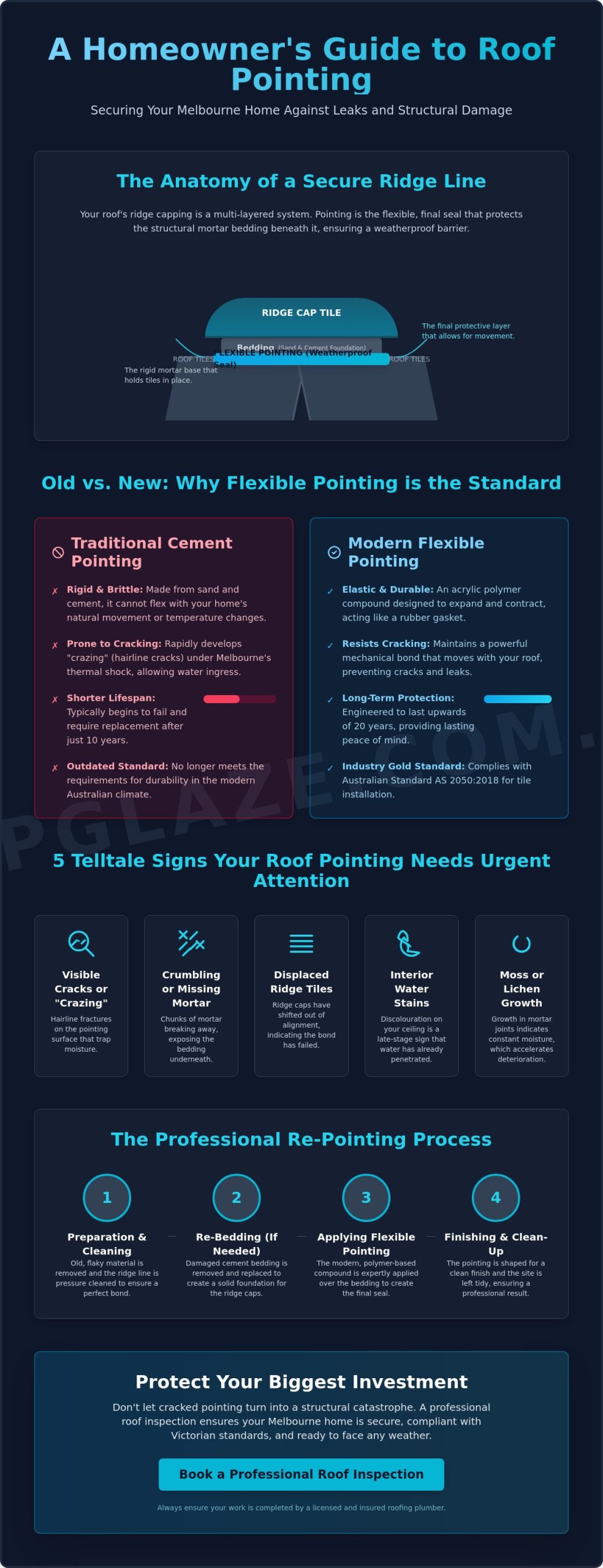
Roof pointing is the final, protective layer of flexible material applied over the mortar bedding on your ridge caps. While most homeowners see it as a decorative finish, its actual job is far more critical. It serves as a secondary mechanical fastener and a water-resistant seal that prevents rain from penetrating the apex of your roof. This apex is where the two slopes of your roof meet. Without a secure seal, water would simply flow into your ceiling space and cause structural rot.
The majority of modern Melbourne homes use either concrete or terracotta roof tiles, and each material requires a specific approach. Terracotta tiles are often glazed and non-porous; they usually need a specialised primer to ensure the pointing compound adheres correctly. Concrete tiles are more porous, but they still require a completely clean surface to prevent the pointing from peeling away over time. If the material isn’t compatible with the tile type, the seal will fail within a few seasons.
Bedding vs. Pointing: Clearing Up the Confusion
It’s common to hear these terms used interchangeably, but they perform very different roles. Think of the bedding as the structural foundation. It is a thick mixture of sand and cement used to seat the ridge tiles in place. However, cement is rigid. It is prone to cracking as your house settles or expands in the heat. Pointing is the flexible veneer applied over the top. It protects the bedding from the elements and allows for natural movement without breaking the seal. You cannot have a reliable roof with just bedding alone; the two must work together to ensure long-term security.
The Components of a Modern Ridge Capping System
A complete ridge system starts with the “starter tile” at the bottom of a hip and ends at the “apex,” where multiple ridges meet. The roof pointing acts as the vital bond that connects the edge of these tiles to the mortar bed. For this bond to last, the surface must be free of moss, lichen, and old, flaky material. A professional will always pressure clean the ridge line before applying the compound. This thorough preparation ensures the new material creates a seamless, airtight barrier that can withstand Melbourne’s notorious wind gusts and sudden downpours. It is about creating a unified system that moves with your home.
Cement vs. Flexible Pointing: Why Modern Standards Matter in 2026
The roofing industry has moved away from traditional sand-and-cement mortar for a very good reason: it simply isn’t built for the modern Australian climate. In the past, roof pointing was essentially just a thinner version of the bedding mortar. While this worked for a time, it lacked the elasticity required to handle the structural shifts of a family home. Today, Australian Standard AS 2050:2018 sets the benchmark for tile installation. The shift toward polymer-based flexible compounds has become the gold standard for any reputable Melbourne roofing professional.
The Problem with Old Cement Pointing
Traditional cement is incredibly rigid. When Melbourne experiences its famous “four seasons in one day,” your roof tiles expand and contract rapidly. This phenomenon, known as thermal shock, puts immense pressure on the ridge line. Because cement cannot stretch, it develops hairline cracks almost immediately. These “crazing” cracks might look small, but they act like straws, drawing moisture into the bedding through capillary action. Most cement-based systems begin to fail after just 10 years, whereas modern alternatives are designed to remain intact for upwards of two decades.
Benefits of Polymer-Based Flexible Pointing
Modern flexible compounds are engineered with high-grade acrylic resins. This allows the material to act like a rubber gasket, expanding and contracting in perfect sync with your roof. These products don’t just sit on top of the tile; they create a powerful mechanical bond that “grips” the surface. This is particularly vital for homes in high-wind areas where the ridge caps must resist significant uplift forces. When we apply modern roof pointing, we are providing a layer that is specifically formulated to withstand the high-wind classifications found in many Melbourne suburbs.
Beyond flexibility, these compounds offer superior UV resistance. The harsh Australian sun often bleaches and degrades older materials, but modern polymers are designed to hold their colour and structural integrity for years. This ensures your home stays protected and looks sharp without the need for constant touch-ups. If you are noticing cracks in your ridge line, it might be time to consider professional roof repairs to upgrade your home to these modern standards.
5 Signs Your Roof Pointing Needs Urgent Attention
Identifying the early warning signs of a failing ridge line can be the difference between a simple maintenance task and a full-scale emergency. While your roof is designed to be tough, the protective seals eventually reach the end of their functional life. If you notice any of the following indicators, it is time to have a professional take a closer look at your roof pointing before the next storm arrives.
- Visible cracking or “crazing”: Look for fine, spiderweb-like cracks along the ridge line. This is the first stage of material fatigue where the seal begins to lose its waterproof integrity.
- Displaced ridge tiles: If a tile looks slightly crooked or out of alignment, the mechanical bond has likely snapped. This leaves the ridge vulnerable to being lifted by high winds.
- Mortar debris in gutters: Finding chunks of hard, sandy material in your gutters or around the perimeter of your home is a clear sign that the bedding and pointing are disintegrating.
- Internal ceiling stains: Water marks appearing on your ceiling directly beneath a ridge or hip are a red flag. This suggests water is already bypassing your tiles and soaking into the plaster.
- Biological growth: Moss, lichen, or mould concentrated around the ridge capping indicates that the material is porous and retaining moisture rather than shedding it.
The Hidden Risks of Ignoring Pointing Failure
Neglecting these signs often leads to a destructive process called “bedding washout.” When the outer layer of roof pointing fails, heavy rain penetrates the structural mortar underneath. This water slowly dissolves the cement, turning it back into loose sand. Once the bedding is compromised, your ridge tiles are no longer securely attached to the roof. In a severe Melbourne gale, these heavy tiles can slide off entirely, posing a significant safety risk to anyone below and leaving your roof’s timber frame exposed to the elements. This moisture eventually saturates your insulation and causes the structural battens to rot. If a storm has already impacted your home, understanding the full scope of storm damage roof repair in Melbourne can help you identify hidden issues before they escalate into structural emergencies.
Melbourne Weather: The Ultimate Test for Your Roof
Melbourne’s notorious “four seasons in one day” isn’t just a local joke; it is a relentless cycle of rapid thermal expansion and contraction that fatigues your roofing materials. A roof can reach 60 degrees Celsius in the afternoon sun and then be hit by a freezing rain squall an hour later. This thermal shock causes rigid, older materials to snap. For those living along the Mornington Peninsula or near Port Phillip Bay, the salt-laden air further accelerates this chemical breakdown. The combination of salt air and suburban storms means that Melbourne ridge capping often requires more frequent inspections than homes in milder, inland climates.
The Professional Re-pointing Process: What to Expect
A professional roof pointing project is far more than a cosmetic touch-up. It is a multi-stage structural service that requires precision and the right environmental conditions. We begin with a rigorous assessment of your ridge capping. This is where our “Honest Inspection” approach comes into play. If your existing bedding mortar is structurally sound, we won’t recommend a full re-bedding. Instead, we focus on removing the failed top layer to prepare for the new flexible seal. This saves you money while maintaining the integrity of your roof.
Preparation is where the real work happens. We use high-pressure water to blast away years of accumulated grime, moss, and loose mortar. Any remaining degraded material is carefully scraped away by hand. This ensures the new polymer-based compound can form a permanent bond with the tile surface. Without this deep clean, even the best materials will eventually peel away. Once the ridge is clean and dry, we apply the flexible compound using specialised trowels, ensuring a consistent thickness of 3 to 5 millimetres across the entire ridge line.
Why Weep Holes are Non-Negotiable
Weep holes are small, intentional gaps left in the pointing at the pan of the tile. They serve as vital drainage points for any moisture that manages to get behind the ridge caps. “Cowboy” roofers often point right over these gaps because it is faster and creates a smoother look to an untrained eye. This is a critical mistake. Blocked weep holes trap water, forcing it back under the tiles and into your ceiling space. At Top Glaze, we ensure every weep hole is correctly formed and clear, allowing your roof to breathe and drain exactly as it was designed to do.
Colour Matching and Aesthetic Finish
Your roof makes up a significant portion of your home’s exterior, so the finish matters. We offer a wide range of colours to perfectly match your terracotta or concrete tiles. A fresh, professional finish doesn’t just protect your home; it instantly boosts your kerb appeal. Beyond the look, a smooth, professionally trowelled finish is vital for longevity. It reduces the surface area where dirt can collect and ensures maximum water runoff during heavy suburban storms. If your ridge capping looks tired or you’ve spotted debris in your gutters, you can book a comprehensive roof restoration to secure your home for the long term.
Protecting Your Melbourne Home with Expert Roof Maintenance
Maintaining your roof shouldn’t be a source of constant anxiety. When you understand the role of roof pointing as your home’s primary flexible seal, you can make informed decisions about your property’s long-term health. A professional re-pointing service is often the most cost-effective way to extend the life of your tiles without the immediate need for a full roof replacement. It is the centrepiece of a high-quality roof restoration, ensuring that the most vulnerable joints of your home are sealed against the unpredictable Victorian climate for years to come.
The Top Glaze Advantage: 30 Years of Melbourne Expertise
With over 30 years of local experience, we have seen every possible challenge a Melbourne roof can face. We have worked on everything from heritage terracotta homes in the inner east to modern concrete tile builds in the growing outer suburbs. This seasoned authority allows us to identify potential issues that less experienced contractors might overlook. We only use premium, Australian-standard flexible compounds that are specifically engineered for our harsh UV levels and rapid temperature shifts.
Our commitment to excellence is backed by a comprehensive 10-year guarantee on both workmanship and materials. Every member of our team is a qualified professional who respects your property and understands the importance of a job done right the first time. By choosing a team with a long-standing reputation, you avoid the risks associated with skeptical quotes and substandard materials. We prioritise transparency in every assessment, ensuring you feel respected and informed throughout the entire process.
Ready for a Roof Assessment?
Don’t wait for a heavy winter downpour to reveal a hidden leak. The most responsible time to assess your ridge capping is well before the storm season arrives. A proactive roof health check can identify minor crazing or loose tiles before they evolve into costly structural water damage. We provide obligation-free quotes that are clear, detailed, and completely transparent, giving you a logical path forward for your home maintenance.
Taking action today means you can face the next Melbourne storm with total confidence. You can organise a professional roof inspection with Top Glaze today to ensure your family stays dry and secure. Our team is ready to provide the professional assessment you need to protect your biggest investment with absolute peace of mind.
Securing Your Home Against the Next Melbourne Storm
Your roof is your home’s first line of defence, and its long-term integrity relies on the quality of its seals. We have covered why modern flexible materials are essential for surviving Melbourne’s rapid temperature swings and how spotting early signs of damage can prevent a minor repair from becoming a structural emergency. Choosing a professional who understands Victorian building codes and the critical role of clear weep holes ensures your ridge capping remains a secure, watertight barrier for decades.
As a pillar of the local industry with over 30 years of Melbourne experience, we provide the seasoned authority and neighbourly reassurance you need to feel confident in your home’s safety. Our team of licensed and insured Victorian roofing specialists offers a 10-year warranty on all residential projects, backed by a commitment to quality that only a local veteran can provide.
Don’t wait for a ceiling stain to tell you there’s a problem. You can Get a Professional Roof Pointing Assessment from Top Glaze today to ensure your roof pointing is ready for whatever the weather brings. We look forward to helping you protect your home with absolute peace of mind.
Frequently Asked Questions
How long does roof pointing last on a Melbourne home?
Modern flexible roof pointing typically lasts 20 years or more, which is double the lifespan of traditional cement mortar. Melbourne’s rapid temperature shifts mean that older, rigid materials often develop cracks much sooner. Using a high-quality polymer compound ensures the seal remains intact despite the house naturally settling and moving over time.
Can I re-point my roof tiles myself?
You should not attempt to re-point your own roof tiles if you aren’t a qualified professional. In Victoria, it is a legal requirement to use a licensed roofing plumber for this type of work to ensure it meets the Victorian Building Authority standards. DIY attempts often lead to blocked weep holes or poor adhesion, which can cause significant internal water damage.
How much does roof pointing cost in Melbourne?
The cost of roof pointing in Melbourne varies based on the size of your home and the current state of your ridge capping. Factors like the total linear metres of the ridge line and whether the underlying bedding needs to be replaced will determine the final investment. A professional assessment is the only way to get an accurate, transparent quote for your specific roof.
Is roof pointing the same as ridge capping?
No, they are different components of the same system. Ridge capping refers to the actual tiles that cover the apex where two roof slopes meet. Pointing is the flexible, waterproof material applied over the mortar to seal those tiles in place. Think of the tiles as the shield and the pointing as the gasket that keeps the water out.
Do I need to re-bed my tiles before re-pointing?
You only need to re-bed your tiles if the original mortar foundation has become loose, sandy, or detached from the roof. If the bedding is still structurally sound and firmly attached, we can perform a “re-point only” service. This involves cleaning the surface and applying a fresh layer of flexible compound over the existing mortar to restore the waterproof seal.
What is the best weather for roof pointing?
Dry weather with mild temperatures is the ideal environment for applying pointing compounds. The material needs time to form a “skin” before it is exposed to rain. While some modern products are rain-fast relatively quickly, we always aim for a clear weather window to ensure the best possible adhesion and a smooth, professional finish.
How do I know if my roofer used flexible pointing or cement?
You can usually tell by the texture and how it ages. Traditional cement pointing looks like grey, porous stone and often develops large, clean breaks or chunks when it fails. Modern flexible pointing has a smoother finish, comes in various colours to match the tiles, and feels slightly more like a hard rubber when pressed.
Will re-pointing my roof stop all leaks?
Re-pointing is highly effective at stopping leaks that originate from the ridge capping and hips. However, it will not resolve leaks caused by cracked field tiles, blocked valley irons, or rusted box gutters. A comprehensive roof inspection is necessary to identify every potential entry point for water before starting any repairs.


