

The most dangerous damage to your Melbourne home isn’t the fallen branch on your driveway; it’s the hairline fracture on a roof tile that you cannot see from the lounge room. After the record-breaking rainfall events we’ve seen across Victoria in early 2026, many homeowners are rightfully anxious about hidden leaks causing structural rot. We understand the stress of wondering if your house is truly watertight or if you’re about to be overcharged by “storm chasers” looking for a quick win.
This guide is here to give you back your peace of mind. You’ll learn exactly how to identify issues safely, prevent secondary damage to your home’s framework, and navigate the insurance process without the usual confusion. We’ll provide a clear path forward for your storm damage roof repair melbourne, covering everything from the initial assessment to meeting the latest standards set by the Building and Plumbing Commission (BPC). By the end of this article, you’ll have a professional’s perspective on how to restore your roof and ensure it remains a reliable guardian for your family.
Key Takeaways
- Learn how to identify subtle signs of structural compromise from the safety of the ground, avoiding the hazards of climbing onto a wet or damaged roof.
- Understand how Port Phillip Bay’s unique wind patterns and Melbourne’s rapid temperature shifts create specific stress points on your tiles and flashing.
- Discover the critical steps for documenting evidence and coordinating with the VICSES to ensure your home is made safe immediately after a weather event.
- Find out why a proactive approach to storm damage roof repair melbourne is essential for preventing costly mould growth and timber rot during the humid winter months.
- Gain peace of mind by understanding the value of local expertise and the protection offered by a 10-year warranty on residential roofing work.
Understanding Melbourne’s Unique Storm Risks to Your Roof
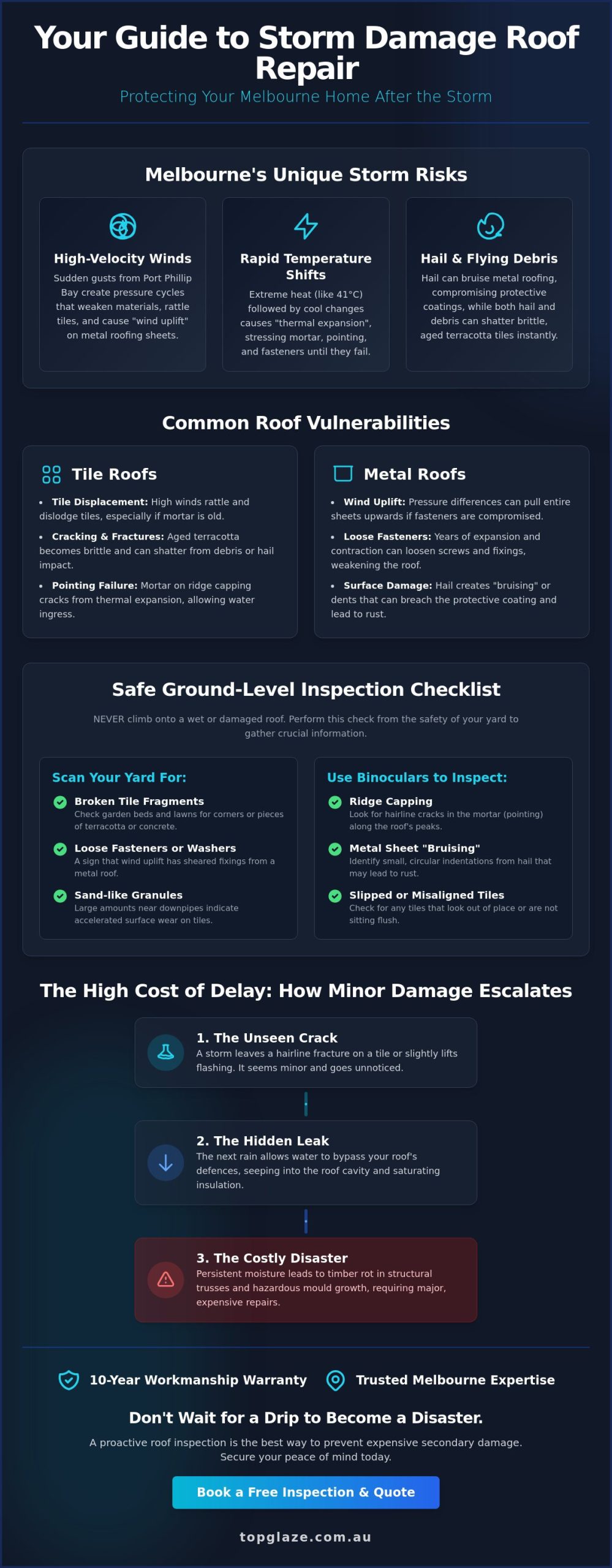
Melbourne’s weather is famous for its volatility, but for a homeowner, “four seasons in one day” is more than just a local quirk. It is a significant stress test for your roof. The proximity to Port Phillip Bay means we often face sudden, high-velocity wind changes that catch residential structures off guard. These gusts do not just blow past; they create complex pressure cycles that can weaken even the most robust roofing materials over time. When these winds hit the eastern suburbs or the Mornington Peninsula, they are often accompanied by hail, which can bruise metal or shatter aged tiles in minutes.
Understanding the nature of storm damage requires looking at more than just rainfall. In Melbourne’s established suburbs, older terracotta tiles are particularly vulnerable. As these tiles age, they become brittle. When hit by the high-velocity winds common in our region, they can crack or shift, leaving the timber sarking and internal ceiling exposed. This is often where the need for storm damage roof repair melbourne begins, starting quietly and out of sight before becoming a major structural headache.
Thermal expansion is another silent culprit. In January 2026, Melbourne recorded a peak of 41°C, the hottest day in six years. Rapid shifts from this extreme heat to cool evening breezes cause roofing materials to expand and contract. This constant movement puts immense pressure on mortar, pointing, and metal fasteners. By the time a storm arrives, these components may already be compromised, making them more likely to fail under the weight of heavy rain or wind.
Wind Uplift and Metal Roofing
Metal roofing is engineered for durability, yet it remains susceptible to wind uplift. This occurs when high winds move over the roof surface, creating a pressure differential that pulls the sheets upward. If fasteners are rusted or have worked loose due to years of thermal movement, a single gust can compromise an entire section. After any significant wind event, a specific inspection of the fixings is vital. We often find that what looks like a secure roof from the street actually has multiple loose sheets ready to lift in the next gale.
Tile Displacement and Water Ingress
Tile roofs face a different set of challenges. Severe wind gusts can “rattle” individual tiles, slowly breaking down the protective mortar or pointing that keeps them in place. Once the bond is broken, the tiles are easily displaced. It doesn’t take a fallen tree to cause a disaster. Even a small branch or flying debris can shatter a brittle tile. A single displaced or cracked tile is often all it takes for water to bypass your primary defences. Once water enters the roof cavity, it quickly saturates insulation and timber trusses, leading to the structural rot and mould issues that every homeowner fears.
Ground-Level Checklist: How to Spot Storm Damage Safely
You don’t need to scale a ladder to understand the health of your roof. In fact, we strongly advise against it. After a significant weather event, roofs are often slippery and structural integrity may be compromised in ways that aren’t immediately obvious from above. A safe, ground-level inspection is the most effective first step for any Melbourne homeowner. By staying on the grass, you avoid the risk of falls while still gathering the evidence needed for a professional assessment.
Scanning the yard for “evidence” is a reliable way to gauge the storm’s impact. High winds and hail often leave behind clues that tell a story of what’s happening on your ridgeline. Look closely at your garden beds and lawn for:
- Broken tile corners or fragments of terracotta.
- Metal fasteners or washers that have been sheared off by wind uplift.
- Large quantities of sand-like granules near downpipe outlets, indicating tile wear.
A pair of binoculars is your best friend during this process. From the safety of your garden, inspect the ridge capping, those triangular tiles that run along the peaks of your roof. Look for hairline cracks in the mortar, known as pointing. Even a tiny gap can allow water to seep through during the next Melbourne downpour. On metal roofs, look for “bruising”—small, circular indentations caused by hail. While they might look cosmetic, they can lead to rust if the protective coating is breached. Identifying these signs early is the key to a successful storm damage roof repair melbourne project. If you’re unsure about what you’re seeing, having a professional perform a thorough roof repair assessment can save you from a much larger structural bill later.
Signs of Damage in the Guttering
Your gutters often show signs of trouble before your ceiling does. Check for sagging sections; this usually indicates the system was overwhelmed by water weight or is currently clogged with debris. If you see an accumulation of granules from concrete tiles, it’s a sign of significant surface erosion. Check the alignment of your fascia boards too. If the timber looks warped or the paint is bubbling, moisture has already started its work behind the scenes. Blocked downpipes are another red flag, as they force water to back up into your eaves and internal walls.
Internal Red Flags to Monitor
Once you’ve checked the exterior, move inside to look for hidden moisture. Damp patches on the plaster or slight discolouration in the corners of your rooms are clear indicators of a leak. Don’t wait for a puddle to form on the floor. Listen closely during the next light shower; a persistent dripping sound in the ceiling cavity is a warning you shouldn’t ignore. If you have safe attic access, check for pinpricks of light shining through the roof space during the day. Any visible light is a direct entry point for water that requires urgent attention.
The Risks of Delayed Repairs: Why “Wait and See” is Dangerous
It’s a common reaction for Melbourne homeowners to breathe a sigh of relief once the wind dies down and the clouds clear. If there isn’t a gaping hole in the ceiling, the temptation is to “wait and see” if any problems develop. However, this approach is often the most expensive mistake you can make. What starts as a minor entry point for water quickly evolves into a complex structural failure. A single shifted tile or a compromised section of flashing creates a “domino effect” where the surrounding materials are forced to bear loads they weren’t designed for, leading to widespread issues across the entire roof plane.
Insurance providers are also increasingly strict about the timeline of reporting. Research indicates that homeowners should contact their insurer within 24 to 72 hours of discovering significant damage. If you delay your storm damage roof repair melbourne, you risk a claim denial. Assessors may argue that the resulting rot or mould was caused by a lack of maintenance rather than the weather event itself. Proactive documentation and immediate professional assessment are your best defences against these complications. When searching for a trusted roofer near me in Melbourne, it’s essential to verify their VBA registration and ensure they understand the latest NCC 2026 standards before any work begins.
Mould and Health Implications
Melbourne’s humid winter months provide the ideal environment for biological growth once moisture is trapped behind your plasterboard. When water bypasses your roof tiles, it saturates the insulation batts, creating a dark, damp breeding ground for mould spores. By the time you see a dark patch on your ceiling, the colony has likely already spread through the roof cavity. This poses a genuine risk to your family’s respiratory health. Removing mould once it has deeply or permanently stained your ceiling is a difficult and costly process that often requires complete plaster replacement rather than a simple patch job.
Structural Integrity and Costs
The financial difference between a minor repair and a full roof restoration is significant. Timber roof battens and structural trusses lose their load-bearing capacity when they are repeatedly exposed to moisture. Over time, this leads to sagging and permanent warping of the roof line. There is also the critical issue of electrical safety. Most Melbourne homes have extensive wiring running through the ceiling space. Water ingress near light fittings or solar inverters is a fire hazard that demands immediate attention. Addressing these issues early protects the resale value of your property and ensures your home remains a safe, weatherproof sanctuary for years to come.
Navigating the Storm Repair Process: From SES to Insurance
When a major weather event hits, the hours following the storm are critical. You need a logical, step-by-step plan to move from emergency response to a permanent resolution. If your roof has suffered significant structural damage or is actively leaking, your first call should be to the Victoria State Emergency Service (VICSES) on 132 500. They are the primary responders for making a property safe, usually by installing heavy-duty tarpaulins to prevent immediate water ingress and further internal damage.
Once the immediate threat is managed, the documentation phase begins. Use the ground-level techniques we discussed earlier to take clear photos of any debris, broken tiles, or visible displacement. Supplement these with internal shots of damp plaster or dripping. With this evidence ready, it’s time to engage a licensed professional for a comprehensive storm damage roof repair melbourne assessment. Having a detailed, written report from a seasoned expert significantly streamlines your conversation with insurance adjusters, as it provides a clear, technical basis for your claim.
Reviewing the proposed repair or restoration plan is the final hurdle before work commences. A quality contractor will explain the “why” behind every recommendation, ensuring you understand the timeline and the materials required to return your home to its original standard. This transparency ensures there are no surprises once the scaffolding goes up.
What to Expect in a Professional Assessment
A thorough inspection goes beyond a quick glance from the driveway. A qualified roofer will examine the integrity of every tile, the condition of the ridge capping, and the state of the valley irons where water flow is highest. They should also evaluate your guttering and leaf guard systems to ensure they haven’t been bent or blocked by storm debris. This results in a professional report, compliant with the latest Building and Plumbing Commission (BPC) standards, that identifies both obvious and hidden points of failure.
Understanding “Make-Safe” vs. Permanent Repair
It’s vital to distinguish between a “make-safe” and a permanent fix. A tarp is a temporary shield designed to last only a few days while you organise a specialist. A permanent repair involves much more than just swapping a tile. It requires matching the specific tile profile or metal colour for a seamless aesthetic finish. For tile roofs, this often includes re-bedding and re-pointing to ensure the ridgeline is structurally sound once more. If you need a definitive solution that stands the test of time, you can request a professional roof repair quote to get the process started.
The Top Glaze Standard: 30 Years of Melbourne Storm Protection
Since 1987, Top Glaze has stood as a reliable guardian for homes across Melbourne and the Mornington Peninsula. We’ve navigated three decades of evolving building codes and increasingly volatile weather patterns, giving us a perspective that newer operators simply don’t have. This seasoned authority is backed by a 10-year warranty on all residential work, ensuring that the peace of mind we promise isn’t just a temporary feeling but a long-term reality. Whether your home features traditional terracotta tiles or a modern metal roofing system, our team possesses the specialised technical knowledge required to restore its integrity.
We take the stress out of the recovery process by organising every detail. From the initial professional assessment required for your insurance claim to the final site cleanup, we handle the logistics so you don’t have to. Our goal is to make your storm damage roof repair melbourne as seamless and low-stress as possible, allowing you to focus on your family while we secure your shelter. We believe in transparency, answering your questions before they are asked and providing a clear path from damage to a weatherproof finish.
Local Knowledge, Quality Results
Being a family-owned Melbourne business means our reputation is tied to the streets we drive every day. We don’t just fix roofs; we ensure that every restoration matches the specific aesthetic of your suburb, whether you’re in a heritage-listed area or a modern development. We use only high-standard materials specifically engineered for Australian conditions, from UV-resistant coatings to heavy-duty fasteners that resist the wind uplift we discussed earlier. This local expertise ensures your roof isn’t just repaired; it’s reinforced against the unique climate whiplash of Victoria.
Next Steps for Your Peace of Mind
Don’t wait for a visible leak to address potential issues. Even if the damage seems minor from the ground, the thermal stresses and wind cycles typical of a Melbourne storm can leave hidden vulnerabilities. A professional “health check” after the peak storm season is a small investment that prevents the “domino effect” of structural failure and ensures your insurance remains valid. Taking a proactive stance today is the best way to protect your property’s value and your family’s safety. Organise a professional roof inspection with Top Glaze today and let our three decades of experience work for you.
Securing Your Home Against the Next Melbourne Storm
Melbourne’s weather is unpredictable, but your response to it shouldn’t be. By using the ground-level inspection techniques we’ve discussed and acting quickly to avoid structural rot, you can protect your property’s value. Proactive care is always more cost-effective than reactive repairs, especially when navigating the complexities of insurance claims and the latest BPC regulations. Identifying subtle signs of damage early ensures that a minor weather event doesn’t turn into a major financial burden.
When you need a definitive storm damage roof repair melbourne solution, experience is your best asset. With over 30 years of local history and a 10-year warranty on all residential projects, our licensed tradesmen provide the stability and expertise you deserve. We’re here to remove the anxiety of hidden leaks and ensure your home remains a safe, weatherproof sanctuary for your family. Your home is your most significant investment; let’s make sure it stays protected for years to come.
Get a Professional Storm Damage Assessment from Top Glaze
Frequently Asked Questions
Does home insurance cover storm damage to my roof in Melbourne?
Most standard home insurance policies in Victoria cover damage caused by sudden, unforeseen weather events like hail, fallen trees, or high winds. However, coverage is usually contingent on the roof being well-maintained prior to the storm. Insurers often exclude damage caused by gradual wear and tear, pre-existing leaks, or porous tiles that have been neglected over time. It is vital to review your Product Disclosure Statement (PDS) to understand specific exclusions regarding the age and condition of your roofing materials.
How long do I have to report storm damage to my roof?
Homeowners are generally expected to contact their insurer within 24 to 72 hours of discovering significant damage. Prompt reporting is essential because it allows the insurer to assess the site before secondary issues, such as mould or structural rot, settle in. If you wait weeks to report a leak, the insurance company may argue that the damage was aggravated by your delay, which can lead to a partial or full denial of your claim.
What should I do if my roof starts leaking during a storm?
Your first priority must be the safety of your family. If the leak is significant or the structure appears compromised, contact the VICSES on 132 500 for emergency assistance. They can provide a temporary “make-safe” by tarping the area to prevent further water ingress. Inside the home, use buckets to catch dripping water and move furniture or electronics away from the affected area. Never attempt to climb onto a wet roof during a storm; always wait for the weather to clear and for a professional to arrive.
How can I tell if my roof tiles are porous after a storm?
Porous tiles are often identified by their dark, damp appearance long after the rain has stopped. When a tile loses its protective glaze, it absorbs water like a sponge rather than shedding it into the gutters. This makes the tiles heavy, putting extra stress on your roof trusses, and encourages the growth of moss and lichen. A professional can confirm this during an inspection by checking if the tiles crumble easily or stay saturated internally.
Is it better to repair or replace a storm-damaged roof?
The choice between repair and replacement depends on the age of your roof and the extent of the storm’s impact. If the damage is isolated to a few cracked tiles or a small section of flashing, a targeted repair is often sufficient. However, if the storm has revealed widespread structural issues or if your roof is over 20 to 25 years old, a full replacement is usually the more secure, long-term investment. A professional assessment will provide a clear recommendation based on the integrity of your timber battens and sarking. If you notice any signs of a sagging roofline, this is a strong indicator that structural damage has already progressed beyond a simple repair.
Can high winds damage a roof without it actually leaking?
Yes, high winds can cause significant “invisible” damage. Gusts can loosen the mortar in your ridge capping or create “bruising” on metal sheets that doesn’t immediately result in a drip. These issues compromise the roof’s ability to withstand the next weather event. Over time, these loosened components can shift, leading to sudden leaks during a future downpour. This is why a professional health check is recommended after any severe wind event in Melbourne.
How much does a typical storm damage roof repair cost in Melbourne?
The cost of repairs varies significantly based on the materials involved and the height of the building. Minor work, such as replacing a handful of tiles or patching a small leak, is a relatively straightforward expense. Moderate repairs involving valley irons or flashing require more labour and materials. For major storm events that impact large sections of metal or require extensive re-bedding of tiles, the cost reflects the complexity of returning the structure to a safe, weatherproof standard.
What is the difference between a roof plumber and a roof tiler for storm repairs?
Roof plumbers are specialists in metal roofing, guttering, downpipes, and any component involving water drainage. They are essential for Colorbond repairs or fixing issues with your fascia and leaf guards. Roof tilers focus specifically on terracotta and concrete tiles, including the bedding and pointing that keeps the ridgeline secure. For a comprehensive storm damage roof repair melbourne, it’s beneficial to use a team that understands both disciplines to ensure every part of your roof system is functioning correctly.


