

Last Updated: November 19, 2026
Quick Summary
Long-lasting roofing results depend on expert workmanship as much as materials, because preparation and correct application decide whether a coating ever reaches its stated service life. A premium coating over a damp, poorly prepared tile can blister and peel within a few seasons, so we back our restoration work with a 10-year workmanship guarantee.
- Materials set the ceiling on roof lifespan, but workmanship decides whether you reach it.
- A product warranty covers the coating, while a workmanship guarantee covers installation quality.
- Ask what voids a guarantee, how long it runs and whether it transfers on sale.
- A maintenance inspection every twelve to twenty-four months keeps a restored roof near its expected service life.
- Restore a structurally sound roof with surface-level problems; replace one with widespread structural damage.
Table of Contents
- Why Long-Lasting Roofing Results Start With Workmanship, Not Just Materials
- Long-Lasting Roofing Results vs Expert Workmanship: A Side-by-Side Comparison
- Roof Restoration Warranty Terms: What Your Guarantee Actually Covers
- How to Choose a Licensed Roofing Contractor for Guaranteed Results
- The Average Lifespan of Restored Roofs and the Evidence Behind the Claims
- When Restoration Beats Replacement: Matching the Fix to Your Roof’s Condition
- Assessing Workmanship Before and After the Restoration Process
- Book a Free Roofing Inspection and Test the Workmanship for Yourself
- Frequently Asked Questions
Why Long-Lasting Roofing Results Start With Workmanship, Not Just Materials
A roof coating is only as good as the surface it sits on.
Most guides compare products, not people, listing coating brands and tile types as though the material does the work by itself.
Workmanship is a deciding factor in any restoration. Materials set the ceiling on how long a roof can last. Workmanship decides whether you get anywhere near that ceiling.
Long-Lasting Roofing Results vs Expert Workmanship: A Side-by-Side Comparison
Long-lasting roofing results come from sound preparation and correct application. Comparing them isn’t a contest because one depends on the other, but it shows where each factor stops working alone.
The table below shows how each factor behaves in isolation, what skilled application adds, and the specific failure mechanism when it is neglected.
| Factor | What It Delivers Alone | What Skilled Application Adds | Failure Mechanism If Neglected |
|---|---|---|---|
| Coating quality | Better UV and weather resistance | Full service life reached because the coating cures evenly | Premature fading and chalking as the binder breaks down |
| Surface preparation | Clean tiles, better adhesion | Coating bonds properly across the whole roof, including valleys and ridge lines | Peeling within a few seasons as moisture lifts the film |
| Tile repairs and repointing | Fewer water entry points | Ridge caps and valleys stay watertight under thermal movement | Roof leaks return after the first heavy rain |
| Priming and sealing | Correct bond between layers | Even finish with no weak patches or missed laps | Patchy coverage and early failure at the edges |
| Installation method | Manufacturer’s stated performance | Performance actually achieved on your roof, not on a test panel | Warranty disputes over application |
What the Comparison Table Shows
Read the right-hand column and you’ll notice a pattern. Every failure route traces back to the same root cause: work skipped or rushed before the coating went on.
The middle column matters most. A good coating with poor preparation doesn’t fail because the coating was bad, it fails because the surface beneath it never gave it a fair chance.
Restoration is best understood as a process rather than a single product.
Why the Comparison Is Roof-Specific, Not Universal
The table is a starting point, not a rulebook. The same coating can behave differently on different roof types, because substrate, pitch and thermal movement vary. Roof pitch, material and exposure all influence how a roof performs over time.
That is why a side-by-side comparison of materials and workmanship only becomes useful once the roof type, age, pitch, climate exposure and extent of damage are known.
Where the Guarantee Fits In
The comparison also explains why a workmanship guarantee and a product warranty are separate documents.
Before you sign, ask what the workmanship guarantee covers, how long it runs, what voids it, and whether it transfers if you sell, and get the answers in writing.
Watch out: a guarantee that lists only the coating brand, without naming the installation defects it covers, is a product warranty in disguise and will not help you if the failure is caused by preparation or application.
Roof Restoration Warranty Terms: What Your Guarantee Actually Covers
A workmanship guarantee covers the quality of the installation, while a product warranty covers the coating or materials themselves. They are two different documents, and homeowners often assume one covers everything.
Before you sign anything, ask three questions:
- What does the workmanship guarantee cover? Look for the specific items: coating adhesion, ridge cap stability, flashing seals, and labour to fix them.
- How long does it run? Terms vary widely across the industry, so get the exact period in writing rather than a verbal promise.
- Does it transfer if you sell? If you’re restoring an investment property, confirm this before work starts.
We back our restoration work with a 10-year workmanship guarantee, and we put the terms in writing so you can read them before committing. For a full breakdown of what a quality job costs compared with a cheap fix, see our guide to the average cost of roof restoration in Melbourne.
How to Choose a Licensed Roofing Contractor for Guaranteed Results
Choosing a licensed roofing contractor comes down to verification, not conversation. Anyone can talk confidently about roofing. Fewer can produce a licence number, insurance certificate and a written scope of works.
Run through this checklist before you accept any quote:
- Ask for the contractor’s licence number and check it against the relevant Australian state or territory licensing register
- Request a certificate of currency for public liability insurance
- Confirm the quote itemises preparation, repairs, priming, sealing and coating separately
A quote that lists one lump sum with no breakdown is a warning sign. You can’t tell what’s included, and you can’t compare it fairly against another quote.
If a previous tradesperson has already left you with a poor job, you have options. Our guide on what to do about a poor roof repair job walks through documenting the fault, raising a complaint and getting an independent assessment.
The Average Lifespan of Restored Roofs and the Evidence Behind the Claims
Lifespan figures vary because the inputs vary. A well-maintained tile roof with a quality coating, applied correctly, will typically outlast a metal roof in a coastal environment exposed to salt and wind. Any single number quoted without context deserves scepticism.
So treat lifespan claims as ranges tied to conditions, not guarantees. The honest answer is that a restored roof’s service life depends on:
- The original condition and structural soundness of the roof
- The roof type: cement tile, terracotta, Colorbond or Zincalume
- The local weather exposure, including coastal salt and storm frequency
A contractor who promises an exact number of years without inspecting your roof is guessing. A roof assessment should come before any lifespan estimate, not after.
Expected Service Life Is Not a Guaranteed Period
A common source of confusion in roofing is the difference between an expected service life and a guaranteed period. An expected service life estimates how long a roof should last under stated conditions; a guaranteed period is a contractual promise to remedy specified defects within a defined timeframe. They are not interchangeable.
A coating might have an expected service life of fifteen years under ideal conditions, while the workmanship guarantee covers installation defects for ten years. The five-year gap is not a loophole; it reflects the difference between a prediction and a promise. When you compare quotes, ask which figure is which. A quote that presents an expected lifespan as though it were a guarantee is either confused or misleading.
How Lifespan Estimates Are Actually Produced
Most lifespan figures come from a mix of manufacturer accelerated-weathering tests, field observations and warranty claim data.
That is why the strongest evidence behind a lifespan claim is usually a combination: manufacturer test data, a documented installation process, and a contractor’s own records of similar roofs.
Industry data on contractor profitability, such as APOC’s benchmark study reported by Roofing Contractor, measures business performance rather than roof longevity. That’s a useful distinction.
What Actually Shortens a Restored Roof’s Life
Lifespan estimates assume the roof is maintained. In practice, the factors that shorten service life are predictable:
- Debris accumulating in valleys and gutters, holding moisture against the coating
- Tree branches abrading the surface and opening pathways for water
- Ponding water on low-pitch sections that never fully dries
A maintenance inspection every twelve to twenty-four months, with gutters cleared and cracked pointing repaired early, is the most reliable way to keep a restored roof near its expected service life. It also protects your position on a warranty claim, because most guarantees require reasonable maintenance.
Watch out: a lifespan figure quoted without stating the roof type, pitch, climate exposure and maintenance assumptions is not evidence, it is a sales number, and it should not be used to compare one quote against another.
When Restoration Beats Replacement: Matching the Fix to Your Roof’s Condition
Restoration suits a structurally sound roof with surface-level problems; replacement suits widespread structural damage. The decision rests on condition, not age alone.
Guidance from American WeatherStar on roof restoration versus replacement makes the same point: restoration suits a roof whose main issues can be repaired, while replacement suits one with widespread damage.
Use this as a working rule:
- Restore if the tiles are intact, the structure is sound, and the issues are moss, lichen, faded coating, cracked ridge caps or minor leaks.
- Replace if tiles are brittle and breaking across large areas, the roof sags, or leaks keep returning after repeated repairs.
- Get an inspection if you’re unsure, because the difference between these two outcomes is often invisible from the ground.
Roof painting sits in between. Our guide on tile re-roofing myths and when to replace versus restore covers this decision in more detail.
Assessing Workmanship Before and After the Restoration Process
You can judge workmanship before you hire and after the job is finished. Most homeowners only check the second, which is too late to avoid a bad hire.
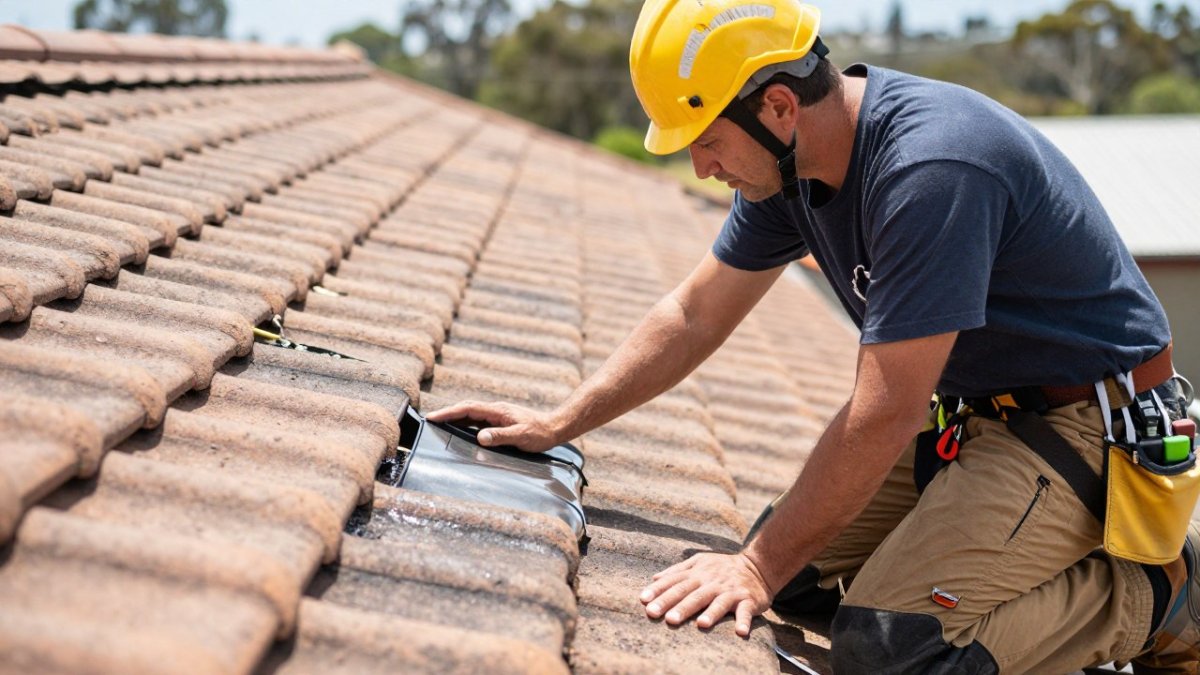
Before the job, look at how the contractor inspects. A thorough roofer gets on the roof, checks ridge caps, valleys and flashings, and explains what they find in plain terms.
After the job, check these:
- Ridge caps sit straight and evenly bedded, with no cracks in the pointing
- The coating is uniform, with no thin patches, drips or missed sections
- Flashings around chimneys and skylights are sealed cleanly
Comparing real before-and-after examples is the fastest way to train your eye. Our roof restoration before and after gallery shows what properly finished tile and metal roofs look like up close.
Book a Free Roofing Inspection and Test the Workmanship for Yourself
The most reliable way to judge a roofer is to watch how they assess your roof.
We’re fully licensed and insured, with 38 years of roofing experience, and restoration work is backed by our 10-year workmanship guarantee.
If you’re on the coast and want a team that understands salt and wind exposure, our roof restoration service for the Frankston area explains how we approach coastal roofs.
A roof that fails early usually wasn’t let down by its coating.
Get started with Top Glaze and book a free roofing inspection, with a written scope of works, a 10-year workmanship guarantee and no call-out fee.
Frequently Asked Questions
What is the difference between a standard roof restoration and a guaranteed service?
A standard restoration covers cleaning, repairs, priming and coating, but the guarantee may be limited or vague. A guaranteed service ties the work to a written workmanship guarantee, typically backed by a licensed and insured contractor. Ask what the guarantee covers, how long it lasts and whether it transfers if you sell the property. Top Glaze backs its restoration work with a 10-year workmanship guarantee, which is the kind of specific commitment worth comparing against any quote you receive.
How does expert workmanship impact the average lifespan of restored roofs?
Preparation decides how well a coating bonds and how long it lasts. Correct pressure cleaning, tile repairs, repointing, rebedding, priming and sealing all contribute to how long a restoration holds. Poor preparation, such as coating over moss or skipping primer, shortens service life regardless of the product used. That is why lifespan claims should always be read alongside the workmanship standard behind them.
What should be included in roof restoration warranty terms?
Look for a written workmanship guarantee that states its length, what defects it covers, and whether it covers labour as well as materials. Check if it transfers to a new owner, which matters for investment properties. A product warranty from the coating manufacturer is separate from the workmanship guarantee, so ask for both. Also confirm the contractor is licensed and insured, because a guarantee is only as reliable as the business standing behind it.
How can I tell if a roofing contractor provides high-quality workmanship?
Ask for the licence number and proof of insurance, then check them. Request itemised quotes so you can see what preparation and repairs are included, not just the coating. Look at completed jobs and ask how long ago they were done. During the work, confirm the roof is pressure cleaned, tiles are repaired and repointed, and primer is applied before sealing. After completion, ask for documentation of the products used and the guarantee in writing.


