

Last Updated: 26 October 2026
Quick Summary
For tile roof maintenance, you should inspect your roof at least once a year, with a full professional check every five to seven years, and clean it as moss or debris builds up. We also recommend a look from the ground every six months after storms, plus repairs as needed. The right frequency depends on your roof’s age, surrounding trees and local weather.
- Book a proper inspection every 12 months, ideally before winter.
- Clean tiles with low pressure and soft tools, never a high-pressure blaster.
- A well-maintained tile roof typically lasts 50 years or more.
- Waiting for a leak means damage has been building for months.
- Top Glaze offers a $0 call-out fee on inspections with a 10-year workmanship guarantee.
Table of Contents
- How Often Should a Tile Roof Be Maintained?
- Your Tile Roof Inspection Checklist
- How to Clean Roof Tiles Without Damaging Them
- Broken Roof Tile Repair: What to Do and When to Call a Professional
- How Long Do Tile Roofs Last?
- Common Mistakes That Shorten Tile Roof Life
- Booking a Professional Tile Roof Inspection
- Frequently Asked Questions
How Often Should a Tile Roof Be Maintained?
For tile roof maintenance, a tile roof should be inspected at least once a year, with a full professional check every five to seven years, and cleaned as moss or debris builds up. For more detail, see our guide on how often should you get your roof checked. That is the short answer. The longer answer depends on your roof’s age, the surrounding trees, and how hard the weather has hit it.
This guide from Top Glaze covers exactly that. We have spent 38+ years on roofs, and the pattern is always the same: the homeowners who book small checks early avoid the big bills later.
Here is the part most guides get wrong. They give you one number and stop. In practice, maintenance is a schedule, not a single task:
- Every 6 months: a look from the ground after storms
- Every 12 months: a proper inspection, ideally before winter
- Every 5 to 7 years: a full professional assessment and clean
- As needed: repairs after storms or broken tiles
The frequency question matters because tile roofs fail slowly, then all at once. A cracked tile or blocked valley is cheap to fix early. Left alone, water gets into the battens and ceiling, and the job turns into a restoration or replacement.
Here is the maintenance schedule we recommend for a tile roof.
| Frequency | What to do |
|---|---|
| Every 6 months | A look from the ground after storms |
| Every 12 months | A proper inspection, ideally before winter |
| Every 5 to 7 years | A full professional assessment and clean |
| As needed | Repairs after storms or broken tiles |
Your Tile Roof Inspection Checklist
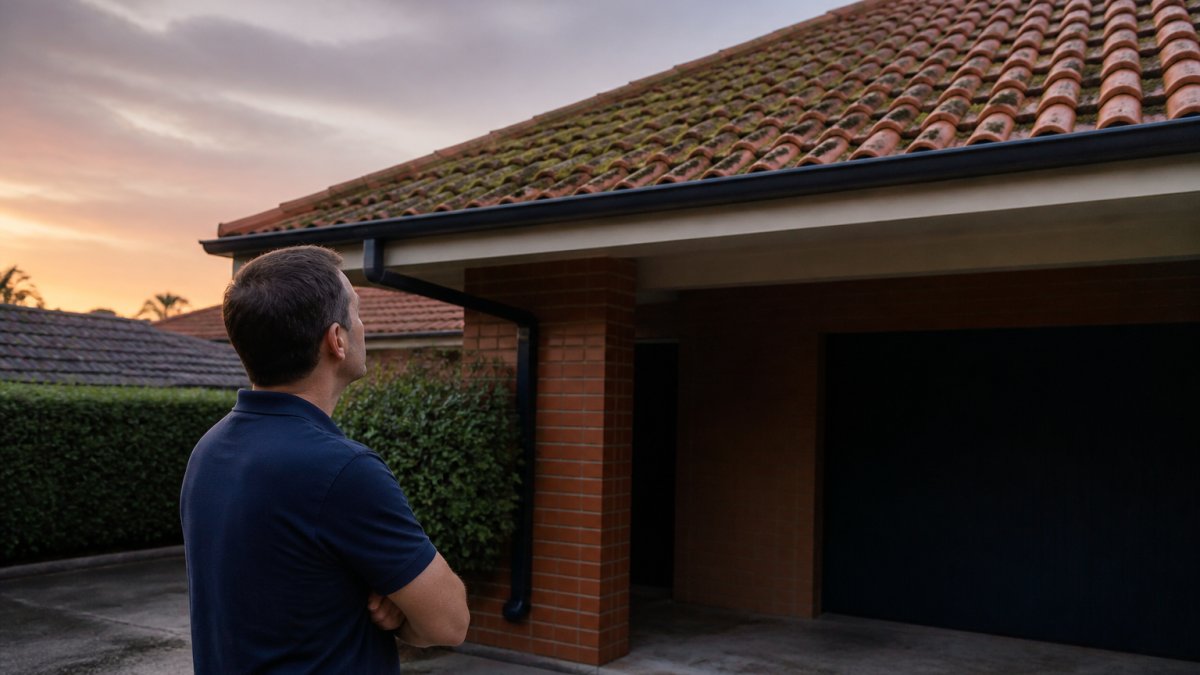
A tile roof inspection checklist is a set of visual checks you can do safely from the ground, plus the items a professional should confirm on the roof. Start with the easy ones. Most problems show up before you ever need a ladder.
From the ground, check for:
- Cracked, slipped, or missing tiles
- Moss, lichen, or dark staining across the surface
- Sagging lines along the ridge or eaves
- Loose or rusted flashings around chimneys and vents
- Gutters full of granules or tile fragments
- Water stains on ceilings or eaves after rain
A professional inspection should also cover:
- Condition of the sarking and battens under the tiles
- Valley and gutter clearance
- Ridge capping and pointing
- Fixings and any previous patch repairs
For a broader seasonal routine you can follow from the ground, our roof maintenance checklist for Melbourne homes breaks down what to check and when.
How to Clean Roof Tiles Without Damaging Them
Cleaning a tile roof safely means using low pressure and soft tools, never a high-pressure blaster. High pressure strips the glaze, drives water under the tiles, and can crack older terracotta. The damage often shows up months later as a leak.
A simple method that works:
- Clear gutters and valleys by hand first.
- Remove moss with a soft brush, working top to bottom.
- Treat moss and lichen with a suitable cleaner, following the label.
- Rinse with a low-pressure hose, not a pressure washer.
- Check tiles as you go and note any cracks.
Watch out: walking on a tiled roof without fall protection is genuinely dangerous, and older tiles crack underfoot. If the moss is heavy or the pitch is steep, leave it to a professional.
For a full breakdown of safe methods, see our guide on how to clean roof tiles safely and choosing the right approach for your roof type.
Broken Roof Tile Repair: What to Do and When to Call a Professional
Broken roof tile repair is a same-week job for a single cracked tile, but a call-a-professional job the moment water is getting in. A hairline crack is easy to miss and easy to fix. A slipped tile that has let water into the ceiling is a different problem.
Do this now:
Request A FREE ROOFING Inspection →
- Photograph the damage from the ground
- Keep off the roof unless you have safe access
- Place a bucket under any ceiling drip
- Book a repair before the next big rain
Call a professional when:
- Water is staining ceilings or walls
- Several tiles are broken or displaced
- The flashing or ridge capping is loose
- You cannot see the damage clearly from the ground
The real difference between a cheap patch and a proper repair comes down to what is happening underneath. A tile replaced without checking the batten and sarking is a temporary fix. Our broken roof tile repair guide walks you through the full repair process and when to call a professional.
How Long Do Tile Roofs Last?
A well-maintained tile roof typically lasts 50 years or more, while a neglected one can fail far sooner. Terracotta and concrete tiles are durable, but the parts around them wear first: pointing, flashings, and fixings.
What shortens the life:
- No cleaning: moss holds moisture against the tile surface
- Blocked gutters: water backs up under the tiles
- Ignored cracks: small breaks let water into the roof cavity
- Poor repairs: patched jobs that skip the underlay
What extends it:
- Annual inspections
- Regular cleaning and moss treatment
- Prompt repairs
- Repointing ridge capping when it crumbles
The tile itself is rarely the first thing to fail. That is why tile roof maintenance is really about the system around the tiles.
Common Mistakes That Shorten Tile Roof Life
The biggest mistake is waiting for a leak before doing anything. By the time water shows on the ceiling, the damage has been building for months. Here are the others we see most often.
- Pressure-washing the tiles. It strips the surface and forces water underneath.
- Walking the roof in soft shoes. Old tiles crack under uneven weight.
- Ignoring moss. It looks cosmetic until it lifts tiles and blocks valleys.
- Skipping the gutters. Overflow is one of the most common causes of internal leaks.
- Hiring on price alone. Cheap work with poor materials usually costs more to fix.
- No records. Keep photos and receipts so you can track condition over time.
If you are coming from a “fix it when it breaks” approach, expect to spend more. Small, regular checks are cheaper than one big repair.
Booking a Professional Tile Roof Inspection
A professional inspection is the fastest way to know exactly where your roof stands. A roofer checks the tiles, flashings, valleys, and underlay, then gives you a clear list of what needs doing now and what can wait. You get a plan instead of guesswork.
At Top Glaze, we offer a $0 call-out fee on inspections, so there is no risk in finding out. Our team is fully licensed and insured, and every job is backed by a 10-year workmanship guarantee. We work on cement and terracotta tiles as well as Colorbond and Zincalume metal roofs.
If you want a straight answer on your roof’s condition, book a free roof inspection and we will tell you what we find.
Frequently Asked Questions
How often should a tile roof be inspected?
Inspection advice varies. Some roofing sources recommend an annual check, while an Australian inspection source gives five to seven years as a useful guide for a sound roof. Older or damaged roofs warrant shorter gaps. A practical approach is to check your roof yourself twice a year, in spring and autumn, and book a professional inspection every few years or after any major storm. A tile roof inspection checklist helps you spot cracked tiles, blocked gutters and worn flashings early, before small issues turn into leaks.
How often should roof tiles be cleaned?
Most tile roofs benefit from cleaning every one to three years, depending on how much moss, lichen and leaf litter builds up. Homes surrounded by trees or in damp, shaded positions may need cleaning more often. Clean in dry weather using a soft brush and low-pressure water, and avoid high-pressure blasting, which can strip the tile surface and force water under the tiles. Clear gutters at the same time so rainwater drains away properly.
What should be included in a tile roof maintenance check?
A thorough check covers cracked, slipped or broken tiles, worn or lifted flashings around chimneys and valleys, blocked gutters and downpipes, and any moss or lichen growth. Look for sagging lines, water stains on ceilings and loose ridge caps. Note the condition of the pointing and any rusted fixings. A tile roof inspection checklist keeps the process consistent, and a professional inspection can identify issues that are hard to see safely from ground level.
Does a tile roof need maintenance if there are no visible leaks?
Yes. Leaks are usually the last sign of a problem, not the first. Cracked tiles, worn flashings and blocked gutters can go unnoticed for months before water enters the ceiling. Regular tile roof maintenance catches these issues while they are still cheap to fix. Simple tasks like clearing gutters and replacing a few broken tiles cost far less than repairing water damage to ceilings, insulation and framing. If your roof is more than 20 years old, book a professional check even without visible leaks.
Your roof does not need much. It needs a look twice a year, a proper clean, and repairs done before they spread. That small routine is the difference between a roof that lasts decades and one that surprises you in the middle of winter. Get started with Top Glaze and protect your home with an inspection that costs you nothing.


