

What if the safest roof check is the one you do without climbing a ladder? Small signs of wear can be easy to miss, and Melbourne’s changeable weather can turn a loose tile or blocked gutter into a bigger concern. A roof maintenance checklist melbourne homeowners can follow starts from the ground, with no risky walk across the roof required.
It can be hard to know which changes matter and when to act. This guide sets out a practical, safety-first routine for checking the roofline, gutters and inside your home through the year. You’ll learn what to look for, how to record changes and when to arrange a professional assessment. If you notice damaged or missing roofing, sagging gutters, water stains or other signs of a leak, don’t climb up to investigate. A ground-level check can help you decide on a safe next step.
Key Takeaways
- Use the roof maintenance checklist melbourne homeowners can follow as a year-round prompt, and make an additional visual check after significant weather changes.
- Look for visible changes to roof surfaces, edges, flashings, drainage and indoor ceilings without stepping onto the roof.
- Record what you see and when. A concern that worsens or returns after rain deserves closer attention.
- Stop at ground-level observation. Unclear or concerning signs are a reason to arrange a professional roof assessment.
- A consistent routine helps you notice potential issues and make a more informed decision about what to do next.
Why Melbourne roof maintenance matters before damage becomes obvious
Routine roof maintenance starts with noticing visible changes around the roof and drainage areas. It doesn’t mean climbing onto the roof or diagnosing a fault yourself. A practical roof maintenance checklist melbourne homeowners can follow makes these observations consistent, helping you notice when something looks different and decide whether it needs attention.
Changing weather and storms can expose existing weaknesses. A tile that has shifted, a damaged-looking roof sheet or a deteriorating roof edge may become more noticeable after rough weather. Not every mark means there’s a leak, but a change that persists or worsens is worth recording and discussing with a roofing professional.
Water marks on a ceiling or wall are a reason to investigate, not a diagnosis. Water can travel before becoming visible indoors, so a stain may not be directly below the point where water entered. Record when you first notice it and whether it changes after rain. Don’t enter the roof space or climb onto the roof to trace the source.
Roofs can be difficult to inspect and repair safely. As Wikipedia notes, a roof is often the least accessible part of a building for repair and renewal, while damage can have serious effects. Use this checklist to observe, not diagnose or access the roof. If a visible issue concerns you, a professional assessment can help determine what needs attention.
What roof maintenance can help you notice
From a safe vantage point, look for changes in appearance rather than trying to judge the roof’s condition. Displaced tiles, damaged sheets, uneven-looking roof edges or material that appears loose are reasons to seek a closer professional assessment. You may also notice debris gathering in a valley or a gutter that doesn’t appear to drain properly. Don’t touch or move anything on the roof to confirm what you see.
Indoors, look for water marks, peeling paint or damp patches on ceilings and upper walls. These signs can help you describe the issue, but they can’t confirm its cause. Photos taken from a safe position, along with notes about when the signs appear, can make it easier to explain what you’ve observed.
Why Melbourne homes need a year-round perspective
One check can’t show how a roof changes over time. Seasonal conditions and storms may reveal different signs, while shade, nearby trees and roof design affect what you can see and where debris may collect. Overhanging branches can obscure surfaces or drainage points. Ensuring your roof remains sound and debris-free is also important when planning renewable energy additions with GridFree Solar. Look from a few safe positions around your home, and note any areas you can’t see instead of trying to access them.
In Melbourne, regular ground-level checks help you notice changes through the year without turning observation into a risky climb. Keep the routine simple: look, note what has changed, and arrange professional advice if something is unclear or concerning.
When to check a Melbourne roof through the seasons
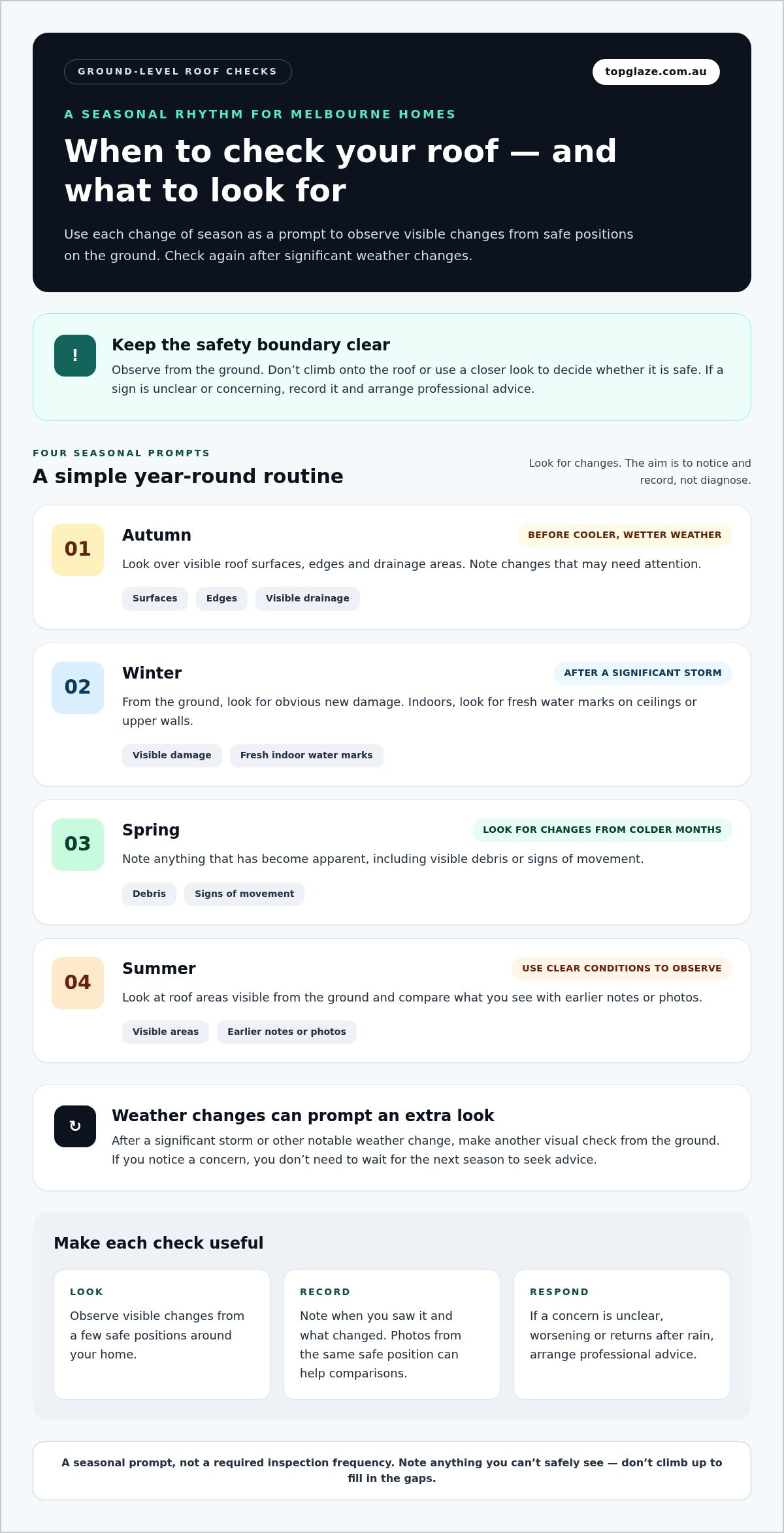
A seasonal rhythm makes roof checks easier to remember. Use each change of season as a prompt to look over the roof from safe positions on the ground, then make another visual check after a significant storm or other notable weather change. The aim is to notice and record visible changes, not to inspect every component or decide whether the roof is sound.
A simple seasonal rhythm for Melbourne homeowners
Each season gives you a reason to look again. Before colder, wetter periods, note visible changes that may need attention. After storms, look for obvious movement, damage or debris from the ground. In warmer months, observe areas you can see clearly and compare them with earlier notes. Use the checks to decide whether to seek advice, not to assess roof safety yourself.
- Autumn: Look over roof surfaces, edges and visible drainage areas before cooler, wetter weather.
- Winter: After a significant storm, check from the ground for new damage and look indoors for fresh water marks.
- Spring: Note changes that may have become apparent during the colder months, including visible debris or signs of movement.
- Summer: Use clear conditions to observe roof areas visible from the ground and compare them with earlier notes or photos.
These are practical prompts, not a required inspection frequency. If you notice a concern at any time, you don’t need to wait for the next season to seek advice. Record the date, what you saw and whether it changes. Photos taken from the same safe position can make comparisons easier.
Adjust checks to your roof and surroundings
Your home’s layout affects what you can see. Whether the roof is tiled or metal, focus on visible changes rather than trying to judge the material’s condition. The Metal Roofing and Cladding Association of Australia represents the metal roofing industry and provides relevant industry context for homeowners with metal roofs. Roof shape may leave some sections harder to view, while nearby trees can obscure surfaces or contribute visible debris. Note anything you can’t safely see; don’t climb up to fill in the gaps.
Look at the surroundings as well as the roofline. Overhanging branches and shaded sections can affect what stands out during a visual check. If debris or drainage is your main concern, the Melbourne roof gutter checklist offers focused guidance on gutters.
A consistent routine is useful when it helps you spot a change and choose a sensible next step. If you’re unsure what a visible sign means, arrange a professional roof inspection rather than attempting a closer look yourself.
DIY roof checks versus professional assessment: what is safe?
A useful roof check doesn’t require climbing a ladder or stepping onto the roof. For this roof maintenance checklist melbourne homeowners can keep the boundary clear: observe from a safe position, note changes and leave roof access, diagnosis and repairs to a roofing professional. Roof surfaces can be slippery or fragile, and damaged components may shift if handled. Don’t climb onto roofing, walk across it or try to move loose tiles, sheets or flashing.
What homeowners can observe without accessing the roof
Choose a stable spot on the ground with a clear view of the roofline. Look for obvious changes such as a sagging section, displaced tiles, visible sheet damage or new debris. You can also observe from a window or doorway, provided you don’t lean out or put yourself at risk. Binoculars may help you see details from the ground, but they can’t confirm whether a component is secure or functioning properly.
Indoors, check ceilings and upper walls for new marks, dampness, peeling paint or changes to an existing stain. Note the location, date and appearance, and record whether the mark changes after rain. Photos taken from a safe position can help you describe what you’ve noticed. These observations are clues, not proof of where water entered or what caused it.
Safe observations from the ground or indoors
- Look for visible changes to roof lines and materials from a stable position.
- Check rooms below the roof for new water marks or damp patches.
- Record when and where a concern appears, and whether it changes.
- Keep clear of fallen or loose roofing materials; don’t handle them.
Professional assessment
- Assesses roof areas that can’t be safely viewed from the ground.
- Examines active leaks, storm damage and apparent structural concerns.
- Determines whether visible damage needs roof repairs or further work.
- Uses professional judgement to assess roof access and the likely cause.
When a roofing professional should assess the issue
Arrange prompt professional attention if water is actively entering your home, a storm has visibly damaged the roof or part of the roof appears to be sagging. Don’t wait for a routine check if the concern is getting worse. An indoor stain doesn’t reliably show where a problem began, and damage can be difficult to interpret from below. For practical guidance on concerns that may need attention, see Melbourne roof repair guidance.
Visual monitoring is for noticing change; roof repair work belongs to a professional. If you’re unsure what you’re seeing, stop at observation and arrange an assessment rather than attempting a closer look or DIY fix.
The Melbourne roof maintenance checklist: work through these checks
Use this roof maintenance checklist melbourne homeowners can follow from safe positions around the home. Work through the observations in order, but don’t climb onto the roof, touch damaged materials or attempt repairs. If an area isn’t visible, leave it for a professional assessment.
- Scan the visible roof surfaces. From the ground, look for tiles that appear cracked, displaced or missing, and sheets that look damaged or out of place. Compare them with earlier observations if you have them. A lack of visible damage from below doesn’t confirm that a surface is sound.
- Look along roof edges and junctions. Notice apparent changes around ridges, eaves, valleys and places where roof sections meet. Check for edges that seem uneven or deteriorated, and flashing that appears loose, bent or damaged. Don’t reach up, move components or try to confirm whether a joint is watertight.
- Observe gutters and downpipes. From a safe vantage point, note whether they appear blocked, overflowing, sagging or out of alignment. Water spilling over during rain or visible debris may warrant professional attention. Keep this check to what you can see. For gutter-specific observations and care, use the Melbourne roof gutter checklist.
- Check indoors for signs of moisture. Look at ceilings and upper walls for fresh marks, dampness, peeling paint or a stain that seems to be spreading. Don’t enter a roof cavity through a hatch. Only note what’s visible from a safe position, without moving insulation or touching materials, wiring or other components.
- Make a simple record. Write down the date, location and what the concern looks like. Take photos from a safe position, then compare them with later observations. Share these notes during a professional assessment. They can help explain what changed and when, but can’t identify the cause.
A useful roof check means observing visible changes, recording them clearly and leaving roof access and repairs to a professional. This keeps the routine practical without turning a visual check into a risky inspection. If you find apparent damage, a new indoor mark or a change you can’t interpret, arrange a professional assessment rather than attempting a closer look.
For an assessment of a concern on your checklist, arrange a professional roof inspection.
What to do if your Melbourne roof checklist finds an issue
Finding a possible roof problem can be unsettling, but you don’t need to diagnose it yourself. Use your checklist to record what you observed, then consider whether the sign is stable, unclear or getting worse. Don’t climb up to investigate, handle damaged materials or attempt a repair. If water is actively entering, a storm has caused visible damage or part of the roof appears to be sagging, arrange a professional assessment promptly.
If a mark hasn’t changed or you can’t interpret a concern, keep observing from a safe position and note any developments. If it spreads, returns after rain or appears alongside other signs, move from monitoring to professional advice. A visual check can flag a concern, but an assessment can help establish what work may be appropriate.
Prepare useful information for a roof assessment
Before arranging an inspection, note where you saw the issue, when it first appeared and whether it changed after rain or a storm. Include photographs taken safely from indoors or the ground. For example, explain whether an indoor mark is new, seems to be spreading or is in the same place as an earlier stain. These details help describe the concern without putting you at risk.
Top Glaze Roofing Systems provides a free roof inspection and assesses the roof before providing a fixed quote with no hidden fees. Its licensed professionals can explain the findings and outline a suitable next step. All services include a 10-year workmanship guarantee covering labour and materials.
Know when to move from maintenance to repair
A routine observation is something you record and compare. Active leaks, storm damage or apparent structural concerns need professional attention rather than another round of monitoring. Don’t try to lift a tile, seal a suspected gap or clear debris from an unsafe position. Keep people clear of visibly damaged areas and share what you’ve seen with the roofing team.
The right solution depends on the roof’s condition. A localised fault may call for a repair, while broader wear may lead to a discussion about restoration. If restoration is relevant after assessment, the Melbourne roof restoration guide can help you understand that option. Top Glaze Roofing Systems has over 38 years in business and has completed more than 20,000 roof repairs, restorations and replacements.
A roof maintenance checklist melbourne homeowners can use is most helpful when it leads to a safe, informed next step. If your observations raise concern, request a free roof inspection to have the roof assessed and receive a fixed quote with no hidden fees.
Make your next roof check a confident one
A roof check doesn’t need to become a major project. Keep a simple record, revisit anything that changes and leave roof access or repair work to a professional. With a roof maintenance checklist melbourne homeowners can use safely, you can turn uncertainty into a clear next step instead of guessing at the cause of a visible sign.
If something you’ve noticed is worsening, unclear or affecting your home, a professional assessment can help identify what needs attention. Top Glaze Roofing Systems offers free roof inspections and fixed quotes with no hidden fees, so you can make an informed decision about the work. All services come with a 10-year workmanship guarantee covering labour and materials.
Request a free roof inspection from Melbourne roofing professionals to take the next step with confidence. A calm, consistent approach can help you feel more prepared to care for your roof throughout the year.
Frequently Asked Questions
How often should a roof be professionally inspected in Melbourne?
There’s no single inspection interval that suits every Melbourne roof. A tiled roof beneath mature trees may need different attention from an exposed metal roof, and age, design and past problems also matter. Make safe visual observations through the year, then seek advice if you notice a change, storm damage or a concern that’s getting worse. A roofing professional can assess the roof and recommend an appropriate approach for your home.
Can I inspect my roof myself without climbing on it?
Yes. From a stable position on the ground, look for obvious changes to the roofline or visible materials, then check accessible rooms for new signs of moisture. Don’t use a ladder to get a closer look, climb onto the roof or handle damaged parts. If you spot something, take a photo from the same safe position for comparison later. A visual check can help you notice change, but it can’t confirm the cause or condition.
What should I do if I notice a ceiling stain after rain?
Record where the stain is, when you first saw it and whether its shape or colour changes. A photo taken from a safe position can help you track it over time. Don’t assume the roof fault is directly above the mark, as a ceiling stain alone can’t identify where water entered or what caused it. If the mark is new, spreading or accompanied by water actively entering the home, seek a professional assessment promptly.
Should I check the roof after a Melbourne storm?
Yes, make a visual check from the ground after significant storm damage, but don’t access the roof to investigate. Look from more than one safe position if the view is clear, and check rooms beneath the roof for new signs of water. A missing-looking tile or damaged sheet deserves professional attention even if you can’t see a leak indoors. If water is actively entering or the roof appears structurally affected, seek prompt help.
Can tree branches damage a roof or block drainage?
Branches close to a roof can obscure your view and may contribute to debris collecting in gutters or other drainage areas. For properties surrounded by overhanging trees, installing specialised gutter guard systems from Leaf Stopper can help prevent recurring leaf blockages. From the ground, note where branches overhang and whether you can see debris or signs of overflow. Don’t climb up to prune branches or clear the roof. If you notice damage, drainage concerns or water spilling over, record the location and arrange an appropriate assessment.
Does a roof maintenance checklist guarantee my roof will not leak?
No. A roof maintenance checklist melbourne homeowners use can help them notice visible changes, but it can’t reveal every concealed defect or guarantee a leak-free roof. A roof may look unchanged from the street while a problem remains out of view. Keep a record of observations and act if signs worsen or return. If you’re unsure about the roof’s condition, a professional assessment is the sensible next step.


