

Table of Contents
- What to Do When Your Roof Is Leaking
- Signs of a Roof Leak You Should Not Ignore
- How to Locate a Roof Leak from Inside
- Common Causes of Roof Leaks
- Tools and Safety Precautions for Roof Inspections
- When to Call a Professional to Find the Source of a Roof Leak
- Frequently Asked Questions
Last Updated: 21 October 2026
What to Do When Your Roof Is Leaking
Water coming through the ceiling needs action in the next hour, not the next week. When you need to find the source of roof leak problems fast, the first priority is containment: stop the water damaging your home while you work out where it is getting in.
Here is the order we recommend after 38+ years of tracing leaks across Melbourne and the surrounding regions.
Immediate Steps to Limit the Damage
Move furniture and electronics clear of the drip. Place a bucket underneath, then puncture a small hole in a sagging ceiling patch so trapped water drains in a controlled way rather than spreading across the plaster.
- Kill power to any light fitting that is wet or dripping
- Photograph everything before you move it, for insurance
- Lift wet rugs and towels off timber floors
- Do not stand on a wet ceiling
Temporary Fixes Before a Proper Repair
A tarp over the affected roof section will hold back rain for a few days. Roofing tape around a cracked tile or flashing buys similar time. Neither is a repair, and both should be removed before a permanent fix.
Never seal a leak from inside the ceiling with paint or filler. Trapped water rots timber battens and can soak insulation for months before you notice. The stain disappears; the damage does not.
Signs of a Roof Leak You Should Not Ignore
The obvious signs of a roof leak are brown ceiling rings, peeling paint and drips. The quieter ones matter just as much: musty smells in a bedroom, bubbling render above a window, or a sudden jump in your water bill.
Check these warning signs each season:
- Dark streaks or tide marks on ceilings and cornices
- Sagging or soft patches in plasterboard
- Damp, cold walls, even in dry weather
- Lifted or curling roof tiles
- Rust on metal sheeting or fixings
- Moss and lichen holding moisture on tiles
- Gutter overflow during moderate rain
Small stains grow. A leak that shows as a faint ring in autumn is often a soaked batten by spring.
How to Locate a Roof Leak from Inside
Start in the roof space, not on the roof. Water almost never drips directly below the entry point. It runs down rafters, along battens and across sarking before finding a gap, so the stain on your ceiling can sit metres from the actual fault.
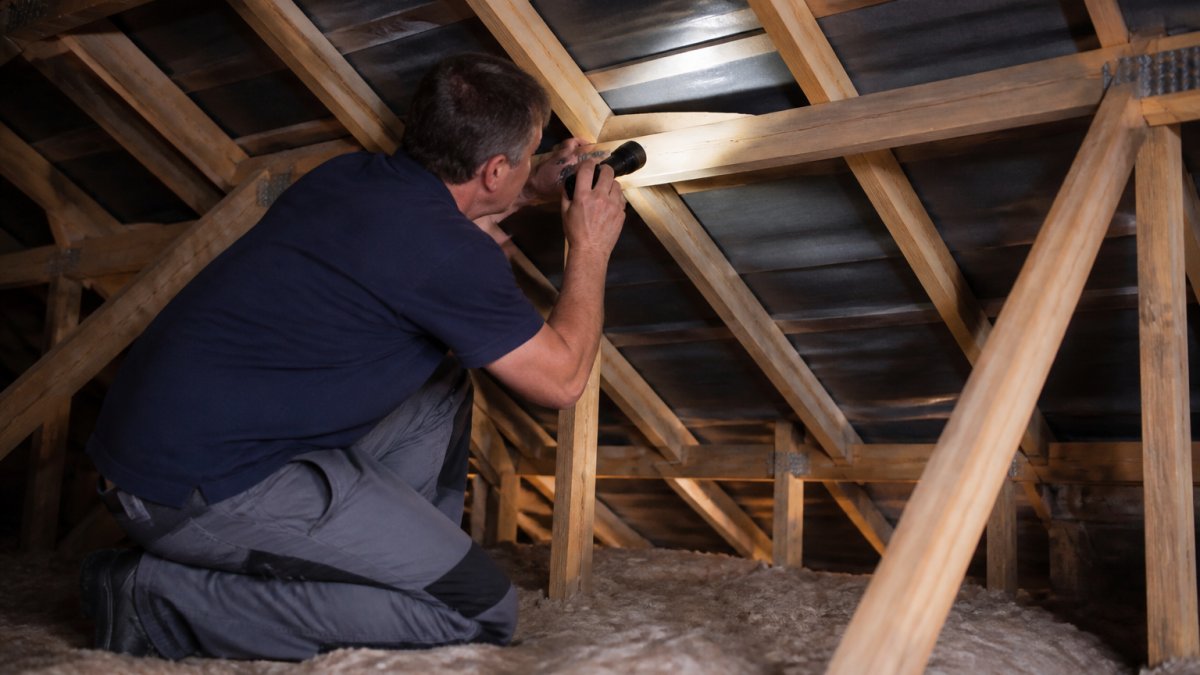
Take a torch up on a dry day and look for:
- Water tracks or dark staining on rafters and battens
- Damp insulation batts, especially at the low end of the roof
- Daylight showing through the roof covering
- Rusted or loose fixings on metal roofs
The Water Test Method
Send a helper onto the roof with a garden hose while you stay in the roof space. Wet one small section at a time, starting low and working upward. Pause between sections and watch for water appearing. The moment you see a trickle, you have your entry point.
Keep the test short. Ten minutes of gentle spraying beats an hour of soaking, and it is far easier to trace a single run of water than a flooded cavity.
Common Causes of Roof Leaks
Most leaks come down to a short list of failures, and knowing them narrows your search quickly. The most common causes of roof leaks are failed flashings, cracked or slipped tiles, blocked valleys, perished seals around penetrations, and blocked gutters forcing water under the edge.
Request A FREE ROOFING Inspection →
| Cause | Where to Look | Typical Clue |
|---|---|---|
| Failed flashing | Chimneys, walls, skylights | Damp patch beside the structure |
| Cracked or slipped tiles | Slopes and ridges | Broken tile, daylight in roof space |
| Blocked valley | Where roof sections meet | Overflow in heavy rain only |
| Perished seal | Vents, pipes, aerials | Leak after wind-driven rain |
| Blocked gutter | Eaves and fascia | Water staining at the roof edge |
Metal roofs add another failure point: loose or corroded fixings let water in at the screw line. On tiled roofs, cracked cement bedding along the ridge is a frequent culprit that homeowners rarely spot from the ground.
Tools and Safety Precautions for Roof Inspections
A roof inspection needs a torch, a notebook, a tape measure and a camera. Add a hose for water testing and binoculars for a ground-level first look. That is the whole kit.
Safety matters more than the tools. Working at height is the leading cause of serious injury on residential properties, and Safe Work Australia’s guidance on falls from height sets out the risks clearly. Follow these rules:
- Stay off the roof in rain, wind or when tiles are damp
- Never walk a tiled roof without crawl boards
- Keep three points of contact on any ladder
- Have someone else at home while you are up there
- Treat any powerline near the roof as live and stay well clear
If your roof is more than two storeys high or has a steep pitch, do not go up at all. A licensed roofer can inspect it safely, and the call-out is cheaper than a hospital visit.
When to Call a Professional to Find the Source of a Roof Leak
Call a professional when the leak has resisted two attempts to find it, when the roof is steep or high, or when water is reaching electrical fittings. Also call when the leak returns after rain in the same spot. Repeated leaks usually mean the first diagnosis was wrong.
Tracing a leak properly takes experience. Our licensed and insured roofers carry out free roofing inspections with a $0 call-out fee, and every repair is backed by our 10-year workmanship guarantee. We work on cement and terracotta tiles, plus Colorbond and Zincalume metal roofs.
If you have had several roofers give you different answers, ask for the diagnosis in writing, with photos of the fault. A roofer who cannot show you the problem is guessing.
Frequently Asked Questions
How do you find the exact source of a roof leak?
Start inside the roof space during or just after rain. Look for water trails, damp timber and staining on the underside of the roof covering, then trace the path upward. Water often enters higher up and runs down rafters before dripping. If the roof space is dry, check ceiling stains and use a hose test on the roof surface while someone watches from below. Persistent or hard-to-trace roof leaks are best confirmed by a licensed roofer with moisture meters and inspection experience.
Why is water appearing far from the roof leak?
Water rarely drips straight down. It follows the path of least resistance along rafters, battens and insulation before finding a gap to fall through. That means a stain on a ceiling can sit metres away from the actual entry point. This is why tracing a roof leak from inside the roof space is more reliable than looking only at the ceiling. Follow the wet trail upward and toward the ridge to narrow down the source before calling a professional.
What are the common causes of a roof leak?
The most frequent causes include cracked or slipped tiles, failed flashing around chimneys and skylights, blocked gutters forcing water under the roof edge, perished seals around penetrations, and corroded fasteners on metal roofs. Moss and lichen build-up can also trap moisture and lift tile edges. Ageing roof membranes and poorly sealed valleys are common on older homes. Identifying the cause matters as much as finding the drip, because a repair that ignores the cause will fail again.
When should you call a roofing professional to find a leak?
Call a professional if you cannot trace the roof leak after a thorough internal inspection, if the leak returns after a repair, or if accessing the roof safely is beyond your ability. Also call if you notice sagging ceilings, widespread damp, or mould, as these suggest a larger problem. A licensed roofer with a workmanship guarantee can pinpoint the source and recommend a lasting repair rather than a patch-up that fails next season.
A leak you cannot find is a leak that keeps damaging your home, one rain event at a time. Rather than climbing ladders and hoping, let a licensed roofer trace it properly and fix it once. Top Glaze brings 38+ years of experience, fully licensed and insured professionals, and a 10-year workmanship guarantee to every job. Request a free roofing inspection with Top Glaze and get your roof watertight before the next downpour.


