

Last Updated: November 17, 2026
Quick Summary
A roof flashing repair cost in Australia typically falls between AUD $250 and $600 for a standard fix on an accessible roof section. Larger flashing systems, or work bundled into full roof rectification, can climb well past AUD $2,000.
- Labour and access decide most of the bill, with steep pitches and second-storey chimneys pushing rates higher.
- Check for rust streaks, lifted metal edges, cracked sealant and damp patches on ceilings below joints.
- Repair wins when damage is localised; replacement wins when metal has corroded through or bedding has failed.
- A good quote itemises materials, labour, access and disposal, and states whether the price is fixed.
- Top Glaze offers a $0 call-out fee, a free roofing inspection and a 10-year workmanship guarantee.
Table of Contents
- Roof Flashing Repair Cost: What You’ll Pay
- Signs of Damaged Roof Flashing to Look For
- Roof Flashing Replacement Cost vs Repair
- How to Read a Roof Repair Quote
- Roof Repair Time: How Long the Job Takes
- DIY vs Professional Flashing Repair
- Book a Free Roofing Inspection
- Frequently Asked Questions
Roof Flashing Repair Cost: What You’ll Pay
A roof flashing repair cost in Australia typically falls between AUD $250 and $600 for a standard fix on an accessible roof section, according to Properties Unlimited Group’s 2026 leaking roof repair guide. Larger flashing systems, or work bundled into full roof rectification, can climb well past AUD $2,000.
Flashing is the metal strip that seals the joints where your roof meets walls, chimneys, valleys and penetrations. When it fails, water gets in. Below, we break down what drives the price, how to spot damage early, and when repair beats replacement.
What Drives the Price Up or Down
Labour and access decide most of the bill. A single-storey tile roof with a straightforward valley is quick work. A steep pitch, a second-storey chimney, or fragile terracotta tiles slow everything down and push labour rates higher.
Material choice matters too. A small Colorbond or lead flashing section costs far less than a full copper or zinc system. Your Local Roofers’ 2024 cost guide puts a single small flashing replacement at AUD $180-$450, while a complete flashing system as part of roof rectification can exceed AUD $2,000-$5,000. Emergency call-outs and after-hours work add a premium on top. If storm damage is the cause, our guide to Melbourne wind damage roof repair costs explains how insurance and pricing interact.
Signs of Damaged Roof Flashing to Look For
Check for rust streaks, lifted metal edges, cracked sealant and damp patches on ceilings below joints. These are the earliest warnings, and catching them early keeps a small repair small.
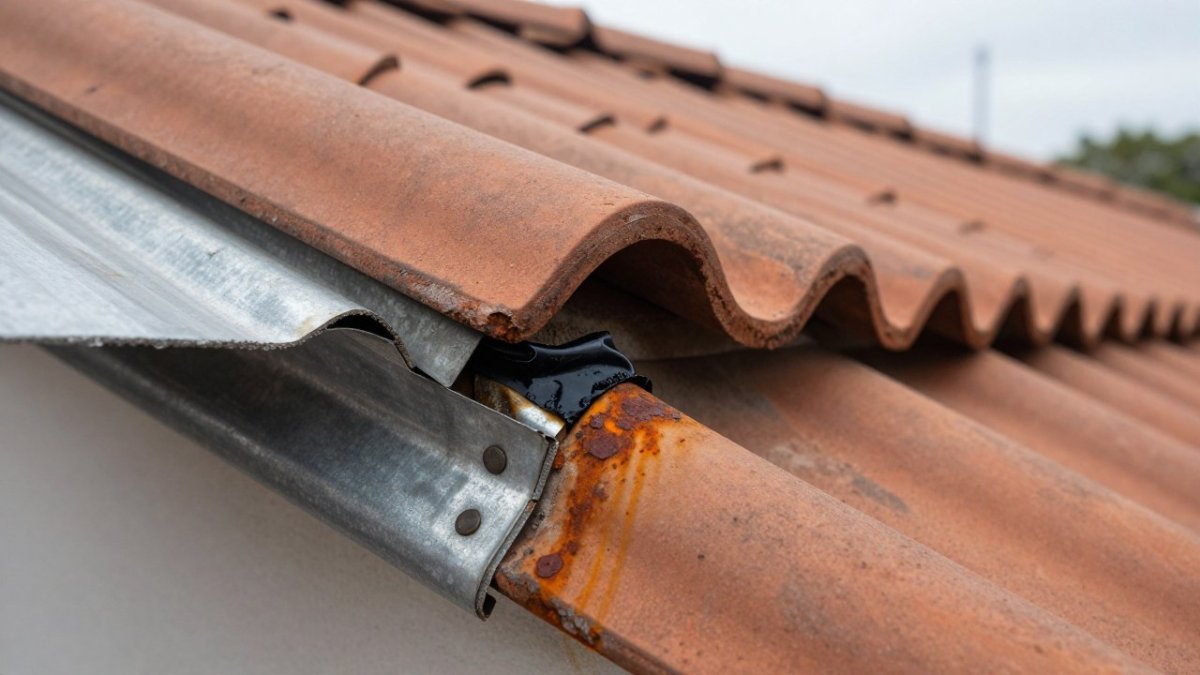
Other signs of damaged roof flashing include:
- Water stains or bubbling paint on interior walls near chimneys
- Granules or sealant fragments in gutters after rain
- Visible gaps where step flashing meets a brick wall
- Moss or mould concentrated around roof valleys
Water ingress rarely announces itself. A slow drip during heavy rain often means the flashing has been failing for months. For a closer look at chimney-specific problems, read our guide to flashing repair around a chimney.
Roof Flashing Replacement Cost vs Repair
Repair wins when the damage is localised; replacement wins when the metal has corroded through or the bedding and pointing have failed across a whole run. A targeted repair on an accessible section sits around AUD $250-$600, while Perth Roof Repair’s 2026 cost guide estimates a simple flashing touch-up at AUD $500-$2,000. Full replacement costs more because it involves removing old material, re-bedding and re-pointing, and often scaffolding or roof access equipment.
The decision usually turns on three questions. First, how much of the flashing run is affected? A single lifted apron or a short valley section is a repair; a continuous run along a wall or chimney that has failed at every fixing is a replacement. Second, what is the condition of the metal itself? Surface rust that wire-brushes back to sound steel can be treated and re-sealed, but metal that has thinned or perforated will fail again within a season. Third, what is the condition of the bedding and pointing? If the mortar bed under a ridge or chimney flashing is crumbling, patching the metal alone leaves the real weakness in place.
A common pattern is that a cheap sealant repair is followed by a full replacement later. If two or more of the three questions point to replacement, a repair may prove a false economy.
Material Costs at a Glance
Material choice is the single biggest lever on a flashing replacement quote, and the spread between the cheapest and dearest option is wide. Material choice affects the cost of a flashing replacement; actual figures depend on access, roof pitch and the extent of bedding and pointing work.
| Material | Typical Use | Lifespan | Indicative Installed Cost |
|---|---|---|---|
| Zincalume | Corrugated metal roofs | 15-25 years | Lower, roughly AUD $45-$75 per lineal metre |
| Colorbond steel | General flashing, valleys | 20-30 years | Moderate, roughly AUD $60-$95 per lineal metre |
| Aluminium | Skylights, vents | 20-25 years | Moderate, roughly AUD $55-$90 per lineal metre |
| Lead | Chimneys, older homes | 50+ years | Higher, roughly AUD $120-$200 per lineal metre |
| Copper | Premium long-term work | 70+ years | Highest, roughly AUD $150-$250 per lineal metre |
Scaffolding, tile removal and disposal are extra costs that can add to a job, and the final price depends on the specific work required.
Colorbond and Zincalume suit most homes. Lead remains the standard for chimney flashing because it shapes easily around brickwork and tolerates the slight movement between masonry and roof frame. Copper is chosen where longevity justifies the premium, but it reacts with some older roofing materials and needs isolation detailing.
Watch out: a quote that names the material but not the gauge or profile is hard to compare, a thinner Colorbond section costs less but dents and fatigues sooner, so ask for the specification in writing.
What Pushes a Replacement Quote Higher
Beyond material, four cost drivers dominate. Access is the first: a second-storey roof, a steep pitch or a fragile terracotta field usually requires scaffolding, which adds cost and a day to the schedule. Extent is the second: replacing a full wall run costs proportionally less per metre than a single short section because set-up is shared. Removal and disposal is the third: old lead and failed mortar must be stripped and disposed of responsibly. The fourth is associated work, if tiles crack during removal or the bedding has failed, those repairs are quoted alongside the flashing.
If storm damage is the cause, insurance may cover part of the replacement; our guide to Melbourne wind damage roof repair costs explains how insurance and pricing interact.
How to Read a Roof Repair Quote
A good quote itemises materials, labour, access and disposal, and states whether the price is fixed. Ask what happens if the roofer finds additional damage once tiles are lifted. Flashing repairs are often quoted for a defined scope, but the scope is only as good as what the roofer can see before work starts, which is why the quote should say how variations will be handled.
What a Fair Quote Contains
A quote you can compare line by line usually includes:
- Scope of works, which flashing type and location, how many lineal metres, and whether bedding and pointing are included.
- Materials, the metal, its gauge or thickness, and the sealant or membrane specified.
- Labour, often expressed as an hourly rate plus estimated hours, or as a fixed price for the scope. Labour is often quoted as an hourly rate or a fixed price for the scope.
- Access and safety, scaffolding, harness or roof anchor costs, listed separately so you can see what you are paying for.
- Disposal, removal and lawful disposal of old flashing, mortar and broken tiles.
- GST, stated clearly, since some quotes are exclusive and some inclusive.
- Warranty and licensing, the licence number, insurance details and the workmanship warranty period.
Red Flags in a Flashing Quote
Watch out: a quote that lists only a single lump sum with no breakdown often hides variation charges, and a price that is dramatically below the others usually means the scope is thinner, often no bedding and pointing, or a sealant patch rather than new metal.
Other warning signs include a quote that does not name the material or gauge, one that excludes GST without saying so, and one that asks for a large deposit before any inspection. A reputable roofer will usually inspect the roof before quoting, not price it from the ground.
Questions to Ask Before Signing
Ask whether the price is fixed or an estimate, what triggers a variation, and how you will be notified if the scope changes mid-job. Confirm the licence and insurance, and ask what the workmanship warranty covers and for how long. Our checklist of questions to ask a roofer before signing a contract covers licensing, insurance and warranty terms in more detail.
Getting two or three itemised quotes on the same scope is the simplest way to see whether a price is fair. Because the scope drives the price more than the hourly rate does, comparing quotes only makes sense when each one describes the same work.
Roof Repair Time: How Long the Job Takes
Job duration depends on the scope of work, access and weather. Roof repair time depends on access, weather and how much old material needs removing.
Timing varies with the work involved, and mortar work may need time to cure. Rain delays are common, so book ahead of the wet season.
DIY vs Professional Flashing Repair
Small sealant touch-ups are within reach for a confident homeowner, but anything involving heights, tile removal or structural joints is a job for a licensed tradesperson. Silicone sealant over a corroded flashing is a temporary patch at best.
Water damage from a failed DIY repair can cost far more than the original fix. If you’re weighing up local options, our guide to local roofing company reviews helps you compare workmanship and quotes. Top Glaze is fully licensed and insured, and offers a 10-year workmanship guarantee.
Book a Free Roofing Inspection
The fastest way to know what your flashing repair will cost is a proper inspection. Top Glaze offers a $0 call-out fee and a free roofing inspection.
Top Glaze specialises in restoring and repairing cement tile, terracotta tile, Colorbond and Zincalume roofs. Explore our roofing services across Melbourne’s western suburbs or book an inspection to get a fixed quote.
Flashing damage only gets worse with every storm, and the repair price rarely goes down. Get a licensed roofer onto your roof before the next downpour. Top Glaze brings 38 years of experience, a 10-year workmanship guarantee and a $0 call-out fee to every inspection. Get started with Top Glaze and get a straight answer on what your repair will cost.
Frequently Asked Questions
How much does roof flashing repair cost?
Pricing for a standard flashing repair on an accessible roof section depends on the specific work and materials required, and larger flashing systems tackled as part of roof rectification cost more. The final figure depends on access, roof pitch, material and how much surrounding roofing has to be lifted to do the job properly.
Is it cheaper to repair or replace roof flashing?
Repair is cheaper when the damage is isolated: a lifted edge, a failed seal or a short cracked section. Replacement makes more sense when the metal has corroded through, the flashing has pulled away along a whole wall or valley, or the roof is being re-laid anyway. The decision usually comes down to how much sound flashing is left.
How long does roof flashing repair take?
The time a flashing repair takes depends on the scope, roof pitch, tile type and whether scaffolding is needed. Weather, roof pitch, tile type and whether scaffolding is needed all affect roof repair time, so ask for a written schedule with the quote rather than a verbal estimate.
Does home insurance cover flashing repairs?
It depends on the cause. Most policies respond to sudden events such as storm damage or a fallen branch, not to wear and tear, corrosion or long-term water ingress from failed bedding and pointing. Photograph the damage before any work starts, keep the roofer’s written report, and check your product disclosure statement before assuming cover. A licensed roofer’s inspection report is usually what insurers ask for to support a claim.


