

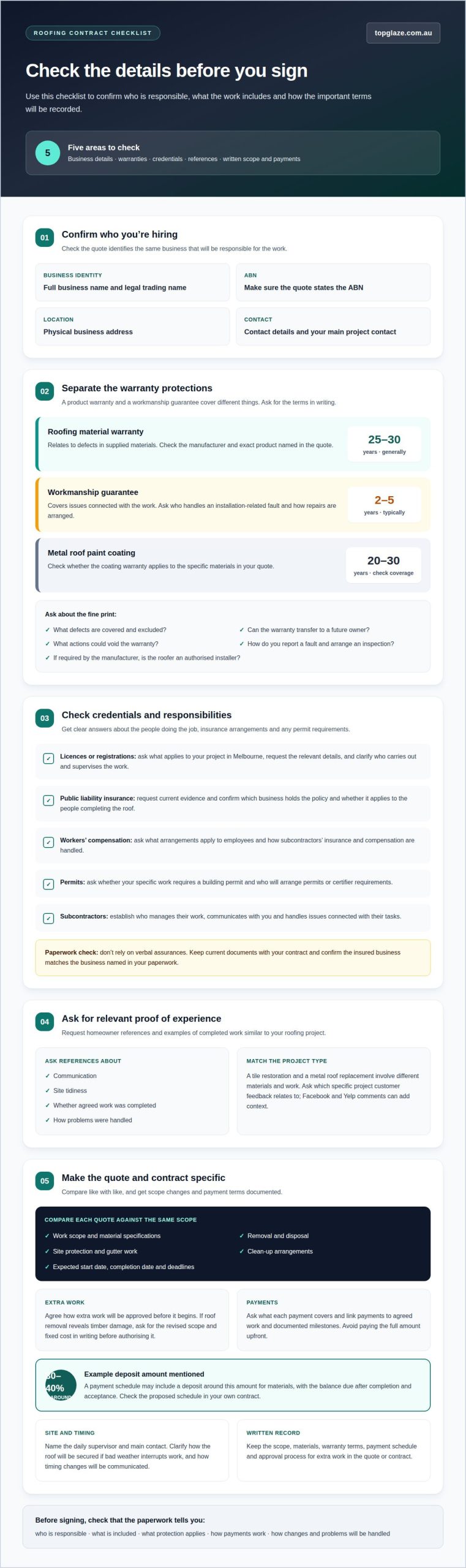
A polished quote isn’t the whole story. The questions to ask a roofer before signing a contract should establish who you’re hiring and exactly what you’re agreeing to. Ask for homeowner references and examples of similar past projects, clarify warranty terms and credentials, and make sure the written scope, materials, payment terms and process for approving extra work are clear. The quote should also show the roofer’s full business name, ABN, physical address and contact details.
It’s sensible to seek reassurance before work begins, especially when your roof protects your home from the weather. References can offer useful insight, but clear paperwork and consistent business details matter too.
This guide sets out the questions to ask about references, previous projects, warranties, credentials and business information. You’ll know what details to look for in the quote and contract, so you can make your decision with greater confidence.
Key Takeaways
- Separate product warranties from workmanship cover, and understand the terms, exclusions and repair process before you sign.
- Clarify insurance, workers’ compensation and who is responsible for any required permits.
- Ask for homeowner references and examples of similar roofing projects to help assess a roofer’s experience.
- Make sure the quote identifies the business clearly, including its legal trading name, ABN, physical address and contact details.
1. Do You Offer a Warranty for Your Roofing Work?
Before signing, ask about the product warranty and the roofer’s workmanship guarantee. They cover different things. A manufacturer’s warranty relates to defects in supplied roofing materials; a workmanship guarantee covers issues connected with the work. Among the questions to ask a roofer before signing a contract, include which protections apply to your project and whether the terms will be provided in writing. A product warranty alone doesn’t explain who will address a problem with the work.
For metal roofing, check whether the paint coating warranty covers at least 20–30 years. Roofing material manufacturer warranties generally last between 25 and 30 years, while a roofer’s workmanship warranty typically runs 2–5 years. These periods aren’t interchangeable. Ask which applies to the exact materials in your quote, and have the manufacturer and product identified in the contract. Don’t rely on a general promise of “long-term cover”.
Read the terms, not just the warranty duration. Ask what defects are covered, what exclusions apply, whether the warranty can transfer to a future owner, and what actions could void it. For workmanship, clarify how to report a fault, who arranges an inspection, and how repairs are handled. For example, the contract should explain whether a leak linked to installation falls under workmanship cover or goes to the manufacturer.
Ask whether the roofer is an authorised installer if the manufacturer requires this for its warranty. Keep the answer and warranty documents with your signed contract. Australian Consumer Law provides consumer guarantees, while cancellation and dispute-resolution options depend on the circumstances and agreement. Read the contract’s termination and complaint terms, and raise concerns in writing. Questions to ask a roofer before signing a contract should also cover the claim process, warranty exclusions and the written record you’ll need. Check that both warranty periods and their coverage appear in the quote. Homeowner references may describe past service, but they don’t replace written warranty terms.
2. Licensing, insurance, workers’ compensation and permits
Before signing, ask the roofing contractor what licences or registrations apply to your project in Melbourne. Request the relevant details and ask who will carry out and supervise the work. Use questions to ask a roofer before signing a contract to clarify which business is responsible for each part of the job. If subcontractors are involved, establish who manages their work and handles project communication.
Request evidence of public liability insurance and workers’ compensation arrangements where applicable. Liability insurance is intended to cover damage to your home or property during the work. Workers’ compensation arrangements relate to employees injured on the job. Ask which business holds each policy and whether the cover applies to the people completing your roof. If subcontractors will be on site, ask how their insurance and compensation arrangements are handled.
Don’t rely on a verbal assurance. Ask for current documentation and make sure the insured business matches the contracting business named in your paperwork. If a subcontractor is responsible for a specific task, clarify who handles any damage or injury connected with it. Keep the documents with your contract and project correspondence. These questions to ask a roofer before signing a contract can help establish who is accountable if an incident occurs.
Permits also need a clear answer in the quote. Ask whether your specific roofing work requires a building permit and, if so, who will arrange it. The quote should identify who handles permits or certifier requirements. Confirm the arrangements before accepting the schedule, so permit tasks don’t become an unexpected hold-up. Ask who secures the roof if bad weather interrupts work, and who will update you about changes to the expected timing. Clear responsibilities help you understand how the site and paperwork will be managed before work starts.
3. References and previous roofing projects
Ask for homeowner references and examples of completed projects similar to yours. A tile restoration and a metal roof replacement involve different materials and work, so relevant examples give you a clearer picture of the roofer’s experience. Ask references about communication, site tidiness, whether the agreed work was completed, and how the roofer handled problems. Customer feedback on Facebook and Yelp can add context, but ask what specific project the comments relate to.
Compare quotes by matching the scope, materials, removal and disposal, site protection, gutter work, clean-up and payment terms. A quote that seems unusually low may omit one of these items or describe materials less precisely. Ask the roofer to explain any difference in writing before you choose; the total alone won’t show whether two quotes cover the same work.
A written roofing contract should set out the work scope, material specifications and deadlines. The quote should also explain the expected start and completion dates, removal and clean-up arrangements, fixed payment terms, and how extra work will be approved before it begins. For example, if roof removal reveals timber damage, ask for the revised scope and fixed cost in writing before authorising the additional work.
Ask what payment schedule the contract proposes and what each payment covers. A typical schedule may include a deposit of around 30–40% for materials, with the balance due after completion and acceptance. Avoid paying the full amount upfront; link payments to the agreed work and documented milestones.
Before signing, establish who supervises the job each day and who your main contact will be. Ask how the roof will be secured if bad weather interrupts work, and how schedule changes will be communicated. The contract’s start date, expected duration and completion date give both parties a clear reference if delays happen. A named supervisor and contact process also make it easier to raise concerns while work is underway.
4. Checking a roofer’s full business name and physical address
A quote should identify the business legally responsible for your roofing work, not just display a trading name. Match the legal trading name, ABN, service area and contact details on the quote with the contract. If an advertised name differs from the legal name, ask which entity will sign the agreement, carry out the work and issue invoices. Different names can be legitimate, but the responsible business should be clear in your paperwork.
Ask for the business’s physical address and compare it with the details on the quote and contract. A PO Box alone should raise concerns because it doesn’t establish the business’s actual location. If the address differs between documents, ask for a written explanation before signing. This simple step can help distinguish an administrative mismatch from uncertainty about which business you’re dealing with.
Check that the ABN and business name appear consistently across the documents you receive. The quote, contract and invoice should make it clear who is responsible for the work and whom to contact about an inspection, a change or a concern. For example, if one name appears on the quote and another on the contract, ask for the relationship between them to be explained in writing.
Also clarify the service area and contact details for project communication. A phone number or email is useful only if the paperwork connects it to the contracting business. Keep the written response with your records. For roof replacement, make sure the business named in the contract is responsible for the agreed scope, rather than relying on a brand name discussed verbally.
Clear identity details make the agreement easier to follow if questions arise during the job. If you’re planning a roof replacement, discuss your roof replacement project with a roofing team before deciding on the contract.
Top Glaze Roofing Systems
Top Glaze Roofing Systems helps Melbourne homeowners with residential roofing projects. Its services include roof restoration, roof replacement, roof repairs, and guttering and fascia. The right option depends on the condition of your roof and the work required.
Use the questions in this guide to keep the conversation clear: discuss the proposed scope, materials, timing, business details and written terms before agreeing to work. If you’re weighing up whether to repair, restore or replace your roof, explain what you’ve noticed and what you need done. Clear project details help you understand the work being discussed.
For help with a residential roofing project, contact Top Glaze Roofing Systems.
Take the next step with confidence
Use the questions to ask a roofer before signing a contract as a starting point for a clear conversation about your home. Before agreeing to work, make sure you understand the proposed scope and feel comfortable with the written terms. A well-considered decision gives you a practical foundation for moving ahead, whether the work is planned now or you’re still weighing up your options.
Top Glaze Roofing Systems provides roof restoration, roof replacement and roof repairs for residential properties in Melbourne. If you’re considering one of these options, explain what you need done and discuss the work involved before making your decision. Request a free roof assessment and a fixed quote with no hidden fees to help turn uncertainty about your roof into a clear plan.
Contact Top Glaze Roofing Systems to discuss your roofing needs. You can move forward at your own pace, with a clearer sense of what comes next.
Frequently Asked Questions
Do You Have Homeowner References?
Ask the roofer for references from homeowners whose projects resemble yours. A tile repair reference may offer different insight from a full metal roof replacement. Ask how the finished work has held up, whether the site was left tidy, and how the roofer handled any follow-up concerns. These specific details can help you judge the working experience, not just the final appearance.
Do You Have Insurance?
Ask for evidence of public liability insurance and workers’ compensation arrangements where applicable. Check that the insured business name matches the business named in your contract. Also ask whether the cover applies to the work being carried out at your property. Keep the insurance details with your project paperwork, so you can refer to them if an incident or property damage occurs.
Do You Offer a Warranty for Your Roofing Work?
Yes. Top Glaze Roofing Systems provides a 10-year workmanship guarantee covering labour and materials on residential projects. For any roofing agreement, read the written terms to understand what the guarantee covers, its exclusions and how to raise a claim. Keep the guarantee with your contract and invoices, so the relevant documents are together if a repair issue arises later.
What Is Your Full Company Name and Physical Address?
Ask for the full legal business name and physical address, then make sure they appear consistently across your quote and contract. The documents should also identify the ABN and a clear contact method. If the trading name differs from the legal name, ask which entity is responsible for the agreement. This helps you know who to contact about invoices or project concerns.
What licences and insurance should a roofer have in Australia?
Ask what licences or registrations apply to the specific roofing work in Victoria, and request evidence of the relevant credentials. Also ask for public liability insurance and workers’ compensation arrangements where applicable. Requirements may depend on the work and who performs it, so have the roofer explain which credentials relate to your project. Keep copies with the contract for your records.
How do I check a roofer’s references, reviews and credentials?
Request homeowner references for comparable projects, then ask about communication, workmanship and how any issues were handled. Read customer feedback for specific descriptions of completed work rather than relying only on star ratings. Compare the business name and ABN shown on the quote with its contract and insurance documents. Consistent details and useful project examples give you a clearer basis for assessment.


