

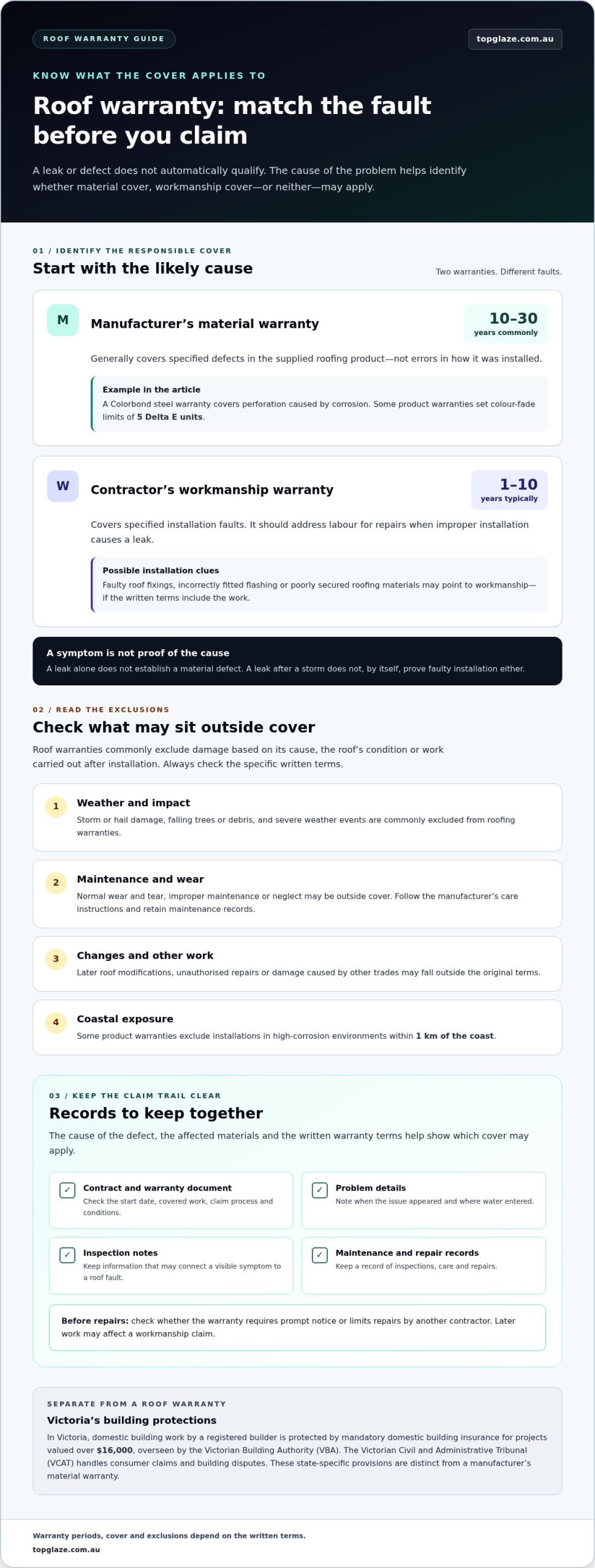
A roof warranty covers specific faults, not every problem that can affect a roof. A manufacturer’s warranty generally covers defective roofing materials, while a contractor’s workmanship warranty covers installation errors. Manufacturer warranties commonly last 10-30 years, and contractor workmanship warranties typically range from 1 to 10 years. Understanding what a roofing warranty covers starts with knowing which warranty applies to the issue.
It’s easy to assume a long warranty protects against every leak or roof defect, but the terms and exclusions matter as much as the stated period. This guide explains what roofing warranties commonly cover, how manufacturer and contractor cover differ, and how maintenance and claim requirements can affect protection.
You’ll also learn how transferability and extended roof-system warranties work, so you can understand the cover attached to a roof and what it may mean for your home.
Key Takeaways
- Match the problem to the right cover: material defects generally belong under the manufacturer’s warranty, while installation faults relate to the contractor’s workmanship warranty.
- Read the exclusions carefully. Weather damage, poor maintenance and later roof modifications can affect whether a claim is covered.
- Before relying on a warranty after selling your home, check its transfer conditions and any required notification or registration steps.
- Extended system cover may include both labour and materials, but can depend on approved installation and specified products.
- Keep warranty documents and maintenance records together so you can identify the relevant cover if a roof problem arises.
What Is a Manufacturer’s Roof Warranty?
A manufacturer’s roof warranty covers specified faults in roofing materials, subject to its written terms. These warranties commonly last 10-30 years, but the coverage period doesn’t mean every roof problem qualifies.
Manufacturer Material Coverage
A manufacturer’s material warranty applies to defects in the supplied roofing product, rather than errors made during installation. For example, a Colorbond steel warranty covers perforation caused by corrosion, while some product warranties set colour-fade limits of 5 Delta E units. Check which materials and defects the document names. Manufacturer warranties often exclude poor installation, storm damage, poor ventilation and improper maintenance, so a leak alone doesn’t establish a material defect.
Common Roof Warranty Exclusions
Australian roof warranties commonly exclude storm or hail damage, falling trees or debris, severe weather events, normal wear and tear, and damage caused by later modifications. What is excluded from an Australian roof warranty? Usually, damage linked to extreme weather, poor maintenance, unauthorised repairs or other trades is outside the stated cover. Coastal exposure can also matter: some product warranties exclude installations in high-corrosion environments within 1 km of the coast. These exclusions matter because the cause of damage helps identify which warranty, if any, applies.
Installation faults generally sit under a contractor’s workmanship warranty, not the manufacturer’s material cover. Workmanship warranties typically range from 1 to 10 years and should address labour for repairs when improper installation causes a leak. For example, a faulty fixing may point to installation, while premature corrosion perforation may indicate a product defect. A manufacturer warranty often excludes the first problem, so Melbourne homeowners need to distinguish the fault before making a claim.
Maintenance can affect both types of cover. Follow the manufacturer’s care instructions and keep records of inspections and repairs, as neglect may void a warranty. Damage caused by another trade or a roof alteration after installation may also fall outside the original terms. If a repair is needed, the cause of the defect and who completed the work help determine which warranty applies.
Separate state regulations and consumer protection bodies have different purposes from manufacturer warranties. In Victoria, domestic building work by a registered builder is protected by mandatory domestic building insurance for projects valued over $16,000, overseen by the Victorian Building Authority (VBA). Additionally, the Victorian Civil and Administrative Tribunal (VCAT) handles consumer claims and building disputes. These statutory provisions concern state-specific consumer matters and builder obligations, rather than automatic extensions to a manufacturer’s material cover provided by companies like Top Glaze Roofing Systems.
Contractor workmanship warranties
A contractor’s workmanship warranty covers labour to correct installation defects, such as a leak caused by faulty roof fixing. A roof warranty may cover defective materials or workmanship, but the responsible party depends on the fault and the written terms. Storm damage is generally excluded from workmanship cover.
Workmanship Warranty Duration
A workmanship warranty sets the period during which a contractor is responsible for specified installation faults. Contractor workmanship warranties typically range from 1 to 10 years, so the stated term matters when a defect appears. A longer period doesn’t automatically mean broader cover. Read the warranty for its start date, covered work, claim process and any conditions that apply throughout the term. Examples from experienced family-run trades such as mikeandmikeroofing.com show how dedicated contractors outline their scope of work and installation guarantees to ensure homeowners understand their protection.
Installation Error Coverage
Installation-error coverage applies when faulty workmanship causes a roof defect. For example, incorrectly fitted flashing or poorly secured roofing materials can let water enter, even when the products themselves are sound. A workmanship warranty should cover labour costs for repairs when improper installation causes a leak. The written terms define which parts of the installation are included and how remedial work is handled.
Materials and workmanship are separate responsibilities unless a written warranty combines them. A contractor’s workmanship warranty relates to installation, while a manufacturer’s warranty relates to defects in roofing materials. If a roof leaks, identifying the cause helps distinguish product failure from installation error. That directs the claim to the relevant warranty and avoids relying on cover for a different type of fault.
Leaks, Storm Damage and Faulty Installation
A leak may fall under workmanship cover if an installation error caused it, while storm damage is generally treated differently. Hail, falling debris and severe weather are commonly excluded from roofing product and workmanship warranties. A leak after a storm, for example, doesn’t by itself prove faulty installation. The cause of the damage, the affected materials and the warranty wording determine which cover may apply.
Start by noting when the problem appeared and where water entered. Keep the contract, warranty document, inspection notes and repair records together. This information can help connect a visible symptom, such as a damp ceiling, with a possible roof fault. Check whether the warranty requires prompt notice or limits repairs by another contractor, as later work may affect a workmanship claim.
If a leak points to installation trouble, roof repair options can be a practical next step for addressing the roof issue.
Quality roofing contractors typically provide 3-year labour warranties covering installation defects. A contractor’s workmanship warranty may last from 2 to 10 years; some offer up to 25 years, while reputable contractors offer 12-month leak warranties. Established industry specialists such as Rescue Roofing Tulsa emphasise how clear workmanship guarantees and transparent terms protect property owners over the life of a roof.
Difference between manufacturer and contractor warranties
A manufacturer’s warranty relates to roofing materials; a contractor’s warranty relates to installation workmanship. Knowing what a roofing warranty covers helps you direct a fault to the right party.
What rights apply to roofing warranties under Australian Consumer Law? Consumer guarantees can apply separately from a written warranty, so the document may not describe every right available to a homeowner. The issue and circumstances determine which protections may apply.
Manufacturer Coverage for Material Defects
A manufacturer warranty covers specified defects in supplied roofing materials, rather than errors in fitting them. For example, premature product failure may fall within the manufacturer’s terms. Roofing material warranties commonly range from 20 to 50 years. The duration alone doesn’t establish cover; the defect, product and exclusions also matter when assessing what a roofing warranty covers.
A contractor warranty addresses installation quality, while the manufacturer’s warranty addresses the product. Workmanship warranties typically run from 1 to 10 years, while material cover may last longer. If a roof leaks, the likely cause helps distinguish the two: a defective tile points towards material cover, while incorrectly fitted flashing points towards workmanship. One issue can involve both product and installation faults.
Maintaining Manufacturer Warranty Validity
To keep a manufacturer’s warranty valid, follow its care, registration and maintenance conditions. Roofing material warranties may require registration after installation, and annual maintenance is a common condition. Keep registration records, inspection notes and invoices together. Poor maintenance, later modifications or damage caused by another trade can affect a claim, even while the stated warranty period remains current.
What should an Australian roofing warranty document include? Check for the products or work covered, the coverage period, exclusions, maintenance duties, registration requirements and claim process. These details help distinguish the manufacturer’s material cover from the contractor’s workmanship cover, rather than relying only on the stated duration.
For a roofing project, keep the contract, product details and warranty documents together. Photograph visible damage and note when it appeared. For a suspected material defect, contact the manufacturer’s warranty department; for an installation issue, contact the original contractor first. Many warranties require notification within 30-90 days after discovering a problem, so follow the document’s claim process promptly.
How do you make a roofing warranty claim in Australia? Identify whether the fault appears to involve materials or installation, then notify the relevant manufacturer or original contractor using the process in the warranty. Provide the warranty document, installation records, photographs and a clear description of the defect.
Warranty transferability
A transferable roof warranty may continue after a home changes ownership, subject to its terms. Some extended roofing system warranties allow transfer when a property is sold.
Transferability matters because a buyer inherits the roof’s condition, not automatically every benefit linked to its installation. The warranty wording determines whether cover passes to a new owner, which parts remain covered and what steps the seller must take. A manufacturer’s material warranty and a contractor’s workmanship warranty may have different conditions, so review them separately.
Registration and Transferability
Registration records the roofing product and installation against an owner or property, while transferability determines whether another owner can use the warranty. Roofing material warranties may require registration after installation, but registration alone doesn’t mean the cover transfers. Check the document for transfer instructions, deadlines, required evidence and any limits on transfers. Keep the registration confirmation with the original warranty.
Before settlement, the seller can gather the warranty documents, installation records and available maintenance history for the buyer. The buyer can then identify the manufacturer, product, warranty start date and any transfer steps in the terms. If the roof has been replaced or substantially repaired, keep records showing which sections were affected. This helps distinguish covered work from older materials.
Transferable Non-Prorated Warranties
A transferable, non-prorated warranty permits a change of owner without reducing the stated coverage according to elapsed time. Transferability concerns who can use the cover; non-proration concerns how the benefit is calculated. The terms still define eligible defects, exclusions and remaining duration. For buyers, these details clarify whether the warranty offers useful protection or a narrower benefit.
Don’t assume “transferable” means every repair cost or roof component remains covered. A warranty may apply only to specified materials or require notice and supporting documents after a sale. Compare the products named in the warranty with the roof actually installed, especially if a previous owner arranged a replacement in stages. A mismatch between the warranty record and the roof can complicate a claim.
Sellers can keep the original contract, registration confirmation and invoices together to create a clearer record for the next owner. Buyers can use those documents to understand the warranty’s scope before relying on it. Note whether it covers materials, workmanship or both, and whether the stated period continues after transfer. These distinctions matter because an extended system warranty may combine labour and materials, while other cover addresses only one.
A roof warranty doesn’t replace a clear record of the roof’s condition at sale. Keep inspection notes and photographs with the warranty paperwork, then record any later repair or modification. These details help show what work was completed and when. If the roof has been replaced, keep the new warranty separate from documents for the previous roof, so each record matches the relevant installation.
Extended or system warranties
Extended roof warranties can add cover beyond a standard material or workmanship warranty. In Australia, roofing material warranties commonly range from 20 to 50 years, while contractor workmanship warranties typically range from 1 to 10 years; the written terms define the actual cover.
Extended Warranty Coverage
An extended system warranty may cover both roofing materials and labour for a longer period. This matters because a product failure may require replacement materials and skilled repair work. The warranty terms explain which costs and components are included and which exclusions still apply.
Some extended warranties require installation by an approved contractor and use of specified products. A system warranty, for example, may depend on using the manufacturer’s nominated components. Later use of different materials or changes to the roof may affect cover. Read these conditions alongside the base warranty, not as a standalone promise.
Extended cover doesn’t automatically include every cause of damage. Storm impact, poor maintenance and improper modifications may remain excluded, even under a system warranty. Check whether the policy covers defects only or also labour to remove and replace affected materials. This distinction helps clarify whether a claim could cover the product failure alone or the work needed to repair it.
Warranty Duration
Warranty duration is the period during which the stated cover applies, not a guarantee that every repair will be paid. Roofing material warranties commonly last 20 to 50 years, while workmanship warranties typically run from 1 to 10 years. The terms may set different periods for separate materials, labour or particular defects.
Some extended roofing system warranties provide enhanced cover for labour and materials over a longer period. Compare their end dates with the original product and workmanship terms. Material cover may continue after labour cover ends, leaving different protections in place at different stages. Record each period, including when cover begins and any registration conditions.
Before relying on extended cover, check the policy’s scope, exclusions, approved-installer conditions and claim process. Keep the warranty, installation records and maintenance documents together. If a roof failure requires repairs, these records can help show which materials were installed and whether the system’s conditions were followed. A premium label alone doesn’t explain what the policy covers.
If roof damage needs attention, arrange roof repairs to address the issue and protect the home.
Top Glaze Roofing Systems: Roof Restoration
Top Glaze Roofing Systems helps Melbourne homeowners address roof wear with roof restoration, repairs or replacement. If you’re weighing a warranty claim against visible deterioration, identifying the roof’s condition and likely cause can clarify the next step. A warranty may address a covered defect, while restoration can improve an ageing roof; replacement may suit a roof that needs more extensive work.
For leaks or damaged roofing, roof repairs can address specific problems. Guttering and fascia work can also support effective water management around the home. The right option depends on the issue affecting your roof, not simply the warranty period.
For guidance on your roof, contact Top Glaze Roofing Systems to discuss the work it may need.
Make your next roof decision with clarity
Knowing what a roofing warranty covers helps you distinguish a claim issue from a roof condition that needs attention. Keep the warranty and repair records accessible, and note any new signs of damage. This gives you a clear starting point when deciding whether to pursue a claim or arrange roofing work.
A warranty document can guide your next step, but it won’t repair a leak or restore worn roofing. If your roof needs practical attention, Top Glaze Roofing Systems provides restoration, replacement and repair services across Melbourne. The right work depends on the roof’s condition and the problem you’re addressing.
For a calm, informed discussion about your roof, contact Top Glaze Roofing Systems. You can move forward with a clearer understanding of the work your home needs.
Frequently Asked Questions
Why Are Roofing Warranties so Important?
Roofing warranties set out responsibility for particular defects and the remedies that may apply. This helps homeowners distinguish a product fault from an installation problem and direct the issue to the manufacturer or original contractor. If roofing materials fail prematurely while the installation remains sound, for example, the material warranty is relevant. Keep warranty documents accessible so you can describe the problem and provide useful records.
Are roofing warranties transferable when a house is sold in Australia?
Some roof warranties can transfer when a home is sold, but transfer isn’t automatic for every policy. Extended roofing system warranties may allow a new owner to continue cover under specific conditions. Before settlement, the seller can pass on the original warranty, product or installation details, registration record and maintenance documents. The buyer should check whether formal notice or transfer paperwork is required and which parts of the cover remain in force.
What maintenance is required to keep a roof warranty valid in Australia?
Follow the manufacturer’s care instructions and complete any maintenance required by the warranty. Annual maintenance is a common condition, and some manufacturers require product registration after installation. Keep the warranty, registration confirmation, dated inspection notes and repair invoices together. Records of inspections and completed work, for example, can help show how the roof was maintained. Missed maintenance or undocumented work may complicate a later claim.
Can roof repairs or solar panel installation void a roofing warranty?
Roof repairs or solar panel installation don’t automatically cancel every roof warranty, but changes to roofing materials or damage during the work can affect cover. Panel installation, for example, may involve roof penetrations, while a repair by another trade could alter the original installation. Keep invoices, photographs and work details. The warranty conditions, manufacturer guidance and whether the original contractor completed the work can all matter if a claim arises.
How do manufacturer and roofing contractor warranties differ?
A manufacturer’s warranty concerns defects in roofing materials; a roofing contractor’s warranty concerns installation workmanship. If a tile fails because of a product defect, the manufacturer is the relevant contact. If incorrectly fitted flashing causes a leak, the original contractor is the practical first contact. Some extended system warranties combine labour and materials, so read the policy to understand whether it covers both product defects and installation work.


