

A professional roof restoration is a structural overhaul that happens to look like a cosmetic refresh. Many Melbourne homeowners feel a sense of dread when they notice a leak or faded tiles, fearing they will be stuck with “cowboy” contractors who offer little more than a “spray and pray” paint job. It is perfectly natural to worry about the potential mess, the disruption to your daily life, or the confusing technical jargon like “re-pointing” and “bedding” that often gets thrown around without much explanation.
We believe you deserve total transparency and the peace of mind that comes from knowing your home is in expert hands. In this guide, we will demystify the roof restoration process step by step, showing you how a seasoned professional ensures your roof stays watertight and looks brand new for years to come. You will discover the value of a methodical approach, from the initial safety inspections required by the latest 2026 standards to the final application of high-quality coatings. We will walk you through every stage of the journey, giving you the confidence that your investment is backed by a long-term warranty and local expertise.
Key Takeaways
- Understand the difference between a cosmetic refresh and a full restoration to determine if your original tiles can be saved rather than replaced.
- Discover the comprehensive roof restoration process step by step, ensuring every valley, flashing, and tile is inspected for maximum durability.
- Learn how professional re-bedding and re-pointing techniques secure your ridge caps and prevent future leaks in Melbourne’s variable weather.
- Explore the multi-stage coating and sterilisation methods that stop moss and lichen from returning to your roof’s surface.
- Gain confidence in the final handover process, including a thorough site clean-up and the security of a 10-year warranty on licensed workmanship.
What is a Roof Restoration and Why Does Your Melbourne Home Need One?
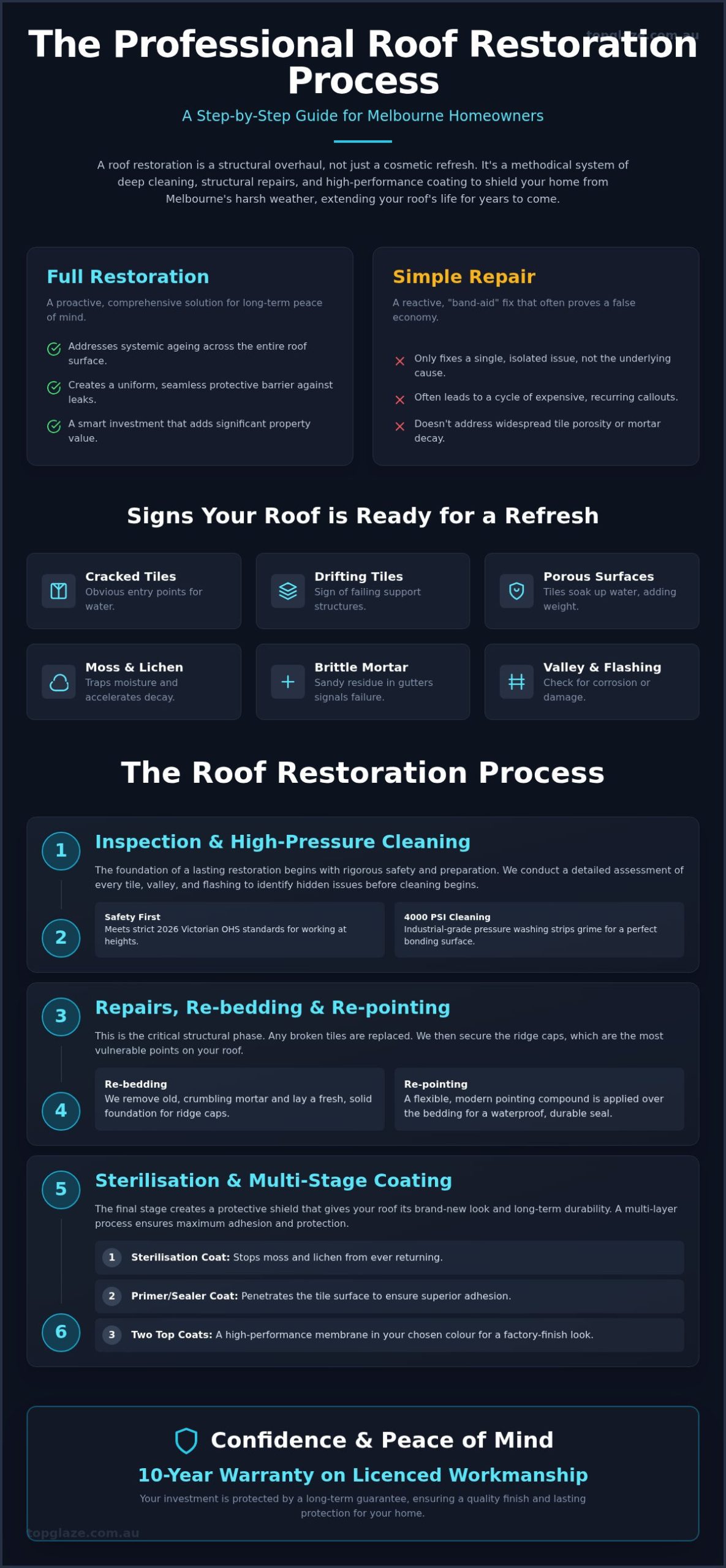
A roof restoration is a methodical, multi-stage overhaul designed to extend the life of your existing tiles. It isn’t just a cosmetic “makeover” or a simple lick of paint. Instead, it’s a comprehensive system of deep cleaning, structural repairs, and the application of a high-performance roof coating. This protective membrane acts as a shield against the elements, giving your home a fresh, factory-finish look without the massive expense of a full roof replacement.
Melbourne homes face a unique set of environmental challenges. Our “four seasons in one day” weather creates extreme thermal expansion. One afternoon your roof is baked by harsh UV rays, and the next, it’s hammered by a wild Victorian storm. Over 20 or 30 years, this cycle causes concrete tiles to become porous and terracotta glaze to wear thin. Following a professional roof restoration process step by step ensures these issues are caught before they turn into internal ceiling damage. It’s a smart investment that adds significant street appeal and property value for a fraction of the cost of new tiles.
Signs Your Roof is Ready for a Professional Refresh
You might notice tiles that look “drifting” or out of alignment, which is often a sign that the underlying support is failing. Cracked tiles are obvious culprits for leaks, but porous surfaces are a hidden danger. When tiles lose their finish, they soak up water like a sponge, adding immense weight to your roof structure. Moss and lichen growth are more than just an eyesore; they trap moisture against the tile, speeding up the decay of your bedding and pointing. If you see “weeping” on the underside of your terracotta tiles or brittle, sandy mortar falling into your gutters, your roof is crying out for an expert assessment.
Restoration vs. Simple Repair: Knowing the Difference
A simple repair is often a “band-aid” fix for a single leak. While this might stop a drip today, it doesn’t address the systemic ageing of the entire roof. Patchwork repairs on an old roof are often a false economy. You might fix one leak this month, only for another to appear a metre away after the next storm. A full restoration provides a uniform, seamless barrier across the entire surface. By following the roof restoration process step by step, we ensure every ridge cap is secure and every tile is sealed. This gives you long-term peace of mind rather than a series of expensive, temporary fixes.
Step 1 & 2: Professional Inspection and High-Pressure Cleaning
Every successful project starts with a firm foundation. In the roof restoration process step by step, these first two phases determine the longevity of the final result. We don’t just jump on the roof with a hose; we begin with a meticulous setup and a deep-dive assessment. Safety is our absolute priority. Since the 2026 updates to the Working at Heights regulations, we ensure all temporary edge protection and harness points meet the strictest Victorian OHS standards. This protects our crew and gives you the peace of mind that the job is being handled by a compliant, professional team.
The Inspection: Finding the Hidden Problems
A surface-level glance isn’t enough to guarantee a watertight home. We conduct a detailed assessment of every tile, valley, and flashing. Following Roofing maintenance best practices, we check the integrity of valley irons and lead flashings, which are often the first points of failure in an ageing roof. We also inspect the eaves and fascia for subtle signs of water damage that could indicate a slow leak. During this phase, we identify any tiles that are too porous or damaged to be salvaged. If you’re unsure about the current state of your roof, our experts can provide a comprehensive roof inspection to give you a clear picture of what’s required.
The Cleaning Process: More Than Just Water
Once the roof is safe and the inspection is complete, we move to high-pressure cleaning. We use industrial-grade 4000 PSI cleaners to strip away decades of Melbourne grime, pollutants, and stubborn moss. This isn’t a quick rinse. We focus on reaching a “bare tile” finish, which is essential for the restorative coatings to bond correctly. A critical part of this stage is cleaning the “nose” of the tile, the front edge that overlaps the tile below. If this area is ignored, the new membrane won’t seal properly, leading to potential failure in years to come.
Environmental protection is built into our workflow. We block your downpipes and use specialised silt bags to ensure that all waste, old mortar, and sludge are captured. This prevents debris from entering the stormwater system or clogging your drains. After the wash is finished, we perform a thorough clear-out of the gutters and downpipes, leaving your property cleaner than we found it. This methodical approach ensures the roof restoration process step by step moves into the repair phase with a perfectly prepared surface.
Step 3 & 4: Structural Repairs, Re-bedding, and Re-pointing
With the surface now stripped of decades of debris, we move into the most technically demanding phase of the roof restoration process step by step. This stage is about structural integrity. We begin by replacing every damaged or cracked tile identified during our initial inspection. We take great care to match the exact profile and colour of your existing tiles, whether you have traditional terracotta or modern concrete, so the final finish looks uniform and purposeful. This is the point where we address the “bones” of the roof before any aesthetic coatings are applied.
Bedding vs. Pointing: The Backbone of Your Roof
Many homeowners are confused by these terms, but they serve very different roles. Bedding is the heavy structural mortar that physically holds your ridge caps to the roof tiles. Over time, this mortar becomes brittle and detaches from the tile surface. We remove this old, failed bedding and lay a fresh cement bed to re-seat every ridge cap. This ensures the caps are level and securely bonded to the roof structure.
Pointing is the flexible outer layer that seals the edge of the ridge cap. In the past, trades used simple cement for this, but it invariably cracks during Melbourne’s rapid temperature shifts. We use modern, polymer-based flexible pointing. This material is a “must” for Victorian homes because it’s designed to expand and contract as your house moves. It prevents the hairline fractures that allow water to seep behind the bedding, providing a long-lasting, watertight seal that stands up to our “four seasons in one day” climate.
Valley Irons and Flashing Repairs
The valley irons are the internal “gutters” where two roof planes meet. Because they carry the highest volume of water during a downpour, they are the most common source of major roof leaks. If your valleys are rusted, pitted, or holding silt, we swap them out for high-quality Colorbond or zinc alternatives. These materials offer superior corrosion resistance and better water flow than older galvanised steel versions.
We also focus on lead flashings around chimneys, skylights, and wall joins. These transition points are vital for keeping the interior of your home dry. We ensure all lead work is secure and that weep holes are clear and unobstructed. This allows water to exit the roof system naturally rather than backing up under your tiles during heavy rain. By the end of this phase, your roof is no longer just a collection of tiles; it is a secure, reinforced system ready for its final protective layers.
Step 5 & 6: The Multi-Stage Coating and Sterilisation Process
Once the structural repairs are complete, we move into the protective phase of the roof restoration process step by step. This is where we transform the appearance of your home while building a multi-layered shield against the elements. We begin with a critical step that many budget contractors overlook: anti-fungal sterilisation. Even after high-pressure cleaning, microscopic moss and lichen spores can remain deep within the pores of concrete and terracotta tiles. We apply a specialised sterilising solution to neutralise these spores, ensuring that unsightly growth doesn’t return to ruin your new finish in a few months.
After sterilisation, we apply a high-quality primer or sealer coat. This acts as a bonding agent between the raw tile and the final protective membrane. Because older tiles are often highly porous, they tend to “suck” the moisture out of standard paint, leading to peeling and flaking. Our sealer penetrates the surface to create a stable, uniform base. This is followed by two thick coats of a premium roof membrane. This isn’t just “paint”; it is a high-build coating specifically engineered for the harsh Australian climate, providing a seamless barrier that remains flexible for years. To ensure a truly professional finish, we hand-paint all edges, gables, and flashings where a spray gun might cause overspray or uneven coverage.
Why We Use a Membrane, Not Just “Paint”
The primary difference between a standard paint and a professional membrane is elasticity. Melbourne homes experience significant thermal movement, and a thin layer of paint will simply crack as the roof expands and contracts. A high-build membrane is designed to stretch, maintaining its integrity even under intense UV exposure. For homeowners looking to maximise their investment, we often recommend heat-reflective coatings. These specialised membranes can significantly lower the surface temperature of your roof, reducing the heat transfer into your living spaces and lowering your summer energy bills. Whether you need a modern charcoal finish or a custom colour match for a heritage property, we ensure the product matches the character of your home.
The Curing Process and Weather Timing
Managing the roof restoration process step by step in Melbourne requires a keen eye on the weather forecast. We never rush the coating phase. Each layer requires specific “dry time” to cure properly and form a permanent bond. If the Bureau of Meteorology predicts rain, we pause the process to protect the integrity of the work. Applying a membrane to a damp surface or allowing rain to hit a fresh coat can cause the product to fail. We coordinate our schedule to ensure your roof is coated during a clear weather window, providing the best possible result. If you are ready to see how a professional coating can transform your property, you can request a detailed quote from our experienced team today.
Finalisation: Site Clean-up and Your 10-Year Warranty
The final stage of the roof restoration process step by step is where our commitment to excellence becomes visible. We don’t simply pack up our gear and drive away once the last coat is dry. Instead, we conduct a meticulous final walkthrough to ensure every ridge cap is perfectly aligned, every tile is correctly seated, and every gutter is free from debris. This methodical approach is the hallmark of a seasoned professional. It provides the peace of mind that your home is fully protected and looks its absolute best.
A comprehensive site clean is a non-negotiable part of our service. We understand the anxiety many Melbourne homeowners feel about the mess often left behind by “cowboy” contractors. We remove all old mortar, broken tiles, and construction waste from your property. Our goal is to leave your garden and driveway in pristine condition, ensuring the only sign of our presence is a stunning, rejuvenated roof that enhances your home’s street appeal.
What to Expect in Your Completion Pack
Once the physical work is finished, we provide you with a comprehensive completion pack. This isn’t just a set of receipts; it is a vital document for your home’s maintenance history. It includes your licensed workmanship certificate and the formal documentation for your 10-year warranty. We also provide a summary of the structural repairs performed, detailing specific ridge caps that were re-bedded or valleys that were replaced. This transparency ensures you understand exactly where your investment has gone and the level of protection your home now enjoys.
Maintaining Your Restored Roof
While your new membrane is designed for longevity, simple post-restoration care will help it look brand new for the next decade. Annual gutter cleaning is the most effective way to prevent water back-flow, which can damage your eaves and fascia over time. We also strongly advise that you never use a high-pressure cleaner on your restored roof yourself. The industrial-grade coatings we apply are designed to shed dirt naturally. A DIY pressure wash can unnecessarily abrade the protective surface and may void your warranty.
By following the roof restoration process step by step, we ensure every detail is handled with the care of a local expert who values reputation over quick wins. If you are ready for a professional assessment, book your free Top Glaze roof inspection today.
Secure Your Melbourne Home for the Future
A professional roof restoration is the most effective way to protect your property from the unpredictable Victorian climate while adding significant street appeal. By understanding the roof restoration process step by step, you can move forward with the confidence that every tile, ridge, and valley is structurally sound. We’ve seen how a methodical approach, from safety-first inspections to high-build membrane coatings, ensures your home remains watertight for another decade or more.
As a family-owned and operated local business with over 30 years of Melbourne roofing experience, we take pride in delivering results that stand the test of time. Our licensed workmanship is backed by a 10-year warranty on residential restorations, providing you with the peace of mind you deserve. Don’t wait for the next storm to reveal a hidden leak. Get your free, no-obligation roof restoration quote from Top Glaze today. We look forward to helping you restore the pride and protection your home deserves.
Common Questions About the Melbourne Roof Restoration Process
How long does a roof restoration take on a standard Melbourne home?
A standard roof restoration usually takes between 3 to 5 days to complete, depending on the size of your roof and the weather. We coordinate the roof restoration process step by step to ensure minimal disruption to your daily life. While the cleaning and structural repairs happen quickly, we allow proper curing time for the coatings. This methodical approach ensures a high-quality, professional finish that stands the test of time.
Can you restore a terracotta tile roof that has turned black?
We can successfully restore blackened terracotta tiles to their former glory. That dark discolouration is usually a heavy build-up of lichen and moss that has embedded itself into the porous surface over many decades. Our high-pressure cleaning and anti-fungal treatment strip away this organic growth. We then apply specialised sealers designed for terracotta to protect the tiles and prevent the black mould from returning, giving your roof a fresh appearance.
Will a roof restoration stop all my leaks?
A full restoration is designed to identify and fix all existing leaks. During the inspection phase, we locate cracked tiles, rusted valleys, and failed flashings that cause water ingress. By replacing these components and applying a seamless protective membrane, we create a watertight barrier for your home. It’s a comprehensive solution that addresses the root causes of leaks rather than just patching a single spot on your roof surface.
What is the difference between re-bedding and re-pointing?
Re-bedding involves removing the old, brittle mortar and laying a fresh cement base to hold your ridge caps in place. Re-pointing is the application of a flexible polymer over the top of that bedding to seal the join. While bedding provides the structural foundation, the pointing allows for the natural movement of your house. We use flexible pointing to ensure the ridge caps don’t crack during Melbourne’s rapid temperature shifts.
Is it better to restore or replace my roof?
Restoration is usually the better option if your tiles are structurally sound but look worn or have minor leaks. It’s a cost-effective way to extend your roof’s life by 10 to 15 years. However, if the majority of your tiles are crumbling or the timber battening underneath has significant rot, a full replacement might be necessary. We provide an honest assessment to help you choose the most valuable path for your property.
Do I need to be home while the roof restoration process is happening?
You don’t need to be home while we work on your roof. All the work is performed externally, so we don’t require access to the inside of your property. We only ask that you keep your driveway clear and ensure pets are kept safely indoors during the high-pressure cleaning and coating phases. We’ll keep you updated on our progress throughout the roof restoration process step by step.
What happens if it rains during the restoration?
We monitor the Melbourne weather forecast closely and pause work if rain is imminent. If it rains during the repair phase, your home remains protected as we only remove what we can replace immediately. If rain occurs during the coating stage, we stop and wait for the roof to dry completely before continuing. This ensures the membrane bonds perfectly to the tile and maintains the integrity of your long-term warranty.
How much does a roof restoration cost compared to a replacement?
A roof restoration is significantly more affordable, typically costing between 25% and 35% of the price of a full roof replacement. It provides a similar visual result and a high level of protection without the massive expense of new materials and heavy labour. This makes it an excellent value-for-money choice for Melbourne homeowners who want to improve their property’s street appeal and durability on a sensible budget.


