

A roof restoration in Berwick usually takes 2-4 days, depending on the roof’s size and the weather. The cost depends on the roof’s condition, size and repair needs, with a price provided after a quote request. A clear assessment helps you understand what work is involved before the restoration begins.
It’s reasonable to want a clear idea of the time, cost and disruption before committing to roof work. This guide explains what affects the price and timeframe, how repairs and ridge capping are handled, and why thorough surface preparation matters. You’ll also learn what to expect during roof restoration in Berwick, so you can make an informed decision about protecting your home.
Key Takeaways
- Learn why dry conditions matter during surface preparation and how repairs address deterioration before the roof is coated.
- Recognise the difference between repointing ridge caps and rebedding them, and the signs that may indicate attention is needed.
- Understand when restoring a roof may be suitable and when the condition of the roof may call for replacement instead.
- See how roof size, condition and the extent of repairs shape a restoration quote, including for roofs needing more substantial work.
Roof restoration repairs and surface preparation
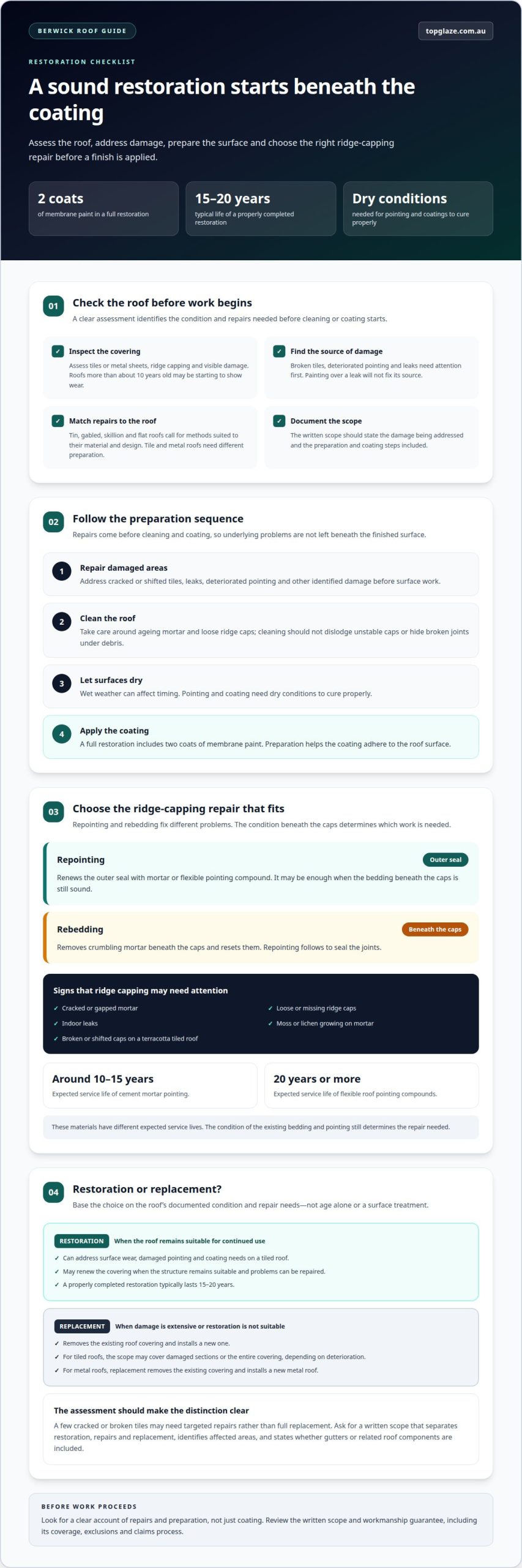
A roof restoration in Berwick starts with an assessment of the roof surface, tiles or metal sheets, ridge capping and visible damage. Roofs more than about 10 years old may be starting to show wear. Broken tiles, deteriorated pointing and leaks need attention before cleaning and coating, or underlying problems can remain beneath the finished surface.
Preparation follows a clear sequence: repair damaged areas, clean the roof, then allow surfaces to dry before applying coatings. Pointing and coating need dry conditions to cure properly, so wet weather can affect timing. A full restoration includes two coats of membrane paint. This staged process helps the coating adhere to a prepared surface and supports a lasting finish.
Roof repairs address specific problems, either on their own or as part of restoration. A cracked tile, for example, can let rain in, while storms may shift tiles or loosen ridge caps. On a metal roof, leak detection involves tracing where water enters and inspecting affected sheets and joins. Repairing the source is essential: painting over a leak won’t fix it.
Berwick homes have a range of roof styles, including tin, gabled, skillion and flat roofs, so repair methods depend on the material and design. Tile and metal roofs need different preparation. An assessment identifies the repairs needed before work begins. For roof restoration in Berwick, the written scope should specify the damage being addressed and the preparation and coating steps included.
When choosing a roof restorer in Victoria, consider relevant roofing experience, applicable licence details and evidence of insurance. As seen with established trade and repair services like localfishinghandyman.com, hiring fully licensed and insured professionals helps protect your property across any maintenance or repair project. Before work starts, review the written scope and workmanship guarantee, including its coverage, exclusions and claims process. If the roof has leaks, broken tiles or storm damage, look for a clear account of repairs and preparation, not just a description of coating.
Rebedding and repointing ridge capping
Ridge caps meet along the roof’s peaks, where mortar helps secure them and seal the joins. Two related repairs address different problems. Repointing renews the outer seal with mortar or flexible pointing compound. Rebedding removes crumbling mortar beneath the caps and resets them before fresh pointing is applied.
A roof inspection can identify worn pointing before water enters the roof space. Warning signs include cracked or gapped mortar, loose or missing ridge caps, indoor leaks, and moss or lichen growing on the mortar. On a terracotta tiled roof, a broken or shifted cap also needs attention because the ridge may no longer be secure.
Melbourne weather exposes ridge capping to changing conditions over time. Cement mortar pointing can last around 10-15 years, while flexible roof pointing compounds can last 20 years or more. These are different materials with different expected service lives; the condition of the existing bedding and pointing still determines the repair needed.
A roofer assesses whether the mortar beneath each affected cap is still sound. If it has crumbled, rebedding comes first, followed by repointing to seal the joints. Where the bedding is sound but the outer seal has deteriorated, repointing may be enough. This distinction helps prevent a deeper mortar failure being treated as a surface-only issue.
Pressure cleaning requires care around ageing mortar and loose caps. Cleaning should not dislodge unstable ridge capping or leave debris hiding broken joints. Weather matters too: pointing needs dry conditions to cure, so the work sequence must account for rain. A clear assessment explains which sections need rebedding, which need repointing, and why, before repairs proceed.
If an inspection finds widespread deterioration as well as other roof damage, include ridge capping repairs in the overall restoration scope. This gives the work a clear sequence, from securing the caps to completing the roof surface.
Restoration versus roof replacement
Restoration refreshes and protects a roof that remains suitable for continued use. For a tiled roof, the work may address surface wear, damaged pointing and coating needs. A properly completed restoration typically lasts 15-20 years. Roof tiles generally last for decades before needing replacement, so age alone doesn’t establish that a whole roof must come off. The deciding step is assessing the roof’s condition and repair needs.
Replacement is a different scope: the existing roof covering is removed and a new one installed. It may be suitable when damage is extensive or the roof’s underlying condition rules out restoration. A few cracked or broken tiles, by contrast, may need targeted repairs rather than full replacement. The assessment should explain whether the damage is localised or widespread, and why the proposed work fits.
For a metal roof, replacement means removing the existing roof covering and installing a new metal roof. The decision depends on the roof’s condition and the replacement scope, not simply on choosing a colour. For a tile roof, replacement may involve damaged sections or the entire covering, depending on the extent of deterioration. Neither option is interchangeable with cleaning and recoating.
Before deciding, request a written scope that separates restoration, repairs and replacement. It should identify the affected areas, the work included, and whether gutters or related roof components are part of the project. A clear sequence shows where cleaning fits and which repairs come first. This helps you understand how the proposed work addresses the roof’s condition, rather than paying for surface treatment that leaves a larger problem unresolved.
If the roof’s structure remains suitable and its problems can be repaired, restoration may renew the covering without replacing the entire roof. If the assessment shows extensive deterioration, replacement may be more appropriate. Compare the options based on the documented condition, required repairs and proposed work for that specific roof.
Roof restoration costs in Berwick
The price of roof restoration in Berwick depends on the roof’s condition and the work required. It’s provided after a quote request, with factors such as roof size, access, repairs, pointing and surface preparation shaping the scope. A roof needing several broken tile replacements and ridge repairs involves different work from one needing cleaning and coating alone.
A useful quote connects each part of the scope to a specific task. It should describe the roof areas being repaired, whether deteriorated pointing needs attention, and which preparation and coating steps are included. If damaged tiles need replacing, the scope should identify those repairs rather than burying them in a vague allowance. This detail helps you understand what the fixed quote covers.
Colour choices can be part of the restoration discussion, but they don’t replace necessary repairs. The assessment should distinguish cosmetic work from repairs to leaks, loose ridge caps or damaged roof surfaces. Ask for a written scope explaining what will be removed, what will remain in place, and how each affected area will be treated before coating.
Compare quotes by scope, not by the final figure alone. One quote may include ridge capping repairs and thorough preparation; another may cover fewer tasks. Check whether the same roof areas, repair types and coating work appear in each description. The workmanship terms should also explain what the warranty covers, its exclusions, and how a claim is handled. Request evidence of insurance before work begins.
For a clear assessment of your roof’s condition and the work required, request a roof restoration quote. A detailed scope gives you a sound basis for understanding the proposed work, including repairs, pointing, colour and preparation.
Top Glaze Roofing Systems: Roof Restoration
Top Glaze Roofing Systems provides roof restoration, targeted repairs and replacement for residential tile and metal roofs in Melbourne, including Berwick. The appropriate scope depends on the roof’s condition and the repairs required. If your gutters or fascia also need attention, the company can help with those as part of your home’s roofing needs.
Turn to a professional when leaks, broken tiles, worn pointing or surface deterioration call for a clear assessment. Top Glaze Roofing Systems has over 30 years of experience in residential roofing, helping homeowners understand the work involved and whether restoration or replacement better suits their roof.
For a practical next step, contact Top Glaze Roofing Systems to discuss your roof.
Make a confident next move
A roofing decision is easier when the next step is a clear conversation about your home and priorities. Note what you’ve noticed, such as a recurring leak or visible wear, and explain the outcome you want. This context helps shape a practical discussion about the work to consider.
For roof restoration in Berwick, discuss the proposed scope before deciding how to proceed. Ask about the areas involved, the sequence of work and how the completed work will be assessed. Clear communication helps you make a considered choice for your home without rushing into a decision.
Contact Top Glaze Roofing Systems to discuss the next step for your roof. With a clear plan, you can move forward with greater confidence.
Frequently Asked Questions
How much does a restoration cost, and how long does it take?
The price is provided as a fixed quote after the roof has been inspected, so the scope reflects its size, materials and repair needs. In Berwick, a restoration typically takes 2-4 days, depending on roof size and weather. For example, a roof needing extra repairs can require a different work schedule from one needing less remedial work.
What is roof restoration, and why bother?
Roof restoration renews an existing roof covering rather than replacing the entire roof. The service can include high-pressure cleaning, repairs, resealing and Solar Glaze® coating. It’s worth considering when the roof remains suitable for restoration but needs attention to its appearance or condition. An inspection helps determine the appropriate work before the scope is set.
Can you work with all roof types in Berwick?
Top Glaze Roofing Systems provides residential roofing services for tile and metal roofs in Melbourne. Repair requirements differ by material, so the roof type guides the proposed work. The roof’s condition and the nature of the problem also help determine whether restoration, replacement or repairs are appropriate.
Does a heritage overlay affect roofing work?
Changes to a heritage home’s roof profile, material or colour may require council approval. Before making these changes, check the property’s requirements with the City of Casey. This is especially relevant when a planned roofing project would alter the home’s external appearance, rather than simply address maintenance or damage.
Why choose us for roofing in Berwick?
Top Glaze Roofing Systems provides residential roofing services, and its work is licensed and insured. Its services carry a 10-year workmanship guarantee covering labour and materials. That gives homeowners clear terms to review alongside the proposed scope. The company handles roof restoration, roof replacement and roof repairs, so the recommended work can match the roof’s needs.
How much does roof restoration cost in Berwick?
Roof restoration is quoted at a fixed price after an inspection, with no hidden fees. The quote reflects the roof’s size, material, condition and required repairs, such as damaged tiles or pointing. A written scope sets out the work included, helping you understand how the proposed tasks relate to your roof before proceeding. Contact Top Glaze Roofing Systems to arrange an inspection and fixed quote.


