

A roof restoration quote has no single set price: the total depends on the roof’s size, pitch, materials, access and required repairs. Understanding a roof restoration estimate means looking at how those details shape the work, not simply comparing totals. A clear, itemised quote shows what’s included and how the scope is defined.
It’s natural to want a straightforward figure before deciding what to do with your roof. This guide explains the main factors behind restoration price ranges, how to compare the likely annual cost and lifespan of restoration with replacement, and which signs of roof damage may point towards a new roof instead.
An on-site assessment is important because the roof’s condition and repair needs determine the scope. With those details in view, you can understand your options and make a considered decision about protecting your Melbourne home.
Key Takeaways
- Look beyond the total: roof size, pitch, access, materials and repair needs all shape what an estimate includes.
- Compare restoration and replacement by considering both the upfront scope of work and how long the roof may last.
- Widespread damage, recurring leaks or weakened roof components can point towards replacement rather than restoration.
- Older roof shingles may contain asbestos; according to the US EPA, buildings constructed before 1970 are more likely to contain it.
How much does it cost for a roof restoration?
A roof restoration estimate depends on the roof’s size, condition, access and required work. A useful quote explains these factors instead of presenting a total without saying what it covers.
Quote scope, materials, labour and timing
A quote sets out the proposed work, materials, labour and expected schedule. This detail helps you understand what the estimate covers and compare the scope accurately. Look for cleaning, repairs, coating or painting, and any roof components that need repair or replacement. The quote should identify the roofing material, such as tile or Colorbond, and describe the paint specification. A typical restoration may take three to 10 working days, depending on the project.
Why restoration quotes vary
Quotes differ because roofs vary in size, pitch, material, condition and access. A larger or steeply pitched roof can require more time, labour and safety measures. Site access, existing coating, rust, repairs to components, and painting beyond the roof can also change the scope. Roof shingles in older buildings may contain asbestos; according to the US EPA, buildings constructed before 1970 are more likely to contain it. Note any concerns about older roofing when discussing the work.
Inspections and tailored quotes
An on-site inspection lets the roofer assess the roof and prepare a quote for its actual condition. For an initial discussion, share the approximate roof size, pitch or height, material and number of storeys. The inspection can identify access and safety requirements, coating issues, rust and repairs that affect the scope. Ask the roofer to explain how the quote handles concealed damage, such as unsound decking, and to put the work, exclusions and expected timeline in writing. Established roofing contractors such as acuteroofing.ie emphasise that thorough on-site assessments are essential to accurately gauge repair needs and prevent unexpected costs.
Comparing contractors and their estimates
Compare at least three detailed quotes, checking that each covers similar work, materials, repairs and timing. The cost is calculated from the roof’s size and pitch, materials, access, safety needs, coating specification and repair scope. Ask which licence applies, request licence details and evidence of current insurance, and have warranty coverage and exclusions stated in writing. Whether building or council approval applies depends on the proposed work and local requirements; ask who is responsible for any necessary approvals. Before accepting, ask what is excluded, how variations are handled and when payment is due.
Comparing annual costs and expected lifespan
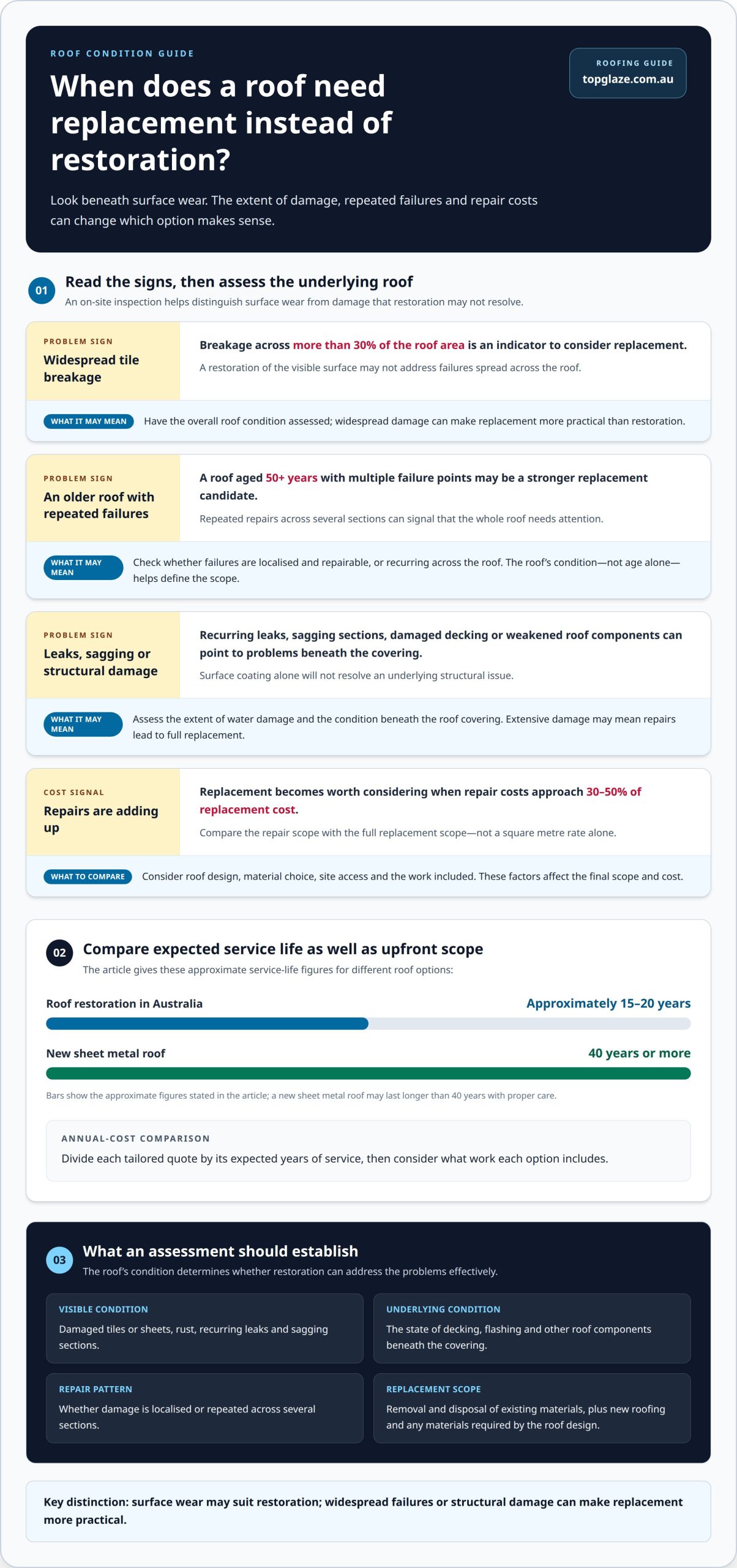
Compare the likely service life alongside the upfront scope, rather than judging roofing quotes by their totals alone. A restoration in Australia can last approximately 15 to 20 years, while a new sheet metal roof can last 40 years or more with proper care. To compare annual costs, divide each tailored quote by the expected years of service, then consider what work each option includes.
Restoration and re-roofing involve different scopes. Restoration may include cleaning, repairs, coating and replacement of damaged components. Re-roofing involves removing existing materials and installing new roofing. Materials, roof design and site access shape the replacement scope. Damage to decking, flashing or other structural components discovered during the work may also affect what is needed. Check how additional repairs and changes to the agreed work are handled before comparing totals.
Solar panels are another factor to consider. If they obstruct the work, removal and reinstatement may need to be included or priced separately. Ask whether the estimate covers both tasks, who coordinates them and how they affect the restoration timeline. Roof cleaning may also appear as a separate line item, depending on the surface condition and whether it is already included in the proposed restoration.
A low quote isn’t automatically poor value, but it can leave important work outside the listed scope. Compare the specified materials, repairs, coating and exclusions, not just the total. Ask whether flashing repairs, damaged components, cleaning and solar panel handling are included. For example, two quotes may describe restoration but differ on whether they cover repairs beneath worn coatings. A clear scope makes those differences visible and helps you assess the expected life of each option.
For a roof that remains suitable for restoration, a detailed roof restoration assessment can clarify the proposed scope before you weigh it against replacement.
Assessing roof condition for restoration or replacement
The choice between restoration and replacement depends on the roof’s condition and whether it can be repaired effectively. An inspection should assess damaged tiles or sheets, recurring leaks, rust, sagging sections and the condition beneath the roof covering. Surface wear may suit restoration, while widespread failures or structural damage can make replacement more practical. Industry specialists such as NanoTech Exteriors highlight how evaluating surface rejuvenation alongside repair requirements helps determine whether a roof can be revitalised or if replacement is necessary.
Widespread tile breakage across more than 30% of the roof area is an indicator for replacement. A roof aged 50+ years with multiple failure points may also be a stronger replacement candidate. These signs matter because restoring the visible surface won’t resolve underlying structural problems. Roof repairs can address localised damage, but repeated repairs across several sections may signal that the whole roof needs attention.
Water damage needs prompt assessment. Leaks can affect roof components and the structure below; if the damage is extensive, repairs may lead to a full replacement. A rough replacement estimate can describe removing and disposing of existing materials, then installing Colorbond sheeting. It may also include building blanket, battens, sarking and other materials required by the roof design. Site access and the selected materials affect the final scope.
Compare costs in context, not by a square metre rate alone. Roof design, material choice and access change the amount of work involved. Replacement becomes worth considering when repair costs approach 30-50% of replacement cost. That comparison helps show whether ongoing repairs are becoming an expensive alternative, but it must reflect the roof’s condition and the work included.
Ask how the written warranty applies to restoration or replacement, including covered materials, workmanship and exclusions. A roof in sound condition may suit restoration, while extensive damage can make replacement more appropriate. The estimate should link its recommendation to the observed condition, identify the sections that need work and explain the proposed scope.
Roof restoration estimate price ranges
Australian roof restoration estimates may use a per-square-metre rate, a project total or both. Treat a rate as a comparison guide, not a firm quote: roof area, preparation and included repairs determine the scope. Understanding a roof restoration estimate starts with checking what the quoted rate covers, rather than relying on an average that may not match your roof.
Check how the estimate measures roof area and which tasks its rate includes. A smaller roof may have a higher rate per square metre because set-up and access still take time. A larger roof may require more materials and labour overall, even if its quoted rate is lower. Ask whether cleaning, coating, ridge work and replacement of damaged sections are listed separately.
Materials and detailing also affect the scope. A metal roof may need different preparation and coatings from a tiled roof. Skylights or chimneys can add detailed work, while gutter or fascia repairs may sit outside the restoration scope. Understanding a roof restoration estimate is easier when the quote states whether these items are included or separate.
Read the total alongside the work description. A lower estimate can reflect a narrower scope, such as coating without specified repairs; a higher one may include preparation or component replacement. Neither total tells the full story alone. Compare the materials, repairs, exclusions and payment terms, then ask for unclear line items to be explained. The clearest quote connects each cost category to a defined task.
For a tailored breakdown of the work required, request a roof restoration quote based on your roof’s condition and specifications.
Top Glaze Roofing Systems: Roof Restoration
Top Glaze Roofing Systems provides roof restoration, replacement and repair services for Melbourne homes. An inspection helps identify whether localised damage calls for repairs or whether worn materials and broader deterioration require a different approach. The recommendation should reflect the roof’s condition and the work required, not just the estimate total.
To discuss an estimate, describe the roof material, visible damage and any recurring leaks. Top Glaze Roofing Systems also handles guttering and fascia work, which may be relevant when drainage components need attention alongside roofing. A clear understanding of the proposed scope helps you weigh your options and decide what to do next.
Contact Top Glaze Roofing Systems to discuss your roof and the work it may need.
Choose your next step with confidence
Your next step is to turn the estimate into a clear decision: identify what needs attention, what can be planned, and how the proposed work fits your priorities. Understanding a roof restoration estimate is useful when it clarifies both the recommended work and the reasoning behind it. If an item is unclear, ask for its scope to be explained before deciding. A well-defined plan gives you a steady basis for moving forward without rushing into work that may not suit your roof.
Top Glaze Roofing Systems can help you consider roof restoration, repairs or replacement for your Melbourne home. Share your concerns and what you want to achieve, then arrange an inspection and fixed quote with no hidden fees.
Contact Top Glaze Roofing Systems to discuss your roofing needs and take the next step with confidence.
Frequently Asked Questions
What does a roof restoration estimate in Australia usually include?
A roof restoration estimate usually describes the proposed work, materials and labour, with costs tied to the roof’s condition and scope. For example, a tiled roof may need re-pointing, while a metal roof may require different surface preparation. In Melbourne, check that the document distinguishes restoration work from optional items such as gutter or fascia repairs, so the planned job is clear.
What is the average roof restoration cost in Australia by roof size and material?
There isn’t one average that applies to every Australian roof. Size and material affect the work involved, while condition and access can further change the scope. For a Melbourne property, Top Glaze Roofing Systems provides a fixed quote after an inspection, with no hidden fees. This gives you a project-specific figure rather than a broad average that may not match your roof.
Which line items should appear in a roof restoration quote?
A useful quote describes the work and materials clearly, distinguishing included tasks from optional ones. Look for separate descriptions of cleaning, repairs, re-pointing where relevant, resealing and coating. Check the coating product and colour specification, the areas to be treated, and how variations will be handled if concealed damage changes the agreed scope. Keep the written quote with your project records.
What extra costs or exclusions should I check in a roof restoration estimate?
Check whether related work is outside the restoration scope. Guttering or fascia work may be listed separately, as may repairs to unsound decking. Look for exclusions covering concealed damage, painting beyond the roof or components not included in the work description. For a Melbourne home, a clear breakdown helps distinguish roof restoration from other property maintenance.


