

Drying time matters: flexible roof pointing needs 4-8 hours of dry conditions to surface-cure properly. For roof repointing in Melbourne, that makes weather part of the job plan, not an afterthought. Rain during this window can affect the fresh finish.
It’s a reasonable concern: even a well-prepared roof needs suitable conditions for new pointing to set. This guide explains the drying window and what can affect it, so you can plan the work without confusing surface curing with completion of the job.
You’ll also learn what affects roof repointing costs in Melbourne, what the process involves, and how repointing differs from re-bedding and wider roof restoration. The right approach depends on whether the existing bedding is sound or needs replacing, which determines the work involved.
The price depends on the roof’s condition, ridge length, access and whether re-bedding is needed, and is provided after a quote request.
Key Takeaways
- Check whether the ridge-capping bedding is still sound: repointing renews the pointing, while re-bedding replaces the bedding beneath the caps.
- Understand the work included in a quote, including whether it covers preparation, broken ridge caps or access requirements.
- Plan the job around dry weather, as conditions affect when fresh pointing can cure properly.
- Use the roof’s overall condition to decide whether targeted repairs or broader restoration is the more suitable next step.
2026 Price Guide: How Much Does Roof Repointing Cost in Melbourne?
Roof repointing in Melbourne renews the flexible pointing that seals the edges of ridge caps. It’s needed when that outer layer cracks, separates or crumbles, leaving gaps where rain can enter. Ridge caps sit on bedding cement, so the first step is to identify whether only the pointing has failed or the bedding underneath also needs replacing.
Look for cracked or missing material along the ridge, loose caps and cement breaking away from the roof tiles. A water stain inside the home can indicate a leak, although water may travel from the ridge before appearing indoors. Deteriorating ridge cement can create potential leak points and affect the roof’s stability. From the ground, note visible damage and check gutters for cement fragments, but don’t climb onto the roof to inspect it.
Flexible pointing is applied over sound ridge-capping bedding to create a weather-resistant finish while allowing movement. Re-bedding is different: if the bedding has broken down or caps are loose, the caps and old bedding cement are removed, new mortar bedding is laid, and the caps are reset. Flexible pointing is applied after the cement bedding has set. Repointing alone won’t fix failed bedding.
Roof bedding cement can harden over time, and incorrect mixing ratios can contribute to early breakdown. An inspection should assess the ridge caps, the cement beneath them and any signs of water entry. Widespread deterioration may require more than a small patch, while isolated cracks may need a more limited repair. A roofing professional can assess the condition and recommend the appropriate scope.
Can roof repointing be a DIY job? It’s possible to attempt, but working on a roof and distinguishing failed pointing from failed bedding require care. A roofing professional can assess the ridge and identify whether re-bedding is needed.
Are contractors in Victoria required to hold a building licence or insurance? Requirements depend on the work and contract circumstances. Confirm the applicable Victorian requirements for the specific job before signing an agreement.
The price depends on ridge length, roof access, preparation, damaged caps and whether bedding needs replacement, and is provided after a quote request.
Repointing, re-bedding and roof restoration
These treatments address different roof conditions. A roof inspection can distinguish worn pointing from failed mortar bedding and identify wider repair needs.
Repointing and rebedding differences
What is the difference between roof repointing and roof rebedding? Repointing renews the flexible pointing over existing bedding; re-bedding removes ridge caps, replaces failed mortar and resets the caps. Look for loose caps or crumbling bedding, rather than judging only the visible pointing. A roof more than 20 years old is a reason to consider full re-bedding and repointing, particularly where deterioration extends along the ridge.
Restoration benefits and roof lifespan
Restoration addresses several ageing components, rather than just the ridge line. Cement pointing lasts around 8-12 years, while most Melbourne tile roofs need repointing every 15-25 years. Those figures describe different measures: the pointing material’s lifespan and the broader timing of roof maintenance. A restoration assessment can identify whether worn pointing, damaged tiles or a valley issue needs attention before water reaches the roof space.
Roof assessment and restoration advice
A useful roof inspection checks ridge caps, bedding, tiles, valleys and areas around gutters. The findings help distinguish localised roof repairs from wider restoration work. Ask for the advice to identify the observed damage and explain why each recommended step addresses it. An honest assessment connects visible symptoms, such as a loose cap or cracked mortar, to the proposed work. For broader deterioration, a roof restoration assessment is a practical next step.
Restoration duration and repairs
A typical roof repointing job in Melbourne takes 1-2 days. That timeframe applies to repointing, not every restoration project; the scope depends on the roof’s condition and repairs required. Replacing damaged tiles, addressing valleys and preparing ridge caps all affect the work sequence. The assessment should clarify which repairs are included and how they relate to the restoration, so you can understand the project before work begins.
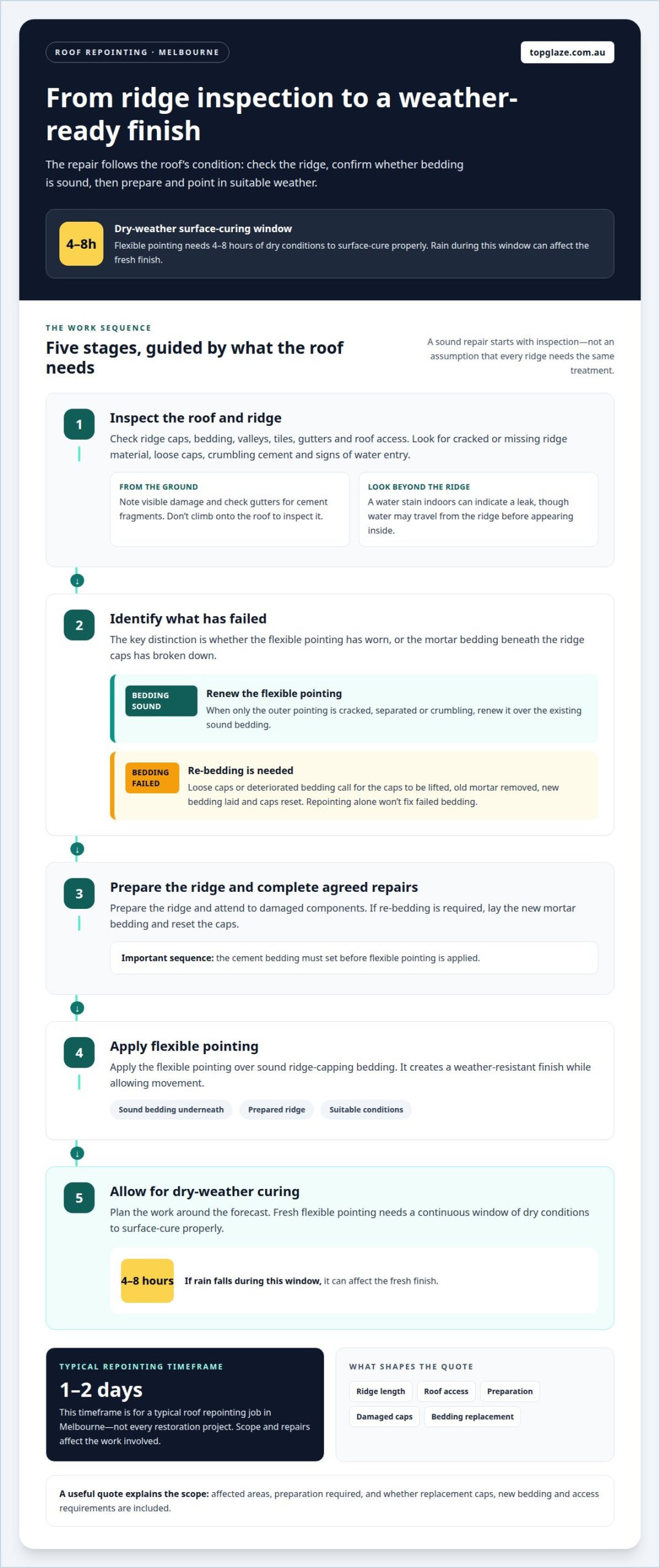
Roof repointing process
A sound repair starts with an inspection and follows the roof’s actual needs. For roof repointing in Melbourne, Top Glaze Roofing Systems can assess the ridge, explain the findings and provide a fixed quote with no hidden fees.
Roof inspection and quote
The inspection should cover ridge caps, bedding, valleys, tiles, gutters and roof access. These checks help locate visible damage and distinguish a local repair from work across the whole roof. A useful quote describes the affected areas, preparation required and whether replacement caps or new bedding are included. For homes across Melbourne, the scope should reflect the specific roof rather than assume every property needs the same treatment.
Repointing and restoration procedures
Before flexible pointing is applied, the ridge needs preparation and damaged components need attention. If bedding has failed, the ridge caps are lifted, old mortar removed, new bedding laid and caps reset. The cement must set before flexible pointing is applied. If repairs extend beyond the ridge, restoration may also address damaged tiles or other roof areas identified during inspection.
On the workday, the crew prepares the ridge, completes agreed repairs and applies pointing in suitable conditions. Flexible pointing needs 4-8 hours of dry conditions to surface-cure properly. Rain during that window can affect the finish, so the forecast helps determine the work schedule. In Melbourne winter, repointing can proceed when it isn’t raining and the temperature is above 5°C.
A typical repointing job takes 1-2 days, while re-bedding adds steps because the new mortar must set before pointing. Confirm that the quote explains the sequence and identifies any restoration work separately. This makes it easier to understand what the crew will complete and when the roof can be exposed to weather.
Melbourne roof repointing costs
The cost of roof repointing in Melbourne depends on ridge length, roof access, the condition of the bedding and the amount of preparation required. A quote is provided after a request, with the scope shaped by those details. A short ridge with isolated pointing damage differs from a longer ridge with loose caps or deteriorated bedding. The key cost distinction is whether work can stay at the pointing layer or needs re-bedding.
Roof material and age help explain the condition, but they don’t determine the work by themselves. Original cement-based mortar typically deteriorates over 15-25 years in Melbourne. Bedding cement made with incorrect ratios may break down after about 10 years. A terracotta roof with intact bedding may need a different scope from one with loose ridge caps. An inspection connects the visible condition to the work required.
Access also affects the work. A two-storey roof may need scaffolding or an elevated work platform, while a single-storey roof may allow a simpler setup. Weather can affect scheduling, especially when the ridge needs dry conditions for pointing. The scope should state whether the quote covers preparation, replacement caps, re-bedding, flexible pointing or related repairs. These details explain what the work addresses, not just how it will look.
For a clear comparison, look at the roof areas and tasks described rather than treating repointing and re-bedding as interchangeable. A 20-year-old roof isn’t automatically due for full replacement; the decision depends on the bedding, caps and wider roof condition. If ceiling marks appear after rain, include them in the inspection discussion, as water entry may have more than one source. A written scope makes the proposed work easier to understand.
To discuss the roof’s condition and the right repair scope, request a roof assessment.
Top Glaze Roofing Systems: Roof Restoration
Top Glaze Roofing Systems can help when worn ridge pointing is part of broader roof deterioration. If an inspection identifies damaged tiles, ageing roof areas or recurring leaks, roof restoration or targeted roof repairs may address more than the ridge alone. If the roof’s condition calls for a different solution, roof replacement may be appropriate. Guttering & Fascia work can also address problems around the roof edge.
The right next step depends on what the inspection finds. A localised ridge issue may need a focused repair, while damage across several roof areas can call for a wider assessment. Understanding the difference helps you make a practical decision about your home.
Contact Top Glaze Roofing Systems or visit topglaze.com.au to discuss your roof.
Choose the right next step for your roof
A decision about roof repointing in Melbourne starts with understanding whether the issue is confined to the ridge or reflects wider deterioration. This helps you focus on the work your roof needs, rather than treating every visible crack as a reason for a larger project. If damage extends beyond the pointing, consider how the roof’s overall condition affects the repair plan.
Top Glaze Roofing Systems offers Roof Repairs, Roof Restoration and Roof Replacement for different roof conditions. Request an inspection to clarify which option suits your home and get a fixed quote with no hidden fees.
Contact Top Glaze Roofing Systems to discuss your roof and take a considered next step towards protecting your home.
Frequently Asked Questions
How long does pointing take to dry?
Flexible pointing needs 4-8 hours of dry conditions to surface-cure properly. That’s the initial curing window, not a guarantee the whole roof is ready for every activity immediately afterwards. For example, if rain is forecast during that period, the roofer may need to adjust the work timing. Follow the roofer’s instructions after application to protect the fresh finish.
Can I get repointing done in winter?
Yes, repointing can be done in Melbourne during winter when it isn’t raining and the temperature is above 5°C. The practical issue is finding a suitable dry work window, because wet weather affects preparation and curing. If conditions aren’t suitable on the planned day, the work may need to wait for a clearer spell.
Can I repoint just a section instead of the whole roof?
Yes, a localised repair may suit a single damaged ridge or a limited area where the surrounding bedding and caps remain sound. The affected section still needs assessment, as nearby cracks or loose caps can indicate a wider problem. A roofing professional can define the repair boundary by checking adjacent ridge sections and the bedding.
Can you repoint in the rain?
No, fresh flexible pointing needs dry conditions to surface-cure properly. Rain can interfere with application and affect the finish, so work should be scheduled for a suitable weather window. If showers are likely during curing, timing matters as much as the time spent applying the pointing. Don’t assume a brief break in rainfall is enough.
Does repointing change the look of my house?
It can make the ridge line look neater by renewing cracked or missing pointing around the caps. The change is usually limited to the roof ridge rather than transforming the whole exterior. For example, pointing work won’t change the colour of terracotta tiles across the roof. The visible result depends on the existing roof and the repair area.
Is repointing covered by home insurance?
Home insurance coverage depends on your policy wording and the cause of the damage. Routine deterioration from ageing may be treated differently from damage caused by a sudden insured event. Before arranging work, review the policy’s maintenance and damage terms, then speak with your insurer about the specific ridge damage. Keep records and photographs to support the discussion.


