

A roof that looks ready for replacement may need only a targeted repair, while recurring leaks can point to a wider problem. For roof repairs in Doncaster, the key difference is scope: a repair addresses specific damage, while restoration renews the roof more broadly. An inspection helps determine which approach suits the roof’s condition.
It’s reasonable to want a clear explanation before deciding what your home needs. This guide explains how repairs differ from restoration, what a professional inspection involves and how the roof’s condition and material shape the recommended work.
You’ll also learn what to expect when repairing ridge caps, metal roofing and Colorbond roofs, and which signs can help distinguish a localised fault from a roof that needs broader attention. The aim is to make your next decision clearer, without assuming every roof problem calls for the same solution.
Key Takeaways
- Learn how to distinguish a targeted roof repair from restoration or full replacement by considering the extent of the damage.
- Understand what a professional roof inspection covers and how its findings guide the recommended work.
- See how ridge caps, metal roofing and Colorbond roofs call for repair approaches suited to their materials and condition.
- Find out what to expect when discussing an inspection and quote, and how to decide on a practical next step for your roof.
What’s the difference between a roof repair and restoration?
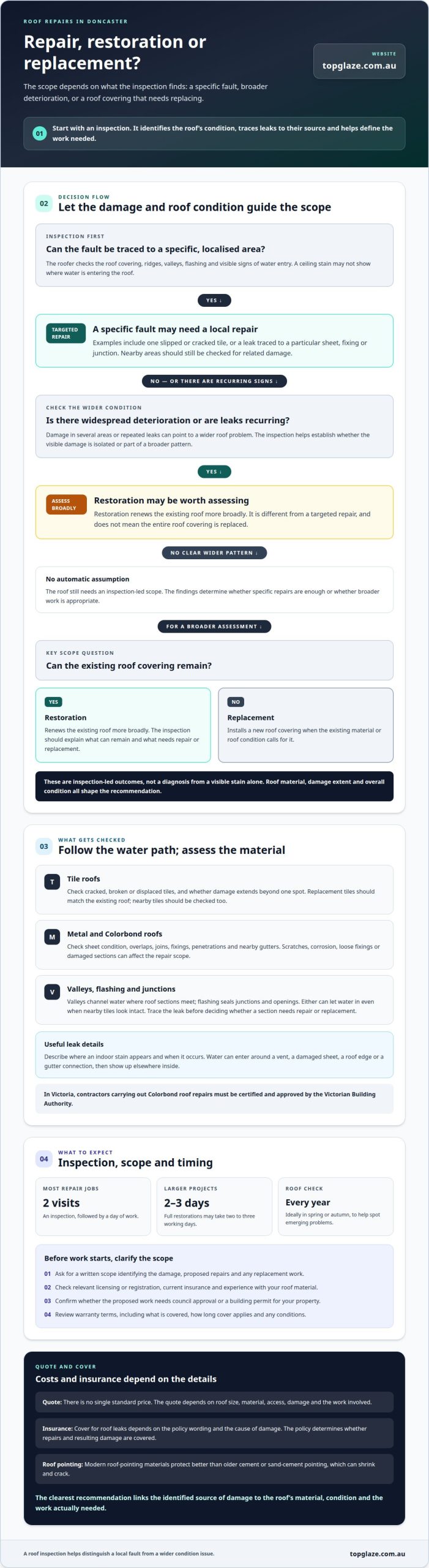
A repair addresses a specific fault, such as a slipped tile or leak. Restoration involves broader work on the existing roof, while replacement means installing a new roof covering.
For roof repairs in Doncaster, the deciding factors are the extent of damage and the roof’s condition. A single cracked tile may need replacing; widespread deterioration or recurring leaks can point to restoration. Roof tiles can last for decades, but wear or storm damage may still make replacement necessary.
Restoration renews the existing roof rather than replacing the entire covering. A full roof replacement is a bigger step when the existing material or roof condition calls for a new covering. Tile and metal roofs each need an assessment suited to their material, with a clear explanation of what can remain and what needs replacing.
Tile Repairs and Replacements
A tile assessment considers cracked, broken or displaced tiles, and whether the damage extends beyond one visible spot. For example, one storm-damaged tile may need a local repair, while damage in several areas calls for a wider inspection. Replacement tiles should match the existing roof, and nearby tiles should be checked for related damage.
Valley and Flashing Replacement
Valleys channel water where roof sections meet, while flashing seals junctions and openings. Damage or deterioration in either area can let water in, even when nearby tiles look intact. An inspection should trace the leak to its source and establish whether a section needs repair or replacement. This is important for urgent leaks in Doncaster and nearby Box Hill.
When choosing a Victorian roof repairer, check relevant licensing or registration, current insurance and experience with your roof material. Ask for a written scope that identifies the damage, proposed repairs and any replacement work.
Whether council approval or a building permit is needed depends on the proposed work and applicable requirements. Before work starts, establish whether the planned repair, restoration or replacement needs approval for your property.
Roof restoration inspection and repair process
An inspection identifies the roof’s condition, the source of leaks and the work needed. These findings help distinguish a targeted repair from broader restoration.
Inspection and Repair Steps
A roofer examines the roof covering, ridges, valleys, flashing and visible signs of water entry. The inspection findings guide the scope, including whether damaged sections need repair or replacement. Most roof repair jobs involve two visits: an inspection, followed by one day of work. Larger projects, such as full restorations, may take two to three working days.
Modern roof-pointing materials protect better than older cement or sand-cement pointing, which can shrink and crack. A roof check every year, ideally in spring or autumn, can help identify emerging problems before leaks develop.
Leak Repairs and Insurance
For a leak, the roofer traces water entry to its source before recommending repairs or restoration. Fixing the visible stain alone may leave the roof fault unresolved. Home insurance cover for roof leaks depends on the policy wording and the cause of damage. The policy determines whether repairs and resulting damage are covered.
Restoration can extend a roof’s useful life, but the likely result depends on the existing material, its condition and the work required. An inspection helps determine whether the roof can be restored or whether replacement is more suitable.
There isn’t one standard price for repairs or restoration. The quote depends on roof size, material, access, damage and the work involved, and is provided after a quote request.
Warranty terms can differ according to the work and materials used. Review the written terms for what is covered, how long cover applies and any conditions attached to it.
A roof restoration assessment can clarify the work your roof needs.
Metal and Colorbond roof repairs
A metal roof needs repairs suited to its sheets, joins and fixings. A leak may start around a roof penetration or damaged sheet, rather than where water appears inside. For a home in Doncaster, tracing the entry point matters: sealing the visible ceiling stain alone won’t fix the roof fault.
Colorbond is a metal roofing material, so an inspection should consider the condition of its sheets and the junctions between them. Scratches, corrosion, loose fixings or damaged sections can each affect the repair scope. In Victoria, contractors carrying out Colorbond roof repairs must be certified and approved by the Victorian Building Authority.
A roofer assesses the roof surface, sheet overlaps, fixings, penetrations and nearby gutters. These checks help determine whether the damage is localised or affects several sections. For example, a leak beside a vent may require attention to the flashing and surrounding sheet, while water entering near an edge can make the gutter connection relevant.
Gutters collect runoff from the roof edge, so a blockage or damaged connection can cause water to spill where it shouldn’t. If you report an indoor leak, describe where the stain appears and when it occurs. That detail helps the roofer investigate likely water paths without assuming the stain marks the entry point.
Repair work may address an isolated fault, while widespread deterioration can call for a broader assessment. Sheet condition, the extent of corrosion and the number of affected joins all help determine the right scope. Melbourne weather exposure also makes the condition of exposed edges and connections important during inspection.
The key takeaway: metal and Colorbond roofs need material-specific diagnosis, not a generic patch. A useful assessment identifies the source, affected components and whether targeted work can resolve the damage. For roof repairs in Doncaster, this distinction ties the recommendation to the roof’s actual condition.
Do Doncaster roof repairers offer free inspections and quotes?
Inspection fees and quote terms depend on the roofer’s arrangements, so “free” should be clear before an inspection is booked. An inspection assesses the roof’s condition; a quote sets out the proposed work and its price. They serve different purposes, even when both follow the same site visit.
For a Doncaster roof, an inspection should identify the source and extent of damage, affected materials and access needs. A leak near a valley, for example, may call for a different scope from a single damaged tile. These findings help explain whether the recommendation is a targeted repair or broader work.
A useful written quote describes the work, materials and areas included. It should also make clear whether the scope covers related components, such as flashing or gutters, and how any additional damage will be handled. This helps you understand what the proposed work addresses before deciding how to proceed.
The quote depends on the roof’s size, material, access, damage and required work. A roof with several affected sections may need a different scope from one with a localised fault. The inspection findings connect the roof’s condition to the proposed work and fixed quote, with no hidden fees.
Before arranging an inspection in Doncaster, have the property address ready and describe the issue, such as where a ceiling stain appears or when a leak occurs. Photos taken from the ground can help explain visible signs, but they don’t replace a roof assessment. Don’t climb onto the roof to take them.
Clear terms help you distinguish an inspection from a commitment to proceed. Review the written scope, included work and price before accepting. To discuss an assessment for your roof, request a roof inspection.
Top Glaze Roofing Systems: Roof Repairs
Top Glaze Roofing Systems can help when a leak, damaged tile or worn roof needs professional attention. An inspection identifies the problem and helps determine whether the right scope is a targeted roof repair, broader restoration or, when needed, roof replacement.
Clear advice matters when damage affects more than the roof covering. Guttering and fascia issues can also contribute to water management problems around the home. Matching the work to the roof’s condition helps clarify the practical next step without assuming every fault requires full replacement.
If you’re ready to discuss the roof issue or arrange a quote, contact Top Glaze Roofing Systems.
Choose a clear next step for your roof
The next step is a plan based on your roof’s condition, not an assumption about how much work it needs. A professional assessment helps you decide what to address now and what belongs in a broader project. Keep the proposed scope clear so you understand what each part of the work is intended to resolve.
For roof repairs in Doncaster, the aim is to match the work to the problem. A targeted repair may suit localised damage; broader deterioration may call for restoration or replacement. The recommendation should explain why that approach fits your roof, giving you a sound basis for planning and protecting your home.
Top Glaze Roofing Systems provides roof repairs, roof restoration and roof replacement. If you’re ready to discuss the next step for your roof, contact Top Glaze Roofing Systems. A clear conversation can help you move forward with a practical plan.
Frequently Asked Questions
Got a leaking roof?
A leaking roof needs professional assessment to locate where water is entering. Move furniture and valuables away from the affected area, and note where the leak appears during rain. Share those details with the roofer, as water can travel before showing inside. Don’t climb onto a wet roof or attempt a repair yourself; roof access can be hazardous.
Must I be home while you’re working on my roof?
You don’t need to remain beside the work, but arrange property access and communication before the appointment. Let the roofing team know about locked gates, access restrictions or areas of concern. Keep children and pets away from the work zone. If the roofer needs access inside, coordinate entry beforehand so the inspection or work can proceed smoothly.
What maintenance is required for my roof?
Roof maintenance includes keeping gutters and drainage paths clear, and looking for visible signs of damage such as displaced tiles or indoor water marks. A professional can also assess fascia and leaf guard condition, as these affect how rainwater moves away from the home. After severe weather, report new leaks or visible damage for assessment.
What services do roof repair services provide?
Roof repair services address faults affecting a roof’s ability to protect a home. Work can include repairing damaged tiles or metal roofing, as well as related guttering or fascia issues. If damage extends across the roof, restoration or replacement may be more appropriate. An inspection helps define a scope that addresses the actual fault.
How can a roof repairer help in a roof emergency?
A roof repairer can assess storm damage, an active leak or another urgent roofing issue, then identify the affected area and suitable work. Keep people clear of damaged roof sections and avoid climbing onto the roof. If a collapse has caused an injury requiring medical attention, call 000. Give the roofer clear details about the damage and any immediate access concerns.
What roof repair services are available in Doncaster, Victoria?
Homeowners in Doncaster, Melbourne, can access residential roof repairs, restoration and replacement. Work can address tile or metal roof damage, while guttering and fascia services support water drainage around the home. The right option depends on the roof’s condition and the extent of the problem. An assessment helps establish a practical scope for your property.


