

A single cracked tile isn’t just a minor cosmetic flaw; it’s a ticking clock on your home’s structural integrity. Many Melbourne homeowners find themselves staring at a damp patch on the ceiling and wondering why the replacing broken roof tiles cost can vary so much between different quotes. It’s natural to feel anxious that a simple repair might turn into a budget-breaking ordeal or that a cheap patch-up will lead to an A$20,000 ceiling collapse during the next Bayside storm.
We agree that you deserve transparency and peace of mind rather than technical jargon. This guide breaks down the real-world factors that determine repair pricing in late 2026, including the latest NCC 2025 requirements and the updated Victorian Guide to Standards and Tolerances. You’ll learn exactly what goes into a professional roofing quote and how to distinguish between a temporary fix and a long-term solution. We’ll provide the clarity needed to protect your family home and find a local expert you can trust.
Key Takeaways
- Understand how minor hairline cracks can quickly escalate into structural damage and mould, particularly under Melbourne’s volatile weather conditions.
- Discover the factors that influence the replacing broken roof tiles cost, from essential safety equipment to the difference between material and labour expenses.
- Learn why the material of your roof-whether terracotta or concrete-dictates the complexity and price of the repair process.
- Determine if your home requires a simple patch-up or if a comprehensive roof restoration is the more cost-effective way to ensure long-term protection.
- Recognise the value of seasoned local expertise and transparent quoting in avoiding the common pitfalls of DIY repairs and unreliable contractors.
The Hidden Risks of Delaying Broken Roof Tile Repairs
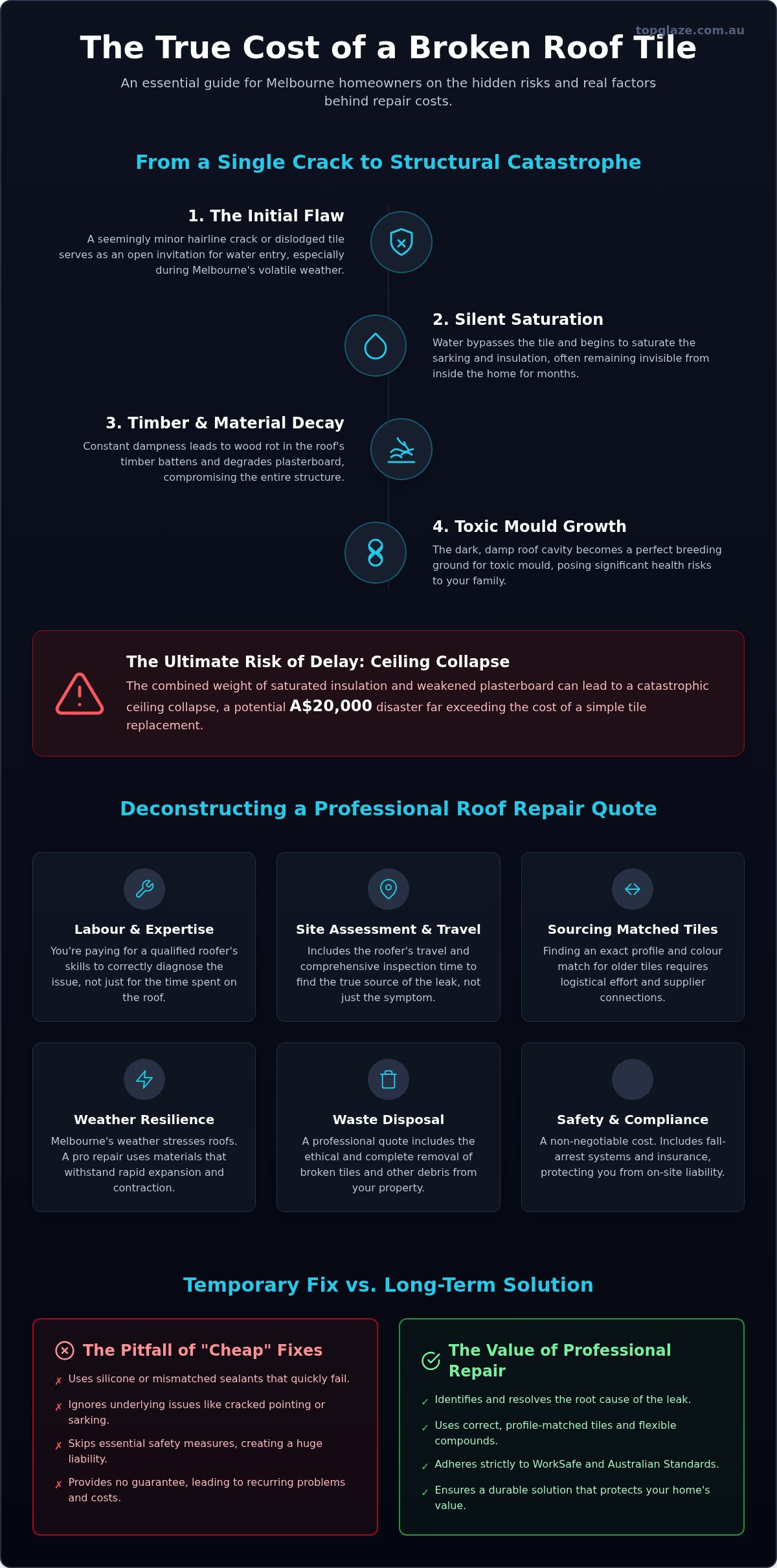
A single hairline crack in a roof tile might seem like a minor issue, but in the context of Melbourne’s unpredictable weather, it is a significant vulnerability. While many homeowners focus on the immediate replacing broken roof tiles cost, the true price of inaction is often much higher. Once water finds a path past the primary tile layer, it begins a silent journey of destruction through your sarking and insulation. This moisture doesn’t just sit there; it migrates, often appearing as a mysterious damp patch on a ceiling far from the original entry point.
Understanding the history and types of roof tiles reveals why different materials react uniquely to stress. Whether you have traditional terracotta or modern concrete, the progression from a small leak to structural damage is remarkably consistent. When water saturates your ceiling insulation, the material loses its thermal efficiency and becomes a heavy, sodden mass. In extreme cases, this added weight, combined with weakened plasterboard, can lead to a sudden and dangerous ceiling collapse.
Moisture also attacks the timber battens that support your roof. These timber elements are the skeleton of your roofing system. Constant dampness leads to wood rot, which compromises the structural integrity of the roof and makes the replacing broken roof tiles cost look like a bargain compared to a full structural rebuild. Toxic mould thrives in the dark, humid environment of a compromised roof cavity, posing potential health risks to your family long before you see a single drop of water on the floor.
Melbourne Weather: The Ultimate Test for Your Roof
Melbourne’s famous ‘four seasons in one day’ creates a cycle of rapid thermal expansion and contraction. This movement causes older tiles to become brittle and fracture over time. In coastal regions or high-wind areas like the Mornington Peninsula, tiles can also become dislodged or ‘slipped,’ leaving the underlay exposed to the elements. Many people attempt a quick fix with silicone or DIY sealants, but these materials lack the flexibility to move with the house. They typically fail within a single season, leaving the home unprotected once again.
Detecting Damage Before the Leak Starts
You don’t always need a bucket in the hallway to know your roof is failing. Visual cues like ‘weeping’ tiles, which appear darker or damp long after the rain has stopped, are clear indicators of porosity or cracks. Debris and leaf litter in the valleys of your roof can also hide broken tiles while acting as a dam that forces water uphill and under the tile laps. For a professional assessment that identifies these hidden threats, consulting Expert Roof Repairs Melbourne ensures your home remains a safe, dry sanctuary regardless of the weather outside.
Understanding the Components of Roof Repair Costs
When you receive a quote for a small repair, the total might seem high for what looks like a simple task. However, the replacing broken roof tiles cost encompasses far more than just the price of a few pieces of terracotta or concrete. A professional quote accounts for the roofer’s travel time, a comprehensive site assessment, and the years of experience required to identify the true source of a leak. The tiles themselves are often the least expensive component. You’re primarily paying for the labour, the specialised equipment, and the logistical effort of sourcing a perfect profile match for an older Melbourne home.
Disposal is another factor often overlooked. Broken tiles and debris cannot be left in your gutters or garden beds. A reputable contractor includes the removal and ethical disposal of all waste materials, ensuring your property is left in pristine condition. These overheads represent the difference between a ‘handyman’ patch and a professional repair that stands up to the next storm. If you are unsure about what to look for in a quote, you can request a professional assessment to get a clear picture of your roof’s health.
The Safety and Compliance Factor
Safety is a non-negotiable part of modern roofing. As of 2026, WorkSafe Victoria has clarified requirements for temporary edge protection and fall-arrest systems on residential sites. Legitimate contractors must factor in the setup of safety rails or harness points, especially for double-storey homes. While ‘cheap’ quotes might skip these steps to lower the replacing broken roof tiles cost, they leave you legally and financially vulnerable if an accident occurs on your property. Professional firms carry comprehensive public liability insurance and strictly adhere to the updated AS 1657 standards for fixed platforms and guardrails, providing you with essential peace of mind.
Location and Roof Pitch Complexity
The physical characteristics of your home play a significant role in the final price. A steep roof pitch requires more time and specialised safety gear than a flat one. Similarly, inner-city Melbourne suburbs often present access challenges. Narrow blocks and shared driveways can make it difficult to position ladders or transport materials to the roofline, which naturally increases the labour hours required. Before committing to any work, it is wise to consult a guide on Hiring a Quality Roofing Contractor to ensure your chosen professional understands these local complexities.
Tile Material Matters: Terracotta vs. Concrete Pricing
Choosing the right material for a repair is about more than just aesthetics; it is a technical decision that dictates the complexity of the entire job. Your replacing broken roof tiles cost is often tethered to whether you have terracotta or concrete underfoot. While both materials have served Melbourne homes for decades, they behave very differently as they age. Terracotta remains prized for its natural colour, but it becomes increasingly brittle over thirty or forty years. Concrete, while sturdier, presents its own challenges regarding weight and surface wear.
One of the most significant hurdles we encounter in established Melbourne suburbs is the ‘discontinued tile’ challenge. Homes built between the 1950s and 1970s often feature specific profiles from manufacturers like Wunderlich or older Monier ranges that are no longer in production. Sourcing these rare tiles requires a deep network of local suppliers and reclaimed yards. This search for a perfect match is a vital part of the service, ensuring your roof doesn’t end up looking like a patchwork quilt after a repair. It’s this level of detail that separates a professional roofer from a general handyman.
The material also dictates how we approach ‘bedding and pointing’ repairs. This refers to the mortar that holds your ridge capping in place. Terracotta tiles often require a more specialised flexible pointing compound to account for their higher rate of thermal movement. If this isn’t handled correctly, the new mortar will simply crack and fall away within a few seasons, leading to more leaks and a repeat of your replacing broken roof tiles cost sooner than expected.
Terracotta Roof Tiles: Beauty and Fragility
Aged terracotta is notoriously delicate. As these tiles reach the end of their lifespan, they can become ‘porous,’ which means they absorb water rather than shedding it. This makes them prone to cracking when walked upon, meaning a simple repair requires a roofer with a very light touch and the right technical knowledge. We always check for the correct use of clips and fasteners, as older installations often lack the mechanical fixing required by modern building codes. For a deeper look at these materials, see The Homeowner’s Guide to Roof Tile Roofing.
Concrete Tiles and Modern Alternatives
Concrete tiles are generally easier to source in modern profiles, but they are significantly heavier than terracotta. This weight places different stresses on your roof’s timber frame. You might notice ‘efflorescence’-a white, salty residue-on older concrete tiles, which is a sign of the material’s lime content leaching out. While this is often cosmetic, it can precede surface erosion. If your concrete tiles are failing across the board, it might be the right time to discuss a material swap to metal roofing, which offers a lightweight and durable alternative for the next fifty years.
Repair, Restore, or Replace: Making the Best Choice
Deciding how to manage roof damage requires a balance between your immediate budget and long-term asset protection. While the initial replacing broken roof tiles cost for a few isolated cracks is manageable, many homeowners fall into the ‘patch-up trap’. This occurs when an ageing roof begins to fail systematically; you fix one leak in January, only for another to appear in March. Over several years, these repeated call-outs often cost more than a single, high-quality restoration, while leaving the underlying issues unresolved.
A professional restoration acts as a strategic middle ground. It goes beyond simple tile replacement to address the ridge capping, which is the most common entry point for water. This approach provides a significant return on investment by boosting your home’s curb appeal and satisfying insurance requirements. Most Australian insurers view a poorly maintained roof as a liability; a documented restoration can be the difference between a successful claim and a costly rejection. If you are ready to stop the cycle of temporary fixes, you can book a comprehensive roof assessment today.
Signs You Should Choose Restoration Over Simple Repair
Isolated repairs are ideal for accidental damage, such as a fallen branch. However, if your roof shows widespread ‘fretting’ (where the edges of the tiles begin to crumble and sand away), a simple patch won’t suffice. This erosion indicates the material has reached the end of its service life. You should also look for cracked or missing mortar in the ridge capping. When the bedding and pointing fail, the ridge caps become loose, creating a major leak risk that minor tile swaps cannot fix. Faded colour and heavy moss growth are also signs of surface porosity that require a professional coating. For a deeper dive into this process, read The Ultimate Guide to Roof Restoration Melbourne.
When Replacement is the Only Safe Option
There is a point of no return where the replacing broken roof tiles cost is no longer a sound investment. If you notice structural sagging along the roofline, it suggests the timber frame has been compromised by long-term moisture exposure. Similarly, if leaks are occurring in multiple rooms and cannot be traced to specific tiles, the entire system has likely failed. In these cases, a full replacement is the only way to ensure your family’s safety. Many Melbourne homeowners choose this moment to switch to Colorbond, which offers a lightweight, low-maintenance alternative that eliminates the risk of broken tiles forever.
Why Melbourne Homeowners Trust Top Glaze Roofing Systems for Tile Repairs
Top Glaze Roofing Systems is more than just a service provider; it is a pillar of the local industry with over 30 years of history. Being family-owned means our reputation is built on every single tile we lay. When homeowners consider the replacing broken roof tiles cost, they aren’t just looking for a competitive price; they’re looking for the certainty that the job is done right the first time. We speak with the calm certainty of experts who have encountered every possible roofing challenge and have a proven method for resolving it. We have seen every weather pattern Melbourne can throw at a roof, from the scorching heat of the northern suburbs to the biting winds of the coast.
Our commitment to transparency means you’ll never face hidden fees or high-pressure sales tactics. We provide a structured journey from the initial assessment to the final inspection, ensuring you feel informed and respected throughout the process. Whether you need a simple tile swap or a comprehensive roof restoration, we treat your home with the same care as our own. This seasoned authority allows us to remove the anxiety often associated with structural repairs, replacing it with the peace of mind that comes from a 10-year warranty on residential projects. Our longevity in the market is a testament to our focus on quality over quick wins.
Our Professional Repair Process
The process at Top Glaze Roofing Systems begins with a meticulous inspection that goes beyond the surface. We don’t just look at the tile that is clearly broken; we identify hidden cracks and slipped tiles that haven’t caused a visible leak yet. Sourcing exact profile matches is a point of pride for us, especially for older Melbourne homes with discontinued terracotta or concrete styles. We ensure the aesthetic of your roof remains seamless and professional. Every repair we undertake is performed to the highest Victorian safety and building standards, ensuring your home is legally compliant and structurally sound. This attention to detail is why the replacing broken roof tiles cost is a vital investment in your home’s longevity.
Peace of Mind for Frankston and Melbourne Residents
For residents in Frankston and across the Mornington Peninsula, salt-air corrosion and high winds are constant threats to roof integrity. Our local expertise allows us to recommend materials and fixing methods that specifically combat these coastal challenges. We understand that your time is valuable, which is why we provide prompt, reliable service that respects your property and your schedule. By choosing a local veteran of the industry, you’re investing in a solution designed to last a decade, not just a single season. Don’t let a small leak become a major structural failure. Request a professional roof assessment and quote from Top Glaze Roofing Systems today.
Securing Your Home Against Melbourne’s Elements
Addressing a damaged roof is one of the most vital maintenance tasks for any Melbourne homeowner. We’ve explored how a single crack can lead to significant structural issues and why the replacing broken roof tiles cost is a necessary investment in your property’s longevity. Whether you are dealing with fragile older terracotta or modern concrete tiles, understanding the balance between a quick patch and a comprehensive restoration ensures you aren’t caught in a cycle of never-ending repairs.
With 30+ years of local experience, Top Glaze provides the seasoned authority you need to navigate these decisions with confidence. Our licensed and fully insured team ensures every job meets the latest safety standards, backed by a 10-year warranty for your total peace of mind. Don’t wait for the next storm to test your roof’s integrity. Book Your Professional Roof Inspection with Top Glaze Today and protect your family home with a solution that lasts. You deserve a roof that stands strong through every season.
Frequently Asked Questions
How much does it cost to replace a few broken roof tiles in Melbourne?
Industry reports suggest that for a few cracked terracotta tiles, the typical outlay ranges between A$400 and A$1,200, while concrete tiles often fall between A$300 and A$800. These figures include the professional call-out fee and the technical labour required to safely access the roof. The final replacing broken roof tiles cost depends on the specific tile profile and the height of your property.
Can I replace a broken roof tile myself to save on costs?
While DIY might seem cheaper, it carries significant risks to both your safety and your home’s integrity. Walking on aged tiles without specialist knowledge often causes more breakages than you started with. Professional repairs are governed by WorkSafe Victoria standards and include a 10-year warranty. A single mistake during a DIY attempt could lead to a voided insurance claim or a dangerous fall from height.
Why is the labour cost so high for a small roof repair?
Labour costs reflect the professional overheads required to operate a licensed roofing business in Melbourne. Every job requires the setup of height safety equipment, travel time, and public liability insurance coverage. You aren’t just paying for the ten minutes it takes to swap a tile; you’re paying for the expert assessment and the peace of mind that the repair meets the 2026 National Construction Code standards.
Is it worth fixing just one or two broken tiles?
Fixing even a single tile is an essential preventative measure to avoid a major ceiling collapse. Small cracks allow moisture to bypass the tile layer and saturate your insulation and timber battens. Over time, this moisture leads to wood rot and mould growth within your roof cavity. Addressing these minor faults immediately is the most cost-effective way to protect your home’s structural health and internal finishes.
How do I find a match for my discontinued terracotta roof tiles?
Finding a match for discontinued profiles like Wunderlich or older Monier tiles requires a deep network of local reclaimed yards. Top Glaze leverages 30 years of industry connections to source these rare materials for Melbourne homes. Using the wrong tile profile can lead to gaps that invite water ingress. We ensure the new tiles interlock perfectly with your existing roof to maintain both aesthetic and functional standards.
Will insurance cover the cost of replacing broken roof tiles after a storm?
Most Australian home insurance policies cover roof repairs caused by sudden, unforeseen events like severe storms or falling branches. However, insurers typically exclude damage resulting from general wear and tear or a lack of maintenance. If a storm damages an already brittle or poorly maintained roof, your claim might be rejected. It’s best to keep maintenance records to prove the roof was in good condition.
What happens if I ignore a cracked roof tile?
Ignoring a cracked tile leads to a progression of damage that eventually requires a full roof replacement. Moisture trapped in the roof cavity destroys the thermal efficiency of your insulation and weakens the plasterboard ceilings below. In Melbourne’s volatile climate, a small hairline fracture can expand rapidly due to thermal movement. What starts as a minor fix will inevitably transform into a major structural and financial burden if left unaddressed.
Should I get my roof restored instead of just repaired?
Restoration is the logical choice if your roof shows widespread signs of age, such as crumbling mortar or multiple failing tiles. While a repair fixes a specific leak, a restoration addresses the entire roofing system, including the ridge capping and surface porosity. This comprehensive approach is often more economical in the long run. It provides a significant boost to property value while resetting the clock on your roof’s lifespan.


