

You’re lying in bed on a stormy Melbourne night, listening to the wind howl across the Mornington Peninsula, when you hear that unmistakable “drip, drip, drip” hitting the plasterboard. It’s a sound that triggers immediate stress about expensive ceiling damage and the daunting task of finding a tradesman you can actually trust. We understand that your home is your most significant investment, and the fear of a failing roof during a downpour is something no Victorian should have to live with.
The good news is that preventing roof leaks in heavy rain is often a matter of proactive strategy rather than emergency reaction. In this 2026 guide, you’ll learn how to fortify your property against Melbourne’s volatile weather using expert preventative maintenance and proven structural roofing techniques. We’ll demystify the repair versus replacement debate and outline the exact maintenance priorities that provide long-term peace of mind, including the security of a 10-year warranty. From managing gutters to identifying hidden tile fractures, we’re providing the roadmap to a leak-free home and the confidence that comes from seasoned professional expertise.
Key Takeaways
- Understand how Melbourne’s rapid temperature shifts cause structural fatigue, making local roofs uniquely vulnerable to sudden downpours.
- Identify the most common water entry points, including displaced tiles and porous ridge capping, before they cause expensive internal damage.
- Discover why maintaining your gutters and fascia boards is the most effective way of preventing roof leaks in heavy rain by managing high water volumes.
- Master a ground-level safety checklist to spot early warning signs like silt or tile granules without ever having to climb a ladder.
- Learn how a professional roof restoration provides a permanent seal for your home, backed by the security of a 10-year warranty.
Understanding Why Melbourne Roofs Leak in Heavy Rain
Melbourne’s reputation for having four seasons in one day is more than just a local joke; it’s a significant engineering challenge for residential roofing. While a standard drizzle might not expose vulnerabilities, heavy rain introduces hydraulic pressures and volume levels that test every seal and tile on your property. Understanding the physics behind these failures is the first step in preventing roof leaks in heavy rain.
The “Four Seasons in One Day” Factor
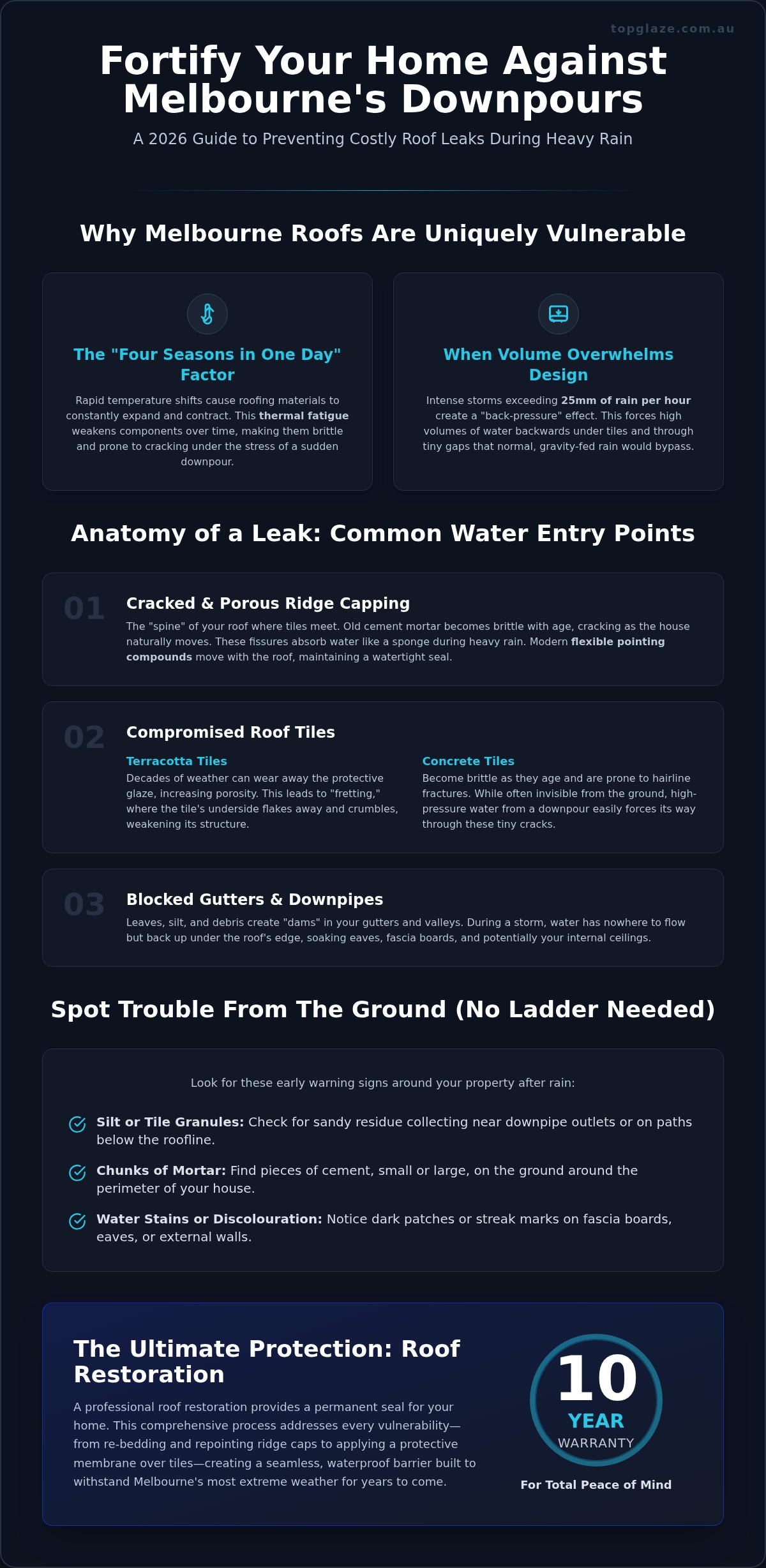
Our city’s rapid temperature shifts create a cycle of expansion and contraction that takes a toll on building materials over time. Thermal fatigue is the progressive structural weakening of roofing components caused by repeated cycles of heating and cooling. This process is particularly aggressive in Melbourne, where a 30-degree afternoon can plummet to 12 degrees in hours.
Victorian homes, especially those with older tile roofs, are susceptible to ridge capping failure. The mortar used to bed these tiles becomes brittle. As the roof expands in the sun and contracts in the cold, the mortar cracks, creating tiny fissures. During a standard light shower, the water might simply run off. However, when a heavy storm hits, these cracks act like sponges, drawing water into the internal roof space.
Volume vs. Velocity: The Physics of a Leak
There is a distinct difference between how a roof handles velocity and how it handles volume. Most residential roofs in Melbourne are designed to shed water efficiently, but they can reach a breaking point when rainfall intensity exceeds approximately 25mm per hour. At this stage, the sheer weight and volume of water can overwhelm the drainage capacity of your tiles or metal sheets.
The “overflow effect” occurs when the volume of water moving down the roof pitch is greater than what the gutters can carry away. This creates a back-pressure situation where water levels rise, forcing liquid backwards under the bottom edge of the tiles or through the laps in metal roofing. This risk increases significantly when debris like leaves or silt creates “dams” in the valleys. These blockages redirect water into areas not designed for high-volume flow, such as the eaves or around chimney flashing. Wind-driven rain complicates this further by pushing water horizontally, finding gaps in the flashing that gravity-fed rain would normally bypass. By understanding these pressure points, homeowners can better prioritise maintenance before the next major weather event arrives.
Identifying Vulnerable Points: Where Roof Leaks Start
A roof is only as strong as its weakest component. When we discuss preventing roof leaks in heavy rain, we’re looking for the specific gaps that high-pressure water exploits. Most leaks don’t start as massive holes. They begin as small, overlooked defects that fail under the stress of a Victorian storm. Identifying these vulnerable points early can save you thousands in internal repairs.
Terracotta vs. Concrete Tile Vulnerabilities
Melbourne’s suburbs feature a mix of heritage terracotta and modern concrete tiles. Each material faces unique challenges during a downpour. For instance, older terracotta tiles often suffer from increased porosity. Over decades, the protective glaze wears thin, allowing the tile to absorb water like a sponge. This leads to “fretting,” where the underside of the tile begins to flake away and crumble, eventually compromising its structural integrity. You can find more detail on these material differences in the homeowners guide to roof tile roofing in Melbourne.
Concrete tiles are incredibly durable but tend to become brittle as they age. They are prone to hairline fractures that might not be visible from the ground but open up during the intense pressure of a heavy downpour. If a tile has been displaced by high winds or a stray branch, it creates a direct channel for water to bypass your primary barrier and soak your ceiling insulation.
The Critical Role of Ridge Capping
The ridge capping is the “spine” of your roof, where two planes meet at the peak. Historically, these tiles were held in place with a simple sand and cement mortar. However, Melbourne’s reactive clay soils mean that many homes experience slight structural movement throughout the year. This movement causes rigid cement to crack and separate from the tiles, creating entry points for moisture.
Modern standards have shifted toward flexible pointing compounds. These specialised materials bond to the tile and allow for natural movement without cracking or losing their seal. If you notice chunks of mortar sitting in your gutters, it’s a clear sign your ridge capping is no longer water-tight and requires attention.
Other common culprits include rusted valley irons and faulty flashing. Valley irons are metal channels designed to carry massive volumes of water from different roof sections. If they’ve corroded or become blocked with silt, the water will simply overflow into the roof cavity. Similarly, the flashing around chimneys and skylights can pull away over time. If the seal isn’t flush, wind-driven rain will find its way inside. If you’re concerned about these hidden vulnerabilities, a professional roof assessment can identify these issues before the next storm arrives.
The First Line of Defence: Gutters, Downpipes, and Fascias
While many homeowners look to their tiles when a storm hits, the perimeter drainage system is often where the real battle is won or lost. Your gutters, downpipes, and fascia boards form a critical network. If this network fails, the water has nowhere to go but back into your home’s structure. This is a primary factor in preventing roof leaks in heavy rain, especially during the intense weather events we see across the Mornington Peninsula.
Guttering and Fascia: The Unsung Heroes
Blocked gutters cause water to back up and overflow. In many Melbourne designs, this overflow doesn’t just spill over the front; it pours into the eaves. Once water enters the eaves, it quickly reaches the timber fascia boards and internal wall plates. Over time, this moisture leads to wood rot and structural instability. Box gutters, which are common in modern architectural homes, are particularly high-risk. Because they are located within the roof perimeter, any failure or blockage results in immediate internal flooding. Maintaining these systems is essential. If your drainage is showing signs of age, you should consider a professional Expert Gutter Replacement Melbourne to ensure your home remains dry.
Leaf Protection and Storm Drainage
The volume of water during a heavy downpour can be staggering. For every square metre of roof, one millimetre of rain equals one litre of water. A large Melbourne home can easily generate thousands of litres of runoff in a single hour. If your downpipe capacity doesn’t match your roof surface area, the system will simply fail. We often see older homes where the original downpipes are too small or too few to handle modern storm intensities.
Leaf guard systems are a vital investment for long-term protection. Beyond keeping out leaves, they prevent the accumulation of silt and organic “sludge” that settles in the bottom of gutters. This sludge holds moisture against the metal, leading to premature rust and holes. We also recommend checking downpipe spreaders on multi-level homes. These components ensure that water from an upper roof is distributed evenly across the lower tiles, rather than hitting a single spot with high-velocity pressure that can force water under the laps. Clear, unobstructed drainage is your best insurance policy against the unpredictable Victorian climate.
Your 2026 Preventative Maintenance Checklist
Beyond ensuring your roof and gutters are clear, protecting your property’s entry points from rising surface water is a crucial part of storm preparedness; to see how you can fortify your home, check out FloodWater Pros and their range of specialised flood barrier systems.
Maintaining your home’s primary shield shouldn’t involve climbing a ladder every time the clouds turn grey. A structured approach to preventing roof leaks in heavy rain starts with observation and regularity. By following a simple 2026 maintenance checklist, you can identify minor flaws before they become structural emergencies. Proactive care is always more cost-effective than reactive repairs after the damage is done.
- Check for silt and granules: When cleaning your gutters, look for a build-up of sand-like sediment. In concrete tiles, this indicates the protective surface is wearing away, leaving the tile porous and prone to cracking.
- Inspect the ceiling cavity: On a bright day, enter your roof space with the lights off. If you can see pinpricks of daylight, water can certainly get in. Look for dark water stains on the timber battening or insulation.
- Observe the roof line: Stand across the street and look at the “ridgeline” of your home. Any visible sagging or dipping suggests structural movement or failing timber supports that need immediate attention.
- Monitor internal plasterboard: Keep an eye on your ceilings for bubbling paint or faint yellow rings. These are the first signs that a leak has bypassed your tiles and is soaking into your plaster.
Ground-Level Inspection Tips
You can perform a surprisingly thorough audit without ever leaving the ground. Use a pair of binoculars to scan your roof for slipped tiles, cracked mortar in the ridge capping, or overgrown moss. Moss and lichen might look harmless, but they act like sponges, holding moisture against the tile surface and preventing proper drainage during heavy downpours. You should also check the “drip line” in your garden beds or on your concrete paths. If you see signs of soil erosion or splashing directly under your gutters, it’s a definitive sign that your system is overflowing during rain events.
Professional Audits: When to Call the Experts
While DIY checks are valuable, they cannot replace the trained eye of a specialist. We recommend a professional roof inspection every 3 to 5 years. A licensed roofer will check the integrity of your valley irons, the condition of the hidden “soaker” flashing, and the tension of your gutter brackets. They identify the root causes that a simple patch-up job might miss.
Choosing a service that includes a 10-year warranty on residential repairs provides the ultimate assurance that your home is protected by a standard of workmanship designed to last a decade. If you’ve spotted any of these warning signs during your own walk-around, it’s time to secure your home with a professional roof assessment from a team that understands Melbourne’s unique conditions.
Roof Restoration: The Ultimate Leak Prevention Strategy
While minor repairs can address immediate drips, they often act as a temporary fix for a much larger problem. A “patch repair” targets a single visible fault, but it doesn’t account for the underlying age and wear of the entire structure. In contrast, a professional roof restoration is a holistic approach that treats the roof as a unified shield. This is the most effective method for preventing roof leaks in heavy rain because it addresses every potential failure point simultaneously, from the ridge caps to the tiles and valleys.
The synergy between cleaning, re-pointing, and coating is what creates a truly water-tight home. Cleaning removes the organic growth that traps moisture, while structural repairs replace any tiles that have already failed. Re-pointing with flexible compounds ensures the “spine” of your roof can move with Melbourne’s reactive soils without cracking. Finally, applying a high-quality membrane seals the surface, preventing water from soaking into porous tiles. This proactive investment is significantly more cost-effective than paying for emergency call-outs and internal plaster repairs every time a storm hits.
The Top Glaze Restoration Process
Our family business has been refining our restoration method since 1987 to suit the specific needs of Melbourne and the Mornington Peninsula. We start with a high-pressure clean to reveal the true condition of every tile, followed by essential structural repairs. We then apply our specialised flexible pointing that won’t crack under thermal stress. To finish, we use premium coatings designed specifically for the harsh Australian sun and rain. Because we believe in the longevity of our work, every residential restoration comes with a 10-year warranty, giving you the peace of mind that your home is protected for a decade of winters.
When Replacement is the Only Option
There are instances where a roof has simply reached the end of its functional life. If your tiles are showing signs of extreme fretting or if the internal timber battening has suffered significant rot, restoration might no longer be a viable option. You can learn more about these warning signs in our full roof replacement Melbourne the 2026 homeowners buying guide. In these cases, a full roof replacement is the only way to ensure safety and structural integrity.
Many homeowners are now opting for a tile-to-metal roof conversion using Colorbond steel. This provides exceptional drainage and is far lighter than traditional tiles, reducing the load on your home’s frame. Beyond the functional benefits, a new roof adds substantial value to your Melbourne property, making it a sound financial decision as well as a practical one. Whether you need a restoration or a full replacement, choosing a licensed contractor with a 30-year track record ensures the job is done right the first time.
Protect Your Family and Your Investment
Melbourne’s weather is famously unpredictable, but your home’s defence shouldn’t be. By understanding the structural fatigue caused by our rapid temperature shifts and maintaining your guttering systems, you’ve already taken the first steps toward preventing roof leaks in heavy rain. A professional restoration is more than just a cosmetic upgrade; it’s a comprehensive seal that protects your internal ceilings from the devastating costs of water damage.
Since 1987, our family business has been fortifying homes across the Mornington Peninsula with licensed workmanship and seasoned expertise. We provide the certainty of a 10-year warranty on all residential work, ensuring your peace of mind lasts well beyond the current wet season. Don’t wait for the next drip to appear on your plasterboard. Take control of your home’s health with a team that has encountered every local roofing challenge over the last 30 years.
Get a Free Quote for Your Roof Restoration or Repair Today and enjoy the comfort of a dry, secure home no matter what the Victorian clouds deliver.
Frequently Asked Questions
How do I know if my roof is going to leak before it rains?
Look for early warning signs like displaced tiles or cracked mortar in your ridge capping. You can use binoculars to safely inspect your roof from the ground without a ladder. Inside your home, check for faint yellow stains on the ceiling or peeling paint around light fixtures. If you can access the roof space, look for daylight pinpricks through the tiles. Identifying these vulnerabilities is the best way of preventing roof leaks in heavy rain before the storm hits.
Will a small roof leak go away on its own or wait until summer?
A roof leak will never fix itself and often worsens as the underlying timber battening absorbs moisture. While a small drip might seem manageable during light showers, the volume of a heavy Melbourne downpour will force more water into the cavity. This leads to sagging plasterboard and potential electrical hazards. It’s always more cost-effective to address a minor fault immediately rather than waiting for the next major weather event to cause extensive internal damage.
How much does it cost to fix a leaking roof in Melbourne?
The cost of repairing a leak depends on several factors, including the roofing material, the height of the home, and the severity of the structural damage. Because every Melbourne property is unique, a standard price range isn’t practical. A professional assessment is the only way to get an accurate quote tailored to your specific needs. Reputable roofing specialists like Miller’s Home Improvement, who focus on both residential and commercial roofing, advocate for these thorough evaluations to ensure that all underlying issues are addressed. Investing in a thorough repair now prevents the far higher costs associated with replacing water-damaged insulation, electrical systems, and ceiling plaster later.
Can I prevent roof leaks by just cleaning my gutters?
Cleaning your gutters is a vital first step, but it isn’t a complete solution on its own. While clear gutters prevent water from overflowing into your eaves, they don’t address cracked tiles, porous mortar, or rusted valley irons. Effective leak prevention requires a holistic approach that looks at both the drainage system and the integrity of the roof surface. Combining regular gutter maintenance with professional leaf guard installation provides much stronger protection during high-volume rainfall events.
Is a roof restoration better than just repairing a leak?
A restoration is generally superior because it addresses the entire roof as a single, integrated system. While a patch repair might stop one specific drip, it ignores the general wear and tear that leads to future failures. A professional restoration involves high-pressure cleaning, structural repairs, and flexible re-pointing. This comprehensive approach seals the entire home and is backed by a 10-year warranty, offering far more stability and peace of mind than isolated, temporary repairs.
What should I do if my roof starts leaking during a heavy storm?
Your primary focus should be on safety and minimising internal damage to your belongings. Place buckets or containers under the drip to protect your flooring and furniture. If water is entering through a light fixture, turn off the electricity at the mains immediately. Never attempt to climb onto the roof during a storm, as wet tiles are incredibly slippery. Once the weather clears, contact a licensed roofer to perform a professional assessment and permanent repair.
Does home insurance cover roof leaks caused by heavy rain?
Most Australian home insurance policies cover sudden damage caused by storms, but they often exclude leaks resulting from gradual wear or lack of maintenance. If your roof fails because it hasn’t been maintained, your claim might be rejected. Insurance companies expect homeowners to keep their properties in good repair. It’s important to review your Product Disclosure Statement (PDS) to understand exactly what is covered and ensure you have evidence of regular professional maintenance.
How often should a Melbourne roof be professionally inspected?
We recommend having your roof professionally inspected every 3 to 5 years to stay ahead of Melbourne’s volatile weather. Regular audits allow licensed tradespeople to spot hairline fractures, deteriorating seals, or shifting ridge caps that aren’t visible to the untrained eye. In 2026, proactive maintenance remains the most effective strategy for extending the life of your roof. For homes over 20 years old, more frequent checks are often necessary to ensure the structure remains water-tight.


