

Could a noisy roof in wind and rain be harmless movement, or a warning that something has come loose? Rattling, flapping or whistling from overhead can be unsettling, especially when you can’t see the source. Some popping and creaking can come from roofing materials expanding or contracting, but persistent or worsening noise may point to loose or damaged components.
The sound is a clue, not a diagnosis. When it happens, where it seems loudest and whether you notice water entry can help narrow down possible causes, including roof tiles, metal sheets and flashing. You don’t need to climb onto the roof to start investigating. After wet or windy weather, keep your checks indoors and at ground level.
This guide explains common causes of roof noise, signs that deserve attention and what you can safely look for. You’ll also learn when monitoring may be reasonable and when a professional roof assessment is a sensible next step to help protect your Melbourne home from further damage.
Key Takeaways
- A noisy roof in wind and rain can have several causes, so the sound alone doesn’t confirm damage.
- Rattling, flapping, drumming and popping can offer clues about what may be happening overhead.
- Check from indoors and ground level, and note when and where the noise occurs.
- Water stains, visible damage or persistent loud noise are reasons to arrange a professional assessment.
- An experienced roofer can inspect roof components and recommend a response suited to the cause.
Why is your roof noisy in wind and rain? Start with the sound
Wind and rain can make sounds from tile and metal roofs more noticeable, particularly when gusts pick up or rain falls heavily. Hearing a noisy roof in wind and rain can be unsettling, but the sound alone doesn’t tell you whether anything is damaged. Roof noise can come from rain hitting a surface, movement around the roof or sound travelling through the roof space.
Start by noticing the pattern. Does the noise happen only during gusts, continue through steady rain or change as the weather shifts? Is it loudest in one room, near the eaves or beneath a particular roof area? These details can help a roofer decide where to look. Keep in mind that weather can make roof sounds more noticeable, but sound alone isn’t evidence of roof damage.
What does a noisy roof sound like in bad weather?
Rattling, flapping, tapping, banging and drumming describe what you hear, but none identifies the cause by itself. A brief rattle during a strong gust differs from steady pattering during rainfall. Intermittent banging may come and go as the wind changes, while heavy rain can make water striking the roof more noticeable.
Make a note of the room where the sound is clearest, the roof area it seems to come from and whether it occurs during gusts, steady rain or both. Record the weather and approximate time as well. You don’t need to pinpoint the source; a clear description is a useful starting point.
Why can Melbourne wind and rain make roof sounds stand out?
Exposed parts of a roof may be more affected by gusts, and changing wind direction can alter which side of the home catches the weather. That can make a sound seem to shift or occur only under certain conditions. Roof material, roof-space construction and insulation also affect how impact and movement are heard indoors. The principles behind roof design loads help explain how roofs are designed to manage forces, but an indoor noise can’t show whether a particular component is sound.
Don’t judge the roof by volume alone. Note how the noise changes with the weather, then look for separate signs such as visible movement or water marks. Those clues can help you decide whether to monitor the sound or arrange a closer assessment.
What causes a roof to rattle, flap or drum in wind and rain?
A roof can make noise when wind or rain causes parts to move, vibrate or knock against one another. Loose fixings, a section of flashing or contact between roofing components may create intermittent sounds as gusts rise and fall. Rain striking the roof is different: it often creates a more even patter or drumming that follows the intensity of the rainfall.
A sound pattern can point towards possible causes, but it can’t confirm which component is responsible without an inspection. A rattle that comes and goes with gusts may suggest movement, while steady drumming during rainfall may simply be water hitting the roof. Neither tile nor metal roofing is always noisier. The roof’s condition, installation and construction all affect what you hear.
Why might a metal roof make a flapping or rattling sound?
On a metal roof, sheets, flashings and their fixings are possible sources of noise if movement is audible. Wind pressure can make the sound intermittent: a sheet or fitting may move during stronger gusts, then go quiet when conditions ease. That pattern is a clue, not proof. A roofer needs to inspect the roof to establish whether a component is loose, damaged or moving as intended.
Don’t assume the whole roof needs attention based on the sound alone. An assessment can focus on relevant components and identify a repair suited to the cause. Guidance from the National Roofing Contractors Association offers a professional roofing reference point, but the roof itself must be examined to determine what’s happening at your home.
Why might tiles, gutters or roof-space parts make noise?
A loose or displaced roof tile may shift or knock during gusty weather. The sound may also come from outside the roof covering: gutters, fascia or downpipes can rattle, and a nearby branch may tap against the home as it moves in the wind. These sources can sound as though they’re overhead even when the roof tiles or sheets aren’t the cause.
There may be sources inside the roof space too. An object stored there or insulation that has shifted could contribute to a sound, though neither should be assumed without checking. Keep your observations to safe vantage points and note whether the noise changes with gusts, rainfall or both. If it persists or comes with visible damage or water entry, a residential roof repair assessment can help identify the source and guide the next step.
Does a noisy roof mean damage, or can it be normal?
No. Noise by itself doesn’t prove your roof has failed. Wind and heavy rain can make ordinary sounds more noticeable, while a loose or damaged component may also rattle, flap or knock. The pattern and any other signs of a problem matter.
Use this comparison as a guide, not a diagnosis. Even if the sound stops when the weather clears, recurring or worsening noise deserves attention.
| What you notice | A sensible response |
|---|---|
| Noise only during intense weather, with no visible change or signs of water inside | Note when it happens and whether it changes with wind direction or rainfall. Keep observing from a safe place. |
| Repeated banging or rattling, visible movement, or roof material that looks out of place | Arrange a closer roof assessment. Don’t climb up to investigate. |
| New water marks, drips or an active leak indoors | Take the water entry seriously and arrange professional attention. Keep clear of any affected area that may be unsafe. |
| Debris after wind or rain, or noise that is becoming more frequent or louder | Record what you can see from the ground and arrange an assessment to establish the cause. |
When can wind or rain noise be less concerning?
A sound that occurs only during a burst of heavy rain or strong gusts, then stops afterwards, may be less concerning if there are no other warning signs. Notice whether it changes when the wind shifts or rainfall eases. That pattern can help describe the issue, but it can’t confirm that the roof is undamaged. Keep a record if the noise returns in later weather.
Which signs suggest a roof inspection is sensible?
Look for new water marks on ceilings or walls, drips, debris on the ground or roofing material that appears displaced when viewed safely from ground level. Repeated banging, signs of movement or noise that is getting worse also warrant a closer assessment, even if the sound disappears when the weather passes. For technical background, the National Roofing Contractors Association shares roofing industry standards; a roofer’s inspection is needed to assess your roof’s actual condition.
If you notice these signs, an experienced roofer can inspect the relevant components and recommend a response suited to the cause. Read more about expert Melbourne roof repairs.
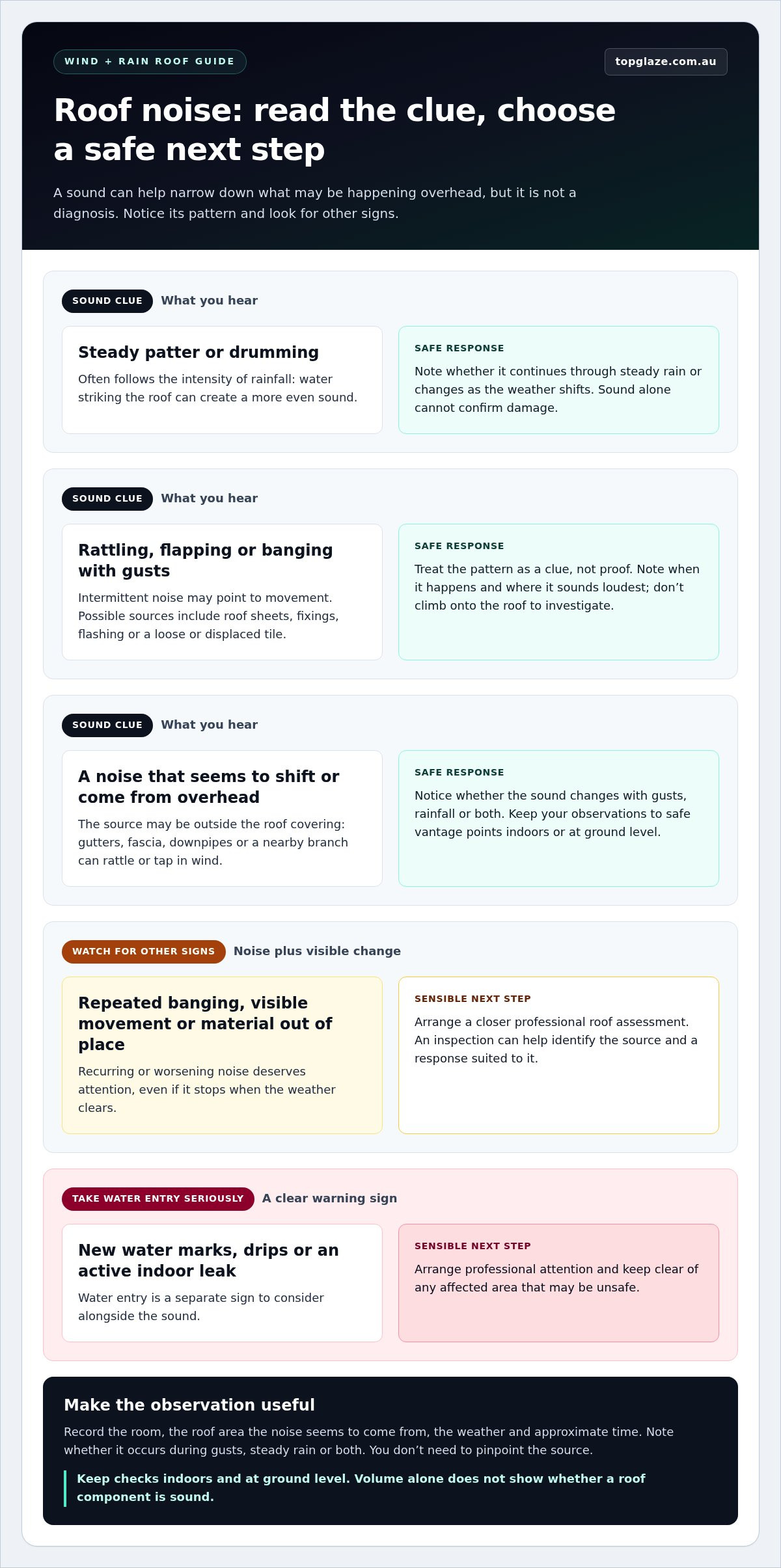
How to check a noisy roof safely after wind or rain
Start indoors, then move to a safe spot at ground level. You’re gathering useful clues, not diagnosing the roof or testing whether it’s secure. Never climb onto a roof to investigate, especially after a storm.
- Check ceilings and upper walls from indoors. Look for new stains, damp patches, bubbling paint or dripping water. Note which room they’re in and whether the area seems to be changing.
- Record the noise. Write down what it sounds like, when it starts and stops, and whether it occurs during gusts, steady rain or both. Note the room where it’s clearest and the roof area it seems to come from.
- Look from safe ground. From a stable position, check for tiles that appear displaced, loose-looking metal sheets or hanging debris. Don’t go underneath anything that looks unstable.
- Consider nearby sound sources. Note whether the noise seems closer to the roof, gutters, fascia or nearby trees. A short recording from indoors may help a roofer understand the sound, but don’t put yourself at risk to capture it.
- Share your notes. Include the weather conditions and any visible changes. If tiles appear to have shifted, this Melbourne roof tiling guide offers further context, but leave roof access and inspection to a professional.
What should you avoid doing during or after a storm?
Don’t walk on a wet, windy or damaged roof, and don’t use a ladder in those conditions. Surfaces and access points can be unsafe, and wind can make reaching or steadying a ladder difficult. Keep clear of fallen electrical wires and report them to the appropriate electricity authority. Stay well away from visibly unstable roof materials.
If water is actively entering, protect belongings only if you can do so without approaching electrical hazards or an unsafe ceiling. Don’t touch wet electrical fittings. Keep people clear of the affected area and arrange appropriate help. A careful ground-level check is enough; you don’t need to risk a fall to investigate a noisy roof in wind and rain.
Once it’s safe, your notes can help an experienced roofer assess the likely source and recommend a suitable response. Arrange a roof assessment if you’ve noticed water entry, visible movement or damage.
When a noisy roof needs professional attention in Melbourne
A persistent or worsening noise is worth investigating, particularly if it comes with water entry, visible damage or material that appears to have shifted. A roofer can assess the relevant areas of a tile or metal roof, along with flashings, gutters and other visible components, to help identify what may be causing the sound. This is a measured next step, not a reason to assume the whole roof has failed.
What happens during a professional roof assessment?
An experienced roofer considers the clues you’ve noticed, such as where the noise occurs and whether it coincides with gusts or rain. They can check relevant roof areas and components for movement, damage and signs of water entry. Your notes about recurring sounds, timing and weather conditions can help direct attention to the areas that need closer examination.
The findings guide the recommendation. Depending on the cause and the roof’s condition, the appropriate response may be a targeted repair, restoration or broader roofing work. The right work depends on an assessment of the roof. Top Glaze Roofing Systems works on residential tile and metal roofs across Melbourne and the Mornington Peninsula, providing roof repairs, restoration and replacement with more than 30 years of roofing experience.
What is a sensible next step for a noisy roof?
Arrange an assessment promptly if there’s an active leak, visible damage or roofing material that looks unstable. Keep clear of unstable areas and don’t climb onto the roof to investigate. If the sound recurs without obvious damage, record when it happens, which room or area it seems to come from and the weather conditions. Those details can help the roofer understand the pattern and assess the relevant parts of the roof.
A noisy roof in wind and rain is a reason to pay attention, but the sound alone can’t establish the cause. A professional assessment connects what you’ve observed with the roof’s condition, so the recommended work can match the issue rather than rely on guesswork.
Melbourne homeowners can speak with Top Glaze about roof concerns and arrange a considered next step for their roof.
Take the next step with confidence
A noisy roof in wind and rain is a clue to investigate, not proof of damage. The sound’s pattern can help narrow down possible sources, while water stains, visible movement, displaced roofing or recurring, worsening noise are reasons to arrange an assessment. Start with safe observations from indoors and ground level. Never climb onto a roof to find the cause.
A roofer can assess the relevant tiles or metal roofing, flashings, gutters and other visible components, then recommend a response suited to the roof’s condition. This measured approach avoids guesswork and focuses attention on what the inspection finds.
Top Glaze Roofing Systems is a Melbourne-based, family-owned roofing business founded in 1987, with more than 30 years of residential roofing experience. Residential projects are backed by a 10-year warranty. If you’ve noticed concerning roof noise or signs of water entry, talk to Top Glaze about a noisy roof. A professional assessment can help you understand what’s happening and choose a sensible way forward.
Frequently Asked Questions
Is it normal for a roof to make noise in strong wind?
Some roof noise can be more noticeable during strong winds, particularly when gusts change direction or rain strikes the surface. A noisy roof in wind and rain doesn’t automatically mean damage. Pay attention to whether the sound is new or worsening, and whether you can see movement or notice water stains or leaks. Don’t climb up to investigate. Observe from inside and from a safe position at ground level.
Can heavy rain make a roof sound like it is leaking?
Yes, rain striking roof sheets, tiles, gutters or other surfaces can create tapping or drumming that sounds like water getting in. Listen for whether the noise seems to come from outside or inside, then check ceilings and walls for damp patches or drips. The sound itself can’t confirm a leak. If you find water entering the home, treat it as a separate warning sign and arrange professional attention.
Why does my metal roof flap or rattle when it is windy?
Flapping or rattling may come from movement in metal roof sheets, flashings or fixings, but the sound alone can’t identify the cause. Notice where it seems loudest and whether it occurs only during gusts. From the ground, look for visible changes without using a ladder. If the noise keeps recurring or is getting worse, arrange a roof assessment so the relevant components can be checked safely.
Should I worry if my roof only makes noise during storms?
A sound that only occurs during storms isn’t automatically proof of roof damage, but don’t dismiss it if it’s new, keeps returning or comes with other signs. Once conditions settle, check indoors for water marks and look from the ground for material that appears displaced. Note when the sound occurs and what the weather is like. Never inspect or walk on a roof during wet or windy weather.
Can a loose roof tile make noise in wind and rain?
A loose or displaced tile may move or knock during gusts, but other roof components can make similar sounds. Don’t climb onto the roof to check. From a safe position, look for visible changes and note any water entry or debris on the ground. A roofer can inspect the roof and determine whether a tile or another component needs attention, then recommend a response suited to the condition.
What should I do if my roof is noisy and water is coming inside?
Keep clear of any ceiling area that looks unstable, and move belongings only if you can do so safely. Don’t climb onto the roof or approach fallen wires. Note where water is entering and whether the noise changes as rainfall continues. Active water entry needs prompt attention. Arrange a professional assessment, and keep away from affected areas if there’s any concern about ceiling stability or electrical hazards.
Can gutters or fascia make noise in windy weather?
Yes, gutters, fascia, downpipes or nearby branches can rattle, knock or move in gusts, making the sound seem to come from the roof. From a safe spot at ground level, note where the noise is loudest and look for visible movement or damage without using a ladder. If the noise persists or occurs with water overflow or leaks, arrange an assessment of the relevant roof and guttering components.


