

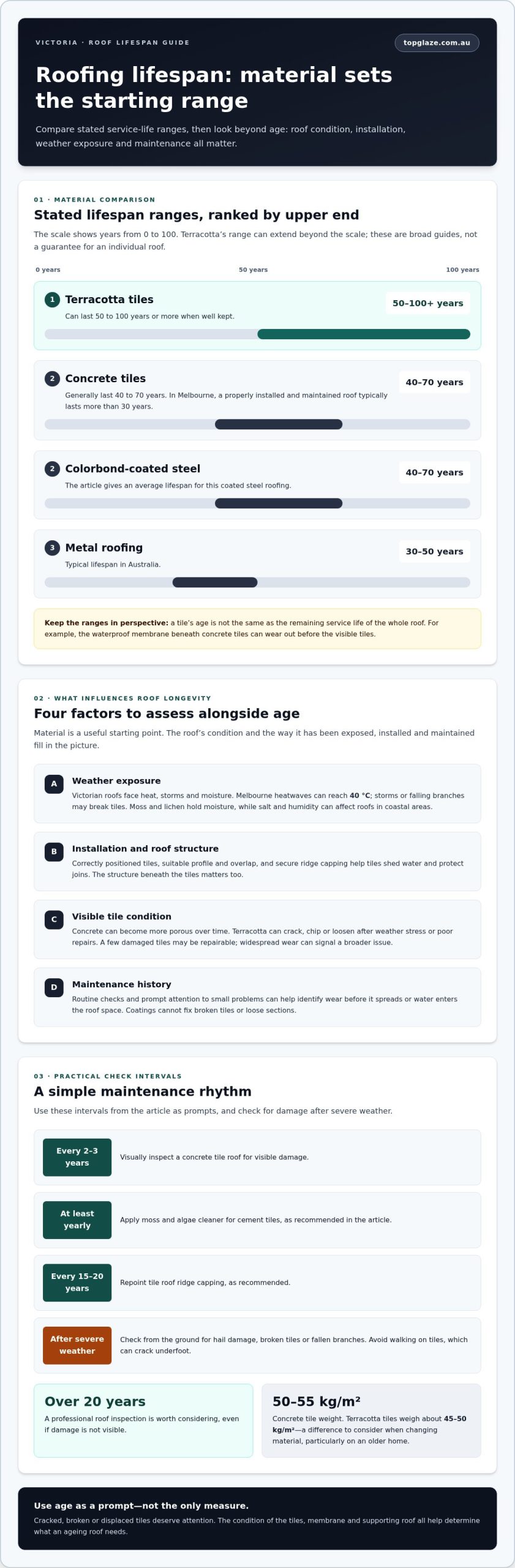
The lifespan of a tile roof in Victoria is commonly measured in decades: concrete tiles generally last 40 to 70 years, while well-kept terracotta tiles can last 50 to 100 years or more. Metal roofing typically lasts 30 to 50 years in Australia. The material gives you a useful guide, but it doesn’t tell the whole story.
It’s natural to wonder whether an older roof is nearing the end of its life, especially after harsh weather or when tiles show signs of wear. This article explains the lifespan of a tile roof in Victoria and compares concrete and terracotta tiles with metal roofing. It also covers how Victorian weather, installation quality and maintenance affect longevity, plus the signs that can help you decide whether your roof needs repair or replacement.
Key Takeaways
- Use material as a starting point: concrete tiles commonly last 40 to 70 years, terracotta can last 50 to 100 years or more, and metal roofing typically lasts 30 to 50 years.
- Look beyond the tiles’ age: weather exposure, installation quality and maintenance all influence how long a roof performs.
- Watch for cracked, broken or displaced tiles, as prompt attention can help limit further damage and water ingress.
- Roof restoration may suit tiles that remain structurally sound; widespread deterioration may call for a closer look at repairs or replacement.
Typical lifespans of concrete, terracotta and metal roofing
Roofing material offers a useful starting point, but the tile’s condition and the roof beneath it also matter. In Victoria, concrete and terracotta tiles can remain in service for decades, while metal roofing has a different lifespan range.
Concrete and terracotta tile longevity
Concrete tile roofs generally last 40 to 70 years, while terracotta tiles can last 50 to 100 years or more. These ranges help you judge whether an ageing roof needs attention, but age alone doesn’t determine its condition. Concrete can become more porous over time, and terracotta tiles can crack, chip or loosen after repeated weather stress or poor repairs.
Metal roofing typically lasts 30 to 50 years in Australia. For comparison, Colorbond-coated steel roofing has an average lifespan of 40 to 70 years. Roof weight also differs: concrete tiles weigh about 50 to 55 kilograms per square metre, while terracotta tiles weigh about 45 to 50. That difference matters when considering a material change, particularly on an older home.
Concrete tile roofs in Melbourne
A properly installed and maintained concrete tile roof in Melbourne typically lasts more than 30 years. The tiles themselves can outlast the waterproof membrane beneath them, so a roof’s visible surface doesn’t always show the condition of every component. This distinction helps explain why an older roof may need assessment before a decision about repairs or replacement.
When assessing concrete roof tiles, consider whether their profile and overlap suit the roof’s existing design. These details affect how replacement tiles fit alongside the existing ones, as well as the finished roof’s weight and appearance. A few broken tiles may be repairable, while widespread wear can signal a broader problem.
In Victoria, whether replacing a tile roof requires a building permit depends on the scope of work and the property. Planning controls may also apply. Before work starts, check the relevant requirements with your local council or building surveyor.
Home insurance coverage for an ageing tile roof depends on the policy wording and the cause of damage. A sudden event may be treated differently from gradual deterioration, so review the policy’s exclusions and claims conditions for your situation.
Weather and maintenance effects on roof longevity
Victoria’s weather exposes roof tiles to heat, storms and moisture. Melbourne heatwaves can reach 40 °C, making regular checks useful for spotting weather-related damage early.
Weather effects on roof longevity
Repeated heat, moisture and storms can weaken roof tiles and junctions over time. Weather exposure can contribute to tile damage over time, and severe weather or falling branches may break tiles. Moss and lichen can hold moisture against tiles and around overlaps, accelerating deterioration. Salt and humidity can also affect roofing materials in coastal areas.
Roof inspections and maintenance
Tile roof maintenance starts with checking for visible damage and addressing small problems before water enters the roof space. Visually inspect a concrete tile roof every two to three years, and check it after severe weather for hail damage, broken tiles or fallen branches. Replace cracked or broken tiles promptly, and realign loose or displaced tiles to help keep the roof watertight. Trim overhanging branches to reduce the risk of damage and shade-related moss growth. For cement tiles, the guidance recommends applying moss and algae cleaner at least once a year.
Installation and ongoing maintenance
Installation quality affects how well tiles sit together and shed water, while ongoing maintenance helps identify wear before it spreads. Correctly positioned tiles and secure ridge capping help protect vulnerable joins. Repointing tile roof ridge capping is recommended every 15-20 years. Discoloured cement tiles may need resealing, but a surface coating can’t fix broken tiles or loose sections. These checks help distinguish localised wear from broader roof deterioration.
After hail, storms or falling branches, look for broken tiles from the ground and arrange appropriate attention for visible damage. Avoid walking on tiles, which can crack underfoot. If you need help understanding what damage means for your roof, explore roofing guidance.
What Is The Life Expectancy Of A Tile Roof?
Tile roofs have a wide range of expected service lives, so age alone does not determine whether a roof remains sound. The tile material, structural condition and maintenance history all help put its age in context.
Clay tile roof lifespan
Clay roof tiles can last from 50 to over 100 years, particularly when well maintained. That long range helps homeowners avoid treating a particular age as an automatic replacement point. Some Australian houses still have clay tiles more than 130 years old, showing how individual roofs can outlast broad estimates when their condition remains sound.
Those examples don’t mean every old roof is structurally sound. Tile condition and the structure beneath it matter too. A professional roof inspection is worth considering once a roof is over 20 years old, even if no damage is visible. This can help reveal issues that aren’t clear from the ground.
Terracotta tile longevity
Terracotta tiles can last 50 to 100 years or more, making them a long-lived roofing material. For homeowners, the practical question is whether the installed tiles and their supporting roof remain in good condition. Cracks, chips and loosened tiles can appear after weather stress or improper repairs, so an inspection should consider the roof as a whole.
A tile’s age and a roof’s remaining service life aren’t always the same. Across tile roofs, expected life spans range from 20 to 100 years, reflecting differences in materials, installation and care. Cleaning can help manage moss and lichen, but it won’t correct structural movement or repair damaged tiles. Visible changes deserve closer assessment.
Use age as a prompt for closer attention, not as the only measure of roof condition. A roof approaching 50 years may still have sound tiles, while an earlier problem can affect a younger roof. Compare the condition of the tiles, ridge areas and supporting structure, and note any broken or displaced sections. That record gives an inspection a clearer starting point.
The structure is especially important on older homes if the roof has been altered or shows signs of movement. An inspection can distinguish tile wear from wider concerns and help determine whether maintenance, repairs or more substantial work are appropriate. Make the decision based on the roof’s actual condition, not its age alone.
Expected lifespan of cement tile roofs
Cement roof tiles in Australia can be expected to last around 50 years. Well-maintained cement tiles in suitable conditions can last up to 100 years, so their age alone doesn’t show whether replacing the roof is necessary. Check the tiles’ condition alongside the roof’s performance, including signs of leaks, damage or moisture reaching the home.
Environmental exposure helps explain why two cement tile roofs of similar age can wear differently. Salt, humidity and storms can affect roofs in coastal areas. In hot, dry inland areas, intense ultraviolet exposure and heat can crack or embrittle tiles. Local conditions influence how soon a roof may need attention.
Slate has a different expected lifespan: slate tile roofs in Australia average 80 to 100 years or more. That comparison can help frame long-term roof decisions, but material alone doesn’t determine whether a particular roof is sound. Installation, ongoing care and the condition of the supporting structure also matter.
Look for cracked tiles, signs of moisture inside, or changes in the roof’s colour and surface. A cracked tile can let water reach areas beneath the roof covering, so timely repairs can help limit further damage. An assessment can show whether the damage is localised or widespread and whether individual repairs are still suitable.
Replacing a roof is a bigger decision than repairing isolated damage. Consider how many tiles are affected and how widely damage is spread, whether leaks keep returning, and whether the components beneath the tiles remain serviceable. A well-maintained roof may perform for decades, while ongoing environmental stress can accelerate deterioration. These factors are more useful than age alone when weighing repairs against replacement.
If cracked or damaged tiles need attention, arrange roof repairs for tile damage to address the affected areas.
Top Glaze Roofing Systems: Roof Restoration
Top Glaze Roofing Systems can help you decide whether roof restoration, repairs or replacement suit your tiles’ condition. Restoration may be appropriate when tiles remain structurally sound but need broader attention; isolated broken tiles may call for repairs. Widespread deterioration can make roof replacement more suitable. Guttering and fascia work can also address related drainage concerns.
A roof assessment clarifies the extent of wear and which work is appropriate, rather than relying on age alone. If you’re deciding what to do next, contact Top Glaze Roofing Systems or visit topglaze.com.au.
Make your next roofing decision with confidence
Roof age is only part of the picture. Start by noting what the roof is doing now: where and when a new leak, displaced tile or change inside the home appears. Keep a record of previous repairs and weather damage too. These details help focus an assessment and clarify whether the issue is isolated or part of a wider pattern.
Understanding the lifespan of a tile roof in Victoria gives you context, not a deadline. Consider the roof’s visible condition alongside any signs of water ingress. A clear assessment helps you decide what needs attention now and what can be planned for later, without making a major decision based on age alone.
For guidance on the next step for your roof, get in touch with Top Glaze Roofing Systems. A considered decision starts with understanding the roof in front of you, and that’s a practical place to begin.
Frequently Asked Questions
How long does a roof last?
A roof’s lifespan depends on its material and exposure. In Australia, asphalt shingle roofs last approximately 15 to 25 years, copper roofs average 40 to 80 years, and slate roofs average 80 to 100 years or more. These examples show why a single lifespan estimate doesn’t suit every roof. The covering, installation, maintenance and local environmental conditions all influence how long it performs.
How Do I Know If My Roof Needs Replacing?
A roof may need replacing when damage is widespread, leaks keep returning, or its overall condition has deteriorated beyond isolated repairs. Look for damage in several areas instead of judging by one cracked tile. Note any water marks inside and where they appear, then arrange an assessment of the roof covering and underlying components. This gives you a clearer basis for deciding what work is needed.
Repair vs Replace: What is the Right Choice?
Repairs are often suitable for localised damage, such as a few broken tiles, while replacement may be appropriate for widespread deterioration. Roof restoration can suit tiles that remain structurally sound but need broader attention. The right option depends on the extent and location of damage, whether leaks recur, and the condition of the roof beneath the tiles. Comparing these findings helps avoid treating a local fault as a whole-roof problem.
How long do concrete tile roofs last in Victoria, Australia?
Concrete tile roofs generally last 40 to 70 years, with a properly installed and maintained concrete tile roof in Melbourne typically lasting more than 30 years. The tiles aren’t the only factor: the waterproof membrane beneath them may need attention before the tiles themselves. If a roof is ageing, assess both the visible tiles and the roof’s water-shedding performance before deciding on work.
How long do terracotta tile roofs last in Victoria?
Terracotta tile roofs can last 50 to 100 years or more when well maintained. That’s a broad guide, not a replacement deadline for an individual roof. Cracked, chipped or loose tiles can affect performance even where surrounding tiles remain sound. Consider the condition across the whole roof, including areas affected by previous repairs, to understand whether local attention or more extensive work is appropriate.
What factors affect the lifespan of a tile roof in Victoria’s climate?
Installation quality, maintenance and environmental exposure all affect tile-roof longevity. In Victoria, storms can damage tiles, while heat and ultraviolet exposure can contribute to deterioration. Moss and lichen may hold moisture against tiles, and coastal salt and humidity can also affect roofing materials. Check for damage after severe weather, and consider the roof’s location and exposure when assessing its condition and future maintenance needs.


