

A compromised roof can be responsible for up to 25% of heat loss in an Australian home. You can improve home insulation with a new roof by addressing insulation alongside the roofing work, helping reduce heat transfer and support steadier indoor temperatures. The roof upgrade matters most when the existing roof or insulation is no longer doing its job.
If your home is chilly in winter, overheats in summer or has noticeably changing indoor temperatures, look beyond the roof surface and consider the space above the ceiling. Older homes may have little or no insulation, so a new roof can be an opportunity to assess the roof cavity and plan ways to improve home insulation.
This article explains how insulation upgrades can improve comfort, what reflective and bulk insulation do, and which factors shape the right approach for a Melbourne home. You’ll also learn how insulation can fit into roof restoration or replacement, and why moisture management and airflow matter alongside heat control.
Key Takeaways
- Learn how R-values help explain insulation performance and what to consider when assessing a home’s existing setup.
- See how reflective foil and bulk insulation work differently, and why combining them can be useful in some roof designs.
- Understand how roof type, climate, existing insulation and energy goals shape a suitable insulation choice.
- Find out why moisture control and ventilation should be considered when insulation is upgraded during roof work.
Can Insulation Improve Comfort in Older Homes?
Older Australian homes can feel cold in winter and hot in summer when roof insulation is limited. Insulation slows heat transfer through the ceiling, helping indoor temperatures stay steadier. Temperature fluctuations or higher-than-usual energy use can be reasons to assess the insulation, although neither alone identifies the cause.
National Construction Code requirements for roof insulation depend on the building work and its location. Products should comply with applicable Australian standards, and the approach should account for the home’s design and climate.
Australian roof insulation rebates and grants depend on current government programs and their eligibility conditions. Review the relevant program’s terms before including a rebate in your renovation budget.
There’s no universal cost or insulation-performance difference between metal and tile roofs. The roof covering alone doesn’t determine how well a home is insulated. The insulation type, roof design and existing ceiling cavity also matter. Compare the insulation system and its R-value, which measures resistance to heat flow.
Bulk insulation, including fibreglass batts, polyester and mineral wool, is common in Australian homes. Reflective insulation uses a foil surface to reflect radiant heat, while bulk insulation slows heat flow. Climate zone, roof type and existing insulation guide the choice. A higher R-value indicates better insulation.
Adding insulation without managing moisture can create problems in damp, poorly ventilated areas. NSW Health notes that mould can grow in insulation where moisture and inadequate ventilation are present. Fire hazards also need consideration, so insulation must suit the roof space and be installed according to product instructions.
Choose a roofer with experience in your roof type and the roofing work involved, then establish how the installation will be assessed. Useful quality checks include confirming insulation is evenly placed, not compressed and not blocking ventilation. For older Melbourne homes, include roof condition, cavity access and airflow in the assessment.
Climate and shading also shape comfort. Deciduous trees can shade a home, while roof insulation helps limit heat transfer. Reflective foil beneath metal or tiled roofing can be combined with bulk insulation in the ceiling cavity. This layered approach addresses radiant heat and heat flow through the roof space.
Reflective insulation for roofs and walls
Consider reflective insulation as part of the whole building assembly, not as a standalone upgrade. Its placement and the surface it serves affect how it contributes to comfort.
Combining reflective and bulk insulation
Reflective and bulk insulation work in different ways, so consider how each layer fits the existing structure rather than assuming that more material is always better. If the ceiling already has insulation, account for it before adding another layer. This can help improve home insulation with a new roof while keeping the upgrade suited to the roof cavity.
Roof shape and access also affect how insulation layers can be arranged. The aim is a compatible system, not simply a greater number of materials.
Reflective insulation and roof sarking
Roof sarking is reflective insulation fitted beneath metal or tiled roofing. Because it sits beneath the roof covering, its placement needs to suit the roof design, particularly around junctions or changes in plane. Reflective insulation containing metal should be installed by an expert. Considering sarking during a roof project helps determine whether it fits the planned assembly and the home’s insulation approach.
Reflective insulation can also be used in walls, so identify the building surface being upgraded before choosing an approach. A home may need different insulation for its roof and walls. Tying material selection to the relevant part of the building helps avoid applying one solution everywhere.
Planning the reflective layer alongside the rest of the roof assembly makes it easier to account for existing construction and the role of each insulation layer. This can help improve home insulation with a new roof by treating the roof covering and insulation as connected decisions.
Consider how the roof structure and insulation work together when planning roofing work.
Factors for choosing roof insulation
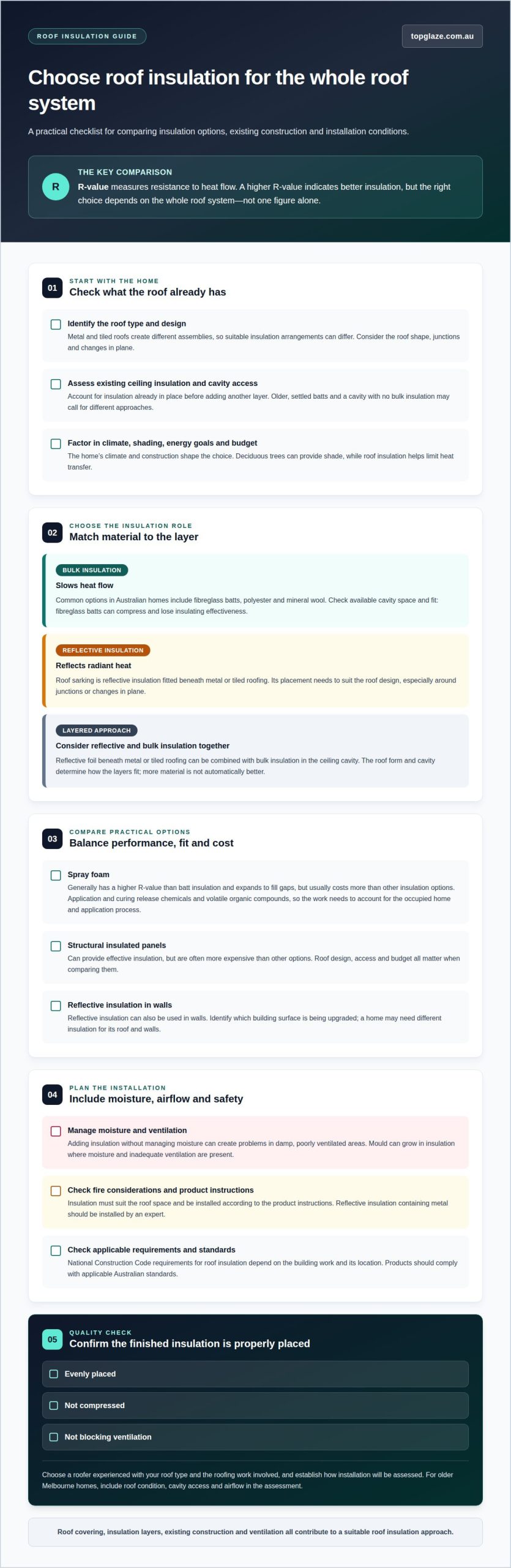
Start with the roof type, local climate and insulation already in place. Metal and tiled roofs create different assemblies, so their suitable insulation arrangements can differ. Energy-efficiency goals and budget also shape the choice. Compare products by R-value: a higher R-value indicates better insulation, but the right selection depends on the whole roof system, not one figure alone.
Material performance matters too. Fibreglass batts, polyester and mineral wool are common bulk insulation options in Australian homes. Fibreglass batts can compress and lose insulating effectiveness, so consider the available cavity space and fit. Spray foam generally has a higher R-value than batt insulation and expands to fill gaps, but usually costs more than other insulation options.
Installation conditions can affect which product is practical. Spray foam releases chemicals and volatile organic compounds during application and curing, so the work needs to account for the occupied home and application process. Structural insulated panels can provide effective insulation, but they’re often more expensive than other options. Roof design, access and budget all matter when comparing these choices.
Match insulation to the home’s climate and existing construction. A home with older, settled batts may need a different approach from one with no bulk insulation in the roof cavity. Reflective and bulk insulation can be considered together, with the roof form and cavity determining how the layers fit. Product selection should also account for moisture control and ventilation, not just heat resistance.
Choose insulation products that comply with Australian standards. The useful comparison is not simply which material has the highest R-value, but how the material, installation method and roof assembly work together for the home’s climate and goals. Assessing these factors helps narrow the options before roof work begins.
Fibreglass batts, polyester and mineral wool are common bulk options; spray foam and structural insulated panels are alternatives. Reflective insulation can also be used alongside bulk insulation. Choose an R-value suited to the local climate and complete roof system. Although a higher R-value provides better insulation, no single value suits every roof.
Insulation upgrades during roof restoration
Roof restoration can create an opportunity to consider insulation while roof condition and ceiling performance are assessed together. Roof and ceiling insulation can save up to 45% on energy consumption for heating and cooling, according to the Australian Bureau of Statistics. This is a potential energy saving, not a guaranteed result for every home. Existing insulation, roof design and the way the home is used all influence performance.
Assess the roof covering, roof cavity and ceiling insulation as connected parts of the home. Existing batts, for example, may be uneven, compressed or interrupted around roof features, reducing their effectiveness. A roof restoration assessment can identify where insulation needs attention and whether reflective insulation, bulk insulation or a combination suits the roof assembly.
Consider moisture control at the same time. NSW Health notes that mould can grow in insulation in wet or moist areas with inadequate ventilation. Adding insulation without considering airflow can leave moisture problems unresolved. Assess roof cavities, vents and gutters together, since blocked airflow or debris can contribute to moisture build-up. Address leaks and damaged roof components before adding insulation.
Timing matters because roof work can provide better access to areas that are otherwise difficult to assess. Coordinate roof repairs, insulation placement and ventilation rather than treating each as a separate decision. For example, address a leak before placing new insulation below the affected area. This helps protect insulation from moisture and supports a coordinated result.
For Melbourne homeowners planning roof restoration, bringing insulation considerations into the project can help align roof condition, comfort goals and moisture management. Discuss roof restoration options as part of planning the work, including how insulation fits with the roof’s existing construction.
Top Glaze Roofing Systems
Top Glaze Roofing Systems helps Melbourne homeowners assess roof condition when planning improvements to indoor comfort. If your roof is damaged, ageing or due for renewal, roof repairs, restoration or replacement can address issues affecting the home’s protection. Gutter and fascia work can also support effective water management around the roofline.
Insulation choice depends on the roof structure and what is already in place. When planning roofing work, consider how roof condition, cavity and ventilation relate to the insulation upgrade. This keeps attention on the whole roof system, rather than treating the roof covering and indoor comfort as unrelated concerns.
If you’re weighing up roofing work as part of an insulation upgrade, contact Top Glaze Roofing Systems to discuss your home.
Plan your roof upgrade around comfort
A roof project is an opportunity to align the home’s protection with the comfort you want indoors. Before work begins, consider how insulation fits the roof structure, what needs attention, and how moisture and airflow will be managed. This helps shape a considered plan to improve home insulation with a new roof, rather than treating insulation as an afterthought.
Top Glaze Roofing Systems provides roof restoration, roof replacement and roof repairs, so you can consider roofing work alongside your insulation goals. The right option depends on the roof’s condition and the project’s scope. A clear discussion about your home can help establish a practical way forward.
Contact Top Glaze Roofing Systems to discuss your roof and insulation plans. A more comfortable home starts with a sound, well-considered plan.
Frequently Asked Questions
What Types of Roof Insulation Work Best?
No single insulation type suits every roof. The right fit depends on the cavity and the home’s needs. Bulk insulation, such as batts, suits accessible spaces between ceiling joists. Loose-fill can reach awkward roof cavities, while reflective foil suits roof or wall assemblies designed for it. For example, a roof with uneven access may need a different approach from a clear, open ceiling cavity.
Can roof insulation be installed during a roof replacement, and what are the steps?
Yes. Insulation can be planned as part of a roof replacement. Coordinate the work so the roof cavity and existing insulation are assessed before new materials are installed.
- Assess the roof cavity, existing insulation and access.
- Address roof defects or moisture concerns before adding insulation.
- Coordinate insulation placement with the roofing work, then check its fit and airflow.
How can roof ventilation and sarking reduce heat gain and condensation?
Roof sarking reflects radiant heat beneath the roof covering, while ventilation helps air move through the roof space. Together, they address heat entering from above and help manage moisture-laden air. Clear vents support airflow, while sarking can limit solar heat entering the cavity. Condensation risk also depends on moisture and ventilation, so consider both measures as part of the whole roof system.
What roof insulation materials and R-values suit Australian climate zones?
Common options include fibreglass batts, polyester, mineral wool and reflective foil, used separately or together to suit the roof assembly. A higher R-value indicates better insulation, but the appropriate choice depends on local climate, roof type, existing insulation and the complete roof system. No single R-value suits every roof.


