

A tile that looks right from the ground can still be the wrong match. Matching new roof tiles to old ones means comparing the profile, dimensions, material and colour: a mismatch can affect both fit and appearance.
It’s understandable to expect a similar-looking tile to slot into place, but small differences in shape, thickness or interlocking design can make installation difficult. Weathering adds another challenge: a new tile in the same nominal colour may still stand out beside older tiles.
This guide explains how to identify a suitable match, why older or discontinued profiles can be difficult to source, and when reclaimed tiles or tile rotation may help. You’ll also learn what to check before choosing a replacement, so the repair suits the roof as well as its appearance from the street.
Key Takeaways
- Use tile markings, shape and dimensions to narrow down a suitable profile before choosing a replacement.
- Compare reclaimed tiles with new stock; naturally aged tiles may blend more closely, but inspect them for cracks and chips.
- If a profile is discontinued, assess compatible current-production options rather than relying on appearance alone.
- When an exact match is unavailable, tile rotation may help place the closest visual match in a more noticeable area.
How do I find a matching roof tile?
Identify the tile’s material, profile, dimensions and colour before comparing replacements. Visual resemblance alone won’t show whether a tile will fit the roof.
-
Identify the Existing Tile Type
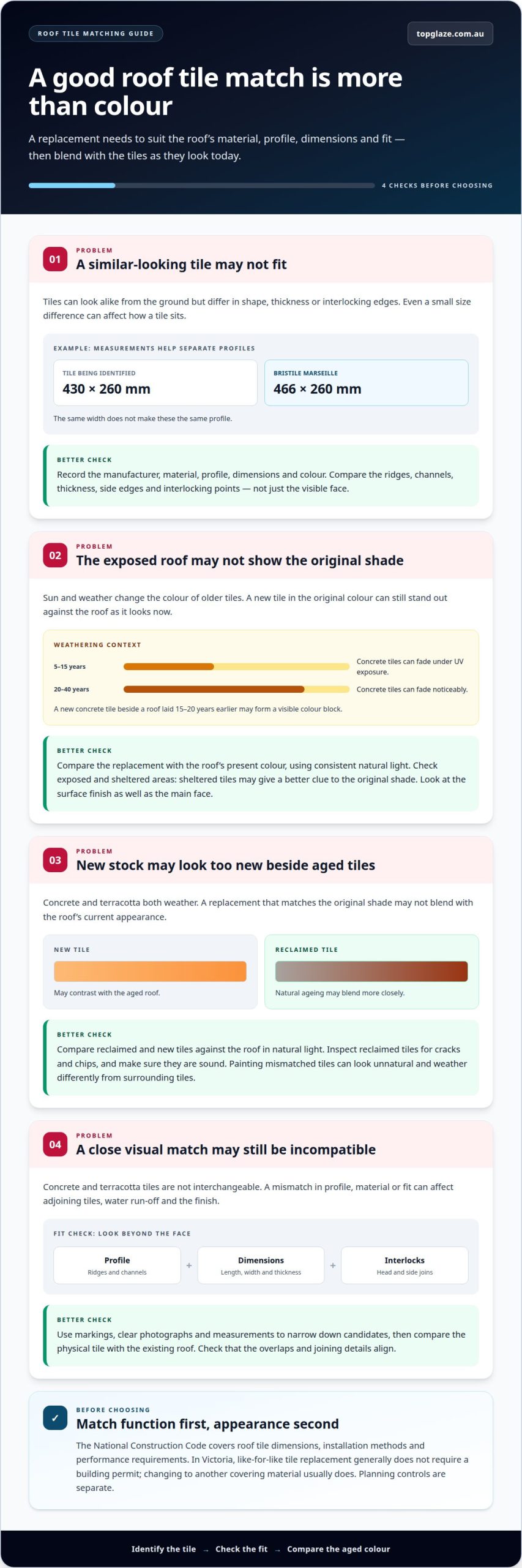
Record the manufacturer, material, profile and colour from a safely accessible spare tile or clear photographs. Terracotta is clay-coloured through the material; concrete tiles have a grey underside beneath the coloured face. In Melbourne, common manufacturers include Boral, Clarke, Monier and Pioneer. Compare markings and dimensions too: a tile measuring 430 mm by 260 mm needs further identification and is a different profile from Bristile Marseille, which measures 466 mm long by 260 mm wide. Shape and measurements help distinguish tiles that appear similar.
-
Check Colour Across Exposed and Sheltered Areas
Compare tiles from exposed and sheltered parts of the older roof, using consistent light. Sun and weather can change the exposed colour, while sheltered tiles may give a better clue to the original shade. Concrete tiles can fade under UV exposure over 5-15 years, so a new tile in the original colour may still look obvious beside a weathered roof. Check both the main face and any surface finish; a different sheen or texture can make a colour match stand out.
-
Allow for Weathering When Matching Colour
Compare a replacement against the roof’s present colour, not just its original shade. Concrete and terracotta both weather, and concrete tiles can fade noticeably over 20-40 years. A new concrete tile beside a roof laid 15-20 years earlier may form a visible colour block. Painting mismatched tiles can look unnatural and weather differently from surrounding tiles. Reclaimed tiles that have aged naturally may blend better with an older roof, provided they’re sound and free from cracks or chips.
-
Check Replacement Requirements and Options
Concrete and terracotta tiles aren’t interchangeable: the replacement’s material, profile and fit must suit the existing roof. In Australia, the National Construction Code, maintained by the Australian Building Codes Board, covers roof tile dimensions, installation methods and performance requirements. In Victoria, like-for-like tile replacement generally doesn’t require a building permit; changing to another covering material usually does, while planning controls are separate. Matching requires identifying the tile type, profile, dimensions and fit. Compare reclaimed and new tiles in natural light before choosing. A suitable match accounts for both function and aged colour.
Why Is Matching Old Roof Tiles So Difficult?
A replacement must fit the roof’s tile system, not just resemble it from the ground. Compare profile, thickness and interlocking points before judging colour or appearance.
-
Identify Tile Material and Maker Marks
Inspect a safely removed tile for maker marks, material and identifying details. Photograph the front, back and side in bright, even light to capture features hidden on the roof. A roofing professional can use markings and shape together, rather than relying on colour seen from the ground. Don’t assume that tiles from the same manufacturer share a profile.
Keep the photographs with your repair notes. They help roofers compare possible replacements and provide a useful reference for future repairs. If a tile has no readable mark, its material and underside can still help narrow down its identity. A clear side photograph can also show its thickness and edge shape.
-
Compare Tile Profiles and Thickness
Compare the tile’s profile, thickness and interlocking system with the surrounding tiles. Look at the ridges, channels, side edges and the parts that overlap neighbouring tiles. Tiles that look alike can differ in length or width by 5-10 mm, enough to affect how they sit. A difference in thickness can leave a replacement sitting proud or uneven across the tiled roof.
Check how the head and side locks meet adjoining tiles, not only the visible face. If those joins don’t align, the replacement may fail to sit properly, affect water run-off or leave an uneven finish. For example, a terracotta tile with a similar curve may still be incompatible if its interlocking edges differ. Where a profile mismatch complicates a repair, roof repairs can address the damaged area as part of the work.
What if my tile profile is discontinued?
A discontinued profile can limit replacement options, particularly for an extension beside an existing roof. Compare current and reclaimed options, then check compatibility before deciding.
-
Search for Current and Discontinued Profiles
Start by identifying the tile type and any markings, then search for that profile among current-production and discontinued tiles. Record the manufacturer, shape and identifying marks so the search relies on more than colour alone. Older profiles are often no longer made, but reclaimed tiles can provide a practical sourcing option.
For an extension, check two possibilities: the original profile may still be in production, or a discontinued profile may be available as reclaimed stock. Use an existing roof tile as your reference. A similar-looking product isn’t an exact match until you compare its shape and joining details.
-
Compare Profiles, Interlocks and Dimensions
Compare each candidate’s profile, dimensions and interlocks with the existing tile. Check the side edges and overlap points as well as the visible face. A tile that looks close in a photograph may still sit poorly if its edges lock differently or its dimensions vary. Fit matters: incompatible tiles can affect the adjoining roof section and water run-off.
Use clear photographs and measurements to narrow down the options, then compare the physical tile with the existing roof. Don’t choose a replacement on colour alone. For example, two tiles with a similar curve may have different side channels, making one unsuitable for replacing the other.
-
Check Discontinued Profile Availability
Find out whether the original discontinued profile is available as a reclaimed tile. Older profiles can often be found second-hand, and naturally aged tiles may blend better with weathered roofing than new stock. Check each reclaimed tile for cracks, chips, brittleness or heavy wear before considering it for installation.
Compare the available tile’s profile and fit with the existing roof before choosing. If an exact visual match isn’t available, don’t expect a seamless colour match: the roof’s age and weathering affect the final appearance. For an extension where the difference would be obvious, consider a compatible profile or a broader roof replacement.
Using tile rotation when an exact match is unavailable
Use tile rotation to place the closest visual match where it matters most. First document the sample and check that any replacement fits the roof system.
A mismatched profile may sit unevenly, affect water run-off or leave a patchy finish. Incorrect interlocks can prevent neighbouring tiles from fitting properly and increase the risk of leaks.
-
Photograph and Measure a Tile Sample
Have a roofer photograph a sample from the front, back and side in bright, even light. Record its length, width, thickness, profile and markings so candidate tiles can be compared accurately. Don’t rely on a colour photograph alone: a similar-looking tile may have different dimensions or edges. These details also provide a useful reference for future repairs.
-
Check Tile Fit and Calculate Quantities
Compare the replacement’s dimensions and interlocking points with the existing tiles before installation. Check that it sits level and overlaps its neighbours correctly, rather than forcing a tile that doesn’t fit. Calculate the number needed for the repair, then allow a few extra tiles because neighbouring tiles can crack when lifted. Reclaimed supplies may need 10-20% extra to allow for damaged tiles.
- Ask a roofer to assess whether tile rotation suits the repair. Matching tiles can be moved from a less visible roof area to the prominent repair spot, with a similar replacement used in the less visible section. This can improve the visible finish without pretending the new tile is an exact colour match. It only works if the replacement fits correctly in its new position. If a damaged area needs professional attention, arrange roof repairs to assess the tile fit and repair approach.
Top Glaze Roofing Systems
Top Glaze Roofing Systems can assess your roof and help determine a practical response when a replacement tile doesn’t match. Visual similarity is only part of the decision: the tile must also suit the existing profile and fit correctly beside neighbouring tiles.
For isolated damage, roof repairs may address the affected area. If mismatched or deteriorating tiles point to a wider problem, roof restoration or replacement may be more suitable. The right option depends on the roof’s condition and the work required.
Contact Top Glaze Roofing Systems to discuss your roof and the available options.
Contact Top Glaze Roofing Systems for a roof assessment and to discuss suitable options. A professional should consider not only the tile’s appearance but also whether its profile suits the existing roof and fits correctly beside neighbouring tiles.
Make the next roofing decision with confidence
Decide what matters most for your roof: a sound repair, a consistent appearance, or a longer-term plan for the whole surface. Matching new roof tiles to old ones is part of that decision, but the right approach also considers the condition of surrounding tiles and how the repaired area will look within the roof.
You don’t need to settle for a tile based on colour alone. A considered assessment can clarify whether a replacement fits the roof and whether a local repair is the practical option. If the profile is hard to identify or the repair affects a prominent area, discuss the roof with a professional before work begins. Contact Top Glaze Roofing Systems to talk through the next step for your roof. With the right information, you can move forward with a clear plan and greater confidence in the result.
Frequently Asked Questions
How Do Suppliers Identify Tiles?
To narrow down compatible options, compare the tile’s profile, thickness and interlocking system. Provide a sample or clear front, back and side photographs, along with any visible manufacturer marks. The underside and edges often reveal details that aren’t apparent from street level. A colour description alone is less useful because weathering can change a tile’s appearance.
Why Is Colour Matching Important?
Colour matching helps a repair blend into the roof, especially on a section facing the street. Matching new roof tiles to old ones by colour alone can still leave an obvious patch if the tile’s finish or age differs. Compare samples beside the roof in consistent daylight, and consider whether the repair will be noticeable from nearby windows or the street.
How do I identify which Monier or Bristile profile I have?
Check for a Monier or Bristile mark, then compare the tile’s shape, measurements and underside with profile examples. Measure length and width, and note the curves, channels and locking edges. For instance, Bristile Marseille measures 466 mm long by 260 mm wide. Don’t assume a tile is Marseille based on a similar appearance; another profile may share a broad shape but fit differently.
How many spare roof tiles should I keep?
Keep a few sound spare tiles with the same profile for future repairs. Neighbouring tiles can crack when lifted, so a small reserve may help avoid another search after installation. Store spares somewhere dry and secure, and note the profile or manufacturer. If the roof uses reclaimed tiles, allow for damaged pieces when choosing how many to source rather than counting every tile as usable.
Step 3: new or second-hand?
Choose a new tile when a current-production profile fits the roof and its appearance suits the repair. A sound second-hand tile can be a better visual choice beside an older, weathered roof because its colour has aged naturally. Check reclaimed tiles individually for cracks, chips and brittleness. The best option is the one that fits the roof system and meets the repair’s appearance needs.
Where to find matching discontinued roof tiles in Australia?
In Australia, reclaimed stock is a common source for discontinued roof tile profiles. Start with the manufacturer’s marks, shape and dimensions to narrow down the profile, then compare candidates with the existing roof. Older profiles can be difficult to match exactly, so assess both fit and appearance. A roofing professional can help identify the tile type and decide whether a reclaimed option is suitable.


