

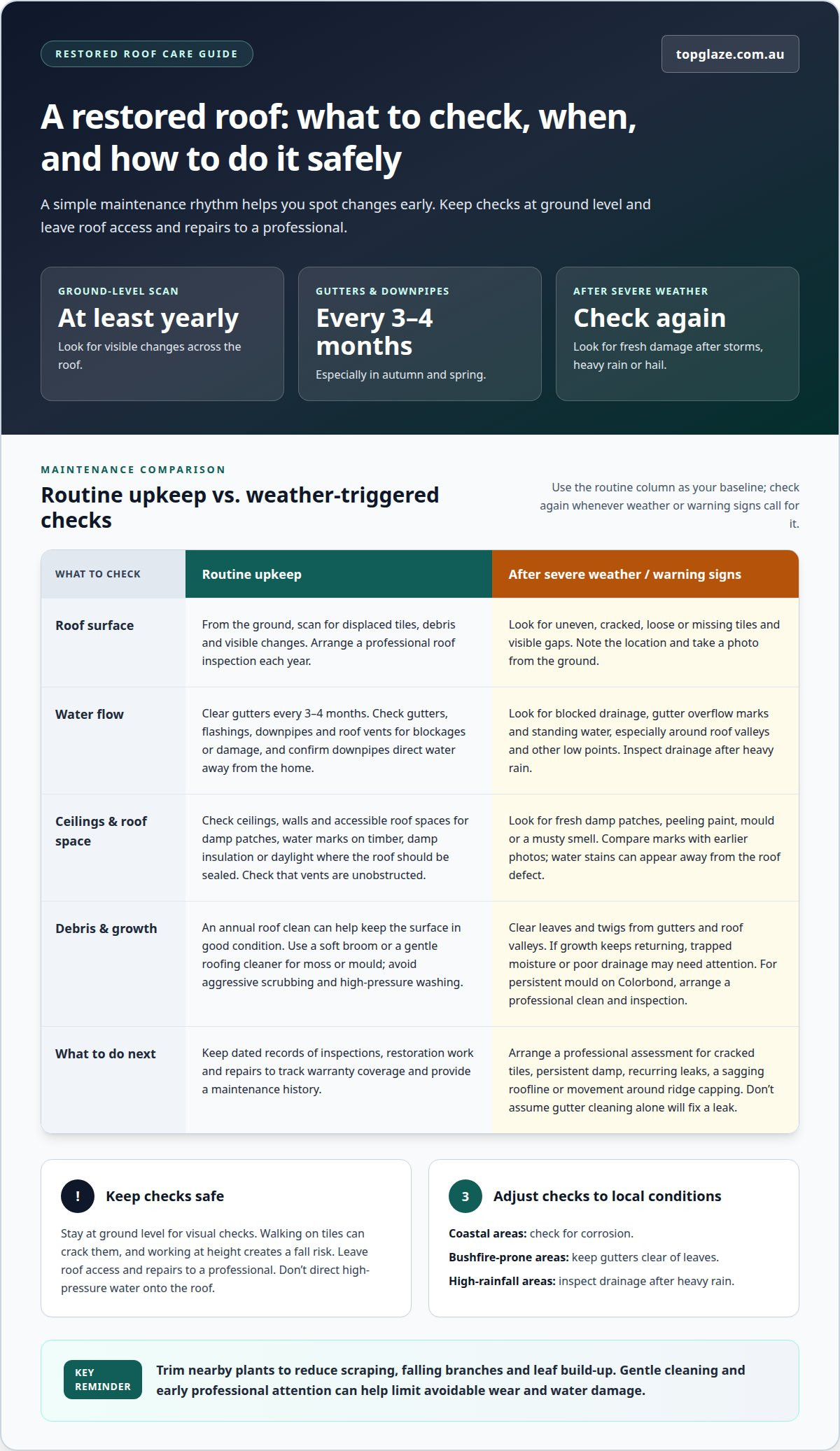
A restored roof still needs regular attention. Knowing how to maintain a newly restored roof starts with a ground-level inspection at least once a year and after severe weather, plus clearing gutters every 3-4 months. Look for cracked, loose or missing tiles, blocked drainage, and signs of moss or algae before small issues become harder to manage.
It’s natural to want to protect the work and keep your roof looking its best. Learning how to maintain a newly restored roof also means spotting changes early and staying off the tiles to avoid damage during checks.
This guide explains how to maintain a newly restored roof by checking it safely from the ground, clearing debris and growth, and trimming nearby plants. You’ll also learn which warning signs call for professional attention, so you can care for your restored roof with confidence.
Key Takeaways
- Inspect the roof from ground level at least once a year, and look for changes after severe weather.
- Spot cracked, loose or missing tiles early, along with signs of moisture inside the home.
- Keep gutters clear and use gentle methods to manage roof debris and growth without damaging surfaces.
- Trim nearby plants to reduce scraping, falling branches and leaf build-up around the roof.
1. Regular roof inspections
Arrange a professional roof inspection each year and another after severe weather. From the ground, scan for displaced tiles, debris and visible changes. After storms, heavy rain or hail, look for fresh damage and check ceilings and walls for damp patches.
A thorough inspection covers more than tiles. Check gutters, flashings, downpipes and roof vents for blockages or damage, and confirm downpipes direct water away from the home. In the roof space, look for signs of poor insulation or ventilation, which can allow heat and moisture to build up. Note whether ridge vents, eave vents or whirlybirds are obstructed.
What Australian safety rules apply to DIY roof maintenance? Keep visual checks at ground level rather than climbing onto the roof. Walking on tiles can crack them, and working at height creates a fall risk. Leave roof access and repairs to a professional.
How much does roof maintenance cost in Australia? The cost depends on the roof’s size, access and condition, and is provided after a quote request. The work needed, such as gutter clearing or repairs, also affects the price.
How soon after roof restoration should gutters and downpipes be cleaned? In Melbourne, clear them every 3-4 months, especially in autumn and spring. Properties with overhanging trees or heavy rainfall may need more frequent attention.
What are the risks of pressure washing or walking on a restored roof? Pressure washing can damage roofing materials, while foot traffic can crack tiles. Stick to ground-level checks and don’t direct high-pressure water onto the roof.
Does roof maintenance affect a roof restoration warranty or insurance? Keep dated records of inspections, restoration work and repairs. These records help you track warranty coverage and give insurers or future roofers a clear maintenance history.
How should a restored roof be maintained in coastal, bushfire or high-rainfall areas? Check for corrosion near the coast, keep gutters clear of leaves in bushfire-prone areas, and inspect drainage after heavy rain. Tailor your checks to the conditions affecting your roof.
2. Checking for loose, cracked, or missing tiles
After storms or strong winds, start with a ground-level view. Look for tiles that sit unevenly, appear cracked or leave visible gaps. A missing tile exposes the underlay and roof space to rain, while a shifted tile can let water beneath the surface. Note the location and take a photo from the ground.
Check ceilings and accessible attic spaces for signs of water entry. Damp patches, peeling paint, mould or a musty smell can point to moisture above. A stain may appear away from the roof defect because water can travel along framing before reaching the ceiling. Compare new marks with earlier photos to see whether they are spreading.
After rain, look for standing water, especially around roof valleys and other low points. Pooled water can contribute to material deterioration, leaks or sagging. From inside, check the roof space for damp insulation, water marks on timber and daylight where the roof should be sealed.
Cracked mortar, loose ridge capping, deteriorated sealant and rust patches also need attention. They can affect drainage or leave gaps for water. Check gutters for overflow marks and debris, but don’t assume cleaning alone will fix a leak. Record the affected area and whether the problem worsens after rain.
Assessing structural soundness means looking beyond individual tiles. A sagging roofline, movement around ridge capping or recurring leaks can point to a wider issue. A professional assessment can determine whether targeted roof repairs or more extensive replacement are needed. Don’t walk on tiles to investigate, as foot traffic can crack them.
Prompt attention limits the chance of water damage spreading into ceilings, insulation or timber. If you find cracked tiles, persistent damp or visible sagging, arrange an assessment rather than attempting a roof repair yourself. Roof Repairs can address damaged areas and help protect the roof from further exposure to the elements.
3. Removing roof debris, moss and algae
Leaves, twigs and other debris can collect in roof valleys and gutters, particularly after autumn leaf fall or windy weather. Clear fallen material promptly: trapped moisture can encourage moss and algae, while blocked drainage can contribute to water damage. Include gutters in your roof-cleaning routine so debris can drain away properly.
An annual roof clean can help keep the surface in good condition and support its lifespan. The right method depends on the roofing material and the type of growth. For moss or mould, use a soft broom or a gentle cleaner designed for roofing rather than scrubbing aggressively. Avoid pressure washing unless a professional is carrying out the work, as high-pressure water can damage roofing materials.
Colorbond roofs need particular care. Use a soft brush and low-pressure water rather than harsh chemicals or forceful cleaning. Persistent mould on Colorbond may indicate a coating concern, so arrange a professional clean and inspection instead of repeatedly applying stronger products. This helps remove growth while limiting unnecessary wear to the roof surface.
Moss, lichen and algae can cling to shaded or damp areas, including beneath overhanging branches. Don’t scrape growth with hard tools or apply untested chemicals, as either can damage tiles, coatings or sealant. A professional can choose a cleaning method suited to the roof’s material and condition, then assess whether the growth has affected the surface.
Zinc or copper strips at the roof peak are sometimes used to help prevent moss and algae growth. They don’t replace cleaning or inspection, especially where leaves repeatedly gather or damp weather persists. Keep nearby branches trimmed and watch for growth returning in the same area. Recurring patches can signal trapped moisture or poor drainage that needs attention, not just another surface clean.
4. Trimming trees and plants near the roof
Overhanging branches can scrape tiles and wear away protective coatings as they move in the wind. A falling limb can crack tiles or damage roof structures during storms. From the ground, identify branches reaching across the roofline and arrange pruning before they cause visible wear. Removing weak or dead limbs also reduces the chance of them falling onto the roof.
Keep branches clear of the roofline to limit scraping and debris. Recommended clearance varies: some guidance advises maintaining two metres, while other guidance recommends trimming branches back at least 3 metres. Use these distances as practical separation targets, while considering the tree’s shape, movement and position. The aim is to stop branches touching the roof, even when wind moves them.
Overhanging trees also drop leaves and small twigs that collect in roof valleys and gutters. Damp debris holds moisture against roof surfaces and can encourage moss or algae. It may also obstruct drainage and increase the risk of water damage. After pruning, check from the ground for branches above the roof and note where leaves gather repeatedly.
Keep tree growth from pressing against eaves, gutters or fascia. Check nearby plants as they grow, not just after a major trim. Branch contact can wear coatings, while poor drainage and accumulated moisture can affect the roof space. Look for damp insulation and other visible changes inside. Don’t climb onto tiles to reach branches.
Where a branch has already cracked a tile or scraped the roof surface, deal with the damage as well as the cause. A targeted roof repair assessment can identify affected areas and the work needed to protect them. Trimming trees and maintaining clear separation helps reduce repeated contact and supports the restored roof’s condition.
Top Glaze Roofing Systems
Top Glaze Roofing Systems can help if a roof check reveals damage, persistent leaks or drainage concerns. The right next step depends on the roof’s condition: a localised problem may need roof repairs, while widespread deterioration may call for roof restoration or replacement. Blocked or damaged gutters and fascia can also affect how rainwater drains away from your home.
Share what you’ve noticed, such as cracked tiles, recurring damp patches, moss returning in the same area or overflowing gutters. This gives the team useful context to assess the issue and recommend suitable work. Regular maintenance helps you spot changes; professional roofing work addresses problems that routine cleaning or trimming can’t resolve.
For help with your roof, contact Top Glaze Roofing Systems.
Make roof care part of your routine
If you’re deciding how to maintain a newly restored roof, build a simple routine around changes you observe over time. A new leak, recurring damp patch or repeated tile movement deserves attention rather than another season of waiting. Acting on a clear warning sign helps you make a considered decision about the work your roof needs.
A practical approach to how to maintain a newly restored roof is to treat changes as useful clues, not just cosmetic concerns. Top Glaze Roofing Systems can assess whether roof repairs, further roof restoration or roof replacement suits the roof’s condition, helping you choose a sensible next step.
For ongoing advice on how to maintain a newly restored roof, contact Top Glaze Roofing Systems today. A careful next step can help you feel more confident about protecting your home.
Frequently Asked Questions
How To Maintain Your Roof?
Maintain your roof with planned checks and prompt attention to drainage and visible changes. After clearing gutter debris, flush the channel with a garden hose, starting at the end opposite the downpipe and working towards it. Watch for water backing up or escaping at joints. This can reveal a blockage or drainage fault before the next period of rain.
What maintenance does a newly restored roof need in Australia?
A newly restored roof needs care suited to its material and finish, not a one-method-fits-all clean. Keep the restoration paperwork together, including coating details and care instructions, so you can choose suitable cleaning products later. On a tiled roof, include ridge mortar and pointing in your checks. These joints need attention as well as individual tiles.
How often should a restored roof be inspected in Australia?
Arrange a professional inspection each year and another after severe weather, such as hail or heavy rain. In Melbourne, act sooner if a storm is followed by a new ceiling mark, water entering the roof space or a change in drainage. Focus each inspection on changes since the previous visit so developing issues aren’t missed.
How to safely remove leaves, moss and debris from a restored roof?
Stay off the tiles and avoid pressure washing, which can damage roofing materials. For roof growth, use a soft broom or a gentle cleaner designed for roofing; the suitable method depends on the roof material. Clear leaves from gutters, too. After removing debris, flush the gutter with a hose from the end opposite the downpipe and check that water flows freely.
What roof restoration coatings need maintenance or recoating, and when?
Standard acrylic roof paint generally lasts around 7-10 years, but fading, chalking or peeling can mean a coating needs attention sooner. Coating type and roof condition affect the timing, so age alone isn’t a reliable trigger. Check the restoration paperwork to identify the finish, then arrange an assessment if its surface begins to change.
How to spot leaks, cracked tiles, failed pointing or coating problems after restoration?
Look for cracked tiles, crumbling or separated mortar, loose ridge capping and deteriorated sealant. Fading, chalking or peeling coatings are also warning signs. Inside, fresh damp marks on ceilings or walls may indicate water entry. Note where and when each change appears, especially after rain, to help identify whether the issue involves a tile, joint or coating.


