

Did you know that a few hairline cracks in your ridge capping can lead to thousands of dollars in internal water damage after just one heavy Victorian downpour? It’s a common worry for local homeowners who find themselves asking how much to re-point a roof in Melbourne while trying to avoid the “cowboy” operators who promise the world but deliver a temporary patch-up job. You deserve a home that stands up to the elements, and it’s natural to feel hesitant when quotes vary wildly or use confusing industry jargon.
We understand the anxiety that comes with maintaining your most valuable asset, especially with the unpredictable storm patterns we see across the Mornington Peninsula and Greater Melbourne. This guide breaks down the essential factors that influence professional costs in 2026, including the critical distinction between re-pointing and re-bedding. We’ll explore how modern flexible pointing compounds provide a superior seal compared to old-fashioned cement, ensuring your roof remains leak-free and your kerb appeal stays sharp. By the end, you’ll have the confidence to choose a solution that offers genuine longevity and peace of mind for your family.
Key Takeaways
- Learn why modern flexible pointing is the essential second line of defence for sealing ridge capping against Melbourne’s volatile weather.
- Discover the primary factors that dictate how much to re-point a roof in Melbourne, from total linear metres to your home’s pitch and height.
- Understand the crucial difference between a full re-bed and a standard re-point so you don’t pay for unnecessary repairs.
- Identify the warning signs of deteriorating mortar before they turn into costly internal water damage or dislodged tiles.
- Find out why a 10-year warranty and local licensing are non-negotiable for protecting your property’s long-term structural integrity.
Roof Repointing: Why it’s Essential for Melbourne Homes
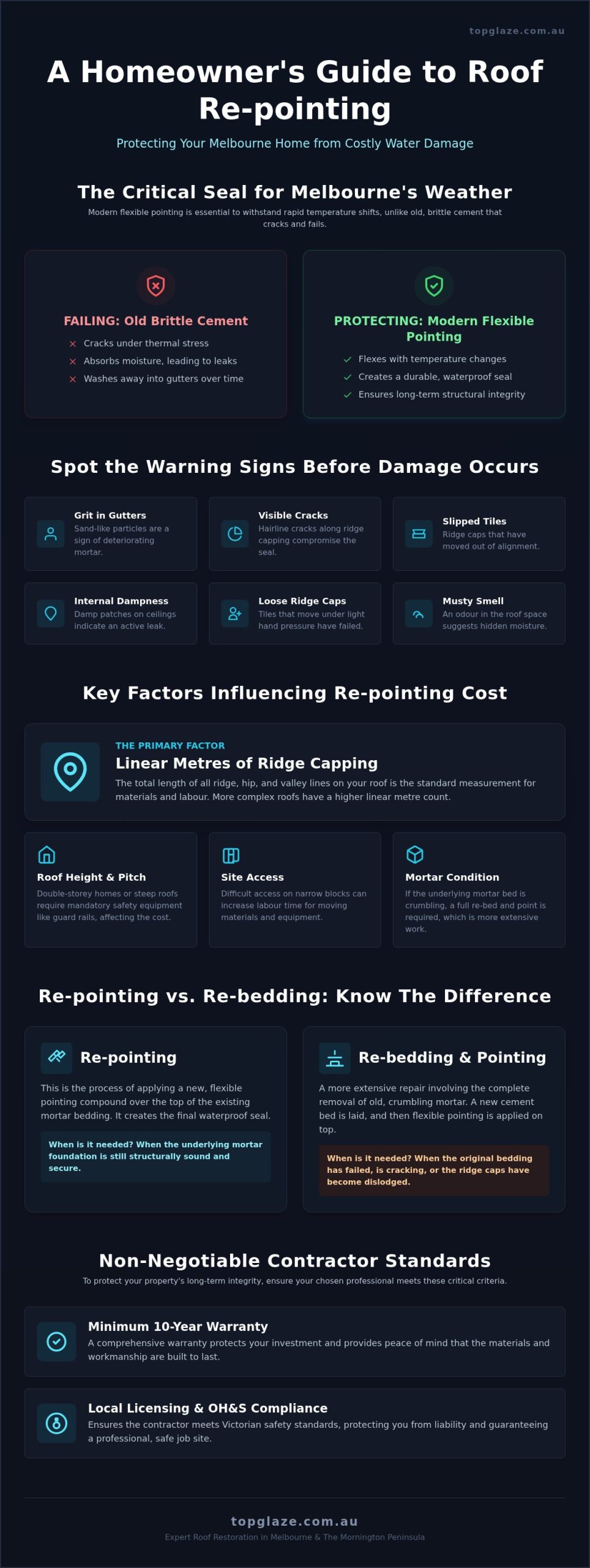
Roof re-pointing is far more than a simple aesthetic upgrade; it’s a vital structural necessity for any tiled property in Victoria. In technical terms, re-pointing involves applying a specialised, flexible polymer-based compound over the existing mortar bedding that holds your ridge tiles in place. This layer serves as the primary barrier against water ingress. While the bedding provides the height and basic positioning, the pointing creates the actual seal. Without this flexible “skin,” wind-driven rain can easily find its way under the ridge caps, leading to rot in your rafters or damage to your internal ceilings.
Melbourne’s infamous “four seasons in one day” creates a harsh environment for traditional roofing materials. Older homes typically rely on a rigid mixture of sand and cement for both bedding and pointing. Because this mixture lacks elasticity, it eventually succumbs to the constant expansion and contraction caused by our rapid temperature shifts. Modern roofing standards have moved away from these brittle solutions toward high-performance flexible compounds. Understanding roof functions and materials highlights why this shift is so important; a roof must be able to move slightly without breaking its seal. When you begin investigating how much to re-point a roof melbourne, you are essentially pricing the long-term resilience of your home against these local conditions.
The Role of Ridge Capping in Your Roof’s Structure
Ridge caps are the most vulnerable part of your roof because they sit at the very highest points where wind speeds are greatest. Their job is to bridge the gap where two roof planes meet, preventing water from pouring into the roof cavity. The pointing acts as a mechanical bond that keeps these caps secured during high-wind events. Whether you have concrete or terracotta tiles, the integrity of this bond is paramount. Concrete tiles are often more porous, while terracotta requires a specific type of primer to ensure the flexible pointing adheres correctly for the long haul.
Signs Your Melbourne Roof Needs Re-pointing
Identifying the need for repairs early can save you from a major restoration bill. One of the most obvious signs is finding sand-like grit or grey chunks of cement in your gutters; this is the old mortar literally washing away. You might also notice visible cracks running along the side of the ridge caps or, in more severe cases, ridge tiles that have visibly slipped out of alignment. If you can safely reach a ridge tile and feel it move under light hand pressure, the bond has failed. Inside the home, look for damp patches on the ceiling or a musty smell in the roof space, as these often indicate that the ridge line is no longer watertight.
Factors That Influence the Cost of Roof Re-pointing
When you start researching how much to re-point a roof melbourne rates can vary depending on several variables that go far beyond a simple flat fee. Every property has its own architectural quirks, and a reliable quote must account for the specific physical demands of the job. It’s not just about the age of the home; it’s about the geometry and height of the structure itself. We look at the total scope of work required to ensure the result lasts for the long haul.
Linear Metres: The Standard Unit of Measurement
A key factor in how much to re-point a roof melbourne specialists charge is the total linear meterage of the ridge capping. This is the total length of all the ridge lines on your roof. While a simple gable roof might have one long ridge across the top, a complex hip roof features multiple descending lines that all require sealing. The more hips and valleys your roof has, the higher the linear meterage. While some might suggest “per tile” pricing for small patches, linear metres provide the most accurate reflection of the materials and labour required for a full restoration.
Safety Requirements and Site Access
Workplace safety is a legal requirement in Victoria, and it directly impacts the final quote. If you have a double-storey home or a particularly steep pitch, the cost will reflect the need for additional safety equipment like perimeter guard rails or specialised scaffolding. OH&S compliance protects you from potential liability if an accident occurs on your property. Beyond height, we also consider site access. If your home is on a narrow block with limited space for equipment, the extra labour time required to move materials will be factored into the final estimate.
The state of the underlying mortar bedding is another major driver. If the original foundation is still structurally sound, we apply the flexible pointing directly over the top. However, if the mortar is crumbling or the ridge tiles have shifted significantly, we may need to perform a partial or full re-bed. Identifying these needs early prevents you from paying for a “band-aid” fix that fails after the first big storm. If you’re unsure about the current state of your ridge tiles, our team can provide a professional roof restoration assessment to give you a clear picture of what’s required.
Ultimately, the goal is to provide a solution that removes the anxiety of future leaks. While it might be tempting to look for the cheapest price, the real value lies in the quality of the polymer-based compound used and the expertise of the applicator. Investing in a thorough job now means you won’t be revisiting the question of how much to re-point a roof melbourne for many years to come.
Re-pointing vs. Re-bedding: Understanding the Difference
One of the most frequent questions we receive is whether a home needs a simple re-point or a more extensive re-bed. While they are often grouped together, they serve very different roles in your roof’s health. Re-bedding is a structural restoration task that involves removing the old, thick mortar base and replacing it entirely. Re-pointing, on the other hand, is a maintenance task where we apply a flexible sealant over that base to keep the water out. If you only look at how much to re-point a roof in Melbourne without checking the bedding first, you might find yourself paying for the same job twice.
Applying a fresh layer of pointing over failed bedding is a temporary fix at best. The underlying mortar is what provides the structural foundation. If that foundation is already detached or crumbling, the new pointing won’t have anything solid to bond to. It’s like painting over a peeling wall; the finish is only as good as the surface underneath. Ensuring the bedding is sound is the first step in any professional assessment we provide. It’s the difference between a roof that looks good for a month and one that stays watertight for decades.
When is Re-bedding Necessary?
We look for specific technical signs like “drumbiness” during our inspections. This occurs when the mortar has physically detached from the roof tile, creating a hollow sound when tapped. If the mortar has turned to dust or is falling out in large chunks, re-bedding is non-negotiable. The process involves stripping the old, brittle material back to the bare tile and laying a fresh mortar bed. This creates a level, secure anchor point for the ridge caps before the final waterproofing layer is applied. Without this solid base, the ridge caps remain loose and vulnerable to high winds.
The Long-Term Value of Flexible Pointing
The transition from rigid cement to modern flexible compounds has revolutionised roof maintenance. Melbourne’s extreme temperature swings put immense pressure on traditional mortar. Because old cement is brittle, it inevitably cracks under thermal stress as the house settles and the tiles move. Flexible pointing compounds are polymer-based and designed to move. They act as a rubberised seal that expands and contracts without breaking the bond. This durability is the primary reason why we can confidently offer a 10-year warranty on our residential restoration work.
Beyond the structural benefits, flexible pointing provides a significant aesthetic boost. These compounds are available in an extensive range of colours to match your terracotta or concrete tiles perfectly. This means the repair doesn’t look like a patch job; it looks like a factory-fresh finish. By choosing a high-quality flexible compound, you’re investing in a solution that protects your home’s interior while significantly improving its street appeal. It’s a smart, long-term choice for any Melbourne property owner.
The Risks of Delaying Roof Repairs in Victoria
It is tempting to look at a few hairline cracks in your ridge capping and decide that the work can wait another season. Some homeowners even suggest waiting until a visible leak appears before investigating how much to re-point a roof in Melbourne. However, this “wait and see” approach is a gamble with your home’s structural integrity. By the time water is dripping through your ceiling plasterboard, the moisture has likely been present in your roof cavity for months, quietly compromising your insulation and timber framing.
One of the most significant risks of delay involves your insurance coverage. Most Australian home insurance policies contain clauses that exclude damage resulting from a lack of maintenance or gradual wear and tear. If a major storm hits and your ridge tiles are dislodged because the mortar was already failing, your insurer may deny the claim. They view roof maintenance as the owner’s responsibility. Proactive re-pointing isn’t just a repair; it’s a necessary step to ensure your policy remains valid when you need it most.
Protecting Your Internal Structure
Small gaps in your pointing allow moisture to seep into the roof space, where it often goes unnoticed. This moisture creates an ideal environment for mould growth and can lead to the slow rot of your roof trusses and rafters. Replacing structural timber is a massive undertaking that far exceeds the cost of a standard restoration. The maintenance gap represents the critical window of time between the first signs of mortar cracking and the eventual structural failure of the ridge line. Addressing the issue within this window prevents the need for expensive plasterboard replacement and toxic mould remediation later on.
High winds present another danger that many local residents overlook. In Melbourne’s volatile weather, a loose ridge tile can easily become a dangerous projectile. When the bond between the tile and the bedding fails, the tile is held in place only by its own weight. A strong gust can lift these tiles, causing them to slide down the roof or fall into your garden, potentially damaging vehicles or injuring passersby. Ensuring your ridge capping is securely bonded provides essential safety for your family and neighbours.
Home Value and Kerb Appeal
A well-maintained roof is a major selling point in the competitive Melbourne property market. Tidy, professionally finished ridge capping suggests to potential buyers that the entire home has been cared for with attention to detail. Conversely, cracked or moss-covered mortar is a massive red flag for building inspectors during pre-purchase checks. They know that poor pointing often hides deeper issues, and their reports can lead to buyers demanding significant price reductions or walking away from the sale entirely.
If you have noticed debris in your gutters or visible cracks along your roofline, it’s time to act before the next storm cycle begins. You can book a professional roof inspection with our experienced team to identify exactly what is needed to keep your home watertight and secure for the long term.
Choosing a Trusted Melbourne Roofing Contractor
Selecting the right team for your restoration is the final piece of the puzzle in protecting your property. While local social media groups are often filled with recommendations for a “mate with a ladder” who can do the job for cash, these options carry immense liability risks. A professional roofing specialist must be fully licensed with the Victorian Building Authority and carry comprehensive public liability insurance. This protects you from being held responsible for site accidents or damage to neighbouring homes. When you are weighing up how much to re-point a roof melbourne quotes often reflect the level of legal and professional protection you are receiving.
A transparent quote should be detailed and easy to understand. It ought to clearly outline the specific flexible compounds being used and the safety measures included, such as perimeter guard rails. If a contractor provides a single, vague figure without explaining the preparation steps, it is a significant red flag. You deserve to know exactly how much to re-point a roof melbourne contractors are charging for specific labour, from the high-pressure cleaning of the ridge tiles to the final application of the polymer sealant. Local experience across the Mornington Peninsula and Greater Melbourne ensures the team knows how to handle specific tile profiles, whether you have heritage terracotta or modern concrete.
The Top Glaze Roofing Systems Difference: 30 Years of Melbourne Expertise
Since 1987, Top Glaze Roofing Systems has served as a stable fixture and a trusted veteran in the Victorian industry. We have encountered every possible challenge that the local climate can throw at a residential roof. Our approach is methodical and unhurried, beginning with a thorough evaluation to ensure the structural base is sound before any sealant is applied. We provide a 10-year warranty on our residential projects, which has become the industry gold standard for homeowner peace of mind. This decade-long guarantee is a promise of quality from a business that has stood the test of time.
Ready for a Professional Assessment?
Every home presents a unique set of challenges, and a generic estimate over the phone can never replace a physical site visit. We believe in providing homeowners with clear, factual information so they can make an informed choice about their most valuable asset. A physical inspection is the only way to accurately determine how much to re-point a roof melbourne homeowners will actually need to invest for a long-term, watertight result. Our no-obligation process is designed to be transparent and low-stress, providing a fixed-price quote and a clear path forward. If you want to ensure your home remains secure, get a professional quote for your Melbourne roof re-pointing today and experience the certainty that comes with three decades of local expertise.
Secure Your Home’s Future with Expert Roof Care
Maintaining your ridge capping is the most effective way to prevent water ingress and protect your property’s internal structure. We have explored how modern flexible pointing outperforms old cement, especially during Victoria’s rapid temperature shifts. Choosing a solution that moves with your home ensures you won’t be constantly revisiting the question of how much to re-point a roof melbourne every few years.
As a local fixture owned and operated in Melbourne since 1987, we understand the specific nuances of both terracotta and concrete tiles. Our team provides the seasoned authority needed to deliver a result that lasts, backed by a 10-year warranty on all workmanship. You don’t have to manage roof maintenance alone or worry about the hidden costs that often follow unverified, “cash only” repairs.
Request your free Melbourne roof inspection and re-pointing quote today to gain a clear, professional assessment of your home’s needs. We’re here to provide the neighborly reassurance and expert skill required to keep your family safe and dry for the decade ahead. Your home is your most valuable asset; let’s ensure it stays protected together.
Frequently Asked Questions
How long does roof pointing typically last in Melbourne?
Professional flexible pointing usually lasts between 15 to 20 years. Because Melbourne experiences dramatic temperature fluctuations, traditional cement often fails within 5 to 10 years. Flexible compounds are designed to expand and contract, which is why we can confidently offer a 10-year warranty on our residential workmanship. Regular inspections every few years will help you monitor the seal’s condition and maintain structural integrity.
Can I re-point my own roof tiles to save money?
While DIY kits exist, we strongly advise against re-pointing your own roof due to safety risks and technical complexity. Working at heights requires specialised safety gear like guard rails to meet Victorian OH&S standards. Incorrectly applied pointing often fails within months, leading to leaks that cost more to fix than the initial professional service. It’s best to leave this to licensed specialists who understand specific tile requirements.
How many linear metres of ridge capping does an average Melbourne home have?
A standard three-bedroom family home in Melbourne typically has between 40 and 60 linear metres of ridge capping. This measurement includes the main horizontal ridges and the descending hips. Complex roof shapes with multiple gables or valleys will have a higher total. When you ask how much to re-point a roof in Melbourne, this linear meterage is the primary figure used to calculate your specific quote.
What is the best weather for roof re-pointing in Victoria?
Dry, mild days with temperatures between 15 and 25 degrees Celsius are ideal for applying flexible pointing. The compound needs a window of dry weather to cure properly before it can withstand heavy rain. We avoid extremely hot days as the material can dry too quickly, and we never apply pointing during rain. Our team monitors local Victorian forecasts closely to schedule your work for optimal conditions.
Will re-pointing my roof stop all leaks?
Re-pointing will stop leaks specifically originating from the ridge capping, but it won’t fix issues like broken tiles or blocked gutters. Pointing is designed to seal the junctions where roof planes meet. If your leak is caused by a cracked tile elsewhere on the roof, a more comprehensive repair or restoration may be needed. A professional assessment identifies the exact source of water ingress before any work begins.
Is flexible pointing better than traditional cement mortar?
Modern flexible pointing is significantly superior to traditional cement mortar for Melbourne homes. While old-fashioned cement is brittle and prone to cracking as a house settles, flexible compounds are polymer-based and act like a rubberised seal. This allows the ridge caps to move slightly without breaking the waterproof bond. It is the industry standard for durability and long-term protection against the volatile Victorian elements.
Does a roof restoration include re-pointing and re-bedding?
A full roof restoration typically includes re-pointing, but re-bedding is only performed if the underlying mortar foundation has failed. We assess the condition of the existing bedding during our initial inspection. If the mortar is sound, we clean the surface and apply fresh flexible pointing. If the bedding is crumbling or detached, we strip it back and re-bed the tiles to ensure a stable foundation.
How long does the re-pointing process take for a standard house?
Most re-pointing jobs for a standard Melbourne home are completed within one to two days. This timeframe depends on the size of the roof and the amount of preparation required, such as pressure cleaning or removing old, loose mortar. If significant re-bedding is also necessary, the process may take a little longer. We always aim to complete the work efficiently while maintaining our high standards of professional excellence.


