

For an average home, a roof replacement takes 1-2 days, and most projects are completed in one day. That’s a useful guide, but the answer to how long it takes to replace a roof depends on the home and the work involved. A faster schedule isn’t automatically better if it leaves important stages rushed.
It’s natural to want a clear timeframe before work begins, especially when your home will be exposed to the elements during the job. A realistic schedule allows the crew to complete the work carefully and accounts for conditions that can affect progress.
In this guide, you’ll see how roof size, design, materials, preparation and extreme weather shape the timeline. You’ll also learn what the main work stages involve and how to recognise a contractor’s timeline as a possible red flag, so you can feel more prepared for the process.
Key Takeaways
- Use a typical replacement timeframe as a guide, then account for the roof’s materials, design and the work required.
- Consider roof area, slope and access when estimating how the project’s size and complexity may affect the schedule.
- Weather can interrupt roofing work; safe conditions matter more than keeping to an unrealistic deadline.
- Look for a clear explanation of the work stages and possible delays when assessing whether a proposed timeline is credible.
What are the steps involved in the roof replacement process?
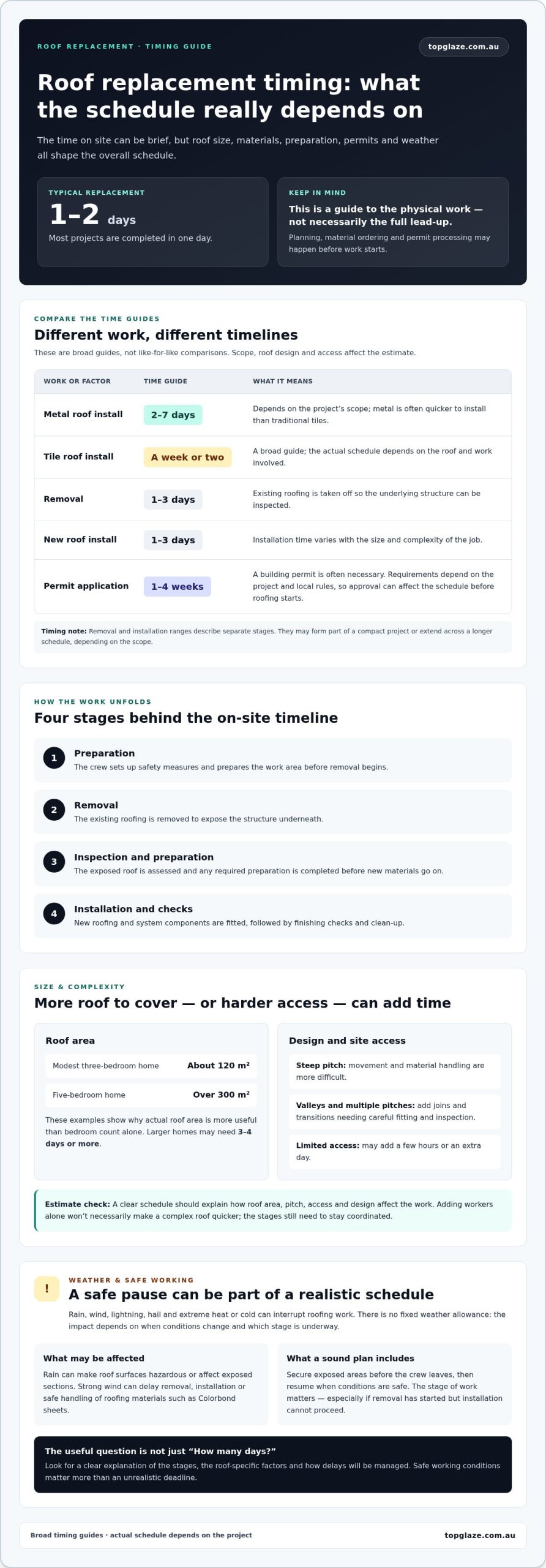
A typical roof replacement takes 1-2 days, and most projects are completed in one day. That timeframe covers the physical work, not necessarily earlier planning, material ordering or permit processing. The sequence usually includes preparation, removal, inspection, installation and final checks.
For a metal roof, installation can take 2-7 days, depending on the project’s scope. Tile roofing may take a week or two to install. These are broad guides, not like-for-like comparisons: roof size, design, access and additional work all affect the estimate.
How long does it take to replace a tile roof versus a metal roof? Metal roofing is often quicker to install than traditional tiles; the stated installation ranges are 2-7 days for metal and a week or two for tile roofing. The actual schedule depends on the roof and work involved.
Each stage has a practical purpose:
- Preparation: The crew sets up safety measures and prepares the work area before removal begins.
- Removal: Existing roofing is taken off so the underlying structure can be inspected.
- Inspection and preparation: The exposed roof is assessed, and required preparation is completed before new materials go on.
- Installation and checks: New roofing and system components are fitted, followed by finishing checks and clean-up.
Removal typically takes 1-3 days, while installing a new roof typically takes 1-3 days. These stages may form part of a compact project or extend across a longer schedule, depending on the scope. A larger roof needs more materials and labour, while complex design features can add work. Materials are priced per square metre, so roof area also affects the estimate.
Do I need council approval or a building permit to replace a roof in Australia? A building permit is often necessary for roof replacement, and requirements depend on the project and local rules. Permit applications typically take 1-4 weeks, so approval can affect the overall schedule before roofing work starts.
Roof size and design complexity
Larger homes may need 3-4 days or more for roof replacement. A steep pitch or complicated layout can extend the timeline because crews must work across more demanding sections.
Roof Size and Timeline
Roof size is the area that must be stripped and covered with new roofing materials. A modest three-bedroom house may have about 120 square metres of roof space, while a five-bedroom house may exceed 300 square metres. That difference means more material to handle and more surface to inspect. Property size offers a rough guide, but roof area is more useful for estimating the work.
Roof size affects how much work the crew can complete efficiently. A larger roof may need to be handled in sections, with removal and installation planned in sequence. The estimate should reflect the roof’s actual area, not bedroom count alone.
Design, Pitch and Site Access
Roof design describes the shape and layout, pitch is its steepness, and site access affects how crews and materials reach the work area. A simple roof gives installers a more direct route across the surface. Valleys, multiple pitches and architectural features create extra joins and transitions that need careful fitting and inspection.
Steep slopes make roofing work slower than a simple flat roof because movement and material handling are more difficult. Limited access can add a few hours or an extra day. For example, a narrow approach may make it harder to bring roofing materials forward, affecting how smoothly the crew can install each section.
Crew size and experience affect how tasks are shared, but adding workers alone won’t make a complex roof quicker to replace. Removal, preparation, installation and inspection need to stay coordinated across each section. A clear estimate should explain how the roof’s area, pitch, access and design affect the schedule, rather than relying on a generic timeframe.
What timespan is necessary to perform a roof replacement when extreme weather conditions prevail?
Rain, wind, lightning, hail and extreme heat can interrupt roofing work and extend the schedule. In Melbourne, safe working conditions and protection for exposed roof areas affect how work proceeds.
Weather-Related Delays
Weather delays pause roofing work when conditions make a task unsafe or impractical. Heavy rain and strong wind can delay removal or installation, while lightning and hail can also interrupt work. Roofers generally work best in dry, mild conditions, so a change in the forecast may alter the planned sequence.
Extreme heat or cold can affect the work schedule too. A roof replacement doesn’t have one fixed weather allowance: the effect depends on when conditions change and which stage is underway. For example, rain during removal may affect exposed sections, while wind can prevent safe handling of roofing materials such as Colorbond sheets.
Protecting the Home During Delays
During a weather delay, exposed areas need to be secured before the crew leaves the roof. If bad weather arises during a replacement, the crew should protect the roof and resume work when conditions are safe. This helps shield exposed areas while work is paused, rather than continuing in dangerous conditions.
The stage of work matters. If removal has started but installation can’t proceed, the crew needs to protect the open area before leaving. When conditions allow work to resume, roofers can continue with preparation and fitting. A clear pause-and-resume plan helps protect the home and organise the remaining work.
Weather and Site Access
Weather and site access affect whether roofers can reach the work area and handle materials safely. Wind can make lifting sheets difficult, while rain can make roof surfaces hazardous. These conditions influence access to the roof and the order in which tasks can proceed.
For example, a roofer may pause material handling during strong winds and resume installation when conditions improve. Delays can also shift removal, preparation and final checks. A realistic schedule accounts for safe access at each stage, rather than assuming every task can proceed in sequence whatever the weather.
Roof replacement timelines and contractor red flags
An Australian residential roof replacement can take a few days or weeks, depending on the job. Homeowners can judge a proposed schedule more clearly by separating on-site work from planning and delays.
Overall Replacement Timeline
The overall timeline runs from preparation through installation and final checks, not just the days spent on the roof. A replacement may take three days to a few weeks, with scope and site conditions shaping the schedule. Custom roofing materials can have longer lead times, so delivery timing may affect the start date even when the installation itself is brief.
Look for a schedule that identifies the main stages, including material delivery, removal, installation and clean-up. A roof with valleys or several sections may require more coordination than a straightforward layout. If the schedule gives only a completion date, ask what stages it includes and how weather interruptions are handled.
Timeline and Start Date Planning
A clear start plan distinguishes the expected work period from the date work can begin. It should account for the project scope, roofing materials, site access and preparation. Material delivery can affect the start date even when the planned on-site work remains unchanged.
Review the schedule by stage and note what could affect each one. A credible plan explains how the crew will handle delays and resume work safely. Be cautious of a promised finish that ignores complex roof features, weather exposure or material delivery, as these can make a firm date unrealistic.
Another warning sign is a timeline that doesn’t explain what the work includes. A roof repair covers a different scope from replacing the whole roof, so the schedule should match the agreed work. The plan should also explain whether final checks and clean-up are included, rather than treating completion as fitting the last roofing sheet.
For a clear roof replacement schedule, discuss your replacement timeline and the stages involved.
Top Glaze Roofing Systems: Roof Restoration
Top Glaze Roofing Systems helps Melbourne homeowners choose between roof restoration, roof replacement and roof repairs based on the work their roof needs. Restoration may suit a roof that needs attention but not full replacement. Repairs address specific issues, while replacement is for roofs requiring more extensive work. Guttering and fascia work can also protect the home’s roofline.
A clear assessment helps you understand which option suits your roof and what the work involves. Contact Top Glaze Roofing Systems to discuss your roof and arrange the next step.
Plan your next step with confidence
Knowing how long it takes to replace a roof gives you a starting point, but the next step is understanding what your own roof needs. Consider its condition, the work involved and how the proposed schedule accounts for preparation, weather and final checks. A clear plan helps you organise around the work and know what to expect.
Top Glaze Roofing Systems provides roof restoration, roof replacement and roof repairs for Melbourne homeowners. If you’re unsure which option suits your roof, an assessment of its condition and the work required can clarify the next step. The decision should be based on the roof’s needs, not pressure to choose a particular service.
Contact Top Glaze Roofing Systems today to discuss your roof and plan the next step with confidence.
Frequently Asked Questions
How Fast Can a Professional Roofing Company Work Without Cutting Corners?
A professional crew can work efficiently without skipping preparation, safe removal or final checks. A quick finish alone doesn’t show whether the work is complete. The schedule should make clear what’s included, such as checking the exposed roof structure before installing new materials. A realistic timeline allows for the work required instead of treating every roof as identical.
How Long Does a Re-Roof Take in Brisbane?
Brisbane-specific examples put a standard metal-to-metal re-roof at 1-2 days, and a tile-to-metal replacement at 2-3 days when tie-down upgrades and new battens are included. These are examples for Brisbane, not a Melbourne schedule. For Melbourne homeowners, Top Glaze Roofing Systems lists a typical roof replacement duration of 3-7 days.
What is the average duration of a roof installation?
A new roof installation typically takes 1-3 days, although the full replacement may involve separate removal and preparation stages. For example, fitting new roofing is only one part of the job if the existing covering must first be removed. Ask what the estimated duration includes, so you can distinguish installation time from the wider project schedule.
What signs can indicate my roof requires replacement instead of repair?
Widespread deterioration, recurring leaks in separate areas or damage affecting the roof structure may indicate that repairs alone won’t address the underlying problem. A localised issue, such as damage confined to one section, may be suitable for repair. An inspection helps establish the extent of the damage and whether replacement is the more appropriate option.
How long does it take to replace a roof in Australia?
Across Australia, a residential replacement may take a few days or weeks, depending on its size, design, materials and project scope. In Melbourne, Top Glaze Roofing Systems lists a typical roof replacement duration of 3-7 days. That timeframe is useful for local planning, while the overall schedule may also depend on material delivery and preparation before work starts.
How many days does a roof replacement take by roof size and type?
Size and roofing type can produce quite different schedules. A standard metal-to-metal replacement takes 1-2 days in the Brisbane example, while a tile-to-metal conversion takes 2-3 days when upgrades and new battens are included. Larger, multi-level roofs can take 3-5 days. These examples show why homeowners should compare the scope of work, not just the material name, when considering a timeline.


