

A roof can look fine from the driveway and still have hail damage that leaves it vulnerable to the next downpour. A hail damage roof assessment melbourne homeowners arrange after a storm can help distinguish fresh impacts from existing wear before hidden damage becomes a leak.
It’s understandable to be unsure what you’re seeing, especially when marks are difficult to spot from the ground. This guide explains which signs may justify a professional assessment, what to record safely without climbing onto the roof, and what happens during an inspection.
A thorough assessment helps clarify your roof’s condition before you decide whether repairs or restoration are needed. Top Glaze Roofing Systems provides free roof assessments across Greater Melbourne, with fixed quotes and no hidden fees. With over 38 years of experience in residential roofing, the team can explain what was observed and outline practical next steps.
Key Takeaways
- A hail damage roof assessment melbourne homeowners arrange can help distinguish possible storm impacts from gradual roof wear.
- Hail can affect roofing materials and roof areas differently, so consider a mark or crack alongside the roof’s overall condition.
- Note when the storm occurred, photograph visible damage from a safe position and record any water entry. Don’t climb onto the roof.
- A professional assessment involves discussing your concerns, inspecting accessible roof areas, recording findings and explaining possible next steps.
- Top Glaze has completed more than 20,000 roof repairs, restorations and replacements, bringing extensive residential roofing experience to Melbourne homeowners.
Melbourne Hail Damage Roof Assessment: Impact Guide
A hail damage roof assessment is a professional inspection of a roof for signs of impact and its overall condition. It helps distinguish visible marks from confirmed repair needs. An assessment does not automatically mean the roof needs replacing.
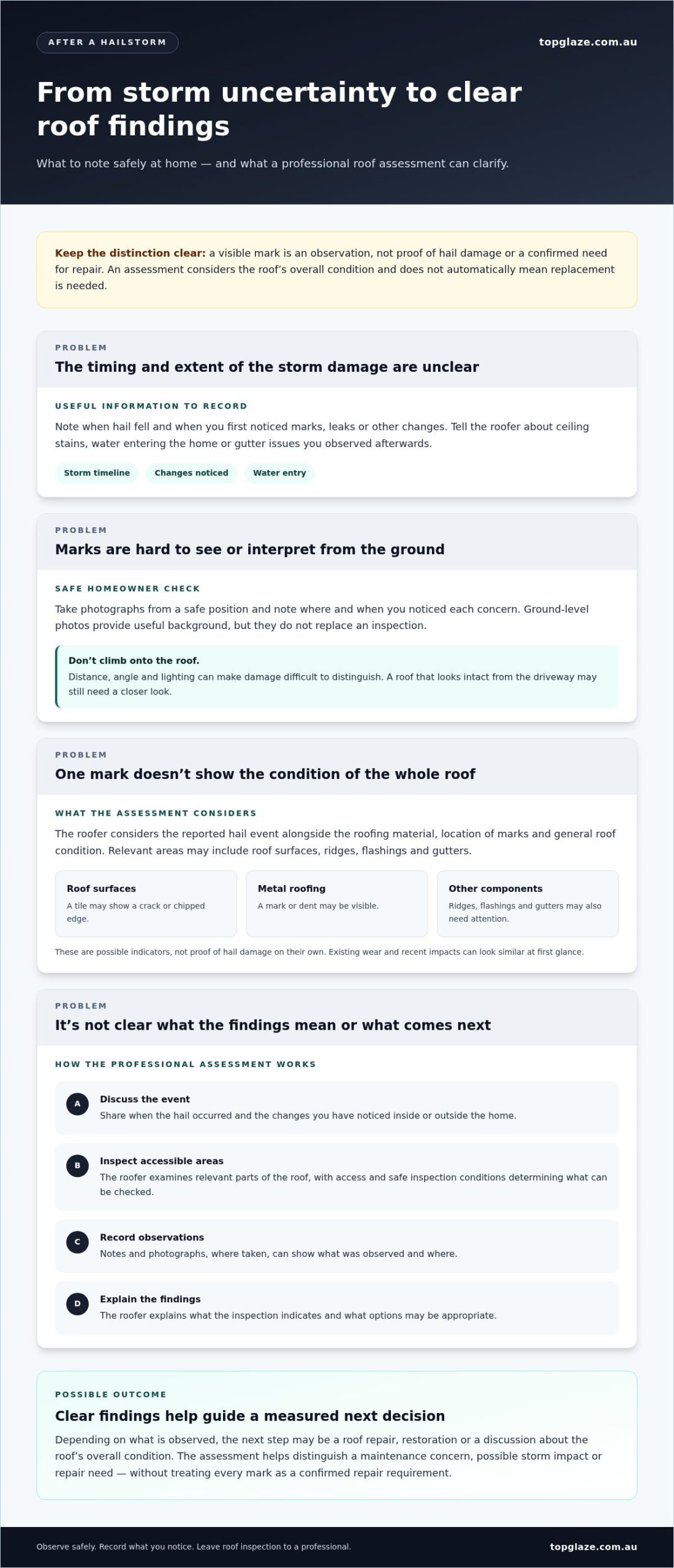
Hail can affect roofs in different ways. The roofing material, the location and angle of an impact, and conditions during the storm can all influence what is visible. For example, a tile may have a crack or chipped edge, while metal roofing may show a mark or dent. These are possible indicators, not proof of hail damage on their own. General background on hail and its potential effects is available in Understanding Hail and its Impact.
A careful assessment considers the roof as a system, rather than focusing on one mark in isolation. The aim is to understand what can be observed and whether it points to a maintenance concern, possible storm impact or repair need. An existing defect and a recent impact can look similar at first glance, so the roof’s age and wider condition matter when interpreting a mark.
Which roof areas may need a closer look after hail?
Roof surfaces are only part of the picture. Ridges, flashings and gutters also help the roof shed water and protect the home. Depending on the roof design and storm exposure, these components may need attention alongside the main covering. Other storm effects can occur at the same time, so an observed issue should be considered in context rather than attributed to hail without inspection evidence.
A ground-level view is useful, but it may not show every area or reveal subtle changes. Distance, angle and lighting can make marks difficult to distinguish. Don’t assume a roof that looks intact from the driveway is unaffected. A professional inspection provides a closer look without asking you to diagnose the roof from the ground.
Why a Melbourne roof assessment can bring peace of mind
After a local storm, uncertainty can be stressful. A hail damage roof assessment melbourne homeowners arrange can help establish what is visible, how the roof is presenting and whether the findings warrant further action. The assessor considers the reported hail event alongside the roofing material, the location of marks and the roof’s general condition.
This context helps keep decisions measured. A visible dent or crack is an observation; whether it needs repair depends on the assessment and how the roof is functioning. Clear findings help you understand the next step, whether that means addressing a confirmed issue or simply getting a better picture of the roof’s condition. The goal is evidence and clarity, not pressure to proceed with extensive work.
What Happens During a Professional Hail Damage Roof Assessment?
A professional hail assessment follows a clear process: the roofer discusses your concerns, inspects accessible roof areas, records relevant observations and explains possible next steps. The inspection considers the roof’s condition alongside details of the reported hail event. This helps separate what can be observed from what may need repair, without assuming every mark is storm damage.
What information should you share before the inspection?
Start with the timeline. Note when hail fell and when you first noticed marks, leaks or other changes. Mention any ceiling stains, water entering the home or gutter issues you observed afterwards. These details give the roofer context and help direct attention during the inspection.
Ground-level photographs can also show what caught your eye, particularly if you took them soon after the storm. They provide useful background, but don’t replace an inspection. You don’t need to interpret the images or decide whether a mark is hail damage. Simply explain where and when you noticed it.
What does the inspection process involve?
The roofer will discuss the storm and your concerns, then inspect accessible roof areas and consider how the visible condition relates to the event you’ve reported. The assessment may include relevant roof surfaces and components, rather than relying on one mark or a view from the street. Access and safe inspection conditions determine what can be examined.
- Discuss the event. Share when the hail occurred and any changes you’ve noticed inside or outside the home.
- Inspect accessible areas. The roofer looks at relevant parts of the roof and considers their condition in context.
- Record observations. Notes and photographs, where taken, can show what was observed and where.
- Explain the findings. You’ll hear what the inspection indicates and what options may be appropriate.
Clear records make the findings easier to follow. For example, a photograph of a mark paired with a note about its location can help you understand what the roofer is referring to. Findings should describe the observed condition, not treat every impact as a confirmed repair requirement.
How an assessment can guide the next decision
Depending on the findings, the next step may be a roof repair, restoration or a discussion about the roof’s overall condition. Top Glaze provides a free roof inspection and quote. Quotes are fixed, with no hidden fees, and the findings are explained before you decide whether to proceed. For more context on how roof issues may be addressed, see this guide to Melbourne roof repairs.
If you’d like a clearer understanding of your roof after a storm, arrange a professional roof assessment with Top Glaze. A considered inspection and clear explanation can help you make your next decision with confidence.
Hail Damage or Existing Roof Wear? How an Assessment Tells the Difference
A mark on a roof can raise a fair question: did it happen during the hailstorm, or was it already there? Appearance alone rarely settles that. An assessment considers the storm timing alongside the roofing material, the position and pattern of visible changes, and the roof’s broader condition. Together, these details give a more informed picture without treating a possible clue as proof.
Hail impacts and gradual wear can look similar in a photograph. A crack, dent or rough patch may have more than one possible explanation, and one isolated mark cannot reliably establish when or how it occurred. An assessor considers the surrounding area and other roof components instead of drawing a conclusion from a single image.
What visible signs may justify a closer inspection?
Some changes are useful prompts to arrange a closer look, particularly if you first noticed them after a storm. Examples include:
- A tile that appears cracked, chipped or displaced.
- Visible marks or dents on metal roofing.
- Gutter damage or a change in how a gutter appears to sit.
These are indicators, not a diagnosis. Roofing materials respond differently, and similar-looking marks may have different causes depending on their location and surroundings. From the ground, note the location and photograph what you can see safely. Don’t climb up to get a closer view. A professional inspection considers the appearance, possible extent and context together.
Why roof condition and storm timing matter
Existing wear can complicate the picture. A roof may already have ageing or deterioration that affects how a newly noticed mark is interpreted. That doesn’t confirm or rule out hail impact; it means the assessment needs to account for both the reported event and the roof’s overall condition. The roofing material and location of a change also matter, since an isolated mark can’t tell the full story.
Timing helps provide context. Share when the hail occurred and when you first noticed a change. Bring earlier roof photographs or maintenance records if you have them. Comparing older and newer information may help explain what appears to have changed, but it doesn’t establish the cause on its own. The assessor considers those records alongside inspection findings, without assuming every pre-existing issue is storm-related or that every new mark requires repair.
Once the roof’s condition is clearer, you can consider whether repair, restoration or another step is appropriate. A broader view of condition and maintenance can help put those options in context. For more on that decision, see the Melbourne roof restoration guide. A careful hail damage roof assessment melbourne homeowners arrange should explain what was observed and distinguish that evidence from conclusions appearance alone can’t support.
What to Do After Hail in Melbourne: Homeowner Checklist
After hail, focus first on safety and a clear record of what you can observe. Don’t climb onto the roof, use a ladder to inspect it or attempt storm repairs yourself. A roof may be slippery or have loose components that aren’t obvious from below. If you notice damage or water entering the home, arrange a professional assessment rather than trying to diagnose the roof yourself.
- Keep clear of possible hazards. Avoid areas beneath visibly unstable roof sections or anything that appears loose.
- Record what you can see safely. Take photos from stable, ground-level positions and note the date of the storm.
- Watch for water entry. Note any leaks or ceiling marks, and move belongings away from an active leak only if it’s safe to do so.
- Seek help for concerning signs. Visible damage, active leaks or worsening water entry are reasons to request professional assistance.
How to document suspected hail damage safely
Write down when the hail occurred and when you first noticed a mark, leak or other change. Photograph visible damage from the ground, without standing beneath a section that looks unstable. Note affected rooms, ceiling marks and whether water entry changes after rain. A simple timeline helps explain what you’ve observed during an assessment.
Keep the record factual. Note what you saw and where, rather than trying to decide whether hail caused it. If you have several photos, label them by date or location so the observations are easy to follow. Don’t put yourself at risk to get a closer view.
When to seek urgent roof repair help
An active leak, visible structural concern or worsening water entry calls for prompt professional help. If water is coming inside, move belongings away only if it’s safe, and stay clear of any area that may be unsafe. Don’t attempt to patch, cover or climb onto the roof yourself. A professional can assess the situation and explain what should happen next.
Top Glaze provides 24/7 emergency roof repairs across Melbourne. For urgent situations, the emergency roof repair guide explains what to consider. If there’s visible damage but no immediate leak, a hail damage roof assessment melbourne homeowners arrange can help clarify the roof’s condition before they decide on work.
Clear notes and safe photographs give the roofer useful context, but they don’t replace an inspection. Top Glaze offers free roof assessments and fixed quotes with no hidden fees, so you can understand the findings and next steps. Arrange a roof assessment to have your concerns examined professionally.
Arrange a Hail Damage Roof Assessment in Melbourne with Top Glaze
After hail, clear information about your roof can make the next decision more manageable. Top Glaze Roofing Systems provides residential roofing services across Greater Melbourne, with over 38 years of experience and more than 20,000 completed roof repairs, restorations and replacements. That experience covers residential roofing beyond storm-related work.
A professional assessment starts with the roof’s observed condition and your concerns. The findings are discussed with you before you consider a next step, so you can understand what was seen and why an option may be suitable. A hail damage roof assessment melbourne homeowners arrange should clarify the evidence, not assume the whole roof needs replacing.
What to expect from Top Glaze after your assessment
Once the inspection is complete, the findings are explained in straightforward terms. If work is appropriate, the recommendation will relate to the condition observed and may involve roof repairs, restoration or replacement. The right option depends on the assessment, so no particular outcome should be assumed before the roof has been inspected.
Top Glaze’s roofing work is carried out by licensed professionals. A free roof inspection and quote gives you a clear basis for considering the findings. If you decide to proceed, the quote is fixed with no hidden fees. All services include a 10-year workmanship guarantee covering labour and materials.
Book a free Melbourne roof inspection
To arrange an assessment, get in touch by phone, email or the website form. Share what you noticed, when the hail occurred and whether you’ve seen water entry. Safe, ground-level photographs can help explain your concerns, but they don’t replace an inspection. Top Glaze provides a free roof assessment and quote, with no call-out fee.
You don’t need to decide on roof work before understanding the findings. The inspection gives you the opportunity to discuss the roof’s condition and consider any recommended repair, restoration or replacement with a fixed quote and no hidden fees. The 10-year workmanship guarantee covering labour and materials applies to all services.
If hail has left you uncertain about your roof, arrange a free assessment with Top Glaze. Request your free roof inspection by phone, email or the website form and get clear information before deciding on the next step.
Take the Next Step Towards Roof Clarity
Uncertainty about a roof after hail can linger, especially with more rain ahead. A professional hail damage roof assessment melbourne homeowners arrange gives you a sound basis for deciding what to do next, rather than relying on a guess from the ground. You can take time to understand the findings and consider the options that suit your roof.
Top Glaze brings over 38 years in business and more than 20,000 roof projects completed. A roof inspection and quote are free, with fixed pricing and no hidden fees. All services include a 10-year workmanship guarantee covering labour and materials.
Move forward with clear information and a practical next step. Request your free Melbourne roof assessment and get a clearer view of your roof’s condition.
Frequently Asked Questions
Can hail damage a roof without causing an immediate leak?
Yes. A roof may be affected without water entering the home straight away, so a dry ceiling doesn’t prove the roof is undamaged. Water entry might only become noticeable during later rain. If you suspect an issue, note what you can see from a safe position and arrange a professional inspection. Don’t wait for an indoor sign of a leak before taking a concern seriously.
Should I get my roof assessed after hail if I cannot see any damage?
Consider an assessment if you notice a new change or water inside, even if the roof looks fine from the ground. A ground-level view cannot show every roof surface or component. A hail damage roof assessment in Melbourne can give local homeowners a closer professional inspection. Don’t climb up to look for yourself; record your concern and share it with the assessor.
Can I inspect my roof myself after a hailstorm?
You can check from safe positions on the ground and inside your home, but don’t climb onto the roof or try to carry out storm repairs. Look for visible changes from a stable spot and take photos without standing beneath any area that appears unstable. Indoors, note water entry or ceiling marks and which rooms are affected. Share these observations with a professional so they can assess the roof safely.
Does a hail damage roof assessment mean I need a full roof replacement?
No. An assessment identifies the roof’s condition and helps establish what, if anything, may need attention. Replacement is not automatic; the appropriate option depends on the inspection findings and the roof’s overall condition. If work is recommended, ask for the findings and proposed scope to be explained clearly before deciding. This helps you understand whether the advice relates to a local repair or more extensive roof work.
Will home insurance cover hail damage to my roof?
Cover depends on your policy, the circumstances and your insurer’s assessment, so a roof inspection alone can’t confirm whether a claim will be accepted. Check your policy and contact your insurer for guidance specific to your situation. Record the storm date, keep relevant photos and note when you first noticed damage or water entry. For detailed property storm damage assessments and inspection support during claims processes, firms like Fox Claims Consultants specialise in evaluating structural impact and emergency mitigation needs. An assessment can document roof condition, but it doesn’t determine the insurance outcome.
What should I do if hail damage is causing an active roof leak?
Keep clear of unsafe areas and don’t climb onto the roof or attempt a repair. If it’s safe, move belongings away from the leak and note where water is entering. If water entry worsens or there are visible structural concerns, seek professional help promptly. Top Glaze provides 24/7 emergency roof repairs across Melbourne. Don’t put yourself at risk to protect belongings or inspect the roof.
How long does a roof repair take after hail damage?
Timing depends on the repair required and the extent of the work. Top Glaze states that minor roof repairs typically take 1 day, while complex repairs typically take 1-3 days. These ranges apply to roof repairs, not roof restoration or replacement. An assessment helps establish what work is relevant, and a fixed quote clarifies the proposed scope before you decide how to proceed.


