

Imagine waking up to the sound of a midnight downpour only to hear a rhythmic tap-tap-tap against your bedroom ceiling. It’s a scenario many Melbourne homeowners know too well, leading to a frantic search to fix roof near me before the next storm front arrives. You want more than just a quick patch; you need the certainty that your family home will stay dry when the clouds turn grey and the wind picks up.
It’s frustrating when tradies don’t show up or when a simple quote suddenly balloons with hidden costs. We understand the anxiety that comes with Melbourne’s unpredictable weather and the confusion of deciding between a minor repair and a full restoration. This guide provides a clear path forward, helping you identify urgent faults and choose a qualified specialist who understands the latest 2026 building standards. You’ll discover how to secure a fixed-price quote and implement a long-term strategy that keeps your home safe and secure for years to come.
Key Takeaways
- Prioritise safety by managing water ingress from inside the home and avoiding the high risks of climbing onto wet or damaged roofs.
- Recognise how Melbourne’s unique climate, from intense UV exposure to rapid temperature shifts, contributes to tile brittleness and metal fatigue.
- Navigate the search to fix roof near me by choosing licensed local specialists over unverified marketplaces to ensure quality workmanship and fixed-price quotes.
- Understand why a professional inspection must include the roof cavity to identify the true source of leaks before they cause structural damage.
- Learn to distinguish between temporary patches and long-term restorations that offer a 10-year warranty and enhanced thermal efficiency for your home.
Immediate Steps When You Need to Fix a Roof Fast
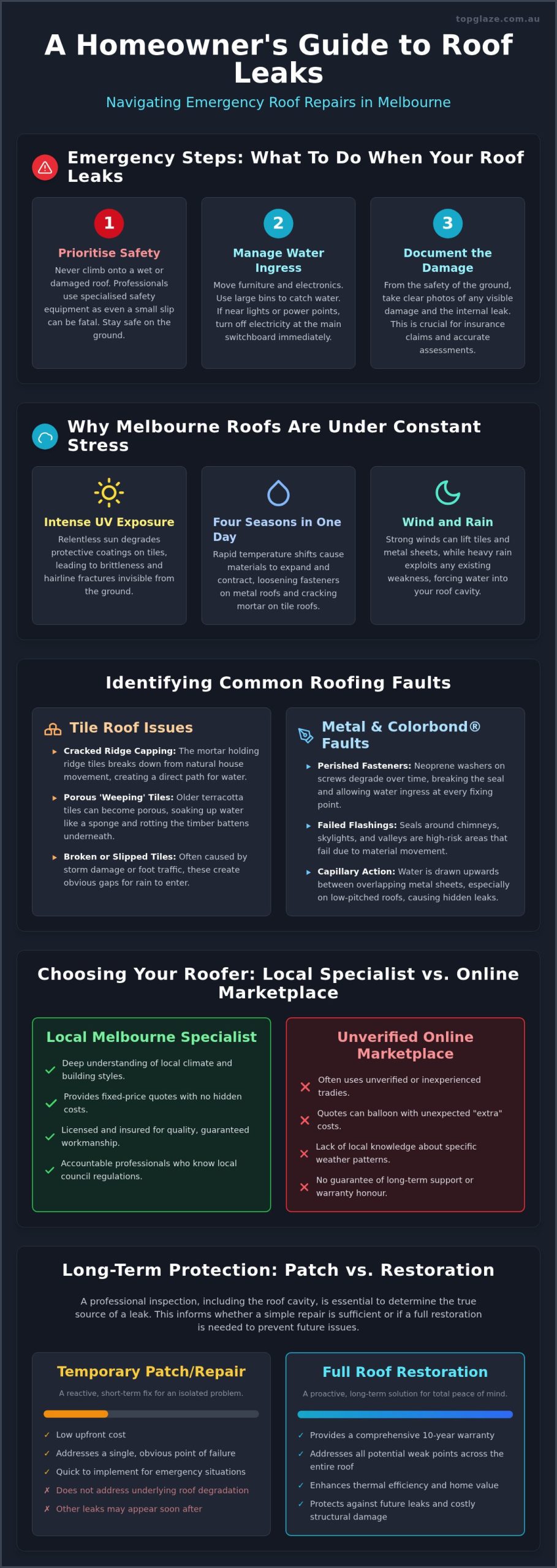
When water starts dripping through your plasterboard, the impulse to find a way to fix roof near me becomes urgent. However, your first priority must be personal safety. Never attempt to climb onto a wet roof yourself. Professional roofers use specialised fall-arrest systems and height safety equipment because even a minor slip on a damp tile or metal sheet can be fatal. While you wait for an expert, focus your efforts on protecting your home’s interior and managing the water ingress from the safety of the ground.
Take clear photos of the leak and any visible damage you can see from the garden. This documentation is vital for insurance claims and helps us provide a more accurate assessment when we arrive on-site. Be wary of the common bucket and tarp myth. While a bucket catches the water, a poorly secured tarp can trap moisture against your battens, leading to rapid mould growth and structural rot. Understanding common types of roof construction helps in realising that water often travels several metres along internal timber beams before it actually enters your living space.
Emergency Leak Management at Home
The spot where water hits your carpet is rarely directly beneath the hole in your roof. Water typically enters through a cracked tile or failed flashing and then runs along a timber rafter until it finds a low point or a light fitting. Move your valuables, electronics, and furniture away from the affected area immediately. Use plastic sheeting or heavy-duty bins to contain the water. If water is dripping from a light fixture or near a solar inverter, turn off the power at the main switchboard. Electricity and water are a dangerous combination; don’t take any chances with your family’s safety.
Why a Local Melbourne Specialist Beats a National Call Centre
When you search for someone to fix roof near me, you might be tempted by national booking agencies or online marketplaces. However, a local Melbourne specialist with over 30 years of experience brings a deep understanding of our city’s specific housing styles, from Victorian heritage terraces to modern metal builds. We understand the local council regulations and the unique wind loads that affect suburbs near the bay versus those in the hilly eastern corridors. A local roofer isn’t just a voice on a phone; they are a professional who knows how Melbourne’s rapid temperature shifts impact the longevity of your roof structures.
Identifying Common Melbourne Roofing Faults
Melbourne’s climate is uniquely punishing on residential structures. While we often focus on the immediate aftermath of a storm, the slow degradation caused by high UV levels and rapid temperature swings is usually what triggers a search to fix roof near me. Concrete tiles lose their protective coating over decades of sun exposure, becoming brittle and prone to hairline fractures that are invisible from the ground. This environmental stress is why a roof that looked fine last summer might suddenly fail during a winter cold front.
Rapid temperature shifts, often called “four seasons in one day,” cause materials to move. Metal roofs expand and contract significantly, while tile structures settle and shift. When these materials don’t have the flexibility to handle Melbourne’s thermal range, leaks are inevitable. Identifying these faults requires a trained eye that understands how local weather patterns specifically affect different Australian roofing industry standards and construction methods.
Tile Roof Issues: From Pointing to Porosity
Cracked or degraded ridge capping is the primary culprit for leaks in Victorian homes. The mortar bedding and flexible pointing that hold your ridge tiles in place eventually crack due to natural house movement. Once the seal is broken, water enters the roof cavity with ease. Older terracotta roof tiles present a different challenge. While they are famous for their longevity, they can become porous over time. These “weeping” tiles look perfect from the outside but soak up water like a sponge, eventually rotting the timber battens underneath and causing persistent dampness in your ceiling.
Metal and Colorbond Faults: Rust and Fasteners
For metal roofs, the most common entry points for water are actually the fasteners. In Melbourne, the constant thermal movement can cause screws to work loose or the protective neoprene washers to perish. You should also check for “swelling” at the laps where two metal sheets overlap; this is often a sign of capillary action pulling water upwards and between the sheets. Flashings around chimneys, skylights, and valleys are also high-risk areas. If these aren’t perfectly sealed, they become the path of least resistance for heavy rain. If you suspect your fasteners are failing, it is wise to arrange a professional roof inspection to secure your home before the next wet season arrives.
Blocked gutters also contribute to significant internal damage through “back-flow” leaks. When leaves and debris prevent water from draining through the downpipes, the water level rises until it flows over the back of the gutter and into your eaves or wall cavities. This is often mistaken for a major roof fault when it is actually a drainage issue that requires immediate attention to prevent mould and structural decay.
Choosing a Roofer: Local Specialists vs. Online Marketplaces
When you search for a professional to fix roof near me, you will likely encounter a flood of ads from digital marketplaces promising the lowest prices. While these platforms are convenient for basic gardening or furniture assembly, roofing is a high-stakes trade that requires specific licensing and heavy-duty safety equipment. Hiring an unlicensed handyman for a roof repair is a gamble that rarely pays off. A cheap patch might stop a drip for a week, but without addressing the underlying structural cause, you will soon find yourself paying for the same repair twice.
In Victoria, a serious roof leak is classified under urgent repair guidelines by Consumer Affairs. This classification highlights the legal and structural importance of immediate, professional intervention. A specialist does not just look for the hole; they assess the flashings, the bedding, and the overall integrity of the structure to ensure the fix is permanent. Choosing a roofer with a physical business address and a long-standing local reputation ensures you are protected by professional indemnity and public liability insurance.
The 10-Year Warranty Difference
A 12-month warranty is effectively useless in the roofing industry. Our climate takes a full year to cycle through its extremes, and a repair that survives a mild spring might fail during a scorching January heatwave. A meaningful warranty must cover both materials and workmanship for a decade. Top Glaze has been a family-owned Melbourne fixture since 1987. Our 30-year history provides the peace of mind that we will actually be here to honour our 10-year warranty if you ever need us, which is a level of security no marketplace gig worker can provide.
The Danger of the ‘Gig’ Roofer
The most significant risk of hiring via a ‘gig’ app is the lack of professional accountability. These workers often lack specialised safety rail systems, which are mandatory for work at height under current 2026 Australian Standards. If an unlicensed worker is injured on your property, or if their work causes further damage, your home insurance policy may be voided. Cash jobs offer no paper trail and zero protection when the next storm hits. When you need to fix roof near me, the only way to secure your home’s value is to work with licensed professionals who provide a clear, fixed-price quote and a documented history of local excellence.
The Professional Inspection and Repair Process
When you decide to fix roof near me, the difference between a superficial patch and a permanent solution lies in the quality of the initial assessment. A professional inspection is a diagnostic process, not just a quick glance from the driveway. While many companies provide a basic quote, we deliver a comprehensive diagnostic report that identifies the root cause of water ingress. This ensures that when we carry out roof repairs Melbourne homeowners can trust, every vulnerability is addressed in a single visit.
Our assessment methods combine modern technology with traditional trade expertise. We use drone technology to safely inspect high-pitched or fragile areas that are inaccessible by foot, providing high-resolution imagery of chimney flashings and valley irons. However, we still believe in the value of a physical climb. A seasoned roofer can feel the “give” in a rotted batten or hear the hollow sound of a delaminating tile, nuances that a camera might miss. Every inspection also includes a mandatory check of your guttering and downpipes, as a perfectly repaired roof will still fail if the drainage system is blocked.
What Happens During a Top Glaze Inspection?
A thorough assessment must start inside the roof cavity. We look for daylight peeking through gaps, water stains on timber rafters, and the condition of your sarking and insulation. On the exterior, we evaluate the integrity of roof pointing and bedding, which are the first lines of defence against wind-driven rain. We also identify “invisible” damage, such as rusted valley irons that appear functional from the outside but have rusted through on the underside. This level of detail is why our repairs are designed to last decades, not just until the next season.
Understanding Your Repair Quote
A professional roofing contract should be transparent and easy to understand. We break down the material costs versus specialised labour so you know exactly where your investment is going. A fixed-price quote is essential for your peace of mind; it means the price we agree on is the price you pay, regardless of any minor complications we find once work begins. Before signing any contract, always ask if the roofer is licensed with the VBA and if they provide a written schedule of works. To get started with a clear, honest assessment of your home, you can book a professional diagnostic inspection with our local team today.
By prioritising a diagnostic approach over a simple price estimate, you avoid the trap of recurring leaks. We ensure that every repair is backed by our 30 years of local experience, giving you a dry, safe home and a long-term warranty that actually means something.
Long-Term Protection: From Minor Fixes to Full Restoration
If you find yourself searching to fix roof near me every time there is a significant storm, it is likely that your roof has reached a point where reactive patching is no longer cost-effective. Minor repairs are excellent for isolated incidents, like a single cracked tile from a fallen branch. However, when leaks become a recurring seasonal event, it usually indicates widespread fatigue in the bedding, pointing, or the tiles themselves. A professional roof restoration is the logical transition from a band-aid fix to a comprehensive long-term strategy.
The restoration process is a methodical sequence designed to return your roof to its original structural integrity. It begins with high-pressure cleaning to remove decades of moss, lichen, and dirt that trap moisture against the surface. Once clean, we perform “re-bedding,” which involves replacing the old, brittle mortar under your ridge tiles. This is followed by “re-pointing” using a modern, flexible acrylic compound that moves with your home. Finally, we apply a multi-coat protective membrane. This system transforms your roof from a liability into a secure, weather-tight asset.
The Benefits of a Full Roof Restoration
Moving beyond a simple fix offers several tangible advantages for your home. A full restoration can extend the functional life of your roof by 15 years or more, providing a significant return on investment compared to the cumulative cost of emergency repairs. You also gain the opportunity to modernise your home’s street appeal with contemporary membrane colours. Beyond aesthetics, modern reflective coatings improve thermal efficiency; they bounce solar radiation away from your roof space, which can lead to lower energy bills during Melbourne’s intense summer heatwaves.
When to Consider a Full Roof Replacement
There are instances where restoration is no longer a viable option. If your roof suffers from deep structural fatigue, widespread tile decay, or if a previous contractor has used incompatible materials that have caused chemical damage, a replacement is necessary. For many older homes, roof replacement melbourne is the ultimate way to reset the clock on your property’s protection. A new roof, whether tile or metal, eliminates the “fix roof near me” cycle entirely. It provides the highest level of security, backed by a 10-year warranty on our workmanship and the seasoned authority of a business that has protected Melbourne families since 1987. Transitioning to proactive maintenance today ensures your home remains a dry, safe sanctuary regardless of what the Victorian weather delivers.
Secure Your Home Against Melbourne’s Volatile Weather
Protecting your property starts with moving beyond temporary patches and choosing a strategy built for longevity. We’ve explored how identifying local faults and insisting on a diagnostic inspection can prevent minor leaks from becoming structural disasters. When you need to fix roof near me, the goal isn’t just to stop a drip today; it’s to ensure your home remains a dry, safe sanctuary regardless of the season.
With over 30 years of Melbourne expertise, our team provides the seasoned authority required to navigate our city’s unpredictable climate. Our fully licensed and insured tradies deliver more than just professional workmanship; they provide the peace of mind that comes with a 10-year warranty on all residential projects. Don’t wait for the next midnight downpour to test your roof’s integrity.
Book Your Free Melbourne Roof Inspection & Quote Today and take the first step toward a secure, worry-free home. You deserve the confidence that only a local, trusted veteran can provide.
Frequently Asked Questions
How much does it cost to fix a roof leak in Melbourne?
The cost to fix roof near me varies significantly based on the severity of the leak and the accessibility of the repair site. Minor patches for isolated leaks generally start at a lower price point; however, complex structural issues requiring material replacement will increase the total investment. We recommend a professional diagnostic inspection to provide a clear, fixed-price quote. This ensures you aren’t surprised by hidden costs once the work begins on your home.
Can I fix my own roof if I have the right materials?
Attempting a DIY roof repair is highly discouraged due to significant safety risks and the potential for voiding your home insurance. Working at height requires specialised fall-arrest equipment and Victorian Building Authority registration for major works. Without professional training, it is easy to miss underlying structural rot or accidentally damage fragile tiles, leading to more expensive fixes. It is always safer to rely on licensed professionals who understand current Australian height safety and construction standards.
How do I know if I need a repair or a full roof restoration?
A single, isolated leak usually indicates a need for a targeted repair, such as replacing a cracked tile or resealing a flashing. However, if you notice widespread mortar degradation, multiple leaks, or significant fading across the entire surface, a full roof restoration is the more cost-effective long-term solution. Restoration resets the clock on your roof’s lifespan by addressing the bedding and pointing across the whole structure rather than just patching symptoms as they appear.
What are the signs that my roof tiles have become porous?
Porous tiles often look normal from the street but reveal their condition through internal dampness and increased weight. Signs include dark water stains on your ceiling, a persistent musty smell in the roof cavity, or visible “weeping” on the underside of tiles during heavy rain. You might also notice that tiles take a long time to dry after a storm. This moisture absorption eventually rots timber battens and compromises your home’s structural integrity over time.
Is a roof leak covered by my home insurance?
Insurance coverage typically depends on the specific cause of the water ingress. Most policies cover sudden and accidental damage, such as a tree branch falling during a Melbourne storm or high winds damaging metal sheets. However, leaks caused by gradual wear, lack of maintenance, or porous tiles are often excluded from standard cover. We recommend documenting the damage with photos and contacting your provider to review your policy while an expert assesses the necessary repair work.
How long does a typical roof repair take to complete?
Most minor repairs, such as replacing ridge caps or fixing a small leak, are completed within a few hours to a full day. Larger projects like a full restoration typically take three to five days, depending on the weather and the size of the property. We prioritise efficiency to minimise disruption to your household, but we never rush the drying times required for modern flexible pointing and protective membrane coatings to set correctly.
Do you offer emergency roof repairs during a storm?
Safety is the primary concern during active weather events in Victoria. It is often too dangerous for tradies to climb onto a wet, wind-swept roof while a storm is raging. Homeowners should focus on internal water containment and contact a specialist to book a priority assessment as soon as conditions are safe. We monitor local weather patterns closely to ensure our teams are ready to respond with professional repairs once the immediate danger has passed.
Why is my roof leaking even though the tiles look okay?
Leaks are frequently caused by failures in the hidden components of your roof rather than the tiles themselves. Perished flashings around chimneys, rusted valley irons, or cracked bedding under the ridge capping are common culprits that aren’t easily visible from the ground. Additionally, capillary action can pull water upwards between overlapping tiles or metal sheets during heavy wind. A diagnostic inspection inside the roof cavity is the only way to find these elusive entry points accurately.


