

The roof colour that looks right on a swatch can feel wrong once it meets your gutters, fascia and exterior walls. Choosing modern roof colours in Australia for 2026 means looking beyond the latest shades to how the whole exterior works together. A Colorbond roof can be repainted with proper preparation, so replacement isn’t the only way to change its appearance.
It’s understandable to focus on the roof first: its colour shapes the home’s overall look and can affect how much solar radiation it absorbs. Lighter shades generally reflect more solar radiation and can help keep roof spaces cooler in summer, while the right contrast can bring brick, render or timber features into balance.
This guide covers popular Colorbond shades, colour choices for different home settings, and practical ways to coordinate a roof with gutters and fascia. It also explains how roof colour relates to heat and what to consider when planning a repaint, restoration or replacement.
Key Takeaways
- Compare Colorbond shades in natural light before settling on a roof colour.
- Use your home’s brick, render, timber and surroundings to guide the colour palette.
- Consider how a lighter or darker roof may affect heat absorption and roof-space comfort.
- Plan the roof, gutters, fascia and downpipes as one coordinated exterior scheme.
1. What is the most popular Colorbond colour in 2026?
There isn’t a single shade that suits every Australian home. For modern roof colours in Australia in 2026, soft greys and off-whites make a practical shortlist, while charcoal and darker neutrals create stronger contrast. The standard COLORBOND steel range has 22 core colours, and its Matt finish is available in six colours. Terrain™, Mangrove™ and Headland™ were additions in 2024.
All 22 standard core colours cost the same per sheet. A roofing project’s total price depends on its scope and is provided after a quote request. For trends, PANTONE identified Cloud Dancer as its 2026 Color of the Year; this offers a reference point for light, neutral palettes, not a roofing-industry ranking. Coastal homes may suit pale, reflective shades, while woodland settings can support deeper, earthy tones.
Check physical samples before choosing. View a roof sample or tile shingle outdoors beside the home’s brick, render or cladding. Compare it in morning light, midday sun and shade, then check it again from the street. A screen or printed chart can’t show exactly how a shade will appear as the light changes. Compare samples with existing gutters and fascia, too, to judge undertones and contrast before painting or choosing a new roof finish.
Named options include Dover White, Surfmist, Shale Grey, Dune, Wallaby, Jasper and Woodland Grey. Dover White and Surfmist are pale neutrals; Shale Grey is a soft grey, while Dune is warmer. Wallaby and Jasper are deeper, earthy tones, and Woodland Grey is a dark, muted grey-green. Lighter colours generally reflect more solar radiation and can help keep roof spaces cooler in summer. Darker roofs tend to absorb more heat, so weigh appearance against comfort when choosing a shade.
2. Choosing colours to suit brick, heritage, rendered, coastal and bushland homes
Start with the fixed features you won’t repaint, such as brickwork, stone and exposed timber. A dark roof can sit comfortably above light render or cream brick, creating clear contrast. On a dark brick home, a lighter roof can soften the overall look. For example, pair warm red brick with a muted neutral rather than another strong colour. Check the palette against the home’s architectural style and neighbouring roofs.
Heritage homes often have established details that guide the palette, including patterned brick, decorative timber and traditional roof forms. A restrained, blended scheme keeps these features in focus. Contemporary rendered homes can suit sharper contrast, such as a dark roof above pale walls. In coastal settings, sandy or dune-inspired tones connect with the landscape; bushland homes can suit earthy shades that sit quietly beside trees and timber. Aim for a coherent exterior, rather than choosing a roof colour in isolation.
In Melbourne suburbs, consider the local streetscape alongside the home’s materials and setting. Compare the roof with nearby houses, wall colours and existing exterior details. A close match creates a quieter, blended appearance; a contrasting shade makes the roofline more prominent. If the home already has several strong colours, choose a neutral roof to reduce visual competition. On a simpler exterior, one deliberate contrast can define a contemporary home without adding another accent colour.
There isn’t one roof-colour list that establishes compliance across Australia. For a specific property, relevant planning controls, heritage conditions and bushfire-related requirements shape what is suitable; colour alone can’t determine compliance. Consider the whole roofing system and site context rather than assuming a particular shade meets every requirement. Before choosing a coating or changing the existing roof colour, make sure the proposed scheme suits the property’s conditions and architectural character.
3. How roof colour affects heat and roof-space temperatures
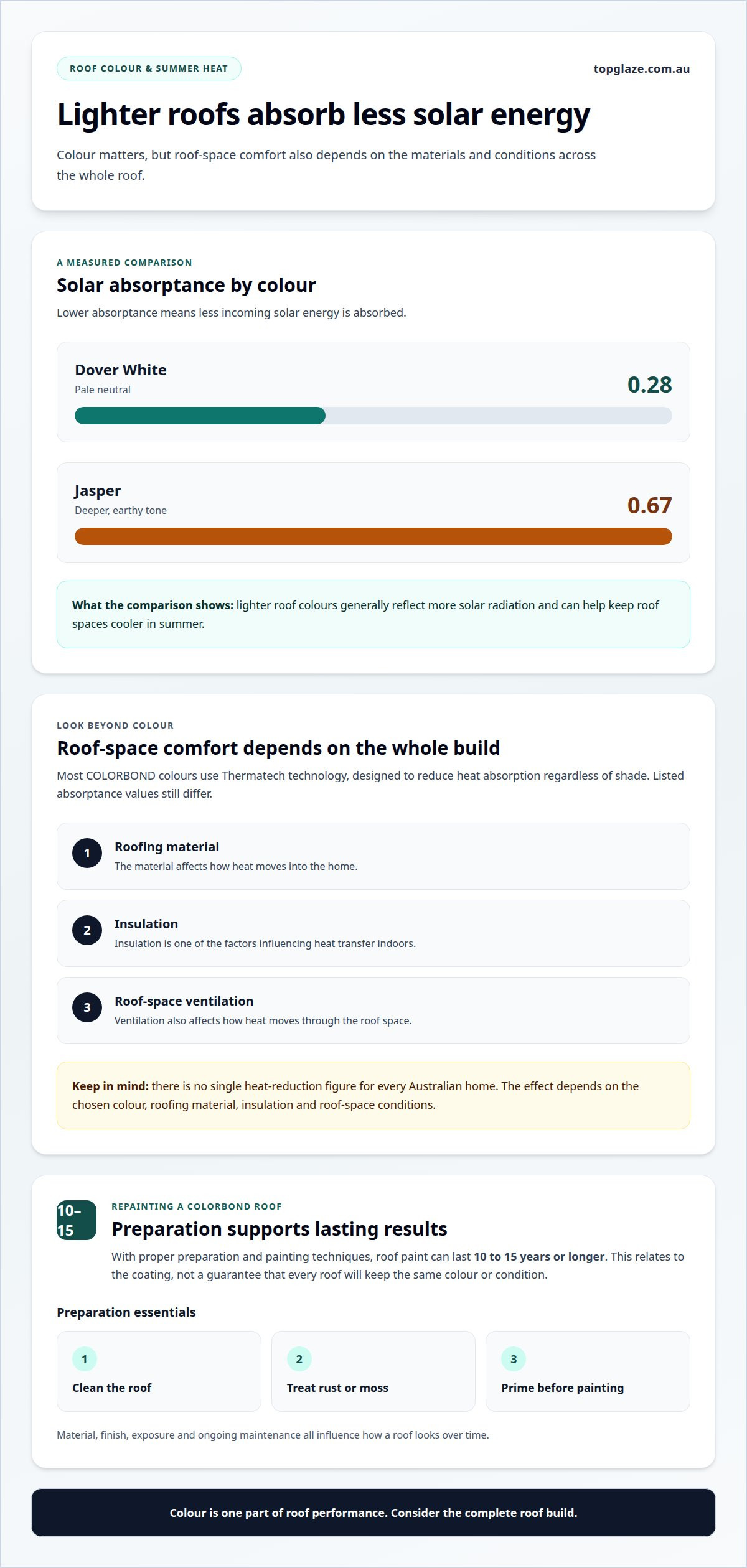
In a hot Australian summer, a lighter roof can reduce solar heat absorbed at the roof surface. Dover White has a solar absorptance of 0.28, compared with 0.67 for Jasper. Lower absorptance means less incoming solar energy is absorbed. Lighter roof colours generally reflect more solar radiation and can help keep roof spaces cooler in summer. These figures show why a pale, reflective shade may suit homeowners prioritising cooler roof spaces.
Colour isn’t the only factor. Most COLORBOND colours use Thermatech technology, which is designed to reduce heat absorption regardless of shade. That doesn’t mean every colour performs identically: listed absorptance values still differ. Roofing material, insulation and ventilation also affect how heat moves into a home. A classic dark roof can retain its visual appeal, while a lighter option may better suit a home where summer heat is a concern.
There’s no single reduction figure that applies to every Australian home. The effect depends on the chosen colour, roofing material, insulation and roof-space conditions. A lighter, more reflective surface absorbs less solar radiation, but the effect on indoor comfort depends on the whole roof build, not colour alone. On a dark roof, a lighter roof-grade coating changes the visible colour and may alter solar absorption depending on its finish and performance.
Paint preparation matters for lasting results. A Colorbond roof can be repainted after proper cleaning, treatment of rust or moss, and priming. With proper preparation and painting techniques, roof paint can last 10 to 15 years or longer. That lifespan relates to the coating, not a promise that every roof will retain the same colour or condition. Material, finish, exposure and ongoing maintenance all influence how a roof looks over time. Choose a reflective shade for heat performance, then weigh its appearance against the home’s existing exterior.
4. Matching roof colours with gutters, fascia and downpipes
Treat the roof, gutters, fascia and downpipes as one exterior scheme. If you need to upgrade damaged drainage components while updating your colour palette, working with a specialist such as Roof Plumbing Expert ensures new gutters and downpipes are correctly installed to protect the property. Choose the roof shade first, then decide whether the trim should blend in or create contrast. Matching gutters to a darker roof, such as charcoal, can make the roofline feel continuous. A lighter fascia can separate the roof from the walls and give the home a cleaner edge. The right balance depends on which features you want to highlight.
For a restrained finish, keep gutters close to the roof colour and fascia close to the wall colour. For example, a pale rendered home with a dark roof can use darker gutters to extend the roofline, while pale fascia keeps the eaves visually lighter. Downpipes can match the wall to recede or match the gutter to make the drainage line more visible. Use the same approach across the front and sides for a considered result.
Existing materials can help narrow the choices. Terracotta tiles bring warm red and orange tones, so earthy or neutral trim can complement them without competing. A Monument-toned roof creates a stronger, darker statement; pair it with trim that relates to the wall colour or repeats another exterior detail. On a home with timber features, echoing a timber tone in the fascia can connect the roof to the façade.
Before settling on a finish, assess the condition of existing gutters, fascia and downpipes. Faded or weathered trim may not match a fresh roof coating, even if the colour name is the same. Compare samples together in natural light and consider how each surface meets at corners, eaves and downpipe outlets. A consistent scheme uses a limited palette, with each shade serving a clear role rather than competing for attention.
If the gutters or fascia need attention as part of your colour update, get help coordinating guttering and fascia with the roof scheme.
Top Glaze Roofing Systems
Top Glaze Roofing Systems can help you connect a roof-colour decision with your home’s condition and needs. If the existing roof is sound but its finish needs attention, roof restoration may suit. Repairs address specific roof issues, while replacement is an option when a new roof is needed. Guttering and fascia can also be considered as part of a coordinated exterior scheme.
Bring your preferred shade and trim combinations to the discussion. The roof material, existing finish and surrounding exterior all inform the practical next step, whether you’re planning a colour refresh or broader roofing work.
For help with roof and exterior choices in Melbourne, contact Top Glaze Roofing Systems.
Make your colour choice part of the bigger plan
A roof colour can shape future exterior decisions, so treat it as a long-term design choice rather than a passing trend. Choosing modern roof colours for Australian homes in 2026 is also an opportunity to decide what you want the property to express: a quiet, cohesive appearance or a more defined roofline. Let that priority guide later choices for walls, trim and other visible details, or even inspire a broader whole-home refresh where specialists like Sheepbridge Sofas & Beds demonstrate how earthy and neutral palettes carry through to interior furnishings.
Before moving ahead, describe your preferred scheme clearly: the roof shade, the look you want from the street and the overall feel you want for the exterior. This gives you a practical starting point for discussing the project and helps keep decisions consistent as the work takes shape.
If you’re ready to discuss your roofing plans, contact Top Glaze Roofing Systems. A considered colour choice can give your home a confident direction for its next chapter.
Frequently Asked Questions
Can You Repaint a Colorbond or Tile Roof a New Colour?
Yes, both Colorbond and tile roofs can be given a different colour with suitable preparation and roof-grade coating. For Colorbond, this means cleaning the surface, treating rust or moss, and priming before painting. On a tiled roof, damaged tiles need attention as part of the restoration process. The roof’s condition and existing finish guide the preparation required.
What roof colour adds the most value to a home?
No single roof colour can be relied on to add the most value to every home. A colour that suits the building’s materials and overall exterior can support a considered presentation, while a clash may distract from other features. Think about the home’s appearance as a whole and avoid choosing a shade solely because it is fashionable.
Do dark roofs make a house hotter?
Dark roofs can absorb more solar heat, particularly on metal roofing, which can radiate heat into the roof cavity. The effect on indoor comfort also depends on the roof build, including insulation and ventilation. If you prefer a dark finish, consider its appearance alongside those elements rather than treating colour as the only factor affecting summer temperatures.
Should my roof be lighter or darker than my walls?
There’s no fixed rule: choose the relationship that suits your home’s materials and the look you want. Lighter walls can make a darker roof stand out, while closer tones create a more unified exterior. Consider how the roof, walls and trim work together from the street, not just how two colour samples look side by side.
What is the most popular Colorbond colour in 2026?
Soft greys and off-whites are popular Colorbond choices in Australia for 2026, but there isn’t one clear national favourite. The right selection depends on your home’s exterior, setting and priorities. A roof shade that works with the walls and trim may be a better fit than choosing a colour based on popularity alone.
What is the most popular roof paint colour?
There isn’t one roof paint colour that can be named the most popular across Australia. Roof paint choices include light, neutral and darker shades; the best fit depends on the home’s materials, surrounding colours and desired appearance. For a repaint, consider how the new colour will work with the existing walls and trim, not just the roof surface.


