

A leak doesn’t automatically mean you need a new roof. Roof repairs in Brighton can address leaks, broken tiles, worn ridge capping and damage to metal roofing, including Colorbond® roofs. The right repair depends on where water is entering and the condition of the roof beneath the visible damage.
It’s understandable to want a leak stopped promptly and the repair to last. A thorough assessment can establish whether targeted repairs will address the fault or whether the roof needs broader work, rather than assuming it must be replaced.
This guide explains how professionals approach tile and ridge capping repairs, leak response and metal roof issues in Brighton. You’ll also learn what affects repair decisions, which credentials and licences to look for when assessing roofing expertise, and how Top Glaze Roofing Systems can help with residential roof repairs.
Key Takeaways
- Learn what a roofer assesses before replacing damaged tiles or repairing ridge capping, and how roof condition shapes the repair approach.
- Understand why tracing a leak to its source matters, including the roof areas professionals inspect for weak points.
- Know which credentials and Victorian licence details to consider when assessing a roofing professional’s suitability for the work.
- Discover the issues that can affect metal and Colorbond® roofs, and when targeted repairs may be appropriate.
Tile replacement and ridge capping repairs
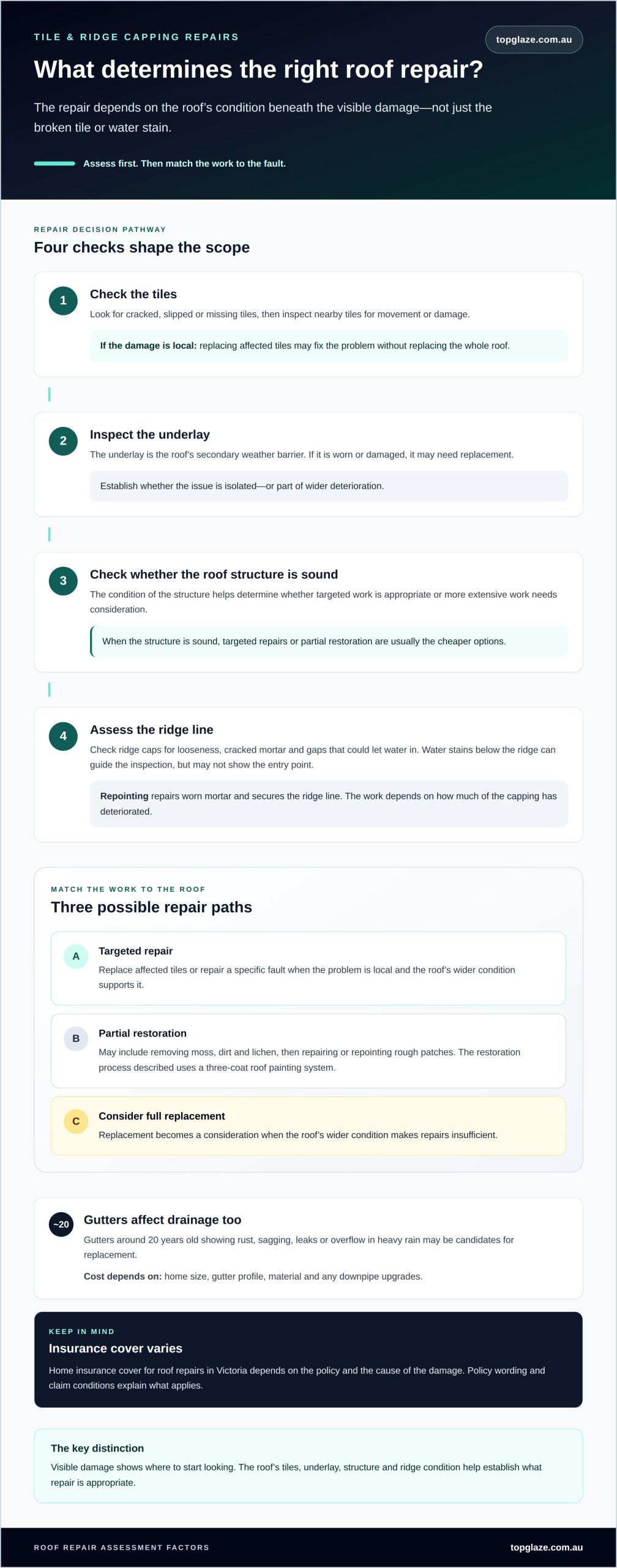
Tile repairs can involve replacing individual broken tiles or repairing ridge mortar. The appropriate scope depends on the tiles’ condition, the underlay and whether the roof structure is sound.
Tile and underlay repairs
A roofer checks for cracked, slipped or missing tiles, then inspects nearby tiles for movement or damage. Replacing affected tiles can fix a local problem without replacing the whole roof. The underlay matters too: if it is worn or damaged, it may need replacement to restore the roof’s secondary weather barrier. The assessment should establish whether the damage is isolated or part of wider deterioration.
When the roof structure is sound, targeted repairs or partial restoration are usually the cheaper options. Restoration can include removing moss, dirt and lichen, then repairing or repointing rough patches. A three-coat roof painting system is used in the described restoration process. Full replacement becomes a consideration when the roof’s wider condition makes repairs insufficient.
Ridge capping repairs
Ridge capping covers the joins along the roof’s peak. A roofer checks for loose caps, cracked mortar and gaps that could admit water. Repointing repairs worn mortar and secures the ridge line; the scope depends on how much of the capping has deteriorated. Water stains below the ridge can help guide the inspection, but the visible mark may not show where water enters.
Gutters affect how rainwater drains away from the roof. Around 20-year-old gutters showing rust, sagging, leaks or overflow in heavy rain may be candidates for replacement. Cost depends on home size, gutter profile, material and any downpipe upgrades.
Home insurance cover for roof repairs in Victoria depends on your policy and the cause of the damage. Review the policy wording and claim conditions to understand what applies to your situation.
Roof repairs and leak response in Brighton
A roof leak needs more than a patch over the ceiling stain. An effective repair traces the water to its entry point and addresses the roof component letting it through.
Leak detection and repair methods
A roofer examines the roof above the stain and checks likely entry points. Flashing around roof junctions and openings can develop weak spots, while ridge mortar may need repointing. The indoor mark can be some distance from the fault, so the inspection follows the water path rather than treating the stain alone.
Once the source is identified, the repair should address the specific fault. This may mean correcting flashing, securing a roof component or repointing mortar. Ask for a clear explanation of what was found and how the proposed work will fix it. For example, repairing flashing while leaving nearby deteriorated mortar unaddressed may leave another vulnerable point. A defined scope shows exactly what the repair covers.
Roof repair warranties
Warranty terms vary by roofer and by the work performed. Ask for the terms in writing, including what the warranty covers, its duration, exclusions and how to make a claim. Distinguish coverage for workmanship from any separate product warranty. Read the conditions alongside the repair scope, so you can see which parts of the roof and completed work are included.
Keep the written scope and warranty documents with your home records. If a leak returns, note the affected room and when water appears. Those details can help the roofer assess whether the same entry point is involved. Avoid assuming a warranty covers every later leak; the written conditions define its limits.
For a persistent leak or uncertain entry point, arrange a professional roof repair assessment. A focused inspection can establish whether flashing, mortar or another roof area needs attention before further repair work is planned.
Business credentials and licence checks
Credentials help you assess whether a roofer is suited to your property and repair scope. Check the business name, relevant licence details, written quote and proposed work together.
For roof work in Brighton, confirm that any credential shown belongs to the contracting business and relates to the work being quoted. A listed identifier, BLD 237345, cites Section 50(1)(b) of the Building Work Contractors Act 1995. That reference is not, by itself, proof that a credential applies to a Victorian project. Check its jurisdiction and relevance before relying on it.
Compare quotes by matching the scope, not just the totals. One quote may include replacing damaged materials and addressing the cause; another may cover only a visible patch. Look for the roof areas inspected, repair items, materials, exclusions and any stated warranty terms. Ask for unclear differences to be explained in writing before accepting the work.
To reduce the risk of a scam, keep communications and the quote in writing. Be cautious about pressure to decide immediately or requests to pay before the work and terms are clear. Confirm the business identity shown on the quote matches the party you’re engaging. Avoid treating a low figure as proof of value if the scope leaves out key repairs.
Whether roof repairs in Brighton require a building permit or council approval depends on the proposed work and property circumstances. Ask for approval requirements to be addressed in the written scope rather than assuming every repair follows the same process.
Before work begins, keep the fixed quote, agreed changes and payment records together, then retain the completion details. These documents help clarify what was included and whether the completed work matches the agreed scope and guarantee terms.
Metal and Colorbond roof repairs
Metal roofs need repairs suited to sheet roofing, not tile methods. For roof repairs in Brighton, a roofer should assess the affected sheets, joins, flashings and drainage before recommending work. Colorbond® is one metal roofing option; the right approach depends on the roof’s condition and the extent of the damage.
Visible corrosion, loose or damaged sheets, indoor water marks and leaks around roof openings can help guide an inspection. The indoor mark may not sit directly beneath the entry point. A roofer traces the water path and checks nearby junctions before settling on the repair scope, rather than treating only the obvious symptom.
At sheet joins, the roofer checks whether gaps or damaged connections are letting water through. Flashing around roof openings and edges also needs attention because weaknesses can let rain enter. A suitable repair addresses the identified fault and considers adjoining areas, rather than simply covering a visible mark.
Metal sheets and their fixings need to be assessed together. If a sheet has shifted or sustained damage, the roofer determines whether it can be secured or needs replacing. Where corrosion or deterioration affects several areas, isolated repairs may not address the wider problem. The roof’s overall condition and supporting structure help guide the decision.
Roof repairs in Brighton can suit a contained fault, while widespread damage may call for a broader project. The assessment should explain which areas are affected, what work is proposed and why. If you’re considering Colorbond® as part of a replacement, select materials to suit the property and project requirements.
Clear findings make the next step easier. Ask for the affected areas and proposed repair scope to be set out in writing, including any sheet replacement. For a metal roof issue, arrange a roof repair assessment to establish the appropriate work.
Top Glaze Roofing Systems: Roof Repairs
Top Glaze Roofing Systems repairs residential tile and metal roofs when leaks, damaged sections or recurring faults need professional attention. The recommended work is tailored to the roof’s condition and the problem’s scope.
If the roof needs more than a targeted fix, restoration or replacement may be appropriate. Top Glaze also handles gutter and fascia work to address drainage and roof-edge concerns. A roof assessment helps match the proposed work to your home instead of assuming every roof needs the same solution.
For help with a roof concern in Brighton, contact Top Glaze Roofing Systems to discuss the repair.
Choose the right next step for your roof
A clear assessment of the roof’s overall condition is the most useful starting point. It can distinguish a contained fault from broader wear and help you decide what work to proceed with. For roof repairs in Brighton, the proposed scope should match the roof, rather than treating every visible sign as the same problem.
Top Glaze Roofing Systems provides roof repairs, restoration and replacement. The appropriate option depends on the assessment and whether targeted work can address the issue. A clear explanation of the recommended scope helps you plan and understand how the work meets your home’s needs.
If you’re ready to discuss the roof and possible next steps, contact Top Glaze Roofing Systems. A conversation can help you move from uncertainty towards a considered plan for your home.
Frequently Asked Questions
What roof repair services are available in Brighton, Victoria?
Brighton homeowners can access repairs for residential tile and metal roofs, as well as restoration, replacement, gutter and fascia work, and leaf guards. A damaged section may need repair, while wider deterioration could call for restoration or replacement. These services address common roofing and drainage needs for homes around Melbourne.
Which roof repair companies in Brighton have good reviews and are licensed?
Top Glaze Roofing Systems lists a 4.8 out of 5 rating from more than 200 Google reviews. Its published credentials include VBA Building Practitioner Licence CDB-L 100045 and Plumbing Licence 28159. For a Brighton project, consider whether the proposed work fits the relevant credential, and read the written scope and warranty terms alongside customer feedback.
How quickly can roofers in Brighton respond to emergency roof leaks?
Top Glaze Roofing Systems offers 24/7 emergency roof repair availability across Melbourne for active leaks, storm damage and structural issues. Availability means emergency help can be requested at any time, but it doesn’t establish a specific arrival time. Share the Brighton property address and describe whether water is entering or damage is visible when arranging assistance.
What are common causes of roof damage in Brighton homes?
Common trouble spots include cracked or displaced tiles, deteriorated underlay, weakened flashing and worn ridge mortar. Damaged sheets or connections can let water through metal roofs, while gutters that rust, sag, leak or overflow can disrupt drainage. An indoor stain may not be directly below the roof fault, so its location alone may not reveal the cause.
How do professional roofers find and repair a roof leak safely?
Professional roofers trace the water path, inspect likely entry points and assess safe access to the affected area. They then match the repair to the fault, such as addressing flashing or a damaged roof component. Keep clear of unsafe areas and tell the roofer when the leak appears; that information can help focus the inspection.


