

Roof damage can develop before it is obvious from the street. For roof restoration in Glen Waverley, look for cracked or loose tiles, worn roof surfaces, recurring leaks and water stains inside your home. These signs warrant an assessment, but they do not automatically mean the entire roof needs replacing.
A leak or mould indoors can be worrying, especially when the cause is unclear. One Glen Waverley homeowner reported mould developing on the bathroom ceiling of a five-year-old house and suspected a leak. It’s a useful reminder that indoor symptoms deserve attention, even in a relatively new home.
This article explains signs that may call for restoration, how restoration compares with replacement, and what influences the decision. It also considers local roofing listings and customer experiences, helping you understand your options and choose a practical next step.
Key Takeaways
- Understand when restoring a roof may be practical and when its condition points towards replacement.
- Learn which visible and indoor warning signs can help identify the need for a professional roof inspection.
- See how to compare local roofer listings and quote details by looking beyond the headline figure.
- Use Glen Waverley customer experiences as context when considering what your own roof may need.
Roof restoration as an alternative to replacement
In Monash, approval depends on the proposed work and the property’s planning controls. Don’t assume restoration and replacement have identical requirements: the scope of work and any structural changes are important when determining whether council approval is needed.
Restoration or Replacement
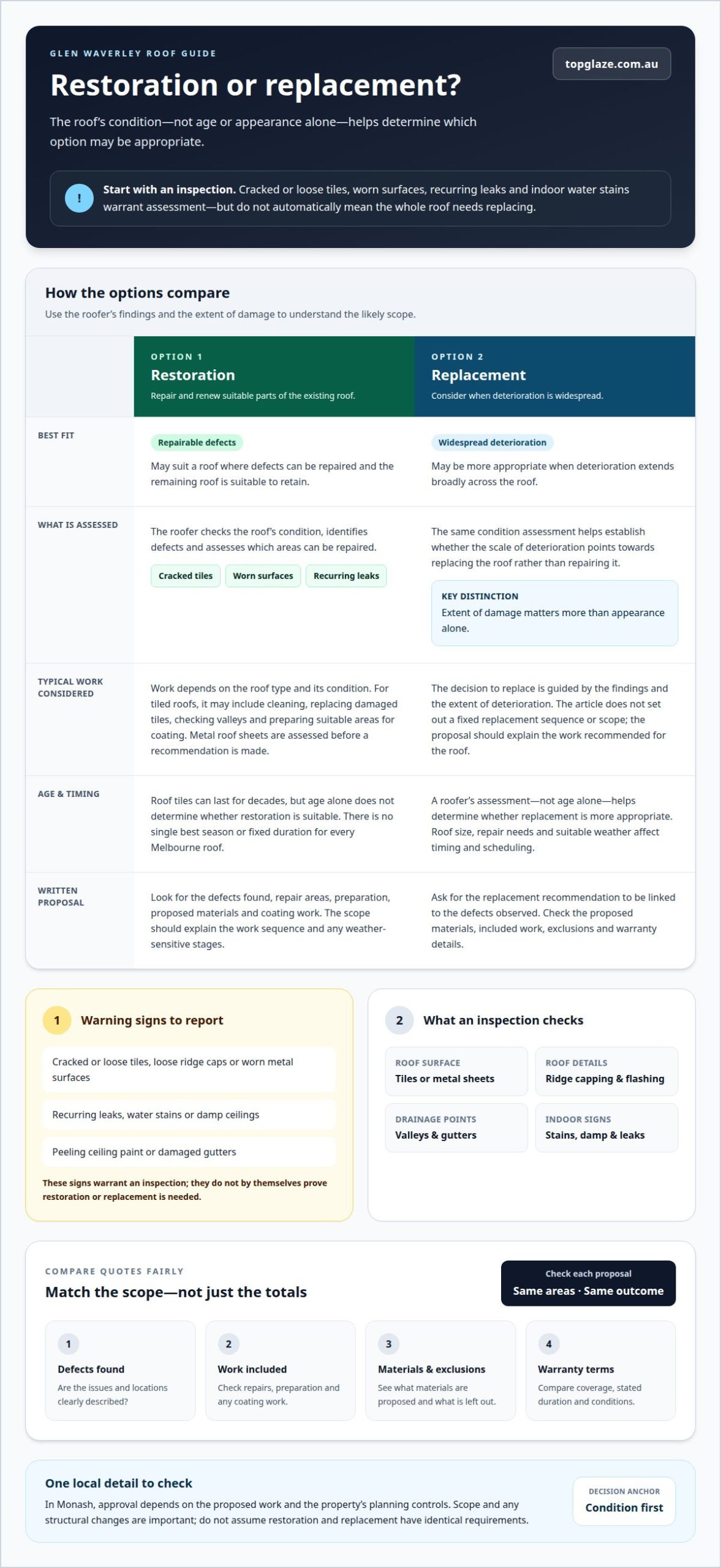
Roof tiles can last for decades, but age alone doesn’t determine whether restoration is suitable. A professional assesses the roof’s condition, including cracked tiles, worn surfaces and recurring leaks. Restoration may suit a roof with repairable defects; widespread deterioration may make replacement more appropriate. The extent of the damage matters more than appearance alone.
For a tiled roof, cleaning removes accumulated grime before damaged tiles are replaced and the remaining surface is assessed. Roof valleys also need checking: deterioration can affect drainage, so the roofer assesses whether they need replacement. For a metal roof, the assessment focuses on the sheets and their condition before recommending restoration or replacement.
Restoration Steps and Timing
For tiled or metal roofs, the roofer inspects the surface, identifies defects, completes necessary repairs and prepares suitable areas for coating. Tiled work may include cleaning and replacing damaged tiles, and valley repairs where needed. The work sequence and scope depend on the roof’s condition.
There’s no single best season or fixed duration for every Melbourne roof. Roof size, repair needs and suitable weather all affect timing. A clear scope should set out the work sequence and explain how weather-sensitive stages may affect scheduling.
Materials and coatings should suit the roof’s existing surface and its exposure to Glen Waverley weather. The roof type, condition and areas needing repair guide those choices. A written scope should specify the proposed materials and where they’ll be used.
Be cautious of vague scopes, unexplained replacement recommendations or pressure to agree before defects are described. Ask for the identified issues, repair areas and material choices to be set out clearly. This makes it easier to judge whether the proposal addresses the roof’s actual condition.
How Do You Know If Your Roof Needs Restoration?
Cracked tiles, loose ridge caps and worn metal surfaces are visible warning signs. Indoors, water stains, damp ceilings or leaks may point to a fault. These symptoms don’t prove restoration is needed, but they do warrant a professional inspection. The cause may be a localised defect rather than widespread roof deterioration.
A professional inspection checks the roof’s surface and drainage points. The roofer assesses tiles or metal sheets, ridge capping, flashing, valleys and gutters, then considers any indoor signs alongside visible defects. For example, a ceiling stain beneath a roof valley gives the inspection a specific area to investigate. The findings help distinguish a repair from broader restoration work.
Compare roof restoration quotes by matching their scope, not just their totals. Each should describe the defects found, included repairs, preparation and coating work, and any exclusions. Check what each warranty covers, its stated duration and any conditions. A quote that links each repair to an observed defect is easier to assess than a general promise.
A local inspection lets the roofer assess your actual roof rather than infer its condition from a description. In Glen Waverley and across Melbourne, report recurring leaks after rain, peeling ceiling paint or damaged gutters. These details help focus the inspection; the roof’s material and condition then guide the recommended work. A written report can record the location and type of each defect.
Maintenance also helps reveal changes before they become harder to trace. Keep a record of when leaks appear, which rooms show staining, and whether the problem returns after rain. Share those details during the inspection. If you’re seeing these signs in Glen Waverley, arrange a professional roof inspection to identify the issue and discuss suitable next steps.
For complete roof restorations, the company offers a free 12-month roof inspection upon request. Homeowners considering this service can ask about the inspection when discussing the restoration and confirm how to request it.
Local roofer listings and quote requests
Online listings can show the range of roofing work requested around Glen Waverley, but they don’t make every job directly comparable. Hipages lists 4,936 roofers, so a directory search can return a broad mix of services and locations. Focus on whether a listing describes residential roofing and the issue your property needs addressed.
Local examples show why the work description matters. One Glen Waverley request involved replacing approximately 7 metres of rake trim. Other listings describe a roof leak or sealing work. These tasks have different scopes, so a quote for a small repair shouldn’t be treated as a direct comparison with a full restoration proposal.
To request a useful quote, provide your suburb, roof type and a clear description of the problem. Note where water appears indoors, whether the issue recurs and which roof area seems affected. Photos taken from ground level can help show visible concerns, but they don’t replace a professional roof inspection.
- Describe the issue: distinguish a leaking roof from damaged trim or a general restoration enquiry.
- Set out the scope: ask for identified repairs, preparation and any proposed coating work to appear clearly.
- Compare like with like: check that each quote addresses the same roof areas and requested outcome.
- Review the written details: look for inclusions, exclusions, materials and warranty terms.
A straightforward quote process starts with specific information, followed by an on-site assessment where needed. A clear proposal explains how the recommended work relates to the defects found. If one quote recommends replacing a small section while another proposes broader work, compare the stated roof condition and scope, not just the labels.
For Glen Waverley homeowners, directory listings are a starting point, not a diagnosis. A specific request helps focus the discussion; a detailed inspection and written scope make proposed roofing work easier to understand and compare.
Customer experiences in Glen Waverley
A Glen Waverley homeowner reported mould developing on a bathroom ceiling in a five-year-old house and suspected a leak. The example challenges an easy assumption: a relatively new home can still show signs of a roof problem. Mould is an indoor symptom, not a diagnosis. The useful next step is to trace the moisture to its source.
In this case, the bathroom ceiling mattered more than the age of the house. A professional assessment can consider where mould appears, whether there’s staining and whether moisture returns after rain. These clues help distinguish a roof issue from another source of dampness. The same approach applies to peeling paint or a water mark in another room.
Customer experiences are examples, not guarantees that another roof needs the same work. A useful job description explains the original concern, the work completed and whether gutters or drainage were included. If a review says a roofer helped resolve a leak, look for details about its cause and repair rather than treating the outcome as a promise for every property.
When reading local reviews, compare the details with your own situation:
- Problem: Was the report about mould, a leak, damaged tiles or drainage?
- Assessment: Does the account say how the roof issue was identified?
- Work: Is the completed repair or restoration described clearly?
- Outcome: Does the reviewer explain what changed after the work?
A specific Glen Waverley account can help you prepare a clearer inspection request. Note the room affected, visible staining and when the problem appears. Share those observations with the roofer, then compare the proposed work with the symptoms and inspection findings. For a professional assessment of a suspected roof issue, request help with your roof concerns.
The company says it has 250+ Google reviews, but review volume is best treated as context; compare individual accounts for assessment details, repair scope and reported outcomes.
Top Glaze Roofing Systems: Roof Restoration
Top Glaze Roofing Systems helps Glen Waverley homeowners address roof wear, leaks and drainage concerns with work suited to the roof’s condition. If tiles or metal roofing show deterioration, an assessment can clarify whether repairs, restoration or replacement are appropriate. Guttering and fascia work can also address problems affecting drainage and roof edges.
The right next step depends on the inspection findings. Localised damage may call for repairs, while broader wear may suit restoration or replacement. A clear scope helps you understand the proposed work and how it relates to the defects identified.
If you’re ready to discuss your roof, contact Top Glaze Roofing Systems.
Make a clear plan for your roof
It’s easier to address a roof concern when you know what needs attention and why. Use the inspection findings to choose work that matches the roof’s condition, rather than assuming every stain or damaged area means a full replacement is needed. A written scope gives you a practical basis for deciding what to do next.
If you’re considering roof restoration in Glen Waverley, start with a professional assessment that connects visible signs to the roof’s condition. This can clarify whether repairs, restoration or replacement suits your home and which work to prioritise. You can then decide with a clearer understanding of the problem and proposed solution.
Discuss your roof with Top Glaze Roofing Systems and take the next step towards a well-informed plan.
Frequently Asked Questions
What does roof restoration in Glen Waverley include?
A roof restoration can include cleaning, repairs, resealing and a protective coating, with the precise work shaped by the roof’s material and condition. For tiled and metal roofs, the completed scope may differ according to the defects found. A coating such as Solar Glaze® is part of the available restoration process. The written scope should connect each proposed task to the roof’s identified needs.
Which roof restoration companies serve Glen Waverley?
Top Glaze Roofing Systems provides residential roofing services across Melbourne, including roof restoration, roof replacement and roof repairs. For a Glen Waverley property, start by matching the service to the roof’s condition and your concerns. A clear scope shows whether the proposed work addresses a localised fault or broader deterioration.
What are the signs a roof needs restoration rather than repair or replacement?
Restoration may suit a roof with widespread surface wear and a sound underlying structure, while a repair may be better for an isolated fault, such as a failed flashing junction. Replacement is relevant when the roof is too deteriorated for restoration to address reliably. A professional assessment considers the number and spread of defects, the roof material and whether damage extends beyond the surface.


