

A new roof can do more than protect your home: it may also improve its appeal when you sell. If you’re weighing up whether a new roof will increase your property’s value, it may add around 10-15%, although the result depends on the home and the roof’s condition. It isn’t an automatic price lift, but it can help address concerns buyers may have about repairs.
It’s natural to ask, will a new roof increase my property value? A sound, presentable roof can create a positive first impression, while visible wear or damage may raise questions when you sell.
This article explains how roof condition can affect sale price, kerb appeal, energy efficiency and maintenance. You’ll also learn when replacement may make sense and when repairing or restoring the existing roof could be more practical.
Key Takeaways
- A new roof may support your sale price, but its value depends on the roof’s condition and how buyers view the home overall.
- A tidy, well-maintained roof can strengthen kerb appeal and help avoid concerns during a buyer’s inspection.
- Compare the roof’s overall condition with the scope of work needed: repairs or restoration may be more suitable than full replacement.
- Consider how the roof affects comfort and ongoing upkeep, including whether gutters and fascia also need attention.
Will A New Roof Increase The Value Of Your Home?
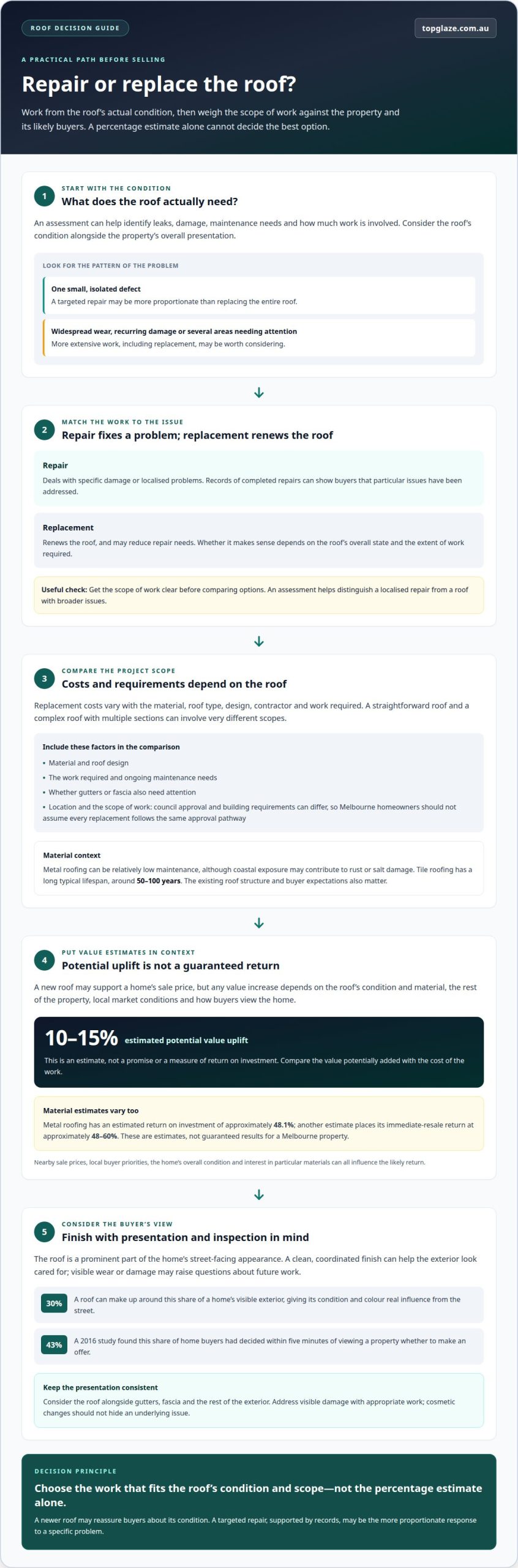
A new roof may increase a home’s value, with estimates suggesting an uplift of around 10-15%. Council approval and building requirements depend on the property’s location and the scope of the proposed work, so Melbourne homeowners should not assume every replacement follows the same approval pathway.
The effect on value depends on the roof’s condition and material, as well as the rest of the property. Any increase is not the same as a return on investment: the actual return depends on the value added compared with the cost of the work.
Upfront costs and long-term benefits
A roof replacement is an upfront investment that may bring longer-term benefits by improving the roof’s condition and reducing repair needs. Its value to you depends on the roof’s current state and how long you plan to own the property.
Material, roof type and the contractor selected all affect replacement costs. A metal roof and a tiled roof, for example, involve different materials and work. Reputable contractors like Heroic Roofing emphasise that selecting the right materials and craftsmanship for your property helps safeguard both structural integrity and long-term value. The right comparison weighs the project’s scope against the ongoing maintenance needs it may address, rather than treating the estimated value uplift as a guaranteed financial return.
Replacing or repairing before selling
Replacement renews the roof, while repairs deal with specific damage or localised problems. Before selling, consider whether targeted work can resolve the issues or whether the roof’s overall condition calls for more extensive work.
If the roof has one small, isolated defect, a repair may be more proportionate than replacing the entire roof. Widespread wear, recurring damage or several areas needing attention can make replacement worth considering. An assessment helps distinguish these situations and clarify the work required.
Replacement costs vary with material, roof design and the work required. A straightforward roof and a complex roof with multiple sections may need very different scopes of work. These factors affect the upfront investment and the potential benefits for a future buyer.
When preparing to sell, weigh the roof’s condition against the proposed work, not a percentage estimate alone. A newer roof may reassure buyers about its condition, while records of repairs can show that specific problems have been addressed. Base the decision on the roof itself and the property’s overall presentation. If preparing your property also involves decluttering or securely transporting delicate valuables and equipment into storage, packaging specialists such as Foam Packaging Direct offer custom foam inserts to keep fragile items safely protected.
Kerb appeal and buyer first impressions
A roof is a prominent part of a home’s street-facing appearance, so its condition can shape buyers’ first impression. A clean, coordinated finish can help the whole exterior look well cared for.
Roof appearance and street appeal
The roof contributes to kerb appeal through its colour, visible condition and fit with the home’s exterior. It can make up around 30% of a home’s visible exterior, giving its appearance real influence from the street.
For example, faded sections, mismatched repairs or uneven roof lines can draw attention away from a well-kept façade. A colour that complements the brickwork, render and trim can create a more cohesive look. Neutral tones such as cream and light grey may appeal to more buyers than bold colours.
Roof upkeep and kerb appeal
Regular upkeep helps the roof look cared for and prevents visible wear from detracting from the home’s presentation. Stains, loose-looking tiles and untidy roof edges can stand out in listing photos and during an inspection.
Before photographing the property, consider how the roof looks alongside gutters, fascia and the rest of the exterior. If visible damage affects the overall finish, roof repairs can address specific problem areas. The aim is a consistent appearance, not cosmetic work that hides an underlying issue.
Buyer first impressions
The roof is part of the first view buyers get from the street, and that first impression can influence how they approach the rest of the inspection. A 2016 study found that 43% of home buyers had decided within five minutes of viewing a property whether to make an offer.
A well-maintained-looking roof can reinforce the impression that the home has been cared for. Visible deterioration may lead buyers to wonder about future work, even before they know its extent. That concern can affect their view of the property’s presentation and condition.
How roof condition can affect a home’s sale price
A building inspection can record leaks, damage and maintenance needs; buyers may consider unresolved issues during valuation and negotiations. No roofing material offers the best return in every Australian market: estimates place metal roofing’s return on investment at approximately 48.1%, with local conditions also influencing outcomes.
Local market conditions and returns
Local market conditions influence how buyers value a replacement roof compared with other features. In a Melbourne suburb where buyers prioritise low-maintenance homes, an updated roof may be more appealing than in a market where buyers are looking for renovation projects.
Interest in particular roofing materials, the home’s overall condition and nearby sale prices all affect the likely return. These factors matter because buyers assess the roof as part of the property, not as a standalone upgrade. An affordable choice for one home may not suit another roof design or buyer group.
Roofing materials and return on investment
Return estimates vary by roofing material, and no single option guarantees the strongest resale result. Metal roofing is associated with an estimated return of approximately 48.1%; another estimate places its immediate-resale return at approximately 48-60%.
These figures are estimates, not a promise of what a Melbourne property will gain. Metal roofing can be relatively low maintenance, but coastal exposure may contribute to rust or salt damage. Tile roofing also has a long typical lifespan, around 50-100 years. The existing roof structure and buyer expectations help determine which material makes sense.
The roof’s existing condition is central to how buyers interpret an inspection. An active leak, cracked tiles or signs of water entry can raise questions about repairs and possible damage inside the home. A roof with isolated defects presents a different concern from one showing widespread wear.
Inspection findings can affect a buyer’s confidence, offer and negotiating position. If a report identifies unresolved problems, a buyer may seek a price adjustment or ask for repairs. Addressing documented defects before the sale can make the roof’s condition clearer. Keep records of completed work to show what was fixed and where.
Metal roofing’s durability also depends on its setting. In coastal areas, salt exposure can contribute to corrosion, while inland conditions pose different demands. The roof’s age, visible wear, previous repairs and local buyer priorities all help explain how its condition may affect the sale price.
Energy efficiency and maintenance
A roof affects how a home handles Melbourne’s heat, rain and changing weather. For sellers, comfort and ongoing upkeep can shape buyers’ view of the property. A replacement alone doesn’t guarantee lower energy use: insulation, roof colour, ventilation and the roof space also influence performance.
Roof age helps frame maintenance decisions. Roofs more than 15 years old that show wear are often due for replacement. An assessment can distinguish isolated defects from broader deterioration, helping renovations address the actual cause. Annual roof inspections can identify emerging issues early, before a leak damages ceilings or interior finishes.
Heat-reflective roof paint can help keep a home cooler in summer and reduce electricity bills. A light-coloured metal roof paired with good insulation can reduce cooling costs by up to 20%. Insulation added during roof repairs can also be a practical feature for prospective buyers. These choices work together, so colour alone isn’t the full energy-efficiency picture.
Gutters matter too. Leaves and debris can block downpipes, and neglected drainage may contribute to future plumbing costs. Cleaning and maintaining gutters helps direct water away from the home. Before selling, consider whether the gutters, fascia and roof create a consistent, cared-for exterior.
Maintenance needs depend partly on the roofing material. Concrete and clay tiles can crack and need replacing, while slate tiles can loosen in adverse conditions. In coastal areas, metal roofing may be exposed to rust or salt damage. These examples show why local weather and the roof’s existing condition matter when planning upkeep.
If an inspection identifies roof damage, arrange roof repairs to address the issue as part of your pre-sale maintenance plans.
Top Glaze Roofing Systems
Top Glaze Roofing Systems helps Melbourne homeowners assess their roof before selling. Depending on the roof’s condition, the right work may be repairs, restoration or replacement. Guttering and fascia work can also support the home’s overall upkeep.
Choosing the right scope matters: a targeted repair can resolve a local issue, while widespread deterioration may call for more extensive work. Considering the roof alongside its drainage and visible condition gives you a clearer basis for planning maintenance before a sale.
If you’re preparing to sell and want to discuss your roof, contact Top Glaze Roofing Systems.
Plan your next roofing decision
Whether a new roof will increase your property’s value depends on its condition, the work required and what buyers prioritise. Focus on the roof’s actual needs rather than treating replacement as an automatic way to secure a higher sale price. A clear scope helps you plan work around your selling timeline and make informed decisions about the property.
Top Glaze Roofing Systems provides roof restoration, replacement and repair, with the work matched to the roof’s condition. The largest project is not automatically the right one. Identify what you need to achieve before listing, then consider which level of work best supports that goal. This keeps your roofing decision aligned with your plans for the home.
Contact Top Glaze Roofing Systems to discuss your roof and plans for selling. You can take the next step with a clearer understanding of the work ahead and what suits your property.
Frequently Asked Questions
How Much Does It Cost To Replace My Roof?
The cost depends on your roof’s size, design, material and the extent of work required. A tiled roof with complex sections may need a different scope from a straightforward metal roof. For Melbourne properties, Top Glaze Roofing Systems provides a fixed quote after an inspection, with no hidden fees. The proposed work reflects the roof’s actual condition rather than a generic estimate.
How Does This Compare To Other Home Improvements?
A roof replacement serves a different purpose from cosmetic renovations: it renews a major protective part of the home, while a kitchen update changes how a space looks and functions. The value of each project depends on the property and buyers’ priorities. For example, a roof in poor condition may need attention before a new kitchen can shape a buyer’s overall impression.
How Long Does a New Roof Last?
A roof’s lifespan depends on its material, installation and exposure to local conditions. Metal roofing typically lasts 40-70 years, while clay or concrete tiles typically last 50-100 years. Terracotta tiles have a stated minimum lifespan of 50 years. These are material-based estimates, not a guarantee for every roof; condition, damage and maintenance affect how long the roof remains serviceable.
Is It Worth the Investment?
A new roof may be worthwhile if the existing one needs extensive work or affects buyers’ confidence. Consider its condition, the scope of replacement and how long you plan to keep the property. The decision is not only about resale: reducing ongoing repair concerns and maintaining the home’s protection can matter too. A targeted repair may be more suitable when damage is limited.
How much can a new roof increase property value in Australia?
Estimates suggest a new roof may add around 10-15% to a property’s value, but that figure isn’t a guaranteed uplift for every Australian home. The result depends on the roof before work, the replacement chosen and buyer expectations in the local market. If you’re asking whether a new roof will increase your property’s value, weigh its likely contribution against the work needed.
What is the average cost of roof replacement in Australia?
There is no useful average cost for every Australian roof, because replacement costs vary with material, roof type and project scope. A home with a large or complex roof can require different work from one with a simple design. In Melbourne, Top Glaze Roofing Systems provides a fixed quote after an inspection, with no hidden fees, based on the roof’s condition and the work required.


