

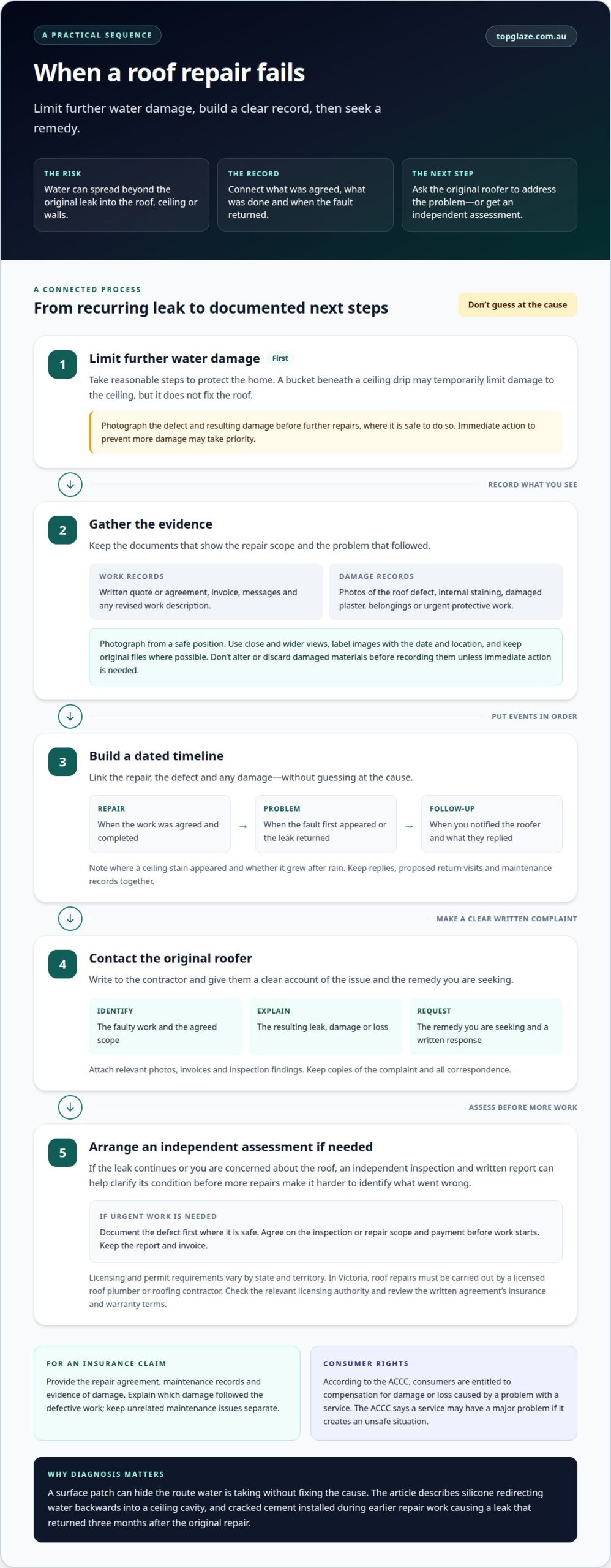
A poor roof repair can allow water to spread into the roof, ceiling or walls, turning a local leak into wider damage. If you’re deciding what to do after a bad roof repair job, first limit further water damage, photograph the defect and any resulting damage, and keep invoices and messages. Then contact the original roofer in writing, explain the problem and request a remedy. If the leak continues or you’re concerned about the roof’s condition, arrange an independent assessment before further repairs make it harder to identify what went wrong.
It’s frustrating to pay for work and still face leaks, but a clear record of what was agreed, what was done and when the problem returned can help you decide your next step. Under Australian Consumer Law, consumers are entitled to compensation for damage or loss caused by a problem with a service, according to the ACCC.
This guide explains how a poor repair can cause further problems, what evidence to gather, how to make a formal complaint and when a professional roof assessment can help. It also outlines how to weigh up repair, restoration or replacement for a Melbourne home, without rushing into another fix before the cause is understood.
Key Takeaways
- A failed repair can redirect water and create damage beyond the original leak, so understanding how the problem developed matters.
- Maintenance history and the agreed repair scope can affect how an insurance claim is assessed.
- A clear record of the repair and resulting damage can help establish what needs to be addressed.
- A formal complaint is more effective when it sets out the defect, its impact and the remedy you’re seeking.
Consequences of poor roof repairs
A poor repair can leave the original leak active or create another path for water. Moisture may contribute to mould or structural issues, and damage can spread beyond the area first repaired. The longer water enters the roof, the more parts of the home may need attention. A patch that seems inexpensive at first can lead to more work if the underlying fault remains.
Placement matters. Roof silicone applied in the wrong spot can make a leak worse when it rains. In one reported example, water caught by silicone flowed backwards into the ceiling cavity instead of draining away. A surface patch can hide the route water is taking without fixing the cause.
Other repair materials can fail, too. One homeowner reported that a roofer later found a leak caused by cracked cement installed during earlier repair work. The roof leaked again three months after the original repair was completed and paid for. Poor water diversion and other unresolved issues continued to cause problems.
On a tiled roof, a leak may come from damage beneath the visible surface. Inspecting under the tiles, including the battens and sarking, can reveal problems that aren’t visible from above. A mismatched replacement tile can disrupt water flow, so swapping tiles yourself may make the leak worse. Check drainage issues, too, if leaks appear after light rain.
Recurring leaks can make it difficult to tell whether the roof needs a repair, replacement or wider work. A bucket under a ceiling drip can temporarily limit damage to the ceiling, but it won’t fix the roof. In Victoria, roof repairs must be carried out by a licensed roof plumber or roofing contractor. The ACCC says a service may have a major problem if it creates an unsafe situation. This distinction matters when deciding how urgently to address the damage and what remedy to pursue.
Roof maintenance issues and insurance claims
Maintenance records and the agreed repair scope can help explain how a defect developed. If you make an insurance claim, organise the evidence and link each damaged area to the repair or maintenance history.
Recording faulty work and damage
Gather the written quote, agreement, invoice and messages describing the work. Record when the repair was completed and when the fault appeared. From a safe position, photograph the affected roof area and any internal staining, damaged plaster or belongings. Include visible debris, loose materials and disturbed-looking flashing. A dated list of defects helps show what changed and when.
If there have been several earlier repairs, a full roof inspection with photographs can help document the condition. Keep maintenance records with the images so an insurer or assessor can follow the sequence. Don’t alter or discard damaged materials before recording them, unless immediate action is needed to prevent further damage.
Arranging an inspection or repair
You can arrange for another roofer to inspect defective work and provide a written report. In Australia, licensing and permit requirements for roofing work vary by state and territory. In Victoria, roof repairs must be carried out by a licensed roof plumber or roofing contractor. Check the relevant state or territory licensing authority, and review the contractor’s written agreement for its insurance and warranty terms.
If urgent work is needed, document the defect first where it’s safe to do so. Agree on the inspection or repair scope and payment before work starts. The person authorising the work is initially invoiced. Keep the report and invoice if you later seek compensation or make an insurance claim.
Seeking compensation or a refund
Write to the original contractor, identify the faulty work, explain the resulting loss and state the remedy you’re seeking. Attach relevant photos, invoices and inspection findings. Ask for a written response, and keep copies of all correspondence. A clear request gives the contractor an opportunity to address the complaint.
For an insurance claim, provide the insurer with the repair agreement, maintenance records and evidence of damage. Explain which damage followed the defective work, rather than presenting unrelated maintenance issues as part of the same event. Consumers are entitled to compensation for damage or loss caused by a problem with a service, according to the ACCC. A roof repair assessment can help clarify the physical condition of the roof.
How can I document defective roof repairs and resulting damage?
Create one organised record linking the repair, the defect and any damage inside the home. Start with the original quote or written agreement, then add the invoice, messages and photographs. One homeowner documented repair work with photos, a list and invoices. Keeping these items together helps show what work was agreed and completed.
Make a dated timeline covering the repair, the first sign of trouble and each later leak or complaint. Describe what changed without guessing at the cause. For example, note where a ceiling stain appeared and whether it grew after rain. Record when you notified the roofer, and keep replies, including any proposed return visit or further work.
- Photograph each visible defect from a safe position, with close and wider views.
- Capture internal damage, such as staining, bubbling paint or damp flooring.
- Keep receipts for damaged belongings or urgent protective work.
- Save the roofer’s scope, invoice and any revised work description.
Label each image with its date and location, such as “hallway ceiling” or “rear roof slope”. Keep the original files where possible, rather than relying only on edited or compressed copies. If water reaches a room, record the affected area before moving items, then photograph any damage that becomes visible afterwards.
When a roof has several previous repairs, a full professional inspection with photographs can help establish its overall condition. Ask the inspector to distinguish observed defects from conclusions about their cause. Include relevant areas, such as flashing or tile surrounds, and note any limits to the inspection. This gives the roofer, insurer or assessor a clearer record to consider.
Store the timeline, images and documents in one folder, and keep a backup. A consistent record makes it easier to explain the repair history without relying on memory or mixing separate issues together.
How do I lodge a formal complaint to a roofer in Australia?
Make your complaint in writing so the roofer understands the defect and the outcome you’re seeking. Address it to the roofing business using the details on your agreement or invoice. If you’re deciding what to do after a bad roof repair job, start with a concise account of what was agreed, what remains faulty and when you noticed the problem. Attach relevant records, and keep copies of every message and document.
Keep your wording factual. For example, say that the repaired area still leaks and describe where water is appearing inside. Separate what you observed from any conclusions in an inspection report. This makes it easier for the roofer to respond and propose a practical remedy.
- State when the work was completed and identify the defect.
- Attach the agreement, invoice and relevant inspection findings.
- Explain the remedy you’re seeking, such as correcting incomplete work.
- Request a written response and proposed next steps.
Record each contact, including the date, method and outcome. After a phone call, send a brief message confirming the main points discussed. One homeowner contacted the original company on three further occasions about damp concerns. A dated record can show whether the issue continued after the initial complaint.
Give the roofer a clear opportunity to respond before arranging further non-urgent work. If urgent action is needed to limit damage, document the affected area first where safe, then keep reports and invoices. Knowing what to do after a bad roof repair job also means linking the defective work to the loss you’re claiming. According to the ACCC, under Australian Consumer Law, consumers are entitled to compensation for damage or loss caused by a problem with a service.
If an independent assessment would help clarify the roof’s condition, arrange a roof repair assessment.
Top Glaze Roofing Systems: Roof Repairs
Top Glaze Roofing Systems provides residential Roof Repairs in Melbourne to address persistent leaks and defective roof repairs. If an assessment shows that the roof needs broader work, Roof Restoration or Roof Replacement may be more suitable. Guttering & Fascia work can address problems with those parts of the roof system.
Keep repair records and photographs together when discussing the problem. They can help explain what work was done, where water is entering and what damage followed. The next step is to understand the roof’s condition and the work needed to resolve the issue, rather than relying on another surface patch.
If you’d like to discuss the roof repair, contact Top Glaze Roofing Systems.
Choose a clear path to a sound roof
Once you understand what failed, decide how to prevent the same problem from returning. The right scope depends on the roof’s condition, the defect’s location and whether earlier work has affected surrounding areas. A focused repair can address a local fault, while broader deterioration may call for restoration or replacement.
Knowing what to do after a bad roof repair job means more than arranging another patch. The next step should address your roof’s actual condition. Top Glaze Roofing Systems provides residential Roof Repairs, Roof Restoration and Roof Replacement in Melbourne.
Share your concerns and discuss a practical way forward. Contact Top Glaze Roofing Systems to talk through your roof. A clearer plan can help you move ahead with confidence.
Frequently Asked Questions
What should I do immediately after a bad roof repair in Australia?
Keep people away from a wet or sagging ceiling, and place a bucket beneath an active drip if it’s safe. Don’t climb onto a wet roof or disturb the repaired area. If water is near electrical fittings, avoid touching them and keep clear. Once the immediate risk is controlled, contact the roofer in writing and ask them to address the defect.
What are the risks of delaying repairs after a leaking roof?
Water can spread beyond the visible drip, so a small ceiling mark may not show the full area affected. Repeated wetting can worsen damage to internal surfaces and make the extent of the work harder to establish. For example, water entering near a roof junction may appear inside somewhere else. Arrange an assessment promptly to clarify the source and repair scope.
What consumer guarantees apply to roofing work under Australian Consumer Law?
Consumers are entitled to compensation for damage or loss caused by a problem with a service. According to the ACCC, a service may have a major problem if it creates an unsafe situation or has a serious problem that would have stopped someone from buying it.


