

The repayment structure matters as much as the roof work itself. A roof restoration payment plan can spread the cost over scheduled repayments, but the amount you pay depends on the finance terms, including any interest, fees and repayment period. A 0% offer can still have fees or eligibility conditions, so the headline rate doesn’t tell the whole story.
It’s sensible to understand the cost before committing to roof restoration. The quote depends on your roof’s size, condition, materials and required repairs. If you use finance, repayments depend on the amount borrowed and the lender’s terms.
This guide explains the finance options, what to look for in 0% plan terms and fees, and what to expect during an application. You’ll also learn a straightforward way to estimate fortnightly repayments and understand how interest or fees can change the total, so you can make a more informed decision.
Key Takeaways
- Compare finance structures by looking beyond the advertised rate to understand what affects the total amount repaid.
- Read 0% plan terms closely, including fees, repayment timing and conditions that can change the overall cost.
- Prepare the details needed for an application so you can understand the steps from submission to an approval decision.
- Estimate fortnightly repayments by factoring in the financed amount, plan duration and any applicable costs.
What are the options to finance a roof restoration?
Finance can spread roofing costs across repayments or use existing credit. Compare options based on the amount you need, the terms and the work involved.
Comparing finance methods
Payment plans, personal loans, credit cards and home equity loans have different repayment structures. Compare interest rates, fees, repayment periods and the total amount repayable, not just the instalment. A personal loan or card may cover restoration or repairs, while a roof replacement may require a higher borrowing limit. The maximum amount depends on the lender’s limits and its assessment. For Zip Money, check whether the roofing purchase qualifies and review the current fees, limits and terms.
Quotes and contract payment terms
When comparing roofing quotes across Australia, check that they cover the same work, materials, exclusions and payment terms. A lower quote may include fewer repairs or leave out work listed in another quote. Request a written breakdown separating restoration from additional repairs, then compare finance costs with the quoted scope. Before signing, review the contract’s payment schedule, including any deposit, progress payments and final payment trigger. Check how variations are priced and how cancellations work, including any applicable process or charges.
Instalments and available assistance
Repayments may be arranged through a payment plan, personal loan, credit card or buy now, pay later service. Each has its own eligibility criteria, repayment terms and fees. Buy now, pay later services, including Zip Money, are not automatically available for every roofing transaction. Check purchase eligibility and repayment conditions. Government rebates or assistance depend on the specific program, so don’t include them in your budget until you know the work and applicant meet its criteria. Programs may treat roof repairs and full restorations differently.
For a useful comparison, match the amount financed to the written quote and calculate repayments using the plan’s actual terms. Keep the contract and finance agreement together so the work scope, payment dates and total commitment are clear.
0% Interest payment plan terms and fees
A 0% offer means the stated interest rate is zero under the plan’s conditions. It doesn’t automatically mean borrowing is free. Read the agreement for fees, repayment dates, the offer period and any conditions that could change what you owe. Check the total amount payable, not only the regular instalment or advertised rate.
Look for establishment, account-keeping, late-payment and transaction fees, and note when each applies. A missed repayment, for example, may trigger a fee or affect access to promotional terms. The agreement should explain whether the 0% rate applies for the full finance period or only an introductory period. If a different rate applies later, find out when it begins and how the balance is treated.
Before accepting a finance offer, compare its repayment schedule with the roofing contract’s payment schedule. Confirm that the approved credit covers the amount you plan to finance and identify any upfront payment. Add applicable fees to the repayments to understand the total commitment. Keep the finance agreement with the roofing contract so you can match payment dates to the work and agreed milestones.
Are roof restoration payment plans regulated under Australian consumer credit laws? Some arrangements may be covered, depending on how the credit is structured and who provides it. The 0% label alone doesn’t establish the legal treatment; the agreement and credit arrangement matter.
For restoration work, separate the scope of the roof project from the finance terms. A clear roof restoration assessment helps define the work being financed, while the agreement explains its credit conditions. Read both before committing, especially where a promotional rate has an end date or fees apply. This keeps the work, payment timing and total finance obligation distinct and easier to understand.
Application and approval process
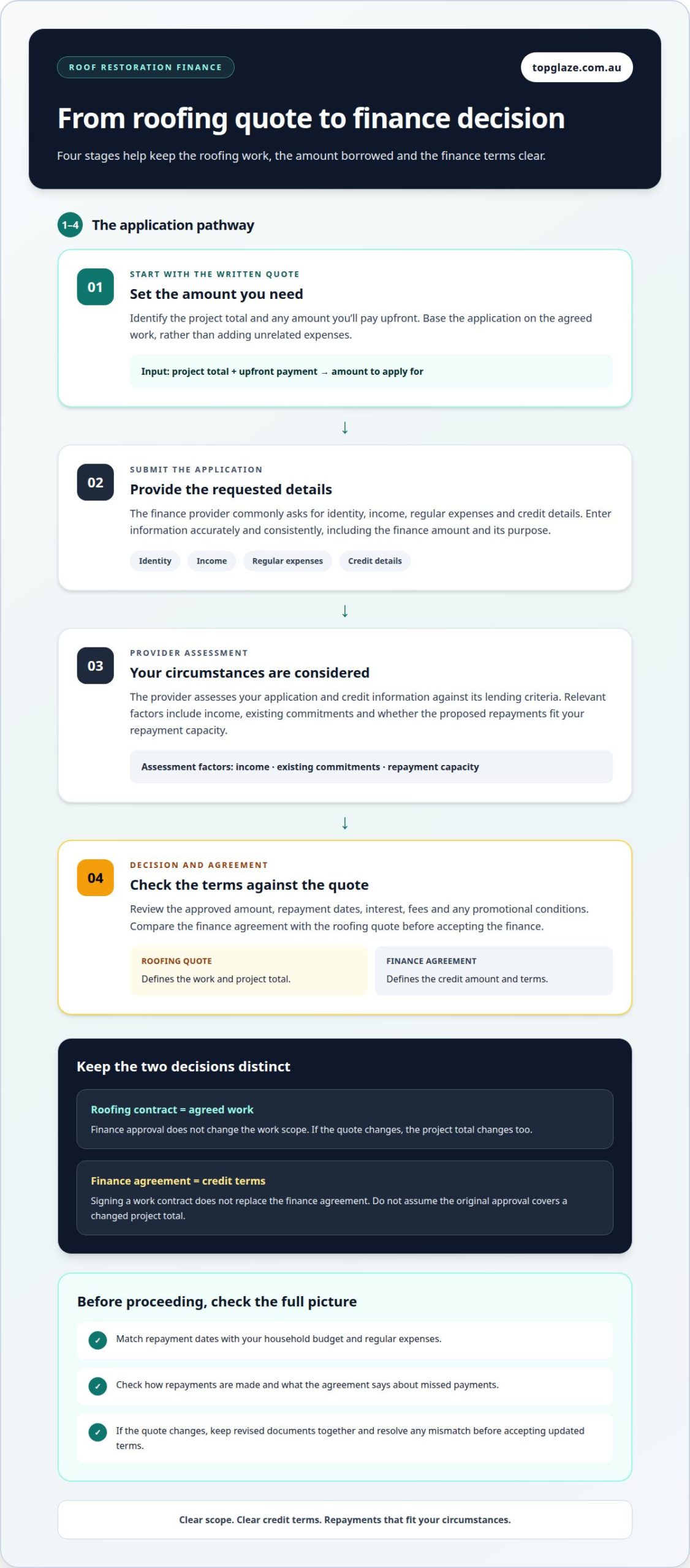
A finance application starts with the roofing quote and the amount you intend to borrow. The finance provider assesses your application and sets out its decision and terms. Keep the quote and finance agreement separate: one defines the roofing work, the other defines the credit.
- Set the amount. Use the written quote to identify the project total and any amount you’ll pay upfront. Apply for the amount needed for the agreed work, rather than adding unrelated expenses.
- Complete the application. Provide the information requested by the finance provider. This commonly includes identity, income, regular expenses and requested credit details. Enter information accurately and consistently, including the amount and purpose of the finance.
- Review the assessment. The provider considers your application and credit information against its lending criteria. Income, existing commitments and repayment capacity are relevant to assessing whether the proposed repayments fit your circumstances.
- Read the decision and agreement. Check the approved amount, repayment dates, interest, fees and any promotional conditions. Compare these with the quote before accepting the finance.
Finance approval and the roofing contract are separate decisions. An approved amount doesn’t change the agreed work scope, and signing a work contract doesn’t replace the finance agreement. If the quote changes, the project total changes too. Don’t assume the original approval will cover the difference. Keep revised documents together and resolve any mismatch before accepting updated terms.
Before proceeding, compare repayment dates with your household budget. For example, list each fortnightly due date alongside regular expenses and consider whether the instalment will remain manageable throughout the full term. Check how repayments are made and what the agreement says about missed payments. The application process is complete only when you understand the approved credit and its obligations, not simply when you receive a decision.
Fortnightly repayment calculations
For roof restoration payment plans, look at the total amount repayable, not just the amount borrowed. The finance agreement shows how interest and fees affect the total. To estimate each fortnightly instalment, divide the total repayable by the number of scheduled fortnightly payments. Use the repayment count in the agreement rather than assuming a term.
For example, if you pay part of a quote upfront, calculate repayments using only the amount you plan to borrow. Add any fees included in the credit agreement, then divide by its scheduled payment count. This gives a basic estimate when instalments are equal. If the agreement sets a different first or final payment, follow its repayment schedule instead.
Use this checklist to make the calculation:
- Find the amount financed and total amount repayable.
- Identify the number of fortnightly repayments in the agreement.
- Divide the total repayable by that repayment count.
- Check the result against the listed instalments and due dates.
A 0% interest offer still needs the same calculation. Include fees that apply under its terms, and use the total repayable shown in the agreement. If the promotional rate ends before the final instalment, the schedule may include different repayment amounts. In that case, add the scheduled instalments rather than using one simple division.
Keep the quote and repayment calculation separate. The quote defines project costs; the finance agreement defines borrowing costs and payment timing. If the work scope changes, recalculate using the revised finance amount and repayment schedule. Treat this as an estimate, not the contractual amount due. The provider’s schedule sets the actual instalments.
Once you have a written scope, request a roof restoration quote to establish the project amount for your budgeting. Then compare roof restoration payment plans with the finance agreement’s total repayable, payment count and due dates. This gives you a practical view of both the work and its repayment commitment before proceeding.
Top Glaze Roofing Systems: Roof Restoration
Top Glaze Roofing Systems can assess your roof and carry out restoration or repairs when needed. A written work scope gives you a clearer basis for budgeting and deciding how much, if any, to finance. It also helps distinguish restoration from replacement when your roof needs a different solution.
If you’re reviewing fortnightly repayments, keep the roofing quote separate from the finance agreement. The quote sets out the proposed work; the lender’s agreement sets out repayments, fees and other credit terms. Guttering and fascia work can also be included where it relates to your home’s roofing needs.
To discuss your roof in Melbourne, contact Top Glaze Roofing Systems.
Choose your next roofing step with confidence
Before committing to finance, make sure the proposed work and your borrowing decision align. A clear roofing scope helps you decide what work to proceed with and what repayment commitment suits your household budget. Keep the finance agreement and work contract together so the details are easy to refer to as the project progresses.
A roof restoration payment plan is one part of the decision, not a substitute for understanding what work your roof needs. Top Glaze Roofing Systems provides roof restoration, roof replacement and roof repairs in Melbourne. Discuss your roof’s condition and the work required to identify a suitable next step.
Contact Top Glaze Roofing Systems to discuss your roofing needs and consider the way forward with confidence.
Frequently Asked Questions
How much does a roof restoration cost in 2026?
Roof restoration costs in 2026 depend on roof size, material, access, condition and the work included. A general market estimate won’t establish the price for your particular roof. Request a written quote that sets out the proposed scope, including any repairs beyond the restoration. This makes it easier to see how changes to the work could affect the quoted total.
How It Works?
A roof restoration involves high-pressure cleaning, repairs, resealing and applying Solar Glaze® coating. The sequence addresses the roof surface and its identified repair needs as part of the same project. Restoration typically takes 2-4 days. The specific work depends on the roof’s condition, so the written scope is useful for understanding what’s included before the job begins.
How do payment plans work?
A payment plan sets out how you’ll repay finance used for roofing work. The credit agreement explains the repayment schedule and how the funds are handled. Check whether payments go to an account or another recipient, and what happens if the final work scope changes. Keep the signed roofing contract with the finance documents so you can refer to each agreement easily.
How do you calculate fortnightly payments?
Use the total repayable and the number of scheduled fortnightly instalments to estimate each payment. If the agreement shows uneven instalments, add the listed amounts to understand the full commitment. A different first payment, for example, can make a simple average misleading. Use the lender’s repayment schedule for budgeting because it sets the actual amounts and due dates.
What is the catch with 0% financing?
A 0% rate means interest isn’t charged under the offer’s terms, but you still have to repay the amount borrowed. Check whether the offer has an end date, minimum repayments or account conditions. If the repayment schedule extends beyond the offer period, read the agreement to understand what applies afterwards. Focus on the full obligation, not only the advertised rate.
What payment plans do Australian roof restoration companies offer?
Finance options can include payment plans, personal loans, credit cards, home equity loans and buy now, pay later services such as Zip Money. Availability and terms vary. Compare application requirements, repayment timing and how each option handles changes to the roofing scope. A plan that suits a smaller repair may not suit a larger project, so match the finance structure to the work being funded.


