

Last Updated: November 10, 2026
Quick Summary
A reliable roof plumber melbourne homeowners can trust should hold a current licence, carry public liability and workers’ compensation insurance, and provide a written, itemised quote before any work starts. A roof plumber focuses on flashings, gutters, downpipes and drainage, the parts that move water away from your home.
- Verify the licence number directly with the relevant state authority rather than relying on the website or a verbal assurance.
- Ask for a certificate of currency for public liability insurance and proof of workers’ compensation cover.
- A good quote lists scope, materials, labour, access equipment and warranty terms, not a single lump sum.
- Check whether the warranty applies to the original owner only and what exclusions apply.
- Recurring stains often start at a damaged flashing away from where the water appears, so patching one spot may not fix the leak.
Table of Contents
- What a Roof Plumber Does and How It Differs From a Roofer
- Signs Your Roof Needs a Plumber, Not Just a Patch
- Roof Plumber Qualifications and Licences to Verify
- What a Roof Plumbing Quote Should Include
- Roof Repair Cost Factors and Repair vs Replacement
- Melbourne Weather, Seasonal Maintenance and When Not to DIY
- Booking Your Roof Inspection With Top Glaze
- Frequently Asked Questions
Finding a leak on a Melbourne roof can feel like a guessing game, especially when three different tradespeople give you three different answers, so choosing a reliable roof plumber melbourne homeowners can trust matters more than most people expect. A roof plumber works on the water-handling parts of your roof, including flashings, gutters, downpipes and drainage. Knowing what that job covers, and what to check before you hire, helps you avoid paying twice for the same problem. This guide walks you through how to choose a reliable roof plumber in Melbourne, what a fair quote should include, and when a repair makes sense.
What a Roof Plumber Does and How It Differs From a Roofer
A roof plumber installs, maintains and repairs the metal components that move water off your home. The Australian Bureau of Statistics describes roof plumbers as installing, maintaining and repairing flashings, metallic roof and wall claddings, gutters and downpipes, which is the core of the trade.
A roofer generally focuses on the roof covering itself, such as tiles, sheeting and the membrane underneath, whereas a roof plumber melbourne specialist concentrates on the drainage and flashing that keep water out. Many jobs overlap, and a single contractor may do both. When you call, ask who will diagnose the leak and who will carry out the repair.
Signs Your Roof Needs a Plumber, Not Just a Patch
Water rarely travels straight down from the point where you see it. A stain on a ceiling may start at a damaged flashing several metres away. Look for these warning signs:
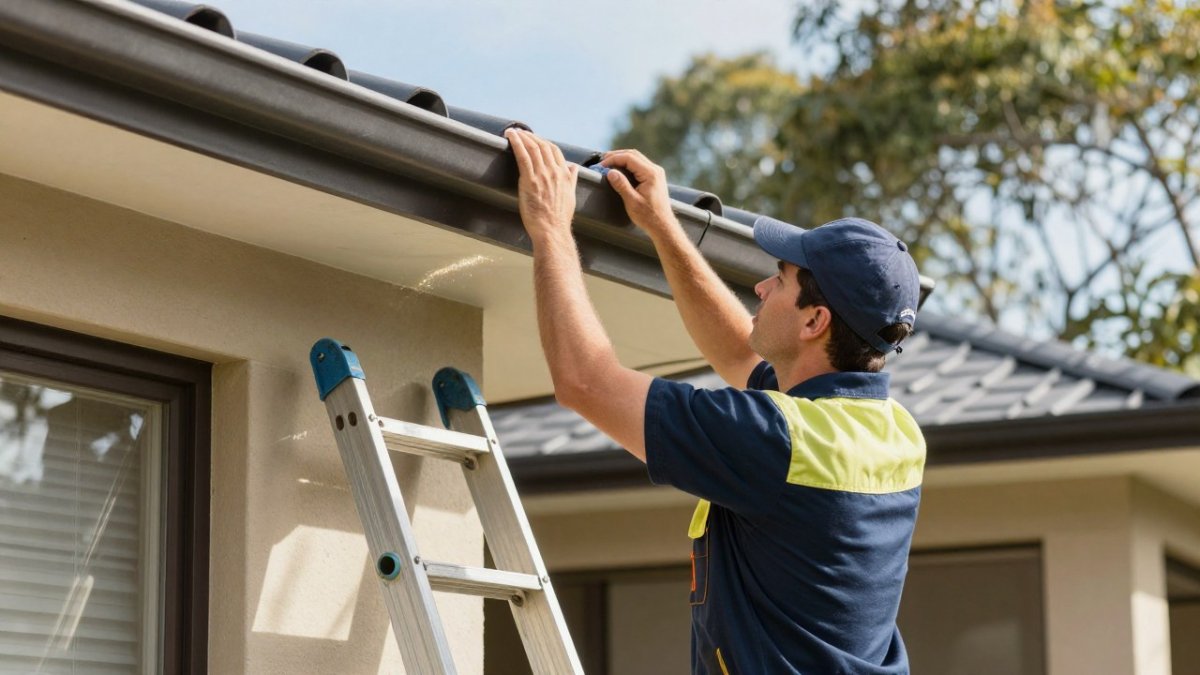
- Water staining near a chimney, skylight or vent pipe
- Gutters that overflow or sag after rain
- Rust or lifted seams on metal sheeting
- Water running down an external wall during storms
- Damp patches that appear only after heavy rain
A patch over one spot can hide the real fault. If the same stain returns, the source is probably in the flashing or drainage, and that calls for plumbing-style work rather than a quick seal.
Roof Plumber Qualifications and Licences to Verify
Before you agree to any work, check the business’s credentials. Ask for:
- A current licence number that you can verify through the relevant state authority
- Proof of public liability insurance
- Proof of workers’ compensation cover
- A written statement of the work to be done
Always confirm licence, insurance and experience details directly rather than relying on a website or a verbal promise.
Checking Insurance and Warranty Terms
Insurance protects you if someone is injured or your property is damaged during the job. Ask to see the certificate of currency rather than accepting a verbal assurance.
Warranties matter just as much. Read what any workmanship guarantee covers before you sign. Ask whether it applies to the original owner only, what exclusions apply, and what happens if the property is sold. A clear answer on these points tells you how much protection you really have.
What a Roof Plumbing Quote Should Include
A useful quote breaks the job into clear parts. It should list the scope of work, the materials, the labour, any access or safety equipment, and the warranty terms. Be cautious of quotes that are a single lump sum with no detail, because they make comparison almost impossible.
Pricing for roof plumbing generally depends on the size of the roof, the access, the materials and how much diagnostic work is needed. Request a written quote for your specific home so you can compare options before committing. Check Top Glaze’s website for current inspection terms.
Roof Repair Cost Factors and Repair vs Replacement
Most roof plumbing pages stop at “free quote”. A useful guide should tell you what actually moves the number, what a written quote ought to contain, and how to judge repair against replacement. Use the points below to interrogate any quote you receive.
What drives the cost
- Access. A single-storey roof with clear ground access is quicker and safer to work on than a double-storey pitch, a roof hemmed in by carports, or one requiring elevated work platforms or scaffolding. Access can be one of the largest variables in a quote.
- Extent and location of damage. One failed flashing around a vent pipe is a different job from water tracking under sheeting across several bays. The further water has travelled, the more diagnostic and making-good work is needed.
- Roof material and compatibility. Metal sheeting, tiles and membrane roofs fail differently and need different fixings, sealants and replacement profiles. Matching existing materials matters: an incompatible patch can accelerate corrosion or movement.
- Age and condition of the surrounding roof. A localised repair on a sound roof is straightforward. The same repair on tired sheeting or perished flashings often reveals further faults once work begins.
- Diagnostic effort. Leaks that only appear in wind-driven rain or after long wet spells can take more than one visit to trace. Ask whether the quote assumes a single visit or allows for investigation.
What a written quote should contain
A quote you can compare should list the scope of work in plain language, the materials and profiles to be used, labour, any access or safety equipment, whether making good and disposal are included, and the warranty terms. It should state whether the price is fixed or subject to what is found once the roof is opened up, and it should say whether the inspection fee is credited against the work.
Watch out: a quote that excludes access equipment, disposal or making good can look cheaper than a complete one, so compare the inclusions line by line rather than the total alone.
Repair or replace?
A repair is usually the better choice when damage is localised, the surrounding sheeting or tiles are sound, and the fault is in flashings, gutters, downpipes or a small section of roofing. Replacement becomes worth considering when leaks are widespread, the roof covering is badly deteriorated, repairs recur every season, or the cost of repeated repairs is approaching the cost of renewing the affected section. Ask your roof plumber to explain the reasoning behind a recommendation in terms of remaining service life, not just the immediate leak.
Getting comparable quotes
Ask each contractor to quote against the same written scope so you are comparing like with like. Request the licence number, certificate of currency for insurance and the warranty terms with the quote, not after you have chosen. A second opinion is reasonable when a recommendation is costly or when the diagnosis is vague; a clear diagnosis should identify the source, the proposed fix and what happens if the source turns out to be elsewhere.
The article lists the main factors that move a roof repair quote, which can be compared at a glance:
| Factor | Why it matters | What to check |
|---|---|---|
| Access | Quicker and safer on single-storey roofs | Ask if scaffolding or platforms are included |
| Extent of damage | Water travelling further needs more work | Ask if the quote allows for investigation |
| Roof material | Incompatible patches can accelerate corrosion | Confirm matching materials and profiles |
| Age of surrounding roof | Tired sheeting often reveals further faults | Ask whether the price is fixed or subject to findings |
| Diagnostic effort | Wind-driven leaks can need several visits | Ask if one visit or more is assumed |
Melbourne Weather, Seasonal Maintenance and When Not to DIY
Local weather does most of the damage to roof plumbing, and it does it in a predictable cycle. A short seasonal routine, done safely from the ground, catches most problems before they become ceiling stains.
A seasonal checklist you can do from the ground
- Autumn (before the wetter months). Clear leaves and debris from gutters you can reach safely with a ladder on firm, level ground and a second person present. Check that downpipes run free by watching water flow during rain, and look for sagging gutter runs or pulled fixings from ground level with binoculars.
- Winter. After storms, check for lifted or displaced flashing visible from the ground, water running down external walls, and gutters overflowing in a pattern that suggests a blockage rather than sheer volume. Note any new ceiling or wall stains and photograph them with a date.
- Spring. Look for rust, lifted seams and loose fixings on metal sheeting, and for cracked or displaced pointing around chimneys and skylights. Clear the leaf fall before it packs into valleys and outlets.
- Summer. Heat and UV dry and crack sealants and perished flashings; check for cracked sealant lines and loose ridge or valley flashings visible from the ground, and book non-urgent work before the storm season.
When not to DIY
Some tasks are reasonable for a homeowner: clearing debris from accessible gutters with the right equipment and a spotter, and taking dated photographs of what you can see from the ground. Everything else at height should go to a licenced roof plumber. That includes walking the roof, any work on flashings, skylights or penetrations, anything near electrical components or solar arrays, and any repair where water is entering the ceiling.
Watch out: never send someone onto a wet, mossy or steep roof to “just check” a leak, and do not block a downpipe or outlet to test it, as backed-up water can enter the roof structure.
Storm preparation and after-care
Before forecast storms, clear accessible gutters and outlets, secure loose items that could strike the roof, and check that downpipes discharge away from the footings. After a storm, photograph any damage before temporary repairs, keep receipts and reports for an insurer, and have a licensed roof plumber document the cause and the fix. That documentation, together with invoices and the workmanship warranty, is what supports a claim and any later warranty discussion.
Booking Your Roof Inspection With Top Glaze
If you are noticing leaks, stains or overflowing gutters, a professional inspection is the fastest way to find the cause. Top Glaze offers free roofing inspections and a $0 call-out fee. Request an inspection to get a clear diagnosis and a written quote before any work begins.
Request A FREE ROOFING Inspection
BUTTON: Book a Free Inspection
CARD_TITLE: Is your roof leaking?
CARD_TEXT: Top Glaze offers free inspections, a $0 call-out fee and a 10-year workmanship guarantee.
Frequently Asked Questions
What does a roof plumber do?
A roof plumber installs, maintains and repairs flashings, metal roof and wall cladding, gutters and downpipes, according to the Australian Bureau of Statistics occupation profile for roof plumbers. Their work centres on keeping water moving away from the building and sealing the points where water most often gets in, such as junctions, penetrations and valleys. Many leaks that look like roof problems are actually flashing or drainage faults, which is why a roof plumber’s diagnosis often differs from a general roofing job. When you call, ask whether the person will inspect the drainage system as well as the roof covering.
What is the difference between a roof plumber and a roofer?
A roofer usually focuses on the roof covering itself, such as tiles or sheeting, while a roof plumber focuses on the water-management components: flashings, gutters, downpipes and penetrations. Plenty of jobs need both trades, so the practical question is who will take responsibility for the whole result. Ask each contractor which parts of the roof they work on, whether they hold the relevant licence for that work, and who will fix a leak if it recurs after the job is finished.
What should a roof plumbing quote include?
A clear roof plumbing quote should list the scope of work, the materials and their grades, the labour estimate, any call-out or inspection fee, the warranty period and what it covers, and the insurance details of the business. Quotes that only give a single total with no breakdown make it hard to compare options. Pricing depends on the size of the roof, the access required and the condition of the existing materials, so ask Top Glaze for a written quote after an on-site assessment rather than relying on a phone estimate.


