

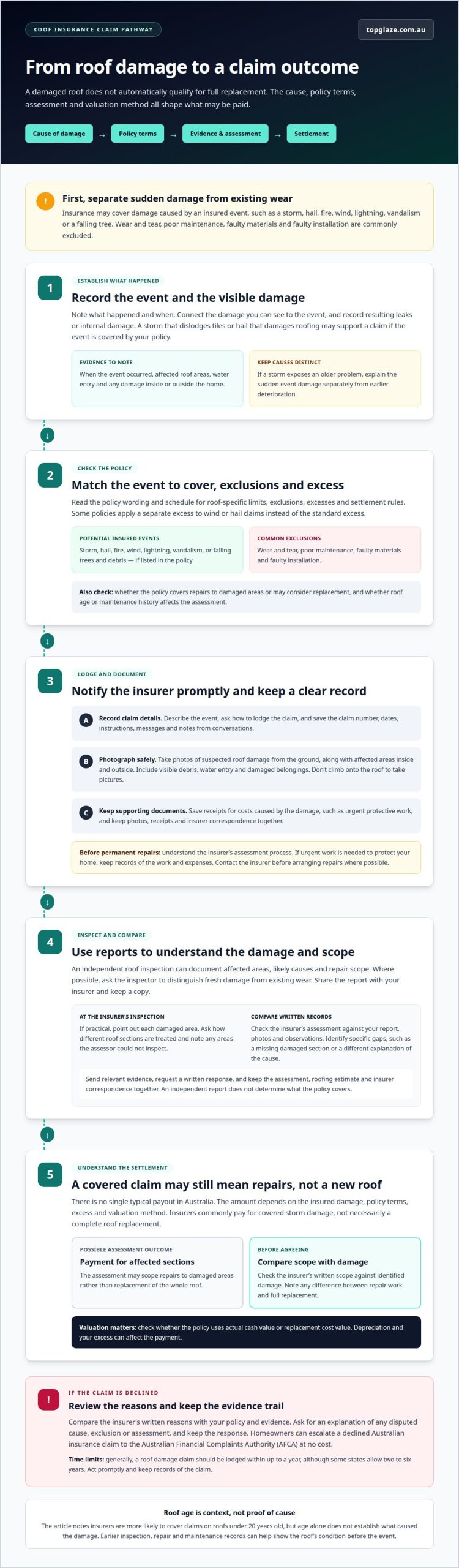
A badly damaged roof doesn’t automatically qualify for a full replacement. Insurance may cover damage caused by an insured event, such as a storm, fire or falling tree, but wear and tear, poor maintenance and faulty materials or installation are commonly excluded. Knowing how to get insurance to pay for a new roof starts with showing what caused the damage and understanding how your policy assesses the roof’s value.
It’s understandable to expect a major storm claim to cover a new roof, but the insurer’s inspection and your policy terms determine what may be paid. This guide explains how to lodge a claim, document damage safely and prepare for an assessment. You’ll also learn how depreciation, the settlement basis and your excess can affect whether the outcome is a repair payment or a contribution towards replacement.
Key Takeaways
- Identify the event that damaged your roof and keep clear records to support your claim.
- Lodge your claim promptly, document damage from the ground and save relevant receipts and insurer communications.
- Use an independent roof inspection to help clarify the damage and compare it with the insurer’s assessment.
- Review whether your policy uses actual cash value or replacement cost value, as depreciation and your excess can affect the payment.
Does Insurance Cover Roof Replacement?
Insurance may cover sudden roof damage caused by an insured event, but full replacement isn’t automatic. Check the cause, exclusions, excess and settlement terms in your policy before estimating the likely outcome.
-
Identify covered sudden roof damage
Record what happened and when, then connect the visible damage to the event. A storm that dislodges tiles or hail that damages roofing may support a claim if your policy covers that event. Note any resulting leaks or internal damage, too. Don’t assume age-related deterioration is insured damage simply because you noticed it after a storm.
-
Review covered causes and exclusions
Match the damage to the events listed in your policy. Common covered causes include storms, hail, fire, wind, lightning, vandalism, and falling trees or debris. Policies commonly exclude wear and tear, poor maintenance, faulty materials and faulty installation. If a storm exposes an existing problem, the insurer may distinguish sudden event damage from earlier deterioration. Describe those causes separately when explaining what happened.
-
Check your policy coverage
Read the policy wording and schedule for roof-specific limits, exclusions, excesses and settlement rules. Some policies apply a separate excess to wind or hail claims instead of the standard excess. Check whether the insurer covers repairs to damaged areas or may consider replacement under the policy. Roof age and maintenance history can also affect the assessment. Keep the relevant wording with your claim records.
-
Compare replacement costs with payouts
In Australia, there is no single typical payout: the amount depends on the insured damage, policy terms, excess and valuation method. Insurers commonly pay for covered storm damage, not necessarily a complete roof replacement. An assessment may lead to payment for affected sections rather than a new roof. Before agreeing to a settlement, compare the insurer’s scope with the identified damage and note any difference between repair work and full replacement.
Filing a roof insurance claim
Notify your insurer promptly and record the claim details. Clear evidence and organised records can help explain what happened and what was damaged.
-
Lodge the roof claim
Contact your insurer as soon as possible, describe the event and ask how to lodge a claim. Record the claim number, dates and instructions, then save messages and notes from each conversation. If your mortgage documents identify a lender, follow the insurer’s written settlement instructions about lender details or any required steps. Don’t arrange permanent repairs before understanding the assessment process, unless urgent work is needed to protect your home.
-
Gather claim evidence and documents
Photograph suspected roof damage from the ground, along with affected areas inside and outside your home. Include visible debris, water entry and damaged belongings, but don’t climb onto the roof to take pictures. Keep receipts for costs caused by the damage, such as urgent protective work, and submit copies with your claim. Store photos, receipts and insurer correspondence together so each item can be matched to the claim.
-
Consider roof age when claiming
Include any records that help establish the roof’s age and condition before the event, such as previous inspection or repair documents. Insurers are more likely to cover claims on roofs under 20 years old, while age alone doesn’t establish what caused the damage. Explain which damage appeared after the event and provide records that show earlier maintenance. This helps distinguish sudden damage from gradual deterioration during assessment.
-
Escalate a declined claim to AFCA
If your insurer declines the claim, read its written reasons and compare them with your policy and evidence. Ask the insurer to explain any disputed cause, exclusion or assessment, and keep its response. Homeowners can escalate a declined Australian insurance claim to the Australian Financial Complaints Authority (AFCA) at no cost. Generally, a roof damage claim should be lodged within up to a year, although some states allow two to six years. Act promptly and keep records of your claim.
Independent roof inspections and assessor reports
You can arrange an independent roof inspection before your claim is approved. Before repairs begin, contact your insurer, ask about its inspection process and keep records of any work and expenses.
-
Arrange an independent roof inspection
Arrange a professional inspection to document the roof’s condition and visible damage. An independent report can describe affected areas, likely causes and the repair scope, giving you a detailed record alongside your photographs. Where possible, ask the inspector to distinguish fresh damage from existing wear. This can help clarify whether the reported damage aligns with the event in your claim.
Share the report with your insurer and keep a copy. If the inspection identifies a leak or exposed section, contact the insurer before arranging repairs and ask how to proceed. Keep receipts and photographs of any work completed. An independent report does not automatically determine what your policy covers; the insurer assesses the claim against its terms.
-
Review the insurer’s inspection
Attend the insurer’s inspection if practical, and point out each damaged area documented in your claim. The insurer may arrange an assessment of the roof and provide an estimate for the roofing work. Ask how the assessment treats damage to different roof sections, and note any areas the assessor couldn’t inspect.
Compare the written assessment with your independent report, photographs and observations. If the reports differ, identify the specific gap, such as a damaged section missing from the scope or a different explanation of the cause. Send the insurer relevant evidence and request a written response. Keep the assessment, roofing estimate and insurer correspondence together so each decision can be traced to its supporting information.
Check how your policy values a damaged roof before estimating a likely settlement. The difference between actual cash value and replacement cost value can substantially change the payment after weather damage.
- Find the settlement basis in your policy schedule and wording. An actual cash value policy pays the roof’s current value after depreciation, reflecting its age and condition. A replacement cost value policy covers replacement cost minus the excess. These terms describe different calculations, not a promise that every weather-related claim will fund a complete new roof.
- Ask the insurer how it calculated the roof’s value and what evidence informed the assessment. For an actual cash value settlement, age, prior deterioration and condition can reduce the amount payable. For replacement cost value, compare the approved replacement scope with the assessed work, then account for the policy excess. Check whether the insurer has valued repairs or full replacement.
- Use the figures in your settlement documents to understand the difference. That example doesn’t establish a standard payout; it shows how assessed value and repair costs can differ. A 25-year-old roof already deteriorating before storm damage may be assessed differently from a well-maintained roof.
- Match the insurer’s calculation to the cause and extent of the covered damage. A replacement cost policy still depends on the covered event and approved scope, while depreciation affects an actual cash value settlement. Ask the insurer to explain any difference between its assessment and the roofing report. For a clear view of replacement work, discuss your roof replacement requirements.
Top Glaze Roofing Systems
Top Glaze Roofing Systems can help you understand the roofing work needed after an insurer’s assessment. If the report identifies damage but you’re unsure whether repair or replacement is appropriate, a roof assessment can clarify the scope of work. The right solution depends on the roof’s condition and identified damage, not simply on the claim outcome. Top Glaze Roofing Systems provides residential roof repairs, restoration and replacement, as well as guttering and fascia work. These services suit different needs, from localised damage to broader roof concerns. Contact Top Glaze Roofing Systems to discuss your roof and the work it may need.
Plan your next roofing decision with confidence
When working out how to get insurance to pay for a new roof, treat the insurer’s decision and your longer-term roof plans as related but separate decisions. Use the claim outcome to understand what work the policy addresses, then consider the roof’s wider condition before choosing a plan. This distinction can help you make a considered decision, whether you need a local repair or are planning for the roof’s future.
Keep the insurer’s written decision and any roofing assessment together as you decide what to do next. If the approved work doesn’t address concerns beyond the claim, consider those separately rather than assuming they form part of the settlement. A clear scope gives you a useful basis for discussing the roof and deciding how to proceed.
For a considered conversation about your roof’s next steps, contact Top Glaze Roofing Systems. You can move forward with a clearer understanding of the work your home needs.
Frequently Asked Questions
How can I put myself in the best position before and during a claim?
To understand how to get insurance to pay for a new roof, keep a simple maintenance record before damage occurs, including dates, observations and repair documents. After an incident, note when it happened and what you first noticed, such as a ceiling stain after heavy rain. Store claim emails, images and paperwork together. A clear timeline helps you explain the claim consistently if the insurer asks follow-up questions.
What do homeowners need to know while claiming?
Keep the claim focused on damage linked to the insured event, separate from older roof issues. Read the insurer’s proposed scope carefully to understand which areas and work it includes. If the payment is a cash settlement, compare its scope with the work needed to address the assessed damage. Keep written records of questions, decisions and changes throughout the claim.
When should I claim partial repair or full roof replacement?
A partial repair is generally relevant when insured damage is limited and the rest of the roof remains serviceable. Full replacement may be considered when the assessment identifies widespread damage or repairs cannot effectively address the covered damage. For example, several isolated damaged tiles differ from damage affecting multiple roof sections. The insurer’s approved scope and policy terms determine what work the claim addresses.
When does Australian home insurance cover roof replacement?
Knowing how to get insurance to pay for a new roof starts with checking whether an insured event caused the damage and whether your policy supports replacement rather than local repairs. The assessment considers the event, affected areas, roof condition and settlement basis. A roof’s age or need for renewal alone doesn’t mean replacement will be approved. Read the insurer’s decision to see which damage and work it has accepted.
What roof damage is covered by Australian home insurance policies?
Policies commonly cover roof damage from insured events such as fire, wind, hail, lightning, vandalism or falling objects. For example, hail-damaged tiles may be considered event-related damage, while longstanding deterioration is commonly excluded. The policy wording sets out covered events and exclusions, so identify the cause and affected areas when describing the damage. Insurers assess reported damage against those terms.
Does Australian home insurance cover roof damage caused by storms, hail or fallen trees?
Storm, hail and fallen-tree damage are commonly covered causes under Australian home insurance, subject to the policy terms. A storm-damaged roof may be treated differently from one weakened by gradual deterioration, even if both are noticed after the same weather. Describe the event and its effects separately, such as broken tiles, a branch impact or water entering through a newly damaged area.


