

The metal beneath a roof valley can fail before the damage is obvious. A valley is the channel where two roof slopes meet, directing concentrated rainwater towards the gutters. Roof valley replacement in Melbourne is generally suited to widespread corrosion or repeated leaks, and the cost depends on factors such as the valley’s length, roof access, materials and any hidden timber damage.
A leak near a valley does not always start there, and metal that looks sound may hide corrosion underneath. Understanding how water moves across the roof, and how the valley connects with nearby flashings and fixings, helps identify the real source of the problem.
This article explains what a roof valley does, how corrosion and leaks develop, what affects replacement costs and how to choose compatible metal. It also outlines the replacement process and when a targeted repair may be suitable, helping you decide how to protect your roof.
Key Takeaways
- Understand how a roof valley channels rainwater and why its condition can affect drainage across the roof.
- Learn what factors influence replacement costs and how concealed timber damage can change the scope of work.
- Recognise common causes of corrosion and leaks, from blocked drainage to ageing or damaged materials.
- See why matching valley metal with nearby flashings and fixings matters when selecting a durable replacement.
What is a roof valley?
A roof valley is the channel formed where two roof slopes meet. It carries concentrated rainwater towards the gutters, so a blocked or corroded valley can interrupt drainage. An open valley has a visible metal channel; a closed valley sits beneath the roof tiles, which can make damage harder to spot. Roof valley replacement in Melbourne may be appropriate when corrosion is widespread or leaks repeatedly return.
An inspection covers the valley tray, surrounding tiles, flashings and drainage path. The roofer checks whether corrosion is isolated or widespread, and looks for lifted tiles, pits, debris and water marks. A nearby leak may instead come from ridge capping or a gutter above the valley. If the roof’s pitch or condition makes walking unsafe, a drone inspection can help assess it from above.
A targeted repair may suit isolated corrosion, small pits or a local blockage that is backing up water. Replacement is more appropriate when the tray is broadly corroded or repeated leaks indicate ongoing failure. The inspection should also look for soft, rotten or water-damaged timber nearby. Replacing flashing without addressing affected timber can leave the underlying problem unresolved.
For flashing replacement, the roofer carefully lifts the surrounding tiles, removes the old metal and inspects the exposed timber. They install compatible flashing, seal the junctions and reset the tiles to maintain drainage. A clear quote should describe the valley work and any timber repairs identified during inspection. When choosing a roofer, look for relevant Victorian licensing, a written scope and a clear explanation of the inspection findings.
The Australian building requirements and Victorian rules that apply depend on the work. Roof work at height should follow WorkSafe Victoria guidance. Rather than assuming one standard covers every roof, the roofer should explain which requirements apply to the proposed work.
A replacement typically follows a clear sequence: assess drainage and surrounding roof components, lift the affected tiles, remove the old valley metal, inspect the timber, install compatible flashing, then reseat the tiles and check water flow. The final inspection checks that the work is secure and weather-resistant. On older tiled roofs, careful lifting and resetting helps protect the tiles.
Roof valley replacement costs and hidden damage
Replacement costs depend on the valley, roof access and the condition of materials beneath it. Visible damage may be only part of the work required.
Cost and Access Factors
Roof size can affect how many valleys need attention, while each valley’s length and the roof’s height and pitch influence access. Material choice and the amount of corrosion also shape the work. A straightforward replacement differs from a complex roof intersection where timber damage is found. The price depends on the case and is given after a quote request, with these factors informing the scope.
Signs of Rust and Water Damage
Look for rusted metal, cracked or displaced sections, small pits and debris that could obstruct drainage. On tiled roofs, some of the valley may be concealed, so surface checks alone can miss deterioration. Water stains on ceilings or walls and damp insulation can also indicate a leak. These signs point to areas for inspection, but the source may be elsewhere on the roof.
Hidden Structural Damage
Water entering through a failing valley can affect nearby timber before interior damage becomes obvious. Lifting the tiles during replacement exposes the supporting area for inspection. Soft or decayed timber may need repair before new flashing is fitted. More extensive water damage can also lead to ceiling repairs and mould growth in insulation or walls, increasing the work beyond the metal valley itself.
Risks of Delayed Repairs
Ongoing leaks keep exposing roof materials and interior surfaces to moisture. What begins as localised corrosion can lead to pooled water, damaged timber and more involved repairs if drainage remains compromised. A prompt roof inspection can establish whether the problem calls for a targeted repair or full valley replacement. If a leak is affecting your roof, a roof repair assessment can help identify the work needed.
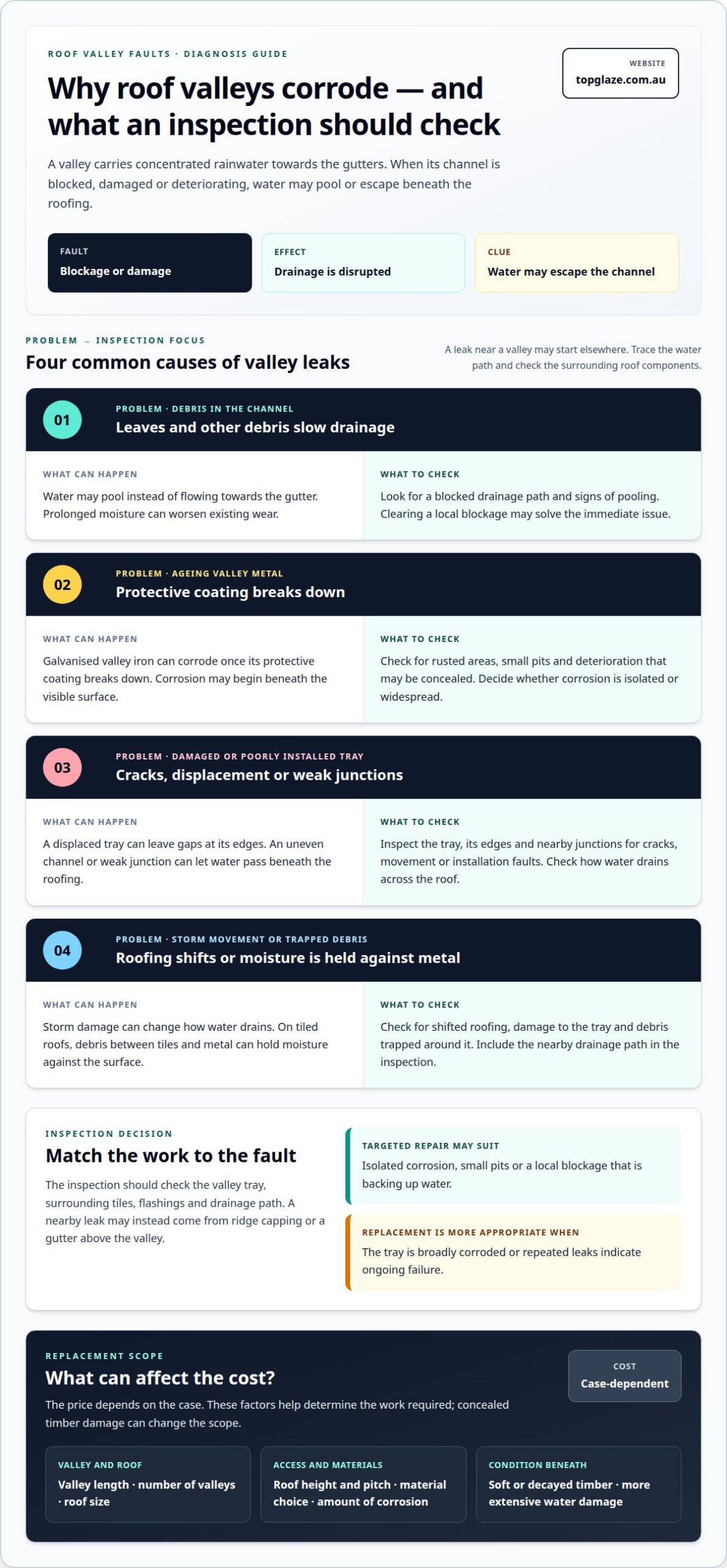
Common causes of valley corrosion and leaks
A roof valley channels concentrated rainwater, so faults can quickly disrupt drainage. On tiled roofs, leaves and other debris can collect in the channel and slow the flow. Water may pool instead of reaching the gutter. Prolonged moisture can worsen existing wear, especially if the valley tray is cracked, displaced or poorly installed. Any of these faults can let water pass beneath the roofing.
Ageing materials are another cause of failure. Galvanised valley iron is found on many roofs and can corrode once its protective coating breaks down. Corrosion may start beneath the visible surface, leaving the channel weaker than it appears from above. Small pits or rusted areas can develop into openings as water continues to flow through the valley. The tray’s condition matters because even a local defect sits in a path carrying substantial runoff.
Storm damage can shift roofing or damage the valley tray, changing how water drains across the roof. A displaced tray may leave gaps at its edges, while an installation fault can create an uneven channel or weak junction. On tiled roofs, debris trapped between the tiles and metal can hold moisture against the surface. Though the causes differ, each problem can let water escape the channel instead of draining towards the gutter.
A practical diagnosis follows the water path. The inspection checks for blockages, pooling, cracked or displaced metal, coating loss and signs of poor installation. It also considers whether ageing materials or storm damage have affected drainage nearby. Clearing a local blockage may solve the immediate issue, while widespread corrosion or repeated leaks point to a failing valley. Identifying the source helps determine whether maintenance, a local repair or replacement is appropriate, rather than treating every leak the same way.
Valley metal selection and compatibility
The valley metal needs to suit the existing roof and manage water flow without creating a new corrosion risk. Colorbond and other steel valleys are common choices for re-roofing and new installations around Melbourne. Coated steel may suit some roofs, but the surrounding metalwork matters too. A durable-looking sheet can still be a poor match for nearby flashings or fixings.
Compatibility is essential. Before installation, the roofer should identify the valley material, adjacent flashing and fixings, then select components that work together. Incompatible metals can accelerate corrosion where they touch and shorten the life of the repair. The inspection should also consider the drainage path, debris traps and how the new valley will meet the existing roofing. Correct overlaps and junctions help direct water through the channel.
Open valleys commonly use overlapped flashing made from lead, stainless steel, copper or aluminium. Each option needs to suit the roof materials and connection details. COLORBOND or other coated steel may be appropriate for some Melbourne homes, depending on compatibility. Choose a complete, compatible system rather than selecting valley metal by appearance or material name alone.
Older and heritage homes may have lead valleys. Lead can be highly durable when correctly formed and dressed, and replacing it with a different metal can affect how the valley joins the existing roof. A sound assessment considers drainage capacity as well as appearance. Valley drainage can be brought up to current standards without changing a heritage roof’s appearance. Hidden mismatches at fixings or flashing can otherwise lead to corrosion or leaks.
If a leak or rust has raised concerns about the valley, arrange a roof repair assessment to identify the right repair approach.
Top Glaze Roofing Systems: Roof Restoration
Top Glaze Roofing Systems provides roof repairs for leaking or corroded valleys. The right response depends on whether the fault is isolated or part of broader roof wear. A targeted repair may address a local problem, while roof restoration can suit a roof needing wider attention. If the roof needs more extensive work, roof replacement is also available.
For a valley concern, the next step is to discuss the visible signs and arrange an assessment of the roof’s condition, drainage and surrounding materials. This helps clarify the work needed without assuming every leak requires the same solution. Contact Top Glaze Roofing Systems to discuss your roof valley concerns.
Take the next step towards a sound roof
A clear record of what you have noticed can make the assessment more useful. Note where water appears indoors, whether it follows heavy rain and any visible changes around the roofline. Photos taken safely from the ground can help explain the concern, but do not climb onto the roof to investigate. These details give the roofing assessment a practical starting point.
For roof valley replacement in Melbourne, first establish whether the valley needs focused work or whether the roof needs broader attention. Top Glaze Roofing Systems offers roof repairs, roof restoration and roof replacement to address different levels of roof wear. Discussing the signs you have observed can help identify a suitable next step.
For a straightforward conversation about your roof and its next steps, contact Top Glaze Roofing Systems. Taking action on a concern gives you a clearer path towards protecting your home.
Frequently Asked Questions
How long does valley replacement take?
A straightforward roof valley replacement may be completed within a working day. Time on site depends on access, roof pitch and whether tiles need careful lifting and resetting. If inspection reveals timber damage or a complex roof intersection, extra work can extend the job. The roofer should explain how these findings affect the expected scope before replacement begins.
What material is used for a new valley?
New valleys may use coated steel, lead, stainless steel, copper or aluminium. The suitable choice depends on the existing roof and the metals used for nearby flashings and fixings. Choosing a valley sheet without considering adjoining components can create a corrosion risk. The material should also suit the roof layout and allow water to drain through the channel.
How much does roof valley replacement cost in Melbourne?
The price depends on the individual roof and is provided after a quote request. The estimate needs to account for the valley’s length, roof height and pitch, access, selected material and any timber damage found beneath the roofing. A quote should make clear whether it covers only the valley or also related repairs, so the proposed scope is clear before work proceeds.
What affects the cost of replacing a roof valley in Melbourne?
Access and the condition of the roof structure can change the work involved. A steep roof or difficult access can make replacement more complex, while a difficult junction may need extra attention to surrounding components. Hidden timber damage can add repair work after tiles are lifted. The number and length of valleys also affect the scope in the quote.
How long does roof valley replacement take?
A standard replacement typically takes about 1-1.5 hours per channel. Complex roof intersections or hidden timber work are estimated to take 1.5-3 hours. These are work-duration estimates, not a promise that every job will fit the same schedule. Tile removal, access and additional repairs can affect the time needed to complete the replacement properly.
What materials are used for roof valleys in Melbourne homes?
Open roof valleys commonly use overlapped flashing made from lead, stainless steel, copper or aluminium. Coated steel, including COLORBOND, may also suit some roofs. Lead valleys are common on older and heritage homes and can be durable when correctly formed and dressed. The key is matching the valley to the roof and nearby metalwork, rather than choosing by appearance alone.


