

A Melbourne roof replacement budget depends on the roof’s size, material, access and any repairs needed. Knowing how to budget for a new roof means planning for the full scope of work, not just the roofing material.
It’s understandable to want a clear figure before committing. Start by identifying the roof type you’re considering and the work that may come with replacement, such as removing the existing roof or repairing related components.
This guide from Top Glaze Roofing Systems explains the cost factors behind roof replacement in Melbourne, how to plan for materials, labour and unexpected repairs, and what to consider when setting aside a contingency. You’ll have a clearer framework for building a realistic budget and understanding which details can make the biggest difference to the total.
Key Takeaways
- Estimate roof area before calculating material needs, and allow extra for cuts and wastage: 10-15% for tiles or around 5-10% for metal roofing.
- Separate material costs from labour, removal, access and related work so your budget reflects the full project scope.
- Set aside a 10-20% contingency to help cover unexpected repairs discovered during the work.
- Compare the roof’s condition with the work required: repairs or restoration may be more suitable than full replacement when the roof remains sound.
1. What Affects Roof Replacement Costs in Melbourne?
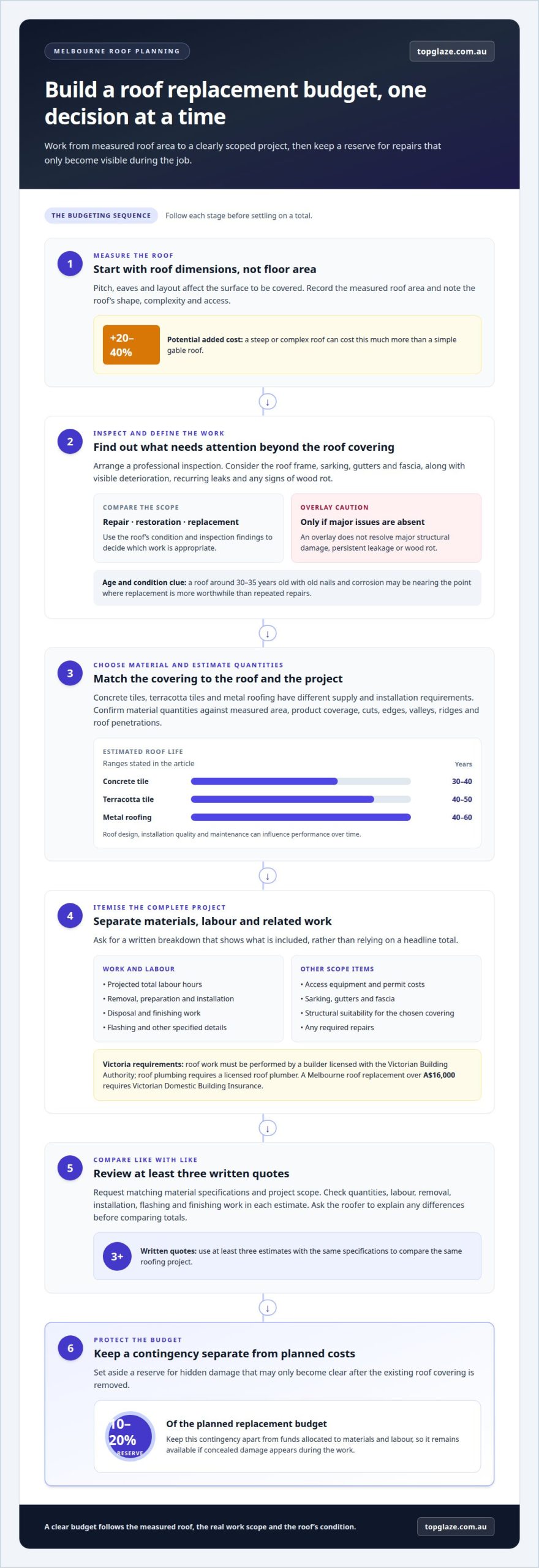
Roof size, pitch, material and access shape the work involved in a Melbourne replacement. A steep or complex roof can add 20-40% compared with a simple gable roof. Roof planes, restricted access and structural repairs may also change the scope. These are useful starting points for learning how to budget for a new roof, because they influence both labour and materials.
Material selection affects supply, installation and future maintenance. Concrete tiles, terracotta tiles and metal roofing each have different requirements. Compare estimates with matching specifications, including removal and installation, rather than judging the material alone. Asphalt shingles are another roofing term homeowners may encounter, but material suitability depends on the roof design and project requirements.
Allow for related components and project logistics. Sarking, gutters and fascia may need attention alongside the roof covering. Removal and disposal, access equipment and any required permits can also affect the scope. Listing these items separately helps clarify what the estimate includes and where additional work may be needed.
Keep a contingency fund of 10-20% of the planned replacement budget for unexpected costs. Set it aside from the main project funds, so it remains available if concealed damage appears after work begins. A roof inspection can help identify visible concerns before planning, while the condition beneath the existing covering may only become clear during removal.
Delaying replacement can allow persistent leaks to contribute to further damage, including wood rot. A roof around 30-35 years old with old nails and corrosion may be nearing the point where replacement is more worthwhile than repeated repairs. For homeowners asking how to budget for a new roof, use the roof’s age, visible deterioration, recurring leaks and inspection findings to decide whether repairs or replacement deserve priority.
2. How much does it cost to replace a roof in Sydney?
For Melbourne homeowners, a roof replacement estimate depends on the measured roof area, material, access and repairs required. Homes with similar floor areas can have different roof sizes because pitch, eaves and layout affect the surface being covered. Base the estimate on measured roof dimensions, not a rough floor-area assumption.
Material choice shapes the work as well as the estimate. Concrete tiles, terracotta tiles and metal roofing involve different supply and installation requirements. Compare written estimates using the same material specifications and scope. Check whether removal, installation, flashing and finishing details are included consistently.
Estimate quantities using the roof surface area and the selected product’s coverage requirements. Allow for cuts, edges and roof features that affect material use. Valleys, ridges and roof penetrations also influence the layout, so clarify how they are accounted for. This helps you compare estimates based on the same quantities and assumptions.
Material longevity is another consideration alongside upfront cost. Concrete tile roofs are estimated to last 30-40 years, terracotta tile roofs 40-50 years, and metal roofs 40-60 years. Roof design, installation quality and maintenance can influence how well a covering performs over time. Melbourne weather exposure and drainage should also inform material selection.
To compare roofing contractors, obtain at least three written quotes with matching specifications. Review each estimate for material quantities, labour, removal and finishing work, including flashing. Ask the roofer to explain any differences in scope so you can compare the same roofing project rather than headline totals alone. For a clearer project scope, explore roof replacement planning.
3. Budget items including labour and planning
Arrange a professional roof inspection before finalising the scope. It can help distinguish repair needs from a full replacement and make the plan more accurate. Ask for the roof frame, sarking, gutters and fascia to be considered, as their condition can affect the work beyond installing new roofing materials.
Separate labour from materials in the written estimate. The work scope should identify removal, preparation, installation and disposal, with projected total labour hours shown. That breakdown helps you understand how the roofer has allowed for the job, rather than comparing totals without knowing what each includes. Check that the estimate names the selected material and describes the work required.
Consider the building structure before changing roofing materials. A heavier covering must be suitable for the existing structure. A lightweight option also needs to suit the roof design and supporting frame, not just the appearance you want. Include structural considerations in the inspection and material decision.
Assess the roof carefully before considering an overlay. It is suitable only when there is no major structural damage, persistent leakage or wood rot. An overlay would leave those problems unresolved. Use the inspection findings to compare repair, restoration and replacement scopes, then decide based on the roof’s condition and the project’s purpose.
In Victoria, roof work must be performed by a builder licensed with the Victorian Building Authority, and roof plumbing requires a licensed roof plumber. A Melbourne roof replacement over A$16,000 requires Victorian Domestic Building Insurance. Include these requirements in planning before work starts, alongside any permit costs that apply. Also consider aesthetic choices, such as colour and profile, while confirming they suit the selected roofing material. A clear scope helps account for labour, compliance and unexpected work without treating every project as identical.
4. Contingency funds for unexpected repairs
A contingency fund gives your roof budget room to respond to hidden damage. Keep it separate from the planned replacement amount, so unexpected work does not consume money allocated to materials or labour. A dedicated savings account and regular contributions make the reserve easier to track. One suggested long-term approach is saving around 1.0% of your home’s value annually for major repairs.
Use inspection findings to identify where a reserve may be needed. Structural damage beneath tiles or metal sheets might become visible only after removal begins. Damaged framing, deteriorated sarking or water entry can change the scope. Ask for any additional work to be clearly described before it is added, so the budget reflects the revised plan.
Consider weather-related damage separately from gradual wear. A home insurance policy may cover some or all replacement costs when damage results from a covered event, such as a storm or fire. Older roofs may be assessed at a depreciated value rather than full replacement cost, while claims involving neglect or preventable damage may be denied. The policy terms and cause of damage determine the outcome.
Keep records that help show the roof’s condition over time. Save inspection reports, repair invoices and dated photographs of leaks or visible damage. These can document maintenance and when problems appeared. They also help distinguish urgent repairs from planned upgrades, such as changing the roof’s appearance or replacing sound materials for aesthetic reasons.
Review the reserve when the project scope changes, not only when a bill arrives. A larger roof area, complex access or newly discovered damage can mean more work than expected. Set priorities: address active water entry and structural concerns before optional improvements. If localised damage needs attention before replacement, arrange roof repairs to deal with the immediate issue.
Top Glaze Roofing Systems: Roof Restoration
Top Glaze Roofing Systems helps Melbourne homeowners choose a practical next step when the roof’s condition makes budgeting difficult. If the roof is weathered but suitable for restoration, Roof Restoration can address its condition without assuming full replacement is needed. When damage or deterioration calls for a new roof, Roof Replacements may be appropriate.
For localised problems, Roof Repair Melbourne addresses specific roofing issues, while Gutter Replacements can cover related parts of the roof system. Matching the work to the problem helps define the scope and focus spending on what the roof needs. The right option depends on the roof’s condition and the work required.
Contact Top Glaze Roofing Systems to discuss your roofing needs.
Make your next roofing decision with confidence
A sound roofing plan is more than a figure on a page. It helps you decide what needs attention first, what can be staged and which choices suit your home. To work out how to budget for a new roof, turn the estimate into a practical plan: separate essential work from optional changes, note decisions still to make and keep project records together.
That preparation also makes conversations about the work more focused. You can explain what you’ve noticed, discuss the outcome you want and consider the next step with a clearer picture of your priorities. If you’re ready to talk through your roof, contact Top Glaze Roofing Systems.
A considered plan puts you in a stronger position to care for your home. Take the next step when you’re ready.
Frequently Asked Questions
How much does it cost to replace a roof in Melbourne?
The cost of a Melbourne roof replacement depends on the roof’s dimensions, material, access and repairs needed. A steep roof or complex layout can require different labour and installation planning from a straightforward design. For a useful estimate, describe the roof’s condition and preferred material, then compare quotes with the same scope and inclusions.
How much does it cost to re-roof your home on a basic budget?
There is no single basic re-roof budget that suits every home. The scope depends on the roof’s area and design, material, access and whether the existing structure needs attention. A clearly defined scope helps you understand what the work involves. Compare estimates by their inclusions, not only by the final figure.
What affects roof replacement costs in Melbourne?
In Melbourne, roof size, pitch, material and access shape the replacement scope. Related work may include replacing sarking, gutters or fascia, as well as removing and disposing of old roofing. Structural issues can also change the work required. Ask for these components to be identified clearly in the fixed quote, so you can see how the roof’s condition and project choices affect the scope.
What do I have to consider when installing a new roof?
Check that the roofing material suits the existing structure and roof design. Consider water drainage, flashing and how the covering meets edges, valleys and penetrations. Think about the appearance you want and the maintenance involved, too. Discussing these choices before installation helps align the material, finish and scope with your home’s practical needs.
What do I need to know before re-roofing my home?
Before re-roofing, understand the roof’s condition and whether it needs repairs, restoration or full replacement. An overlay is suitable only where there is no major structural damage, persistent leakage or wood rot. Note recurring leaks and previous repairs for the inspection. Consider whether gutters or fascia should be addressed as part of the same project.
What is the average cost of a new roof in Australia in 2026?
A single average can be misleading because roof dimensions, material, design and access vary between Australian homes. Structural repairs and associated work can also change the project scope. For a meaningful budget, identify the roofing material and work required, then compare estimates based on matching specifications. Those details provide a more useful guide for your home than a broad national figure.


