

A valley iron can wear out before the rest of the roof because it carries more water than almost any other section. As rain and debris pass through the junction of two roof planes, corrosion can weaken the metal and let water beneath the tiles. For Melbourne homes with original valleys, replacement may be due once the roof is over 25 years old, but visible damage matters more than age alone.
It’s understandable to worry that a leak near a valley means the whole roof needs replacing. Often, the problem is confined to the valley, though nearby tiles, flashings or other roof details can also let water in.
This guide covers warning signs, when a repair may be enough, and what to consider when choosing replacement metal. It also explains how the old valley iron is removed and a new tray fitted. You’ll learn what to expect from valley iron replacement in Melbourne before deciding on the next step.
Key Takeaways
- Rust streaks, leaks and visible holes can signal that a valley iron needs attention. The extent of corrosion helps distinguish a repair from full replacement.
- Choose valley metal with the surrounding flashings and fixings in mind, as incompatible materials can accelerate corrosion.
- Replacement involves lifting nearby tiles, removing the old metal, checking the support beneath it and fitting a new tray before reinstating the tiles.
- Access, roof complexity and any hidden damage can affect the scope and duration of the work. Roof valley work also calls for suitable safety equipment and training.
- A targeted roof repair may resolve a valley problem without replacing the entire roof, while damage to surrounding areas may call for broader roofing work.
Why do valley irons fail before the rest of the roof?
In Melbourne, valley iron is the metal tray in the channel where two roof planes meet. Valley work involves inspecting the channel, repairing suitable minor faults or replacing corroded metal.
A valley carries concentrated rainwater from both roof slopes. Repeated water flow, leaves and other debris can keep the channel damp and encourage corrosion. Because the drainage path is narrow, rust, blockages or a poor join can restrict water and cause it to spill beneath nearby tiles. A rusted-through tray may let water reach the ceiling and damage roof timbers.
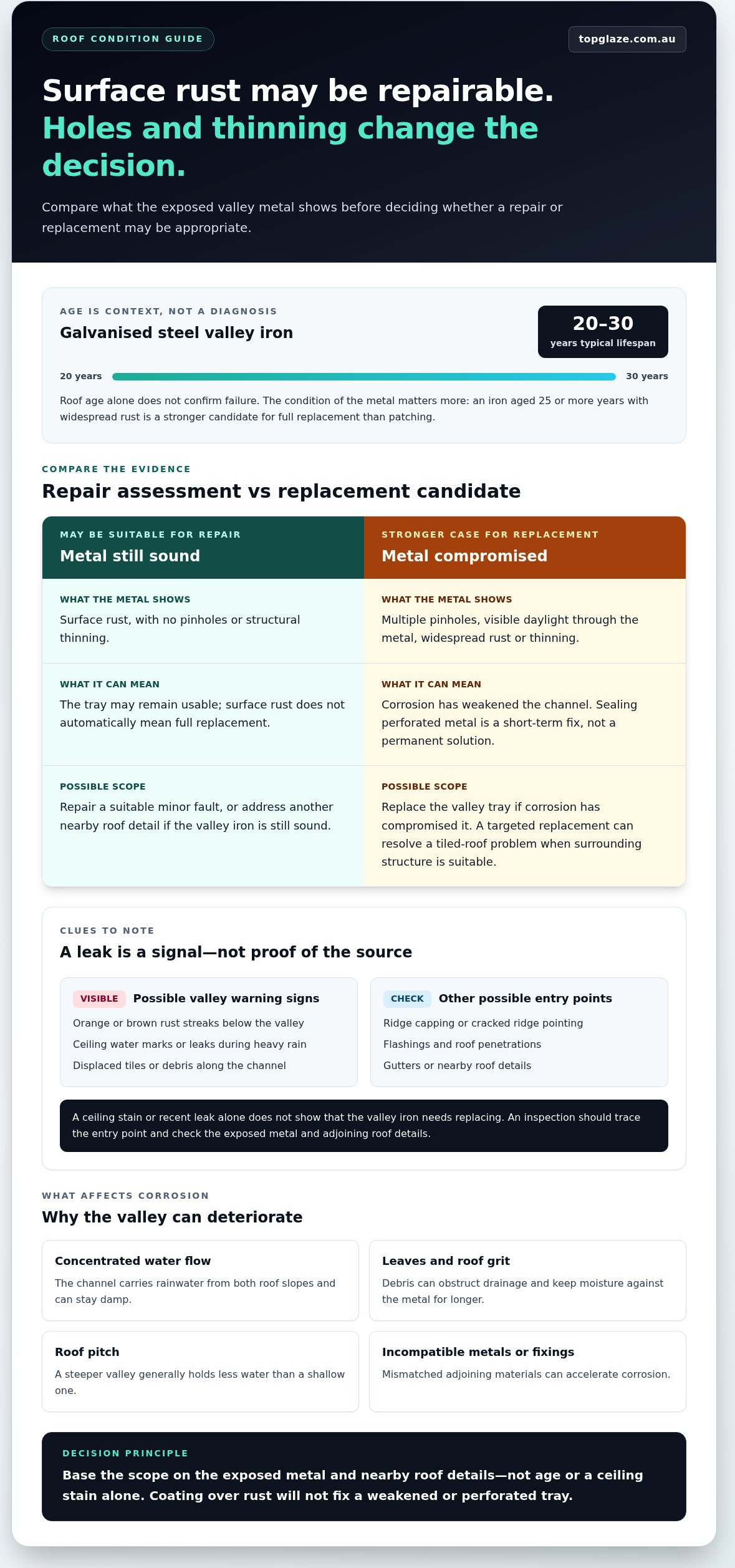
Galvanised steel valley irons typically last 20-30 years. Roof age alone doesn’t confirm failure, but an inspection can reveal thinning, holes, debris build-up or a slipped tile. Steeper roof valleys tend to collect less water, which can extend the metal’s life. Regular inspections help identify small issues before corrosion becomes extensive.
The price depends on the case and is given after a quote request. The number of valleys, roof access, complex intersections and the condition of hidden timber affect the work required. For example, a straightforward channel may need only a targeted replacement, while damaged support timber or surrounding roof components can add repair work. This is why a roof inspection needs to identify the source and extent of damage before the scope is clear.
Replacing a valley can stop a leak if the valley iron is the entry point and the new tray is fitted correctly. It won’t fix water entering through ridge capping, flashings, roof penetrations or gutters. An inspection should trace the leak and check adjoining roof details, rather than assuming every ceiling stain below a valley comes from the tray.
Traditional mortar can crack, allowing water back in around roof details. In suitable restoration work, a properly fitted storm seal moves with the roof and stays watertight, making it an alternative to mortar. The right method depends on the detail being sealed. It won’t replace valley iron that has rusted through.
Melbourne weather exposes roof valleys to rain, drying and debris. Roof pitch affects drainage: a steeper valley generally holds less water than a shallow one. Keeping the channel clear and arranging regular inspections can help identify corrosion early. Coating over rust won’t fix a weakened or perforated tray.
During Melbourne roof restoration, valley work may be coordinated with repairs to nearby tiles, bedding, capping or flashings. This helps address related faults in the same area. A targeted valley replacement can often resolve a tiled-roof problem without replacing the whole roof, provided the surrounding structure is suitable.
Signs that valley irons may need replacement
Rust streaks below a valley and leaks during heavy rain can point to a failing tray. The important distinction is whether rust is only on the surface or has caused holes or thinning that compromise the metal.
Signs of valley iron deterioration
Look for orange or brown streaks below the valley, ceiling water marks, and leaks that appear during heavy rain. These signs can indicate corrosion, but don’t prove the valley iron is the source. Water may also enter through ridge capping, flashings, roof penetrations or gutters. Note where staining appears and when it worsens.
From the ground, look for displaced tiles, debris along the channel or rust-coloured marks on nearby roof surfaces. Don’t climb onto a steep or slippery roof to inspect it yourself. A professional can safely assess the exposed metal and check whether nearby tiles or roof details are contributing to the leak.
Valley corrosion signs and causes
Surface rust may remain repairable if the valley iron has no pinholes or structural thinning. Multiple pinholes, visible daylight through the metal, or widespread rust indicate more serious deterioration. A valley iron aged 25 or more years with widespread rust is a stronger candidate for full replacement than patching.
Corrosion can develop as the valley carries rainwater and collects debris. Leaves and roof grit can obstruct drainage, keeping moisture against the metal for longer. Roof pitch also affects how quickly water moves through the channel. Incompatible adjoining metals or fixings can accelerate corrosion.
Record each sign: where ceiling marks appear, whether a leak followed heavy rain, and any visible rust streaks. This information can help an inspection identify the likely entry point. A recent leak alone doesn’t show whether the metal needs replacing. Holes, thinning and the condition of the protective coating matter.
Pointing, flashings and roof penetrations also need attention during diagnosis. A crack in ridge pointing or a gap around flashing can let water travel before it appears indoors. If the valley iron is still sound, repairing the nearby fault may be more appropriate than replacing a usable tray.
Sealing perforated metal is a short-term fix, not a permanent solution to corrosion. If holes or thinning have weakened the channel, replacement restores a continuous path for rainwater. Surface rust without holes or structural thinning can be assessed for repair rather than automatically treated as a reason for full replacement.
These checks help show whether the issue is localised or part of wider roof deterioration. A targeted repair may suit an isolated valley fault, while extensive damage to surrounding roof components may require broader work. The decision should be based on the exposed metal and nearby roof details, not a ceiling stain alone.
Valley metal materials and compatibility
Choosing replacement metal involves more than matching the roof colour. The valley tray must suit the nearby flashings, fixings and roof materials. Water flowing between incompatible metals or treated materials can accelerate corrosion. Consider how water moves across the whole roof junction, not just the valley.
Galvanised steel valley irons typically last 20-30 years. Colorbond and zinc are materials used for valley replacement, while Zincalume is another coated-steel option homeowners may encounter. Colorbond is one option for a replacement valley tray, but its suitability depends on the roof and adjoining materials. Copper or aluminium valley irons can last 50 years or more.
Material lifespan comparisons can be useful, but they don’t replace an inspection. Exposure, drainage, debris and adjoining materials all affect how a valley performs. A steep channel tends to collect less water, while a shallow or obstructed one can stay damp longer. Existing rust and failing metal also matter when deciding whether to match or change materials.
Compatibility matters where the valley meets a gutter, flashing or metal fixing. If runoff passes from one material onto an incompatible one, corrosion can develop at the junction. A roofer can assess the existing metals and water flow to help select a tray that works with the connected roof components.
Colour is another practical consideration. Colorbond may coordinate with visible roof details, but appearance shouldn’t take priority over drainage and compatibility. Zinc is another option for a valley tray. The right choice depends on the roof layout, adjoining components and the materials’ condition.
For tiled roofs, replacement also depends on how the tiles sit beside the tray. The valley needs clear space for drainage, and the tiles must be reinstated without obstructing water flow. Bedding and nearby pointing may need attention if they affect the junction. Choosing a metal alone won’t correct poorly positioned tiles or defective roof details.
During roof restoration, valley material selection can be considered alongside related work, such as flashing or gutter repairs. Coordinating these details helps direct water from the roof into the drainage system without crossing incompatible surfaces. If several roof areas are failing, the extent of deterioration may also determine whether isolated valley work is suitable.
Before work begins, identify the existing valley metal, adjacent flashings and fixings, and any treated materials that contact runoff. Then assess drainage, roof pitch and visible corrosion. This provides a basis for selecting a compatible replacement, whether the project uses galvanised steel, Colorbond, zinc, Zincalume, copper or aluminium.
Removing old valley iron and installing replacements
Replacing valley iron involves more than swapping one metal tray for another. The tiles, roof support, flashing and drainage path all need attention so rainwater can flow safely off both roof planes.
Before work starts, the roof area is prepared for safe access. Valley work can involve steep, slippery surfaces, so appropriate equipment and training matter. The roofer lifts tiles along both sides of the channel to expose the rusted valley iron and the edges that direct water into it.
- Clear the channel. Remove tiles beside the valley and clear debris, so the old metal and its edges are accessible.
- Remove and inspect. Lift out the old tray and check the exposed timber for signs of damage. Hidden timber problems can change the work required.
- Fit the replacement. Position the new valley tray so it follows the roof junction and carries water towards the drainage point.
- Seal and reinstate. Seal the flashing where required, then return the tiles with the correct overlap and a clear water path.
Correct shaping and placement are essential. Poorly formed or fitted flashing can direct water under tiles, damage the roof structure or cause a new leak. The tray must sit securely, and adjoining tiles must not block the channel. A final visual check should look for debris, gaps and tiles that haven’t been properly reseated.
Installing new roof valley flashing, sealing it and reinstating tiles typically takes 20-40 minutes. That describes this installation task, not every part of a replacement project. Access, surrounding repairs and any timber work affect the total job time. For example, replacing a tray where the timber needs attention involves more than fitting flashing and tiles.
Sealing matters at the junctions as well as along the tray. A correctly fitted storm seal moves with the roof and stays watertight, while mortar can crack and let water back in. The seal must suit the roof detail; it cannot restore valley iron that has rusted through.
After installation, tiles should sit correctly beside the valley, leaving water free to drain rather than pond or spill beneath them. Nearby flashings and roof details must also direct runoff into the channel. These checks can catch fitting problems before Melbourne weather exposes them through water entry.
DIY repairs without proper fall protection can be hazardous. Incorrectly formed flashing can also cause leaks or damage tiles and roof structure. A trained roofer has the equipment and practical skills to remove the old iron, inspect the exposed area and install the replacement as part of the complete roof detail.
Valley iron replacement process
The process of valley iron replacement in Melbourne follows a clear sequence: assess the channel, prepare safe access, remove the old metal, check the support and install the replacement.
Assessment and preparation: The initial assessment identifies the valley’s length, roof access, nearby tiles and any visible water damage. The roofer also considers whether the work involves one channel or a complex intersection. Site set-up and safety preparation typically take 10-20 minutes. Suitable equipment and training are essential because roof valleys can be steep and slippery.
- Lift tiles and clear debris. Tiles along both sides of the valley are lifted carefully. Debris is cleared to expose the tray and give access to its edges. This stage typically takes 15-30 minutes.
- Remove the old tray and inspect timber. The roofer takes out the existing metal and checks the exposed support. Removing the old valley metal and checking timber typically takes 15-30 minutes. Hidden timber damage can add repair work.
- Fit the replacement channel. The new tray is positioned to follow the roof junction and direct water down the channel. Its edges and joins must align with the surrounding roof details, so water doesn’t track beneath tiles.
- Seal and reinstate tiles. The roofer seals the relevant flashing details, then reinstates the tiles with the correct overlap. The completed channel must remain clear, with no tile edges blocking drainage.
A standard roof valley iron replacement in Melbourne typically takes about 1-1.5 hours per channel. Complex intersections or hidden timber repairs can extend the replacement time to 1.5-3 hours. These are working estimates for the replacement process; multiple valleys, access difficulties and surrounding repairs can extend the overall job.
The final assessment should consider what the exposed roof reveals, not just the visible tray. Sound timber and intact surrounding tiles, for example, may keep the work focused on the channel. Damaged timber or related roof details need repair before the area can be properly closed.
Roof restoration may involve coordinating valley work with nearby roof repairs, bedding or flashing work. This helps address connected defects rather than closing over them. A clear scope explains which parts need replacement, which surrounding areas need repairs and how the work will restore water flow.
Incorrectly formed flashing can cause leaks or damage tiles and roof structure, while working without proper fall protection is hazardous. For an assessment of the valley and surrounding roof, request a roofing assessment.
Top Glaze Roofing Systems: Roof Restoration
Top Glaze Roofing Systems can address valley damage through roof repairs or roof restoration, guided by the condition of the surrounding roof. If corrosion is confined to the valley, targeted repairs may be suitable. If deterioration affects broader areas, roof replacement may be more appropriate. Gutter or fascia faults can also be considered as part of the roof’s drainage.
A clear assessment helps identify whether the valley is the leak source and which surrounding details need attention. Contact Top Glaze Roofing Systems to discuss your roof, or visit topglaze.com.au.
Take the next step towards a sound roof
For valley iron replacement in Melbourne, start by understanding how the valley connects with the rest of your roof. A visible leak may be only one part of the issue, so consider whether surrounding areas need attention too. This helps define the right scope rather than focusing on the metal tray alone.
Top Glaze Roofing Systems offers Roof Repairs for localised faults, Roof Restoration for broader roof upkeep, and Roof Replacement when a more extensive solution is needed. The right option depends on the roof’s condition and the work needed to address it properly.
A clear conversation can help you move from uncertainty to a practical plan for protecting your home. Contact Top Glaze Roofing Systems to discuss your roof and the next step. With the right assessment, you can make an informed decision and move forward with confidence.
Frequently Asked Questions
Can valleys be repaired instead of replaced?
Yes, repairs can suit a valley with a small, localised fault. Debris build-up, a slipped tile, a minor gap or surface rust without pinholes or structural thinning may be repairable. A rusted-through or too-narrow valley, or one with multiple holes, generally needs replacement. The decision depends on the exposed metal and whether a repair can restore reliable drainage.
How do I know if my valley irons need replacing?
Rust streaks below the valley, recurring leaks during heavy rain, pinholes and visible daylight through the metal are warning signs. Widespread corrosion in a valley iron aged 25 or more years supports replacement rather than patching. Note where ceiling marks appear and whether they worsen after rain. That information can help distinguish a valley fault from water entering elsewhere on the roof.
What happens once a valley iron rusts?
Surface rust doesn’t always mean the tray has failed. Metal without pinholes or structural thinning may be suitable for repair. Once corrosion creates holes or weakens the metal, water can pass beneath roof tiles and damage the ceiling or surrounding structure. Sealing rusted-through metal is a short-term measure, not a lasting replacement for the failed section.
What material do you replace it with?
Common options include galvanised steel, Colorbond and zinc, with copper or aluminium also used for valley irons. Galvanised steel typically lasts 20-30 years, while copper or aluminium can last 50 years or more. The replacement should also suit adjacent flashings and fixings. Incompatible metals or treated materials can accelerate corrosion where rainwater runs between them.
What are the steps to arrange iron replacement treatment in Melbourne?
Contact Top Glaze Roofing Systems by phone, email or the online form, and describe the issue, such as rust marks or a leak after heavy rain. An assessment can establish whether the valley needs repair or replacement and identify related roof work. Top Glaze Roofing Systems provides fixed quotes with no hidden fees after inspection, giving you a clear scope before you decide how to proceed.


