

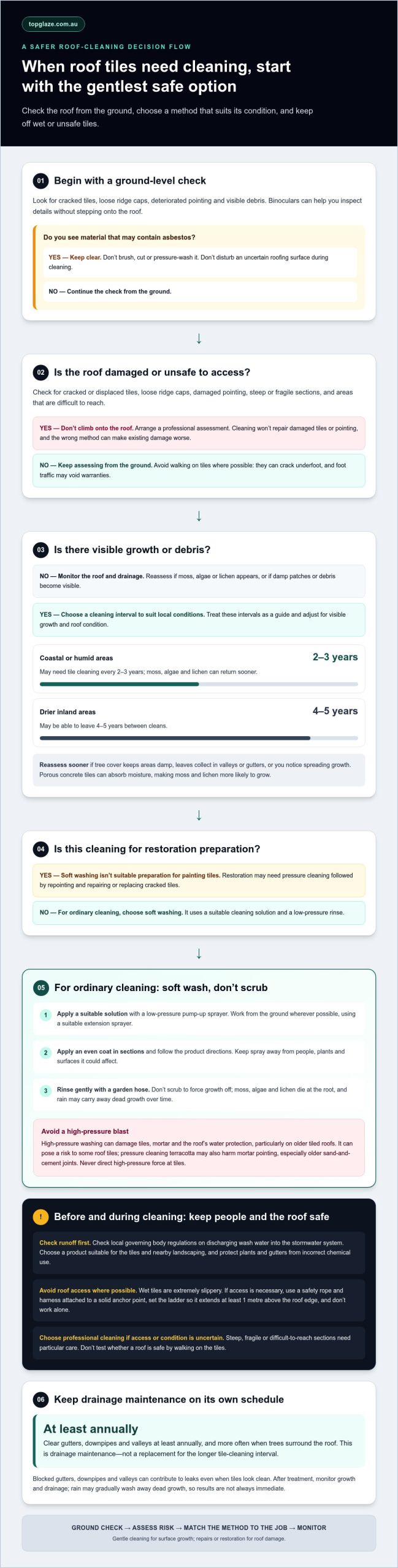
Roof tiles don’t need a high-pressure blast to get clean. The safe way to clean roof tiles is usually soft washing with a suitable cleaning solution and a low-pressure rinse. Coastal and humid areas may need cleaning every 2-3 years, while drier inland areas may go 4-5 years between cleans.
It’s understandable to want a quick fix when moss, algae or lichen starts to show, but the wrong cleaning method can damage tiles or leave a roof slippery and unsafe. This guide explains how often to clean roof tiles, which products suit different materials, and when scrubbing or pressure washing is appropriate. You’ll also learn why cleaning matters beyond appearance, how to recognise when a gentle wash is enough, and when roof condition calls for a more thorough solution.
Key Takeaways
- Use your local conditions to guide cleaning frequency: coastal and humid areas may need more frequent attention than drier inland areas.
- Choose a cleaning method and product that suit the tile material; soft washing is generally gentler than high-pressure cleaning.
- Skip abrasive scrubbing and take care with terracotta and clay tiles, which can crack or suffer damage if handled incorrectly.
- Moss and lichen may fade gradually after treatment as rain washes away dead growth, so results aren’t always immediate.
- Blocked gutters, downpipes and valleys can contribute to roof leaks, while cracked tiles or deteriorated pointing may call for repairs or restoration.
Do I need to scrub or use a pressure washer when using these products?
Usually, scrubbing isn’t needed. Soft washing uses a cleaning solution and a low-pressure rinse. High-pressure washing can damage tiles, mortar and the roof’s water protection, particularly on older tiled roofs.
For a safe way to clean roof tiles, don’t treat a slippery roof as a suitable DIY job. Use the steps below to choose a gentler method and reduce the risk of falls or broken tiles.
Check pressure-cleaning risks and precautions
Identify the tile material and assess the roof’s condition before choosing equipment. High-pressure washing can pose a risk to some roof tiles. Pressure cleaning terracotta may also harm mortar pointing, especially older sand-and-cement joints. Wet tiles are extremely slippery, and walking on them can break tiles or cause a fall. High-pressure roof cleaning uses thousands of PSI, so never direct that force at tiles.
- Check the surface and structure from the ground. Look for cracked tiles, loose ridge caps, deteriorated pointing and visible debris. Don’t climb onto a roof that looks damaged or unsafe to access. Walking on tiles can also void warranties, so keep foot traffic off the roof where possible.
- Keep clear of suspected asbestos-containing material. If you see material that may contain asbestos, don’t brush, cut or pressure-wash it. Roof tiles and surrounding roofing materials can differ, so don’t disturb an uncertain surface during cleaning.
- Manage runoff before applying a cleaning product. Check local governing body regulations on discharging wash water into the stormwater system. Choose a product suitable for the tiles and nearby landscaping, and protect plants and gutters from incorrect chemical use.
Use soft washing with low pressure
Choose soft washing when a tiled roof needs cleaning, rather than preparation for restoration. Apply a suitable solution with a low-pressure pump-up sprayer, then rinse gently with a garden hose. Don’t scrub to force growth off. Moss, algae and lichen die at the root, and rain may carry away the dead growth over time. Exterior maintenance specialists such as squirtzpropertydetailing.com often utilise these gentle washing techniques to refresh surfaces safely without causing damage from excessive pressure.
- Work from the ground wherever possible. Use a suitable extension sprayer to apply the product without walking on tiles. Apply an even coat in sections, following the product directions, and keep spray away from people, plants and surfaces it could affect.
- Use roof access only with proper fall protection. Wet tiles can become dangerously slippery. If roof access is necessary, use a safety rope and harness attached to a solid anchor point. Set the ladder so it extends at least 1 metre above the roof edge, and don’t work alone.
- Leave restoration preparation to the right method. Soft washing cleans a roof but isn’t suitable preparation for painting tiles. If you decide to restore the roof, pressure cleaning may need to be followed by repointing and repairing or replacing cracked tiles. This work addresses damage left or revealed by cleaning, rather than simply removing surface growth.
How Often Should Roof Tiles Be Cleaned?
Use your local conditions to set a starting point: coastal and humid areas may need tile cleaning every 2-3 years, while drier inland areas may go 4-5 years between cleans. Treat those intervals as a guide, then adjust for visible growth and roof condition.
- Set a cleaning interval based on your surroundings. In humid or coastal conditions, moss, algae and lichen can return sooner, so inspect the roof regularly and consider cleaning every 2-3 years. Drier inland homes may be able to leave 4-5 years between cleans.
Tree cover can change what your roof needs. Shaded areas stay damp longer, and leaves may collect in valleys or gutters. Concrete tiles are porous and can absorb moisture, making moss and lichen more likely to grow. Use visible growth, damp patches and debris as signs to reassess your usual cleaning interval.
- Decide whether a ground-level check is enough for DIY. From the ground, look for spreading moss or lichen, blocked valleys, displaced tiles and damaged pointing. Binoculars can help you inspect details without stepping onto the roof. Note which roof faces have heavier growth, as shaded slopes may need attention before sunnier areas.
DIY cleaning is sensible only when you can work without unsafe roof access or risking damage. Don’t walk on tiled roofing just to confirm what you can see from below. Tiles can crack underfoot, and wet surfaces are slippery. If you’re unsure whether the roof is safe to walk on, professional cleaning is recommended.
- Choose professional cleaning when access or condition is uncertain. A professional can assess whether growth is superficial or whether cracked tiles, loose ridge caps or deteriorated joints need attention first. The distinction matters: cleaning won’t repair damaged tiles or pointing, and the wrong method can make existing damage worse.
Professional cleaning is also suitable for steep, fragile or difficult-to-reach roof sections where safe access is a concern. It helps avoid turning routine cleaning into a risky climb. If you can’t assess the roof clearly from the ground, arrange professional cleaning rather than testing it by walking on the tiles—established exterior cleaning specialists such as pbcpressurecleaning.com demonstrate how dedicated low-pressure washing safely clears build-up while protecting delicate roofing materials.
- Keep roof cleaning separate from regular drainage maintenance. Clear gutters, downpipes and valleys at least annually, and more often when trees surround the roof. This schedule is for drainage debris, not a substitute for the longer tile-cleaning interval. Blockages can contribute to leaks even when the tiles look clean.
After cleaning, monitor growth and drainage instead of repeating treatment automatically. Rain can gradually wash away dead growth, so the roof may continue changing after cleaning day. Use returning moss or lichen, persistent debris and blocked drainage as signs that an inspection is due.
What are the best products used to clean roofs?
Choose a roof-cleaning product suited to the tile material and nearby landscaping. For moss and lichen, use a treatment that targets growth without abrasive scrubbing. Dead growth can take time to wash away.
- Match the cleaner to the roof and garden. Check the product label for compatibility with the specific tiles, whether concrete, terracotta or another material. Consider nearby plants, gutters and painted surfaces too. Incorrect chemical use can damage tiles, plants and gutters, so don’t assume one roof cleaner suits every home. Follow the label’s application and handling directions.
Concrete tiles are porous and can absorb moisture, making moss and lichen more likely to grow. That doesn’t mean a stronger product is automatically better. Choose a cleaner intended for roof growth and the tile type, then apply it only as directed. If you’re unsure of the tile material, identify it before choosing a treatment.
- Apply a treatment rather than scraping growth away. Moss and lichen attach to the tile surface, so aggressive scraping can disturb tiles or their finish. Use a low-pressure pump-up sprayer to apply a suitable roof-cleaning solution. Cover the affected area according to the product directions, and avoid abrasive brushes or tools that may scratch or loosen the surface.
Make sure the spray reaches the growth without flooding nearby areas. Protect landscaping and manage runoff, especially around garden beds and gutters. Product suitability matters as much as application: the wrong cleaner for the roof or its surroundings can cause avoidable damage.
- Allow dead moss and lichen to clear gradually. A treatment may kill growth without making the roof look clean straight away. Rain can wash dead material from tiles over 6 to 12 months, so don’t respond to remaining patches by immediately scrubbing or applying extra product. Observe how the roof changes after treatment and follow the cleaner’s directions.
Some sections may clear before others, particularly where growth is thicker or water runs differently. Prevent debris from building up in gutters and valleys as it washes down. Keeping drainage paths clear allows weather to gradually remove treated growth from the roof surface.
- Reduce conditions that encourage regrowth. Once the treatment has had time to work, check for debris in roof valleys and gutters. Leaves can hold moisture against the roof and obstruct drainage. Clear gutters, downpipes and valleys at least annually, and more often when trees surround the home.
Use maintenance checks to spot new moss or lichen early, rather than repeating chemical treatment on a fixed schedule. Shaded, damp areas may need closer observation than exposed sections. A suitable product, careful application and clear drainage work together; scraping or using harsher chemicals won’t resolve persistent moisture or debris.
Roof tile materials and their cleaning requirements
Identify the tile material before choosing a cleaner or planning maintenance. Concrete, clay, terracotta and slate each need different care.
Check tile compatibility and surface precautions
Identify the roof tile and check its surface for cracks, loose pieces or worn joints. Concrete tiles are porous and can absorb moisture, while slate is fragile and needs gentle cleaning. Choose a product suitable for the specific material and nearby landscaping. Avoid high-pressure washing on slate, and don’t assume a cleaner made for concrete suits every tile.
Maintain terracotta tiles
Use low-pressure cleaning on terracotta, which is more brittle than concrete and can crack if handled incorrectly. Terracotta’s colour is baked into the tile during firing, so it doesn’t need respraying. Avoid walking on tiles to inspect them; clay tiles can break if stepped on incorrectly. If roof access is essential, the lower half of each tile’s centre ridge is the advised walking point.
- Check concrete tiles for surface changes before cleaning. Efflorescence, the pale residue that can appear on concrete, comes from natural salts rising to the surface and usually disappears naturally. Don’t confuse it with moss or lichen, or use an aggressive cleaner simply to remove the colour change. Match the treatment to the actual surface growth and tile material.
- Separate cleaning from repainting. Concrete roof tiles may need repainting about every five years to maintain their appearance. Repainting doesn’t improve waterproofing, so treat it as an appearance measure, not a leak repair. Soft washing isn’t suitable preparation for painting; paint adhesion requires thorough preparation by pressure cleaning. Keep cleaning and painting as distinct tasks.
- Arrange professional repairs for cracked or displaced tiles. A qualified roofing professional should replace roof tiles and carry out repairs. Cleaning won’t fix a cracked tile, loose ridge cap or deteriorated joint. Have those issues addressed before treating the roof, so cleaning doesn’t add avoidable stress to an already damaged surface.
- Match the next maintenance step to the material. For example, don’t plan a terracotta respray as you might for a concrete roof’s appearance. Check each roof slope for different tile types, repairs and surface wear before choosing a product. If the material or condition isn’t clear from the ground, don’t climb up to test it; an incorrect step can break tiles.
Reasons to clean roof tiles
Cleaning is more than a cosmetic job. Moss, lichen and debris can hide roof problems, while blocked drainage points can contribute to leaks. A careful cleaning method helps reveal what needs attention and what doesn’t.
- Remove growth that obscures the tile surface. Moss and lichen can make a roof look neglected, but they also make it harder to see the condition beneath. Treating growth helps reveal cracked tiles, loose ridge caps or worn joints that need attention. A clean surface makes defects easier to spot from the ground.
Don’t treat a change in appearance as proof of damage. Pale marks on concrete tiles, for example, may be efflorescence caused by natural salts rising to the surface. It usually disappears naturally, so aggressive cleaning may be unnecessary. Identify what you’re seeing before choosing a treatment.
- Keep roof drainage paths clear. Leaves and other debris can collect in gutters, downpipes and valleys, restricting the route rainwater takes off the roof. Blocked gutters, downpipes and valleys are common sources of roof leaks. Cleaning the tiles alone won’t clear a blocked valley or drain, so include those areas in maintenance checks.
If water overflows a gutter during rain, look for a blockage rather than assuming the tiles need washing. Remove accessible debris safely and monitor where the water flows. Persistent overflow or signs of a leak point to a drainage or roof problem that cleaning cannot fix.
- Use cleaning as an opportunity to notice roof changes. Compare visible sections before and after cleaning. Look for cracked or displaced tiles, deteriorated pointing and growth returning in shaded areas. These signs help distinguish a surface-cleaning task from damage that needs repair.
Cleaning doesn’t restore broken tiles or reseal worn joints. If a crack or loose ridge cap becomes visible, don’t cover it with another application of cleaner. Keep the issue in view and arrange appropriate roof repairs. This prevents a cosmetic task from being mistaken for a repair.
- Choose the method for the reason you’re cleaning. To remove moss or lichen, use a tile-compatible treatment rather than chasing an instant colour change. Dead growth may wash away with rain over time. To prepare tiles for painting, don’t use soft washing: thorough preparation by pressure cleaning is needed for paint to stick.
Keep appearance, drainage and repair needs separate. A roof that looks cleaner may still have a blocked downpipe or damaged tile. Check each concern directly, then choose the cleaning or repair step that addresses it.
If cracked tiles, loose ridge caps or deteriorated joints need attention, get help with roof repair options rather than relying on cleaning alone.
Top Glaze Roofing Systems: Roof Restoration
Top Glaze Roofing Systems can help when cleaning reveals cracked tiles, deteriorated pointing or broader wear that needs more than surface cleaning. Roof Restoration is a practical next step when the roof needs more extensive work. Roof Repairs can address specific damage, while Roof Replacement may suit a roof that needs a more complete solution.
Blocked gutters or worn fascia can also affect roof drainage. Top Glaze Roofing Systems’ Guttering & Fascia work addresses those parts of the roofing system, rather than treating tile growth as the only concern. The right solution depends on whether the issue is isolated damage, broader roof deterioration or drainage.
For help deciding what your roof needs, contact Top Glaze Roofing Systems.
Make the Next Roof Decision with Confidence
A clean roof can be easier to assess, but appearance alone can’t tell you what work it needs. Use what you’ve observed to decide whether the next step is routine upkeep or attention to a specific roofing issue. That keeps the safe way to clean roof tiles connected to the bigger goal: caring for the roof without overlooking damage.
Top Glaze Roofing Systems offers Roof Repairs for specific damage, Roof Restoration for broader roof work and Roof Replacement when a more complete solution is needed. The right service depends on the roof’s condition and the work required, not simply how it looks after cleaning.
If you’re ready to discuss the next step for your roof, contact Top Glaze Roofing Systems. A clear plan can help you move forward with care and confidence.
Frequently Asked Questions
What is the safest way to clean roof tiles in Australia?
Soft washing with a tile-compatible cleaner and gentle rinsing is generally the safest approach for routine cleaning. Avoid hard scrubbing or directing forceful water at tiles. Before treating a Melbourne roof, identify its material and check the product directions, nearby garden beds and water collection arrangements. If the job requires climbing or the roof condition is uncertain, stay off the tiles and use professional cleaning.
How do you clean concrete roof tiles without damaging them?
Use a cleaner intended for concrete roof tiles, follow its label and avoid abrasive tools. Concrete can absorb moisture, so moss may grow in damp areas, but aggressive scraping can still harm the surface. Before treating the whole roof, check for cracks or loose tiles from the ground. Pale marks may be efflorescence, not dirt, and usually disappear naturally.
How do you safely clean terracotta roof tiles?
Use a gentle, low-pressure method and avoid walking on terracotta tiles. They’re more brittle than concrete and can crack if handled incorrectly. Check visible tiles and joints from the ground first, especially around ridge caps and older mortar pointing. If you spot cracks or loose sections, don’t try to clean or repair them from the roof. Arrange professional help to avoid worsening the damage.
What cleaning solutions are safe for roof tiles, plants, gutters and rainwater tanks?
Choose a solution whose label specifies compatibility with your roof tile material and surrounding landscaping. Check whether the directions cover gutters and rainwater tanks before applying anything; don’t assume a roof cleaner is suitable for collected rainwater. Protect nearby plants from spray and manage wash water carefully. Australian local rules may apply to discharging it into stormwater, so check your local governing body’s requirements.
How much does professional roof tile cleaning cost in Australia?
There isn’t one reliable price for every Australian roof; cost depends on the roof and the work required. Factors include tile material, roof size, access, the amount of growth and whether damage needs attention. Top Glaze Roofing Systems provides fixed quotes after inspection, with no hidden fees. The price for a specific job is set out in the quote, rather than estimated from a general average.
When should roof tile cleaning be done by a professional?
Use professional cleaning if you’re unsure whether the roof is safe to walk on, or if it’s steep, fragile or visibly damaged. Cracked tiles, loose ridge caps and worn joints are reasons to avoid DIY access, as cleaning won’t repair them. Professional help is also sensible when you can’t reach the area safely from the ground or need to distinguish surface growth from a roof defect.
Do Australian state or local rules restrict roof cleaning or chemical runoff?
Check your local governing body’s regulations before cleaning, particularly rules about discharging wash water into the stormwater system. Use products suitable for the tiles and nearby landscaping, and protect plants and gutters from incorrect chemical use.


