

What if the damp patch near your chimney isn’t directly below the point where water is getting in? A leak can travel along the roof before it appears indoors. That’s why flashing repair around chimney areas starts with tracing the water path, not simply sealing the nearest visible gap. A surface patch can hide the symptom without fixing the cause.
Water marks, peeling paint or dampness around a chimney are understandably worrying, especially when roof access feels risky and the source is hard to pinpoint. Melbourne weather can put stress on roofing materials, but the right repair depends on what an inspection finds, including the condition of the flashing and surrounding roof.
This guide covers common signs of chimney flashing damage, how an assessment can help locate a leak, and why the repair should suit the roof rather than rely on a one-size-fits-all fix. You’ll also learn what to expect when arranging a roof assessment in Melbourne. With more than 38 years in residential roofing and over 20,000 roof repairs, restorations and replacements completed, Top Glaze Roofing Systems handles flashing repairs and helps homeowners understand the recommended work through a free inspection and fixed quote with no hidden fees.
Key Takeaways
- Learn how chimney flashing protects the roof junction and why an indoor water mark may not sit beneath the leak.
- Spot common warning signs, including failed joins, worn sealant or flashing that has shifted out of place.
- Understand how the condition of the flashing and nearby roofing helps determine whether localised flashing repair around chimney areas or broader replacement is appropriate.
- If you suspect damage, note the symptoms and take photos from the ground, but don’t climb onto the roof or disturb the flashing.
- See how Top Glaze’s free roof inspection and fixed quote with no hidden fees can clarify the recommended repair scope.
Flashing Repair Around a Chimney: What It Does and Signs It Needs Attention
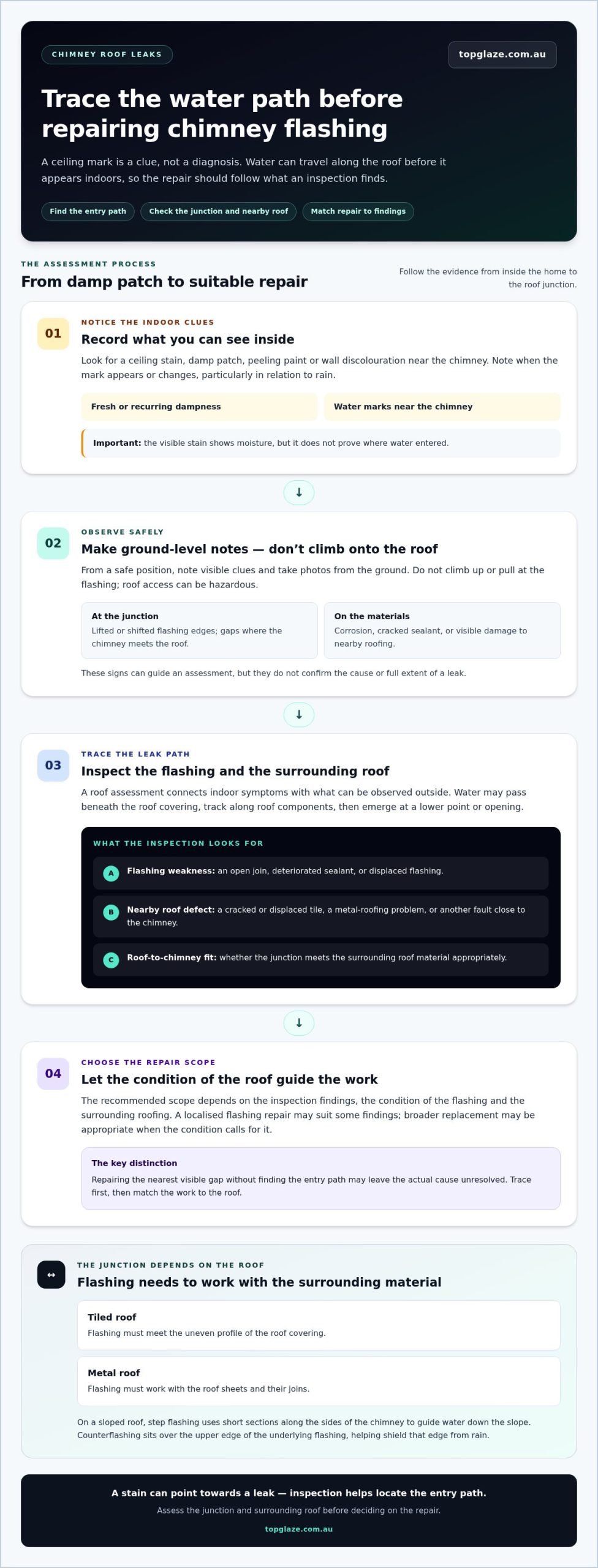
Chimney flashing is the weatherproof junction between the chimney and the roof. It closes the gap where the two structures meet and helps direct rainwater back onto the roof rather than into the roof space. Flashing is part of a broader weatherproofing system. The Flashing (weatherproofing) overview explains how flashing protects joints and openings from water.
The location of an indoor leak doesn’t always show where water entered. Moisture can get beneath the roof covering, travel along the roof slope or supporting materials, then emerge at a ceiling or wall. A stain near a chimney is a useful clue, but it doesn’t prove the flashing is at fault. The surrounding roof may also need inspection.
Which flashing parts protect the chimney-to-roof junction?
On a sloped roof, step flashing is made up of short sections fitted along the sides of the chimney. Each section works with the roof covering to guide water down the slope. Counterflashing sits over the upper edge of the underlying flashing, helping shield that edge from rain. Together, these parts form a junction that needs to suit the surrounding roof tiles or metal roofing.
The details depend on the roof material. With tiles, flashing must meet the uneven profile of the roof covering. With metal roofing, it must work with the roof sheets and their joins. If a section lifts, shifts or no longer sits neatly against the surrounding materials, water may find a path beneath the roof surface.
What signs can point to chimney flashing damage?
Inside, look for a ceiling stain, damp patch, peeling paint or discolouration on a wall near the chimney. These symptoms may appear after rain, but the visible mark can be some distance from the entry point. Recurring dampness or fresh staining is worth investigating, even if the roof looks fine from the ground.
From the ground, visible clues may include lifted flashing edges, gaps at the chimney junction, corrosion or cracked sealant. These signs can guide an assessment, but they don’t confirm the full cause or extent of a leak. Roof access can be hazardous, so don’t climb up or pull at the flashing. Note what you can see from a safe position and leave the roof inspection to a professional; chimney specialists such as Absolute Chimney Pros similarly advise property owners to prioritise safety and professional evaluations over risky DIY attempts.
A chimney flashing leak occurs when water passes through a failure in the weatherproof junction between the chimney and roof. The phrase describes the leak path, not a diagnosis based on an indoor stain alone. Effective flashing repair around chimney areas starts with checking the junction and surrounding roof, then matching the repair to the inspection findings.
How Water Gets Past Chimney Flashing, and Why Leak Tracing Matters
A chimney flashing leak can start at a failed join, a gap where flashing has shifted, or sealant that has cracked and no longer closes the junction. Rain can then pass beneath the roof covering. The flashing may look mostly intact from the ground, while a small weakness at an edge or join lets water through during rain.
Not every leak near a chimney begins at the flashing. A cracked or displaced roof tile, a problem with metal roofing or another nearby roof defect can also let water into the roof space. These faults may be close together, so the position of an indoor stain alone can’t distinguish between them. Repairing the wrong spot may leave the actual entry path untouched.
Why a ceiling stain may not sit directly below the leak
After passing the roof covering, water can track along roof components before reaching the plaster ceiling. It may follow a surface or junction, then emerge at a lower point or where it finds an opening. For example, a damp patch beside a chimney could relate to an entry point on the roof above or alongside it.
The stain is evidence of moisture, not proof of where it entered. Its shape and position can help guide an inspection, but they don’t identify the faulty roof component by themselves. Note when the mark appears or changes, particularly in relation to rain, and share that detail during the assessment.
How a roof inspection traces the leak path
A roof assessment considers the chimney flashing alongside the surrounding roof covering and any visible water marks. The inspection looks for signs such as an open join, deteriorated sealant, displaced flashing or damage to nearby roofing. The aim is to connect what can be observed outside with the symptoms inside, rather than assume the closest visible component is responsible.
The assessment also considers how the junction meets the roof material, because the details differ between tiles and metal roofing. An overview of chimney flashing leak repair describes common failure points and why the condition of the junction matters when choosing a repair. For a Melbourne home, the observed condition and likely water entry path should guide the repair scope, not a guess based on the ceiling mark.
Trace the water path before choosing the repair. This helps distinguish a flashing issue from a nearby roof defect and gives the roofer a sound basis for recommending what needs attention. It also avoids treating a symptom while leaving the entry point unresolved.
If you’re seeing signs of water ingress around a chimney, a professional roof repair assessment can help identify where the water is getting in. Top Glaze Roofing Systems provides a free roof inspection and a fixed quote with no hidden fees, so you can understand the recommended work before deciding how to proceed.
Chimney Flashing Repair or Replacement: How the Right Scope Is Chosen
There isn’t one repair that suits every chimney leak. A small, isolated fault may call for a targeted repair, while flashing that has deteriorated across several sections may need more extensive work. The decision should follow an inspection of the flashing, the likely water entry path and the surrounding roof, not the ceiling stain alone.
Sealant can be useful as part of a suitable repair, but adding more over the surface won’t necessarily fix flashing that’s damaged, poorly fitted or no longer working with the roof covering. The aim is to address the fault itself and make sure the repair suits the junction and its materials.
| Repair scope | When it may be considered | What the assessment considers |
|---|---|---|
| Localised repair | Damage appears limited to an isolated, accessible area. | Whether nearby flashing and roof materials remain serviceable, and whether the suspected entry point is confined to that area. |
| Broader flashing work or replacement | Deterioration extends across multiple sections, or the flashing no longer meets the chimney and roof properly. | The extent and condition of the flashing, the roof type, and how the chimney junction is formed. |
When may a targeted flashing repair be suitable?
A targeted repair may be appropriate if an inspection finds a specific fault, such as a small section that has lifted, while the surrounding flashing and roof covering remain serviceable. The assessment determines whether the visible issue is isolated and nearby materials can stay in place. The actual leak path and condition need to be understood before a repair is recommended, so the scope shouldn’t be decided from a surface-level view alone.
When might broader flashing work be needed?
Widespread corrosion, deterioration across several joins or flashing that no longer sits correctly against the chimney may call for a larger scope. The work also depends on the roof covering: tiles and metal roofing meet the chimney differently, and the junction’s layout affects how the flashing can be repaired or replaced. A clear recommendation should explain the observed condition and why the proposed work addresses it.
For Melbourne homeowners, look for a clear link between the inspection findings and the work proposed. If only one section is compromised and the surrounding materials remain sound, broader replacement may not be necessary. If deterioration is extensive, patching one visible point may leave other failing areas untouched. A professional assessment helps distinguish between these situations and select flashing repair around chimney areas that matches the actual condition.
Top Glaze Roofing Systems assesses the roof before recommending the repair scope. You’ll receive a fixed quote with no hidden fees, setting out the proposed work before it begins. This gives you a clear basis for understanding whether the recommendation is a localised repair or more extensive flashing work.
Suspected Chimney Flashing Damage in Melbourne
A damp patch near a chimney can be unsettling, but there are safe, useful steps you can take before a roof assessment. Stay on the ground and focus on recording what you’ve noticed. You don’t need to identify the exact fault yourself. A professional inspection can assess the flashing and surrounding roof to determine the next step.
What can homeowners safely observe before an inspection?
Note which room or ceiling area is affected and when the dampness appears. Record whether you first noticed it during or after rain, whether the patch changes, and whether you can see peeling paint or a drip. These details help explain the symptoms, though they don’t confirm where water is entering.
If you can see a concern from the ground, take a photo from a safe position. Don’t climb a ladder or get onto the roof for a closer look. Avoid applying sealant, shifting flashing or walking on the roof, as this creates a safety risk and can disturb evidence of the original problem.
When should a roof repair assessment be arranged?
Arrange an assessment if water is actively coming in or dampness near the chimney keeps returning. If there’s an indoor drip, place a container beneath it and move belongings out of the affected area if you can do so safely. Don’t enter a room or part of the home if conditions there seem unsafe.
Use this simple sequence:
- Note the symptoms. Record where and when you notice water, dampness or staining.
- Photograph from the ground. Capture visible roof concerns only if you can do so safely.
- Arrange an assessment. Share your notes and photos so the roofer has a clear starting point.
Flashing repair around chimney areas should be based on the roof’s condition and the likely water entry path, not a guess from indoor symptoms. Top Glaze Roofing Systems provides a free roof inspection across Greater Melbourne, then explains the recommended repair scope in a fixed quote with no hidden fees. There’s no need to attempt roof work yourself.
Chimney junctions are one part of the wider roof system, and nearby roofing can also contribute to water ingress. The guidance on Expert Roof Repairs Melbourne explores why roof condition matters in Victoria’s changeable weather. For a suspected leak, a careful assessment helps distinguish a flashing fault from another roof issue before work is selected.
If you’ve noticed recurring damp or an active leak near a chimney, arrange a free roof inspection with Top Glaze to have the roof assessed safely and receive a clear, fixed quote.
How Top Glaze Handles Chimney Flashing Repair in Melbourne
A sound repair starts with understanding the roof, not assuming chimney flashing is the cause. Top Glaze Roofing Systems handles chimney flashing repairs in Melbourne, assessing the reported leak area and chimney-to-roof junction alongside relevant visible roof components. This helps connect the symptoms inside with the roof’s condition and determine an appropriate repair scope.
What happens during assessment and quoting?
During the free roof inspection, the team considers the reported leak location and checks the flashing and surrounding roof areas that may be relevant. The findings guide the recommendation, whether that’s a localised repair or more extensive work. You’ll receive a fixed quote with no hidden fees, so the proposed scope and cost are clear before work begins.
For urgent roof concerns, the Emergency Roof Repair Melbourne page provides further information about Top Glaze’s roof repair service. If water is entering your home, keep clear of unsafe areas and arrange an assessment rather than climbing onto the roof or trying to adjust flashing yourself.
The team brings more than 38 years of roofing experience, with over 20,000 roof repairs, restorations and replacements completed. Top Glaze holds VBA Building Practitioner Licence CDB-L 100045. This experience and licensing support a considered approach to flashing repair around chimney areas, where the recommendation should reflect the roof’s actual condition rather than rely on a quick surface patch.
What workmanship assurance and timing should homeowners know?
All services include a 10-year workmanship guarantee covering labour and materials. Roof repair timing depends on the work required: minor repairs take 1 day, while complex repairs take 1-3 days. These are the stated timeframes for roof repairs, not a promise that every chimney flashing job will fit one category. The assessment identifies the scope and provides a clearer basis for planning.
From inspection to quote, the process is designed to give Melbourne homeowners a clear explanation of what the roof needs. Share the location of any dampness, when it appears and any photos taken safely from the ground. This information helps the team understand the concern before inspecting the roof and chimney junction.
If you’re concerned about a leak around your chimney, there’s no need to guess or attempt a repair yourself. Request a free roof inspection from Top Glaze Roofing Systems and receive a fixed quote with no hidden fees for the recommended roof repair.
Take the Next Step Towards a More Secure Roof
Uncertainty about a roof leak can make it tempting to reach for sealant or assume the chimney flashing is to blame. A better next step is to have the roof assessed before choosing a repair. The right flashing repair around chimney areas depends on the condition of the junction and the surrounding roof, so an informed recommendation helps you understand what work is needed.
You don’t need to diagnose the leak yourself or take risks getting onto the roof. Top Glaze Roofing Systems can assess the concern and explain the recommended repair. A free roof inspection is a straightforward way to move from wondering where water is entering to having a clear basis for your next decision.
Request a free roof inspection from Top Glaze and take a practical step towards resolving the issue. With the roof assessed and a fixed quote in hand, you can decide how to proceed with greater confidence.
Frequently Asked Questions
Is chimney flashing repair always enough to stop a roof leak?
No, it depends on the leak source and what an inspection finds. If the fault is confined to one damaged section of flashing, a localised repair may be suitable. But water near the chimney could also enter through an adjacent roof defect or a junction elsewhere. Tracing the water path helps identify the likely entry point, so the recommended repair responds to the cause rather than only the indoor symptom.
Can I repair chimney flashing myself?
It’s best not to repair chimney flashing yourself. Climbing onto a roof carries a fall risk, and a view from the ground may not reveal the actual entry point. Applying sealant without an assessment can cover symptoms without addressing the underlying fault. Instead, note where and when you see dampness, and arrange a professional roof inspection. If water is actively entering, keep clear of unsafe areas while organising an assessment.
How do you know if flashing around a chimney is leaking?
Damp patches, ceiling stains and peeling paint can signal water ingress, while visible gaps or deterioration around the chimney may be clues outside. None of these signs proves that the chimney flashing is the source. Water can appear away from where it entered, and another roof defect may be responsible. A roof assessment can examine the chimney junction and nearby roof areas to help locate the entry point before repair work is selected.
What is the difference between chimney flashing repair and replacement?
Repair addresses a localised defect when the surrounding flashing is still serviceable; replacement may be considered if deterioration is more extensive. The decision depends on the condition of the flashing, the roof materials and the likely leak path. For example, damage at one join may call for a different scope from deterioration across several sections. A full replacement isn’t automatically needed for every leak, so an inspection should guide the recommendation.
How long does a chimney flashing roof repair take?
Roof repairs take 1 day for minor work or 1-3 days for complex repairs. The inspection findings determine which timeframe is relevant, as the extent of the fault and the repair scope can differ from one roof to another. These are general roof repair timeframes, not a guaranteed duration for every chimney flashing job. The recommended scope provides a clearer basis for planning the work at your Melbourne home.
Does Top Glaze provide a fixed quote for chimney flashing repair in Melbourne?
Yes. Top Glaze provides a free roof inspection and fixed quotes with no hidden fees for chimney flashing repair in Melbourne. The inspection helps establish the condition of the flashing and surrounding roof before the repair scope is set out in a quote. There’s no call-out fee for the free roof inspection. This gives you a clear outline of the proposed work before deciding how to proceed, without relying on an estimate from a ceiling mark alone.
What guarantee applies to Top Glaze roof repairs?
Top Glaze provides a 10-year workmanship guarantee covering labour and materials on all services. This applies to roof repairs as well as the company’s other services. Knowing the workmanship assurance can help homeowners consider the proposed repair with greater confidence, but the first step is still understanding what the roof needs. A professional assessment identifies the repair scope, while the guarantee sets out the workmanship assurance attached to the service.


