

Could a small change on your roof become a bigger problem after Melbourne’s next burst of rain or strong winds? When people search for common roof problems in melbourne climate, they’re often looking for help understanding whether a cracked tile, water stain or overflowing gutter needs attention. A visible mark doesn’t always reveal how serious the issue is.
Melbourne’s changing weather can put extra pressure on existing roof damage, but you can spot some warning signs safely from the ground. Climbing onto the roof isn’t worth the risk.
This guide explains what to look for on tile and metal roofs, why issues such as leaks, damaged tiles and blocked gutters can develop, and which signs call for a prompt professional assessment. You’ll also learn how Melbourne’s weather can affect roof maintenance and when an inspection can help clarify the next step. Top Glaze Roofing Systems has over 38 years of experience assessing residential roofs and recommending suitable repairs, restoration or replacement.
Key Takeaways
- Learn how seasonal weather exposure can reveal existing roof weaknesses without assuming every roof will be affected.
- See how common roof problems in melbourne climate may show up differently on tile and metal roofs, and which warning signs deserve prompt attention.
- Use a safe observation sequence: check from the ground, record changes and limit indoor water exposure while arranging an assessment if needed.
- Understand how a professional assessment can help match roof concerns with repairs, restoration, replacement or gutter services.
Why Melbourne’s changeable climate puts roofs under pressure
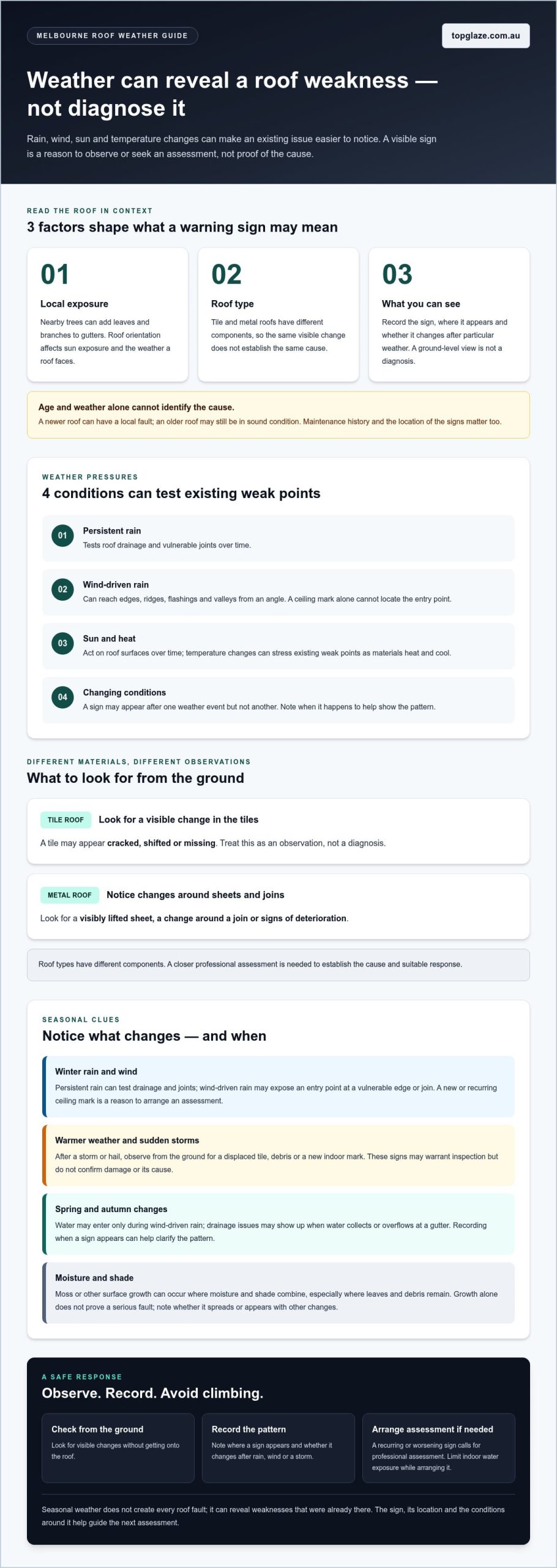
Climate-related roof problems are faults or signs of wear that become noticeable after exposure to rain, wind, sun or temperature changes. Weather doesn’t automatically damage every roof. It can reveal an existing weakness, such as a cracked tile, deteriorated flashing or a drainage issue. Noticing a change early gives you a reason to monitor it or arrange an assessment before further weather tests the same area.
Consider weather alongside the roof’s age, material and maintenance history. A newer roof can still have a local fault, while an older roof may remain in sound condition. The cause of a visible change can’t be determined from age or weather alone.
How Melbourne’s weather reaches the roof
Melbourne’s weather can shift between wet, windy and sunny conditions. The overview of Melbourne’s climate describes its variable patterns and temperature changes, which help explain the different kinds of exposure roofs face across the year.
Persistent rain tests roof drainage and vulnerable joints. Wind-driven rain can reach the roof from an angle, putting particular pressure on edges, ridges and areas around flashings or valleys. A leak during a storm may point to an entry point, but an indoor mark alone won’t identify its exact location.
Sun exposure and temperature changes matter too. Roofing materials heat and cool as conditions shift, and repeated expansion and contraction can place stress on existing weak points. A roof won’t necessarily fail, but a developing issue may become easier to notice after changing conditions.
Why roof material and home location matter
On tiled roofs, you may notice a cracked, shifted or missing tile from a safe ground-level viewpoint. On metal roofs, look for a visibly lifted sheet, a change around a join or signs of deterioration. These are observations, not a diagnosis. Roof types have different components, so a closer professional assessment is needed to establish the cause and appropriate response.
A property’s surroundings also shape its exposure. Trees near the roof can contribute leaves and branches to gutters, while the roof’s orientation affects which areas receive more sun or face prevailing weather. Homes across Melbourne and the Mornington Peninsula won’t all experience the same conditions, even if they have similar roof materials.
In short, common roof problems in melbourne climate are best understood through three factors: local exposure, roof type and the warning signs you can see safely from the ground.
How Melbourne’s seasons contribute to different roof problems
Each season places different demands on a roof. The shift from wet, cool conditions to warmer weather and sudden storms can make an existing weakness easier to spot, but the season alone doesn’t diagnose the cause. A leak may relate to a tile, flashing, valley or drainage issue. The location and pattern of the signs help guide an assessment.
Winter rain, wind and damp roof spaces
During wetter periods, persistent rain can test roof drainage and joints over time. Wind-driven rain may reach vulnerable edges or joins from an angle, exposing an entry point that isn’t obvious in calmer weather. A new or recurring ceiling mark is a reason to arrange an assessment, not proof of where water entered. Dampness can also come from indoor condensation, which is different from a roof leak and needs to be considered separately.
Warmer weather, UV exposure and sudden storms
Sun and heat act on roof surfaces over time, while changing temperatures can place stress on existing weak points. After a storm or hail, look from the ground for changes such as a displaced tile, debris or a new mark inside. These observations may warrant inspection, but they don’t confirm damage or its cause. Avoid climbing up to check. A professional can assess the roof safely.
Spring and autumn bring changing conditions too. A roof may show different signs from one weather event to the next. Water might only enter during wind-driven rain, while a drainage problem becomes noticeable when water collects or overflows at the gutter. Recording when a sign appears can help an assessor understand the pattern.
Moisture and shade can encourage moss or other surface growth, particularly where leaves and debris remain around the roof. Growth alone isn’t evidence of a serious fault. Its significance depends on its location and the roof’s condition. Note whether it is spreading or accompanied by water marks, blocked drainage or visible changes to roofing materials.
Seasonal weather doesn’t create every roof fault; it often reveals weaknesses that were already there. That’s why common roof problems in melbourne climate are best considered in context: what changed, which weather conditions preceded it and what part of the roof appears affected.
If a sign recurs or worsens after changing weather, a professional assessment can help clarify the next step. Top Glaze offers a free roof inspection to identify whether repairs, restoration, replacement or gutter work is appropriate.
Common roof warning signs: what to notice and how urgent they are
A visible sign can help you decide what to do next, but it can’t confirm the cause or reveal concealed damage. Use the guide below to record what you’ve noticed and decide how promptly to arrange an assessment. Urgency is a practical guide, not a diagnosis: the extent and location of a problem matter.
Signs visible from inside the home
Look for new ceiling marks, damp patches or changes that appear after rain. Indoor signs can have more than one cause, including roof water entry or condensation, so don’t assume a stain identifies a specific fault. Note when it appeared, whether it changed after rainfall and which room it’s in. A clear record can help an assessor investigate.
Internal signs
Sign: New or spreading ceiling mark. Likely area: Roof space above the affected room, though water can travel before showing inside. Observation: Record its position and whether it follows rain. Suggested urgency: Arrange an assessment promptly, especially if it returns or grows.
Sign: Dampness or a musty smell. Likely area: Could relate to the roof space or another source of moisture. Observation: Note when it’s present and whether it changes with weather. Suggested urgency: Seek assessment if it persists or appears alongside water marks.
Signs visible from the ground around the roof
Check from a safe position at ground level, using a window or taking a photo from the ground if that helps you track a change. Don’t climb onto the roof or use a ladder to inspect it. A photo can document what you’ve seen, but it can’t show concealed damage or establish the cause.
External signs
Sign: Displaced or broken tile. Likely area: The visible roof slope. Observation: Note its location and whether the change followed a storm. Suggested urgency: Arrange a professional assessment, particularly if water is entering.
Sign: Debris on the roof or overflowing gutters. Likely area: Roof surface, gutters or downpipes. Observation: Look for repeated overflow or debris after windy weather. Suggested urgency: Arrange an assessment if drainage remains affected or water is spilling near the home.
Sign: Apparent roofline change. Likely area: The roof edge or ridge as seen from outside. Observation: Note what looks different without approaching or touching it. Suggested urgency: Treat an apparent structural concern as requiring prompt assessment.
Active water entry needs prompt professional assessment. Storm damage or an apparent change to the roofline also warrants timely attention. Common roof problems in melbourne climate can have similar surface signs but different causes, so don’t diagnose concealed structural damage from one symptom or a photograph. Record what you’ve observed and arrange an inspection.
What Melbourne homeowners can safely do when roof problems appear
After rain or a storm, a safe check from the ground can help you work out what has changed and explain it clearly during an assessment. You don’t need to identify the fault yourself. Keep people safe, limit water exposure indoors and arrange help promptly if signs suggest an active or worsening problem.
A safe ground-level check after rain or a storm
From inside or a safe spot outside, look for water marks, overflowing gutters, visible debris or roofing materials that appear displaced. Take dated photos from the ground or through a window, and note when you first noticed the change and what the weather was like. Don’t climb onto the roof, use a ladder to inspect it, move roof materials or enter an unsafe roof space.
Follow these steps in order:
- Observe safely. Check visible areas from the ground and look indoors for new damp patches or water marks. Keep clear of any area that appears unsafe.
- Record what changed. Take dated photos from a safe location and write down whether the sign appeared during or after rain, wind or a storm. This record helps describe the issue without trying to diagnose it.
- Limit indoor water exposure. If water is entering, move belongings away if it’s safe and use a container to catch drips only where you can do so without risk. Don’t touch wet electrical fittings or stand beneath a sagging ceiling.
- Arrange an assessment. Contact a roofing professional if water is actively entering, a leak keeps returning, storm damage is visible or the roofline appears to have changed.
When to arrange a professional roof assessment
Active leaks, repeated water entry, visible storm damage and apparent roofline changes need timely professional attention. Blocked or overflowing gutters also warrant action, as poor drainage can allow water to spill near the home. Don’t try to clear a blockage from a ladder or roof. An assessment can help determine whether repairs, restoration, replacement or gutter work is appropriate.
Some roof concerns call for targeted roof repairs, while others relate to gutters and drainage. An inspection can help distinguish between them. Common roof problems in melbourne climate can have similar visible signs, so don’t treat a photograph or one symptom as a confirmed diagnosis.
If you’ve noticed a change, Top Glaze offers a free roof inspection and fixed quote, with no hidden fees. An inspection can clarify your roof’s condition and suitable next steps.
How Top Glaze helps protect Melbourne roofs for the long term
Once you’ve noticed a warning sign, the next step is understanding what the roof needs, rather than assuming every issue calls for the same fix. A cracked tile, recurring leak, worn roof surface or gutter overflow can point to different work. Top Glaze Roofing Systems assesses residential roofs across Greater Melbourne and the Mornington Peninsula, then recommends a suitable response based on the roof’s condition.
Family-owned and operating since 1987, Top Glaze brings over 38 years’ experience and more than 20,000 completed roof projects to each assessment. This experience helps homeowners make a considered decision about common roof problems in melbourne climate, with clear information about the condition observed and the work proposed.
A clear assessment from licensed professionals
An inspection looks at the visible condition of the roof and related areas, helping clarify whether a reported leak, damaged roofing or drainage concern needs attention. It’s a practical way to move from an observation to an informed next step, without treating a ceiling mark or photograph as a complete diagnosis. As highlighted in guides by United Roofing & More!, working with certified roofers is essential to dispel common maintenance myths and ensure that homeowners get a reliable assessment of their roof’s condition.
Top Glaze holds VBA Building Practitioner Licence CDB-L 100045 and Plumbing Licence #28159. The company has a 4.8 out of 5 rating from 200+ Google reviews. These credentials and customer feedback offer useful context when choosing how to address a roof concern, while an assessment helps establish which work is appropriate for your home.
Choose the next step for your roof
Different roof conditions call for different solutions. Roof repairs may address a localised fault, such as damaged roofing or a leak. Restoration may be suitable where the roof’s overall condition can be improved without replacing it. If an assessment shows the roof needs more extensive renewal, replacement may be appropriate. The recommendation should reflect the roof’s actual condition, not just one visible sign.
Drainage problems need their own attention. If gutters are damaged or no longer managing water effectively, gutter and fascia work may be relevant. Where leaves and debris contribute to blockages, leaf protection can help address the issue. The right approach depends on what’s observed around the roof and drainage system.
Top Glaze provides a free roof inspection with no call-out fee, followed by a fixed quote with no hidden fees. All services carry a 10-year workmanship guarantee covering labour and materials. To clarify what your roof needs, request a free roof inspection and fixed quote.
Give your roof a clear path forward
A roof concern doesn’t have to leave you guessing. Have the condition assessed before deciding whether any work is needed. That way, you can make a considered plan based on your home and roof, rather than reacting to one mark or a single spell of rough weather.
Understanding common roof problems in melbourne climate is about more than spotting visible changes. It’s also knowing when an expert assessment can bring clarity and help protect your home through changing conditions. If you’ve noticed something concerning, Top Glaze can assess the roof and provide a fixed quote with no hidden fees.
Request your free roof inspection and fixed quote, with no call-out fee, and get a clear view of the next steps for your roof.
Frequently Asked Questions
Is Melbourne’s climate particularly hard on roofs?
Melbourne’s changeable weather can put roofs through varied conditions, but that doesn’t mean every roof will develop problems. Rain, wind, sun and temperature changes may reveal weaknesses that are already present. The effect depends on the roof’s material and condition, its position and the maintenance it has received. A roof showing no obvious change doesn’t need to be treated as damaged simply because the weather shifts.
Can roof problems appear without a ceiling leak?
Yes. A roof concern can be visible outside before water reaches an interior ceiling. You might notice a gutter overflowing, a tile sitting out of place or debris collecting on the roof. Some faults may not produce an obvious indoor mark straight away. Note changes you can see safely from the ground, and arrange an assessment if something looks new, unusual or is getting worse.
How often should I check my roof in Melbourne?
There isn’t one inspection schedule that suits every home. Make a safe ground-level look part of your regular home maintenance, and check again after a significant storm or unusually heavy rain. Along with roofing, maintaining other building envelope elements like weather-sealed windows—an area showcased by exterior specialists at galaxyhrg.com—plays a vital role in protecting a home from severe weather. Consider the setting too: trees close to the house may mean keeping an eye out for leaves in gutters, while a change noticed after wind or rain is worth recording. Don’t climb up to inspect.
What should I do if my roof starts leaking during heavy rain?
Keep clear of the leak if water is near electrical fittings or a ceiling appears to be sagging. If it’s safe, move belongings away and catch drips in a container. Don’t climb onto the roof or try to locate the entry point during the storm. Arrange a professional assessment promptly, and note where and when the water appeared so you can describe what happened.
Can Melbourne storms damage a roof even if no tiles are missing?
Yes. A storm may affect flashing, gutters, roof joins or other areas without leaving an obvious missing tile. Wind-blown branches or hail may also leave marks or debris that are difficult to assess from the ground. If you notice a new change after a storm, record it safely and arrange an inspection. The absence of a missing tile doesn’t rule out a roof issue.
Does moss on a Melbourne roof always mean the roof needs replacing?
No. Moss or surface growth alone doesn’t establish that a roof needs replacement. Its significance depends on where it has appeared and the condition of the roofing beneath it. Look for related signs, such as water entering or drainage concerns, but don’t try to scrape or clean the roof yourself. A professional assessment can clarify whether the growth is an isolated maintenance concern or part of a wider issue.
Can a roof be repaired during Melbourne’s wetter months?
It may be possible, but the suitable approach depends on the damage, roof type and conditions at the time. Some work may need appropriate weather conditions, so an assessment helps establish what can be done safely and whether the repair should wait for a suitable period. Don’t delay arranging an assessment for an active leak or storm damage simply because it’s wet. Describe the issue and any changes you’ve observed.


