

A ceiling stain is a symptom, not a diagnosis. Roof leak repair melbourne homeowners can rely on starts by finding where water enters, rather than covering up the mark indoors.
It’s understandable to want a leak stopped quickly, especially when Melbourne’s changeable weather brings more rain. If water is coming in, keep clear of roof and ceiling areas that may be unsafe. Move belongings away from drips only if you can do so safely. A temporary measure indoors may limit the mess, but it won’t repair a fault in the roof.
This guide explains what to do safely, what commonly causes leaks and why the right repair depends on the roof material and the fault’s location. You’ll also learn what to expect from a residential roofing specialist and why tracing the source matters more than patching the visible damage.
Top Glaze Roofing Systems repairs residential tile and metal roofs in Melbourne. A careful assessment helps identify the underlying fault and determine a suitable repair to help protect your home from further water damage.
Key Takeaways
- Water marks inside may appear away from the roof entry point. Note where and when they show up to help guide an assessment.
- Effective roof leak repair for Melbourne homes starts by tracing the fault, not simply covering the visible stain.
- Tile and metal roofs have different repair considerations. The right approach depends on the diagnosed fault and its location.
- Keep people clear of affected areas, contain drips indoors if it’s safe, and record signs of the leak while arranging a professional assessment.
- Top Glaze assesses residential roofs to identify the fault and determine suitable repair work.
Roof leak repair in Melbourne: recognise the signs before damage spreads
A fresh ceiling stain or a drip during Melbourne rain can be unsettling. Even a small mark deserves attention, but it doesn’t necessarily show where water entered. Rain can travel along roof framing or other surfaces before becoming visible inside, so the wet patch and the roof fault may be some distance apart.
A roof leak is water entering a home through a failure in the roof system. That system includes more than the outer covering. Its components and layout vary by roof type. This overview of types of roofs and their components helps explain why water may pass through different points before reaching a room.
Look for clues such as:
- A damp or discoloured ceiling, including a stain that grows after rain.
- Peeling or blistering paint, or plaster that appears swollen or soft.
- A musty odour that persists in a room or roof space.
- Water appearing near a skylight, vent, chimney or another roof opening.
These signs help describe what’s happening, but none identifies the exact fault on its own. An assessment traces the water path and considers the roof covering, junctions and penetrations together. Roof leak repair melbourne homeowners need should address the cause, rather than assume the visible mark tells the whole story.
Which signs suggest your roof may be leaking?
An active drip during rain is a clear reason to arrange an assessment. Older staining also warrants investigation, even if the ceiling feels dry today. The source may only let water through under certain conditions. Notice whether the mark darkens, spreads or returns after rainfall. From a safe indoor position, record when and where moisture appears, and take photos over time to show any changes.
Why the ceiling stain may not mark the leak
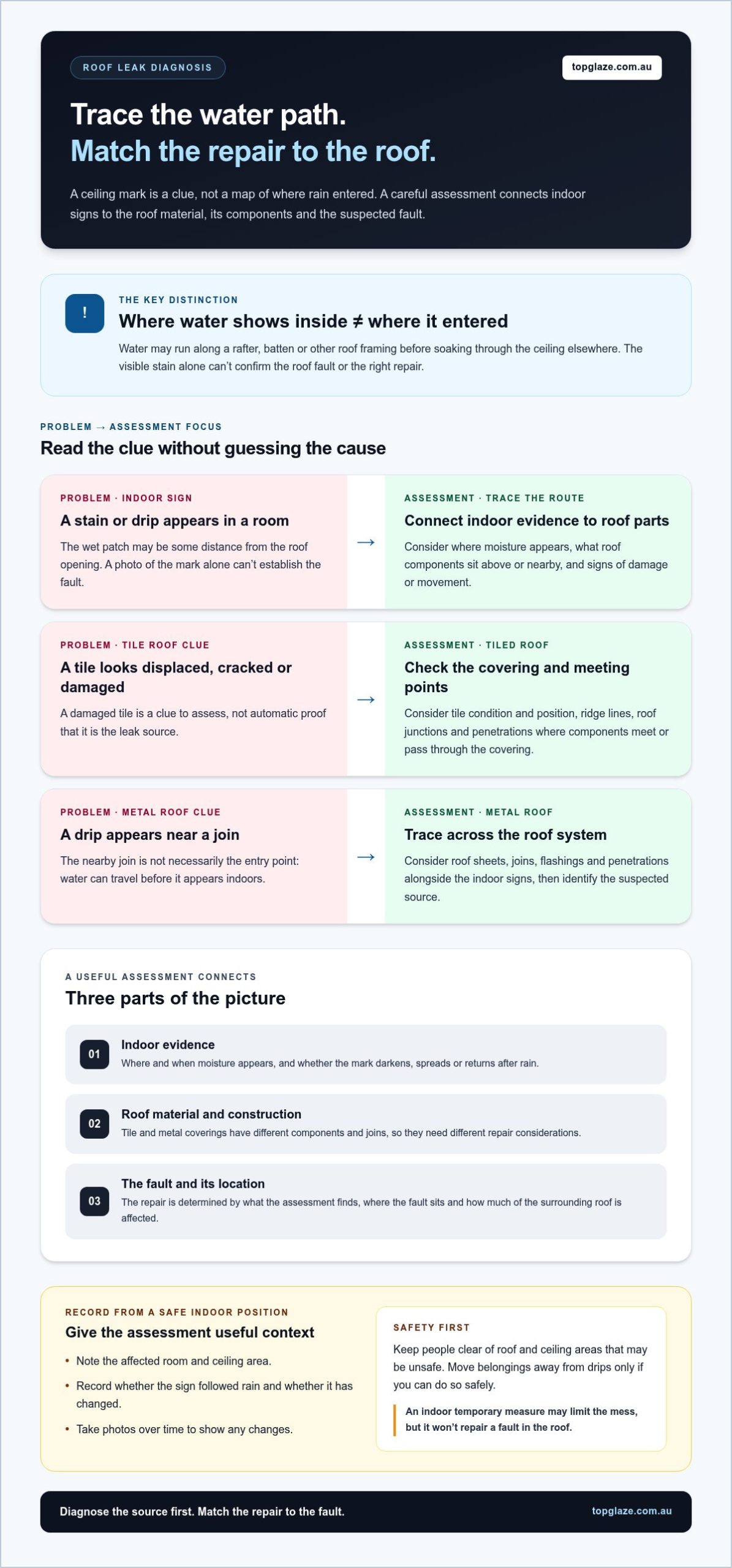
Water can enter at one point, then run along a rafter, batten or other roof framing before soaking through the ceiling elsewhere. As a result, a stain may appear far from the opening where rain first got in. A photo of the indoor mark alone can’t establish the roof fault or determine the right repair.
An assessment may consider the roof covering, junctions where surfaces meet, and penetrations such as vents or skylights. Damaged tiles or metal roofing may also need attention, but the visible symptom won’t confirm which component is involved. Note the affected room and ceiling area, whether the sign followed rain, and whether it has changed. This gives a roofing specialist useful context without putting you at risk on the roof.
How roof leak diagnosis works on Melbourne tile and metal roofs
Diagnosis means tracing where water enters and identifying the roof fault behind it. The mark inside a room is a useful clue, but it isn’t a map of the route rainwater has taken. The visible leak location alone doesn’t establish where water entered. A careful assessment considers the roof covering, junctions, penetrations and indoor evidence together, then matches those clues to the roof’s material and construction.
This helps avoid choosing a repair based on guesswork. Water may pass beneath a roof covering or follow a roof component before becoming visible indoors. An inspection looks at where moisture appears, which roof parts sit above or nearby, and whether there are signs of damage or movement. A photo can help explain the symptoms, but it can’t show the whole path or confirm the fault by itself.
Tile and metal roofs need different assessments because their coverings and joins are built differently. Roof leak repair melbourne homeowners arrange should be based on the roof material and the fault found, not a one-size-fits-all patch.
What an inspection looks for on a tile roof
On a tiled roof, displaced, cracked or damaged tiles are clues to assess, not automatic proof of the leak source. The inspection may also consider ridge lines, roof junctions and penetrations, where different components meet or pass through the covering. The condition and position of each part help build a clearer picture. For more background on tiled roof components, see the Professional Roof Tiling Guide for Melbourne Homeowners.
What an inspection looks for on a metal roof
For metal roofing, the assessment considers the roof sheets, joins, flashings and penetrations alongside the indoor signs. A drip near a join doesn’t prove that the join is the entry point, as water can travel before it shows inside. The suspected source needs to be traced. Once the roof material and fault have been assessed, a suitable repair can be determined.
In practical terms, diagnosis connects the indoor evidence to relevant parts of the roof, then helps distinguish a damaged covering from an issue at a junction or penetration. The same ceiling mark could lead to different repair considerations on a tile roof and a metal roof. Top Glaze Roofing Systems works on residential tile and metal roofs in Melbourne. Learn more about Top Glaze residential roof repairs.
Roof leak repair options: matching the fix to the roof fault
The right repair depends on what the assessment finds, where the fault sits and how much of the surrounding roof is affected. A small ceiling stain doesn’t necessarily mean the roof issue is small. Water can travel before appearing indoors, and visible damage may not show the full extent of the fault.
Use the examples below as a guide to the repair considerations an inspection may raise, not as a diagnosis. Tile and metal roofs have different components, so one repair method won’t suit every roof.
| Possible fault identified | Possible repair focus | When further assessment matters |
|---|---|---|
| Cracked, displaced or damaged roof tile | Assess the affected tile and nearby roof area to determine whether a localised repair is suitable. | If several tiles or surrounding sections show deterioration, the issue may extend beyond one spot. |
| Fault at a tile roof ridge, junction or penetration | Examine where the roof components meet and determine the repair needed for that detail. | If moisture appears in more than one area, the route and extent need closer assessment. |
| Issue involving metal roof sheets or joins | Trace the suspected entry point and assess the relevant sheet, join or adjoining components. | If deterioration appears across multiple sections, consider the roof’s broader condition. |
| Fault around flashing or a roof penetration | Assess the connection between the roof covering and the opening or junction. | If the source isn’t clear, symptoms alone aren’t enough to select a repair. |
When a targeted roof repair may be appropriate
A localised repair may suit a clearly identified fault when the surrounding roof material is in suitable condition. A specialist assesses the fault and nearby components before recommending work, rather than simply covering the point where water appeared indoors. The repair should address the diagnosed cause, and its suitability can’t be established before the roof is inspected.
For homeowners comparing repair approaches, Expert Roof Repairs Melbourne: Protecting Your Home from Victoria’s Volatile Weather offers related guidance on residential roof repairs.
When restoration or replacement may need consideration
If an assessment finds deterioration across a wider area, a single repair may not address the roof’s overall condition. Restoration may be appropriate where broader remedial work is needed, while replacement may be considered if the roof’s condition calls for a more extensive solution. These options differ from fixing one specific leak. The recommendation should reflect the roof as inspected, not the size of the ceiling stain alone.
Roof leak repair melbourne homeowners arrange should begin with a clear diagnosis, then match the work to the fault and roof material. Top Glaze repairs residential tile and metal roofs, with the approach guided by the condition found during assessment.
Staying safe while organising Melbourne roof leak repairs
A leak needs attention, but getting onto a wet roof or trying to seal a suspected entry point can put you at greater risk. Start indoors and take these steps in order. Prioritise keeping people safe, limiting damage where practical and giving a roofing specialist useful information.
- Protect people first. Keep household members and pets away from wet floors, active drips and any ceiling that’s sagging, cracked or visibly compromised. Don’t stand beneath a bulging ceiling or touch water near lights, power points or electrical appliances. Treat water near electrical fittings as an immediate safety concern: keep clear and seek urgent help if there’s danger. Don’t handle wet electrical equipment.
- Contain water only where it’s safe. Move furniture and valuables away from the affected area if you can do so without walking through standing water or entering an unsafe space. Put a bucket beneath a drip only if it’s practical and doesn’t require reaching under a damaged ceiling. Don’t puncture plaster or try to catch water from a sagging section.
- Document what you see. From a safe indoor position, note where moisture appears and whether it changes during rainfall. Take photos of indoor marks or drips, and record when they occur. Don’t climb a ladder or go onto a wet or damaged roof for a closer look.
- Arrange a professional assessment. Share your notes and any safe, ground-level photos of visible exterior concerns. A roofer can assess the roof and determine the fault before recommending a repair. Avoid risky DIY patches, which can expose you to falls and may not address the source.
How to limit indoor disruption without taking roof risks
Keep the affected area clear so no one accidentally walks beneath a compromised ceiling. Move belongings only if the route is safe, and avoid shifting anything that requires standing under a sagging section. A simple record of the leak’s location and any changes during rainfall can help explain the problem without putting you on the roof.
What information helps a roofer assess the leak
Note whether the leak starts during rain, follows a particular change in weather or returns after earlier repairs. Share where water appears indoors and whether the mark has grown. If you’ve photographed something outside from ground level, provide that too. Describe what you’ve observed plainly. You don’t need to identify the fault yourself.
Good preparation helps make a roof leak repair melbourne assessment more informed while keeping the household away from avoidable hazards. Once everyone is safe and you’ve recorded the signs, Explore Top Glaze roof repair services to learn how residential roof repairs can address the diagnosed issue.
How Top Glaze approaches residential roof leak repair in Melbourne
A roof leak is easier to address when the repair starts with a clear understanding of the problem. Top Glaze’s residential process moves from your reported symptoms to a roof assessment, then to a repair recommendation based on the fault found. The aim is to address the roof’s actual condition, not simply cover the first visible sign of water.
Sharing when the leak occurs, which rooms are affected and whether it has happened before gives useful context. The roof itself also needs to be assessed, because a ceiling mark alone can’t show whether the issue involves a tile, metal roofing or a roof junction.
- Understand the symptoms. Explain what you’ve noticed, when it appears and whether the signs have changed or returned.
- Assess the roof. Consider the roof material, the suspected area and its surrounding components to identify the fault.
- Determine suitable work. Use the assessment to guide whether a roof repair is appropriate or broader work needs consideration.
A considered repair for tile and metal roofs
Top Glaze repairs residential tile and metal roofs, so the assessment can account for their different materials and construction. The recommendation follows the identified fault and the condition of the surrounding roof, rather than assuming the same method suits both materials. Decisions about repair, restoration or replacement are guided by the roof assessment.
This approach is useful for Melbourne homeowners because an indoor symptom may not reveal the roof component involved. The roof needs to be understood as a whole before the appropriate scope of work is set. A local repair may suit one diagnosed fault, while deterioration across a wider area may call for broader consideration. The assessment provides the basis for deciding which option fits.
Local experience and residential project reassurance
Top Glaze is a family-owned business serving Melbourne and the Mornington Peninsula. Founded in 1987, the company has more than 30 years of roofing experience, with residential work on both tile and metal roofs. This local, material-specific experience informs assessments of the roof systems found on homes across the region.
For homeowners arranging roof leak repair melbourne services, clear information about the work matters too. Top Glaze states that its workmanship is licensed and that all residential projects are backed by a 10-year warranty. These project assurances complement the essential first step: identifying the leak’s cause and choosing work suited to the roof.
Ready to take the next step after a leak? Arrange a roof repair with Top Glaze. A professional assessment can establish what the roof needs and help you move forward with a considered repair plan.
Take the next step towards a sound roof
A roof leak can feel like one more thing to manage, but you don’t have to work out the cause on your own. A professional assessment gives you a clearer basis for deciding what to do next, whether that means addressing a localised fault or considering the roof more broadly.
Keep a note of any changes you notice and share them during the assessment. With a clear picture of the symptoms and the roof’s condition, roof leak repair melbourne homeowners arrange can be guided by the actual fault, not guesswork. That’s a more considered starting point for protecting your home through Melbourne’s changing weather.
Top Glaze can help with residential roof repairs. Arrange a residential roof repair with Top Glaze and move towards a clearer plan for your home.
Frequently Asked Questions
Can a roof leak happen without a visible ceiling stain?
Yes, water can enter the roof space without immediately reaching the ceiling surface. It may be absorbed by insulation or timber, or remain in a concealed area before becoming noticeable indoors. If you notice a musty smell, dampness in the roof space or a change in indoor humidity, make a note of it. These signs don’t confirm a leak, but they’re useful information for a professional assessment.
What should I do first when my roof starts leaking?
First, keep people away from water near electrical fittings and any ceiling that looks swollen or unstable. If it’s safe, move belongings from the affected area and place a container beneath a drip without standing under damaged plaster. Record when the leak occurs and photograph changes from a safe position. Then arrange a professional roof assessment rather than attempting to access the roof yourself.
Can I repair a leaking roof myself?
Don’t climb onto a roof to make a DIY repair, particularly in wet or windy conditions. Roof surfaces can be slippery, and damaged areas may not support your weight. Indoor steps such as moving valuables or catching a drip can help if they’re safe, but sealants or patches applied without identifying the fault may not address the water entry point. A roofing specialist can assess the roof and determine suitable work.
Does home insurance cover roof leak repairs in Australia?
It depends on your insurer, policy wording and the cause of the damage. A sudden event may be treated differently from a leak linked to gradual wear, poor maintenance or an existing fault, but only your insurer can assess your circumstances against your policy. Check the policy documents and contact your insurer before authorising work you expect to claim. Keep records and photos, and ask what evidence they require.
How long does roof leak repair take in Melbourne?
There isn’t one timeframe for every Melbourne roof leak repair. The duration depends on the fault, the roof material, the extent of affected areas and the work required. Weather and safe access can also affect when roof work can proceed. Once the roof has been assessed, the specialist can explain the proposed scope and expected timing for your particular job, rather than offer a misleading estimate before seeing the roof.
Can heavy rain make a small roof leak worse?
Yes, heavier or longer rainfall can increase the amount of water reaching a vulnerable point, making an intermittent leak more noticeable or causing indoor damage to spread. Wind can also drive rain towards parts of the roof that are less exposed in calmer conditions. If a drip increases during a storm, focus on household safety and record the change from indoors. Don’t go outside or onto the roof to investigate in dangerous weather.
Does a leaking roof always need to be replaced?
No, a leak doesn’t automatically mean the whole roof needs replacing. If an assessment finds a localised fault and the surrounding roof remains suitable, a targeted repair may be appropriate. More widespread deterioration can lead to consideration of restoration or replacement instead. The decision depends on the roof’s actual condition, not simply the presence of water indoors. An inspection helps establish the right scope before work is recommended.


