

A gutter leak is rarely just a gutter problem. Overflowing water or a drip near the eaves can point to a blockage, a damaged section or a wider drainage issue. Left unchecked, escaping water may affect fascia, eaves and nearby walls. For gutter repairs Melbourne homeowners can rely on, start by noting where water appears and when the problem occurs.
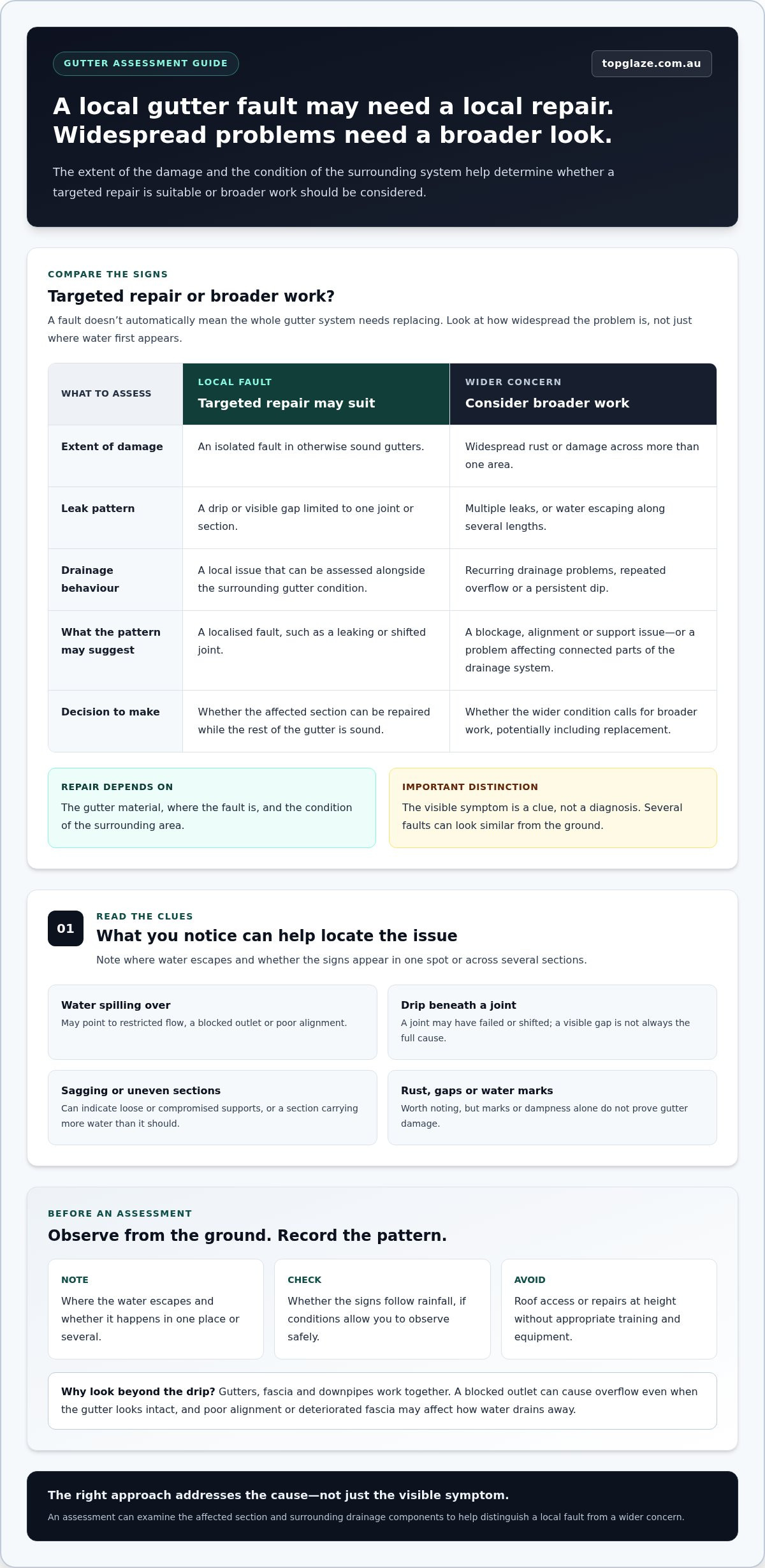
It’s understandable to wonder whether a repair will hold or if the whole system needs replacing. An isolated fault in otherwise sound gutters may suit a targeted repair, while widespread rust, multiple leaks or recurring drainage problems may call for broader work. The right approach addresses the cause, not just the visible symptom.
In this guide, you’ll learn how to spot common gutter damage, judge how urgently it needs attention and understand when repair may be suitable instead of replacement. We’ll also explain what to expect from a professional assessment. Top Glaze Roofing Systems is a family-owned Melbourne roofing specialist, founded in 1987, providing residential gutter and fascia repairs across Melbourne and the Mornington Peninsula.
Key Takeaways
- Overflowing water, dripping joints, sagging sections, rust and water marks can help pinpoint where a gutter needs attention.
- Debris, failing joints, corrosion, impact and loose or misaligned sections can all disrupt how roof water drains away.
- A fault doesn’t automatically mean full replacement. The extent of damage and condition of the surrounding system help determine whether gutter repairs melbourne are suitable.
- Observe gutter symptoms from the ground and note where they occur. Avoid roof access or repairs at height without appropriate training and equipment.
- A local assessment can clarify suitable repairs to residential gutters and fascia.
Gutter Repairs Melbourne: Which Warning Signs Should You Take Seriously?
Visible gutter problems are easier to address when their source is identified. Water spilling over an edge, a drip at a joint or a section that appears to dip can each point to a different fault. Look for patterns rather than assuming every symptom has the same cause. A blocked outlet may slow drainage, while a leaking joint or poor alignment can let water escape before it reaches the downpipe.
Melbourne’s changing weather makes reliable roof drainage especially valuable. During heavy rain, a gutter that can’t collect and direct water effectively may overflow towards the eaves or run down the outside of the home. A rain gutter is part of a system that channels roof water away, so a visible fault can be a reason to look beyond the spot where water appears.
How can you tell your gutters need attention?
From the ground, look for drips beneath joints, dark marks below the gutter line, water spilling over during rain or damp-looking eaves. Rust patches, visible gaps and sections that seem to sag are also worth noting. If one area leaks, the fault may be localised. Repeated overflow along a length of gutter or a persistent dip can suggest a blockage, alignment issue or support problem that needs closer assessment.
Observe from a safe position at ground level, including during or shortly after rainfall if conditions allow. Note where water escapes and whether it happens in one spot or several. Don’t climb onto the roof to inspect the gutter or attempt repairs at height without appropriate training and equipment. Clear observations can help a professional identify where to investigate without putting you at risk.
Why gutter faults can affect more than the roofline
When water doesn’t flow through the gutter and downpipe as intended, it can spill onto fascia and eaves or track down nearby walls. Repeated wetting may leave stains and expose building surfaces to ongoing moisture. A blocked outlet can cause overflow even if the gutter itself looks intact, while a failed joint may leak in one concentrated spot. The visible symptom doesn’t always reveal the underlying cause.
Water marks or dampness can also have more than one possible source, so they aren’t proof of gutter damage on their own. Their location, whether they appear after rain and any nearby overflow or dripping can all help guide an assessment. Sealing an obvious drip without addressing restricted flow or poor alignment may leave the same problem to return.
An early gutter assessment can identify where water is escaping and limit how long fascia, eaves and nearby walls are exposed to it. If you’re weighing up gutter repairs melbourne homeowners can rely on, note the symptoms and where they occur. This gives an experienced local team a clearer picture and helps distinguish a local fault from a wider drainage concern.
What Causes Gutter Damage in Melbourne Homes?
Gutter damage is any fault that interferes with collecting, carrying or discharging roof water. A leak is one possibility, but poor flow can also stem from a blocked outlet, a shifted section or a problem with the supports. The visible symptom is a useful clue, not a diagnosis. Several faults can look similar from the ground, so the cause needs to be assessed before choosing a repair.
Melbourne homes face leafy debris, changing weather and exposure that can gradually affect gutter materials and fixings. Understanding how the parts work together helps explain why a fault in one area may affect drainage elsewhere.
Leaks, joints and corrosion: what may be happening?
Joints connect gutter lengths and can become leak points if they fail or shift. Holes or deteriorated areas may also let water escape before it reaches the downpipe. Corrosion can weaken metal, while impact from a branch or another object may leave a dent or displace a section. The right repair depends on the gutter material, the location of the fault and the condition of the surrounding area.
Sealant isn’t a universal or permanent answer. If water is escaping because a joint has moved, the gutter is poorly aligned or the surrounding material has deteriorated, covering the visible gap may not resolve the underlying issue. An assessment should establish whether the fault is localised and which repair method suits the affected section.
Overflow, sagging and drainage problems
Leaves and other debris can restrict flow, while a blocked outlet may prevent water from entering the downpipe. Poor alignment can leave water sitting or moving towards the wrong point. Sagging may indicate loose or compromised supports, or that a section is carrying more water than it should. It’s a reason to investigate, not proof of one particular cause.
Gutters, fascia and downpipes work together as parts of the roof drainage system. If fascia has deteriorated or gutter supports have loosened, the gutter may become unstable or sit out of position, affecting how water reaches the outlets. A professional assessment can examine these connected components rather than treating overflow or a leak as an isolated surface problem.
From the ground, note whether the problem appears along one short section or across several lengths, whether it follows rainfall and whether the gutter looks uneven. These observations help guide an inspection, but they can’t confirm what’s happening behind the gutter or at its fixings. Avoid climbing up to examine supports yourself. The linked OSHA fall protection standards are US rules, not Australian requirements, but they underline the need for careful safety planning when working at height.
If a gutter fault keeps returning or you can’t tell whether the problem is isolated, Top Glaze provides residential gutter and fascia repairs across Melbourne and the Mornington Peninsula. An experienced assessment can help identify the cause and clarify suitable work. Explore residential gutter repairs as a next step.
Gutter Repair or Replacement: How to Tell Which Is More Suitable
A visible fault doesn’t automatically mean every gutter needs replacing. If damage is confined to one section and the rest of the system remains sound, a targeted repair may be suitable. If deterioration appears across multiple sections, leaks keep returning or the gutter can’t direct water reliably, broader work may need consideration. Base the decision on the condition of the affected area and surrounding system, not just the most obvious mark or drip.
There isn’t one rule that settles every case. A professional assessment considers the gutter material, extent of damage, condition of nearby sections and supports, and how water moves through the system. This helps clarify whether a local repair is appropriate or replacement may be the more practical option.
When a targeted gutter repair may be appropriate
A localised defect in an otherwise serviceable gutter may be suitable for repair. For example, one damaged joint or a limited area of deterioration may be addressed without replacing sound sections. The suitable method depends on the fault and material, so the affected area should be assessed before deciding what work is appropriate. The surrounding gutter and drainage also need consideration before treating a repair as a lasting solution.
When broader gutter work may need consideration
Widespread deterioration, several recurring leaks or persistent drainage problems can point to a system-wide issue rather than a single defect. The condition of the fascia and gutter supports matters too. If they’re compromised, they may affect how securely the gutter sits and how effectively it carries water. In those circumstances, replacing some or all of the system may warrant consideration alongside repair options.
Isolated damage may suit a targeted repair; widespread deterioration or repeated failures may call for broader work. That distinction is a useful starting point, not a substitute for checking the gutter’s overall condition. A repair that addresses one visible fault may leave other weak areas untouched, while replacing sound sections unnecessarily may not be the most suitable approach.
An assessment considers the condition of each affected section alongside the system’s water flow. This helps distinguish a local defect from a recurring problem linked to multiple sections, supports or fascia. It also gives the homeowner a clearer explanation of the recommended scope of work, rather than a decision based on appearance alone.
- Repair may be suitable: damage appears limited, and the surrounding gutter remains in serviceable condition.
- Broader work may be suitable: deterioration is widespread, problems recur, or supports and fascia affect stability.
- Assessment is needed: the cause or extent of the fault isn’t clear from visible symptoms.
For gutter repairs melbourne homeowners should consider both the immediate fault and the condition of the wider drainage system. If replacement is being considered, the gutter replacement guide explains that option in more detail. Comparing repair and replacement helps keep the recommendation grounded in the actual condition of the home’s gutters.
Before Gutter Repairs: Safe Steps for Homeowners
You can help make a gutter assessment more focused without going near the roof. Start with what’s visible from the ground, then record when the problem occurs and where water appears. This gives the repair team useful context while keeping you clear of risky roof access.
Use this simple checklist:
- Observe from the ground. Look for visible overflow, drips, uneven sections or water marks from a safe position.
- Note the pattern. Record which area is affected and whether it happens during steady rain, heavier rain or after rainfall.
- Arrange an assessment. Share your observations and any clear photos taken safely from ground level.
Don’t climb onto the roof or attempt repairs at height without appropriate training and equipment. A ladder or wet surface can create serious risk, and an unsafe inspection isn’t worth the extra detail. If you can’t see the gutter clearly from the ground, leave the closer inspection to a professional.
How to prepare useful information for an assessment
Be specific about where you noticed a leak or overflow, when it happened and whether the same area has shown the problem before. Note visible water marks around the fascia, eaves or nearby walls, and take photos only if you can do so safely from the ground. These observations help focus the assessment, but they don’t confirm the cause or replace a proper inspection.
A short record can be more helpful than a guess. For example, noting that water spills over one corner only during heavy rain gives the team a clear starting point. The Melbourne roof gutter checklist offers broader guidance on what to observe around your home’s roof drainage.
What happens during professional gutter repairs?
A professional assessment looks at the affected gutter section, its supports and nearby fascia, then considers how water travels towards the downpipe. The repair scope should reflect the observed cause and condition of the components, rather than simply covering the visible symptom. This helps clarify whether the issue appears localised or needs broader attention.
Top Glaze Roofing Systems provides residential gutter and fascia repairs across Melbourne and the Mornington Peninsula. Its family-owned team has more than 30 years of residential roofing experience. If the assessment also points to a roof fault, professional roof repairs in Melbourne may provide useful related context.
For a clear assessment of your home’s gutter or fascia concern, arrange professional gutter repairs in Melbourne with Top Glaze.
Arrange Gutter Repairs in Melbourne with an Experienced Local Team
Gutter trouble can be unsettling, especially if you’re unsure whether water is escaping from one joint or the wider system needs attention. You don’t need to identify the technical cause before arranging an assessment. Explain what you’ve noticed, such as a leak, overflow or sagging section, and an experienced team can investigate the gutter and fascia before outlining suitable work.
Top Glaze Roofing Systems is a family-owned Australian roofing specialist, founded in 1987, with more than 30 years of residential roofing experience. The team provides residential gutter and fascia repairs across Melbourne and the Mornington Peninsula. Its local experience is a practical starting point for understanding how a gutter fault may affect the roofline and the flow of rainwater away from your home.
What a clear repair recommendation should explain
A useful recommendation should describe the observed fault, which components are affected and what work is proposed. It should explain how the work addresses the drainage issue, rather than simply covering a visible mark or leak. The repair scope should reflect the condition of the gutter, fascia and related parts, so you can understand why that approach is suitable for your home.
Share the symptoms you’ve observed and ask for the proposed work to be explained in plain English. The cause may not be obvious from a ground-level view, and an assessment helps distinguish what’s visible from what needs attention. A considered recommendation gives you a clearer basis for deciding how to protect the roofline.
Take the next step to protect your roofline
Whether you’ve noticed a drip, water spilling over the edge or a gutter that appears to dip, describe what you’ve seen and where it occurs. You don’t need to name the fault or determine whether repair or replacement is right. An assessment can help identify the issue and set out suitable next steps for your residential gutter or fascia.
Addressing a gutter problem thoughtfully can help limit ongoing water exposure to fascia, eaves and nearby walls. A clear explanation of the cause and repair scope also helps you understand how the proposed work supports drainage, rather than treating only the symptom. Top Glaze brings established local experience to residential gutter repairs Melbourne homeowners need to protect their homes.
Arrange a gutter repair assessment with Top Glaze Roofing Systems.
Give Your Roofline a Clear Next Step
You don’t need to settle on repair or replacement before seeking advice. A considered assessment can turn an uncertain symptom into a clearer decision, based on the gutter’s condition and how it handles water. That gives you a practical way forward rather than relying on a quick fix that may not address the source of the trouble.
If you’re considering gutter repairs melbourne homeowners can arrange a residential gutter and fascia assessment with Top Glaze. Describe what you’ve noticed, and the team can assess the issue and explain suitable work in straightforward terms. You can take the next step without knowing the technical cause in advance.
Arrange a gutter repair assessment to move towards a clearer plan for protecting your home. A calm, informed decision starts with understanding what your gutters need.
Frequently Asked Questions
Can gutters be repaired without replacing the whole system?
Yes, a localised fault may be repairable without replacing sound sections of the gutter system. For example, a defect confined to one joint may need attention only in that area, depending on the material and surrounding condition. The assessment should also consider whether nearby sections and fixings are still serviceable. If the same issue appears in several places, the scope may need to be broader than a single repair.
What causes gutters to leak?
Gutters can leak through failed joints, holes, corrosion or sections that have shifted out of position. Debris or a blocked outlet can also disrupt water flow, causing water to escape over the edge rather than through a visible hole. For instance, a drip near a corner could relate to a joint, but the water may be travelling from another point. The leak location is a clue, not necessarily the source.
How urgent are gutter repairs after heavy rain in Melbourne?
Arrange an assessment promptly if heavy rain is followed by continuing drips, fresh water marks, overflow or dampness near the roofline. Note whether the symptoms stop once the rain eases or continue afterwards. If water is entering living areas or causing active damage, treat it as a priority and keep clear of wet roof areas. Don’t climb up to inspect the gutter yourself.
Can I seal a leaking gutter myself?
Applying sealant yourself may not address the underlying fault, and it can be unsafe to reach gutters from a ladder or roof. A leak might be caused by a shifted joint, corrosion or water backing up behind a blockage, so covering the visible spot may not resolve it. Avoid repairs at height without appropriate training and equipment. A professional can assess the material and cause before recommending a suitable repair.
How do I know whether my gutters need repair or replacement?
A professional assessment is the clearest way to compare the options. A contained defect in an otherwise sound system may be suitable for repair; widespread deterioration, recurring failures or compromised supports may point towards broader work. Note which sections show trouble and whether the issue returns after rainfall. For gutter repairs Melbourne homeowners should look beyond the visible defect and consider the condition and drainage performance of the full affected area.
Do gutter repairs include fascia repairs?
They can, if the assessment finds that fascia is damaged or affecting the gutter’s stability. The gutter and fascia sit together along the roof edge, so the condition of one can influence the other. For example, a loose gutter may need its support and adjoining fascia checked before the repair scope is clear. Top Glaze provides residential gutter and fascia repairs, with suitable work based on the condition of the affected components.
What should I do if my gutters are overflowing but there is no visible leak?
Overflow without a visible leak can indicate restricted flow rather than a hole in the gutter. From the ground, note where the water spills over and whether it happens near an outlet or along a longer section. A blocked outlet, debris or poor alignment may be contributing. Don’t reach into the gutter or climb up to clear it. Arrange an assessment to identify why water isn’t draining away properly.


