

Could your roof be hiding a thousand-dollar problem behind a bit of harmless-looking moss? For many Melbourne homeowners, the first sign of a failing roof isn’t a missing tile, but a damp patch on the ceiling during a heavy midnight downpour. Investing in quality roof tile roofing is one of the smartest decisions you can make for your property, but it’s not a set-and-forget asset.
We understand the anxiety that comes with seeing lichen growth or wondering if your terracotta tiles are becoming porous after decades of exposure to our local elements. You want a home that stays dry and maintains its kerb appeal, without the constant worry of what the next storm might bring. This guide provides the clarity you need to manage your roof with confidence. We’ll explore the essential differences between terracotta and concrete tiles, how to identify early signs of failure before they become emergencies, and the best ways to maintain your roof for the unique Melbourne climate.
Key Takeaways
- Understand the key structural differences between terracotta and concrete tiles to choose the most durable material for your home’s specific needs.
- Learn how to spot the early warning signs of tile porosity and structural fatigue caused by Melbourne’s unpredictable weather patterns.
- Discover how regular maintenance and professional restoration can significantly extend the life of your roof tile roofing without the need for a full replacement.
- Identify why thermal mass properties make tiled roofs the ideal choice for naturally regulating indoor temperatures throughout the Victorian seasons.
- Gain expert insights into preventing water back-flow and internal damage through strategic guttering and leaf guard solutions.
What is Roof Tile Roofing and Why Does it Dominate Melbourne Suburbs?
If you take a drive through any established suburb in Melbourne, from the leafy streets of Camberwell to the coastal homes of Brighton, you’ll see a sea of pitched roofs. Most of these properties utilise roof tile roofing, a modular system designed for extreme durability and thermal performance. But what are roof tiles? At their core, they are individual units made from either kiln-fired clay or high-strength concrete. These tiles are laid in a precise, overlapping pattern to create a weather-tight shield that protects your home from the harshest elements.
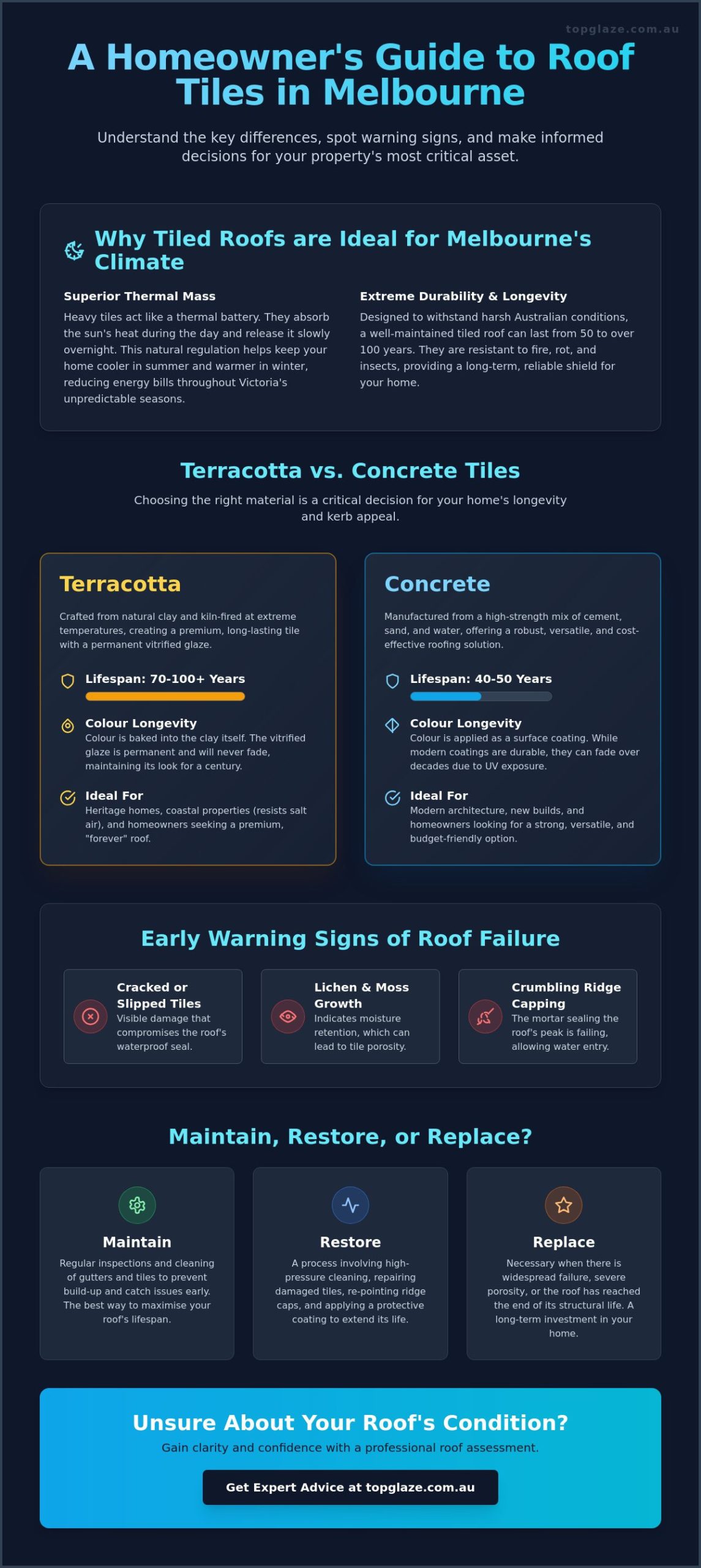
This style of roofing dominates the local landscape for a very good reason: thermal mass. Melbourne’s climate is famous for its sudden shifts, often delivering four seasons in a single afternoon. Heavy tiles act like a thermal battery. They absorb heat during a scorching January day and release it slowly as the temperature drops at night, helping to keep your living spaces comfortable. When installed correctly and maintained with care, a tiled roof is a legacy feature for a home. It’s common to see well-kept tiles lasting between 50 and 100 years. It is vital to view this as a complete system rather than just a collection of covers. A functional roof includes the timber or steel battens the tiles sit on, the sarking underneath, and the flexible pointing that seals the ridge caps.
The Aesthetic Versatility of Tile Profiles
The profile of a tile refers to its shape, and this choice affects more than just your home’s kerb appeal. Flat profiles offer a sleek, minimalist look that’s popular in contemporary Melbourne architecture. Semi-flat and raised wave profiles, frequently seen on Federation-style homes, provide a classic, textured appearance. These waves aren’t just decorative; they create deep channels that manage water runoff speeds during heavy Victorian downpours. Choosing the right profile ensures your home matches its architectural era while directing water safely toward your guttering.
The Role of Sarking in Modern Tiling
While the tiles are your primary defence, sarking is the silent protector underneath. This is a layer of reflective foil laminate installed under the battens. It serves as a secondary water catchment, directing any moisture that might blow under the tiles during a storm safely into the gutters. It also provides a vital radiant heat barrier, which is essential for home insulation. For any modern roof tile roofing installation, sarking is a non-negotiable component that provides an extra layer of security against leaks and high energy bills.
Terracotta vs. Concrete: Choosing the Right Material for Your Home
Deciding between terracotta and concrete is the most common crossroad Melbourne homeowners face when planning their roof tile roofing project. Both materials offer exceptional protection against our local elements, yet they serve different architectural needs and long-term goals. While terracotta is often viewed as the premium, “forever” option, concrete provides a robust and versatile alternative that has become a staple of modern Victorian suburbs.
One factor often overlooked in generic guides is the weight implication for older Melbourne homes. Both tile types are significantly heavier than metal alternatives. This means your underlying timber frame must be structurally sound to support the load safely. Professional installers must adhere to strict Australian standards for roof tiling to ensure the weight is distributed correctly across your home’s load-bearing walls. If you are concerned about the integrity of your current structure, a professional assessment of your roofing system can provide the clarity needed before you commit to a specific material.
Terracotta: The Premium Melbourne Choice
Terracotta tiles are crafted from natural clay and fired in kilns at temperatures often exceeding 1,000 degrees Celsius. This intense process creates a permanent vitrified glaze that will never fade, even after a century of exposure to the harsh Australian sun. For residents in the Mornington Peninsula or bayside areas, terracotta is the gold standard due to its natural resistance to salt air corrosion. These tiles also offer a unique breathability that helps manage moisture levels within the roof cavity, preventing the stagnant heat build-up common in older properties.
Concrete: Strength and Modern Flexibility
Concrete tiles are manufactured from a high-strength mix of cement, sand, and water. Unlike most materials that degrade over time, concrete actually continues to harden and gain strength for years after installation. They feature a sophisticated interlocking design that provides superior wind resistance during Melbourne’s wild spring storms. While concrete is more cost-effective than terracotta, it’s important to understand the maintenance trade-off. The colour is a surface coating rather than a through-and-through glaze. Over 20 to 30 years, this coating will naturally weather and fade, meaning the tiles will eventually require a professional recoat to maintain their appearance and water resistance.
Common Issues with Roof Tile Roofing in the Melbourne Climate
Melbourne’s weather is notoriously fickle, often delivering “four seasons in one day.” This constant temperature cycling is the primary enemy of roof tile roofing. When the sun beats down on a thirty-degree afternoon only for a cold front to sweep through an hour later, the rapid cooling causes the tiles to contract sharply. Over decades, this relentless expansion and contraction can lead to hairline fractures and structural fatigue that often goes unnoticed until the first major leak appears.
While many homeowners focus on visible damage, the real “silent killer” of a tiled roof is porosity. As concrete tiles age and their protective coatings weather away, the material begins to act like a sponge. Instead of shedding water into the gutters, the tiles absorb it. This increases the weight load on your timber rafters and keeps the roof cavity damp, which can lead to timber rot and mould. Similarly, moss and lichen growth are more than just an eyesore; they trap moisture against the tile surface and can even grow into the water channels, causing water to “wick” over the side of the tile and into your ceiling space.
The Danger of Cracked and Dislodged Tiles
A single cracked tile might seem insignificant, but it creates a direct path for water to bypass your primary defence. In the high winds common to Melbourne’s storm season, tiles that have become loose or dislodged can move, exposing the sarking or the internal ceiling to direct rainfall. It’s a small problem that, if ignored, quickly escalates into expensive internal repairs. Regular inspections are the only way to catch these minor faults before they become structural emergencies.
Why Ridge Capping and Pointing Fail
The ridge caps are the tiles that sit along the peaks of your roof, and they are held in place by bedding (mortar) and pointing. Historically, this was done with a rigid cement mix. However, because houses naturally move and tiles expand in the heat, this old-style cement eventually cracks and “pops” out. This is known as failed pointing, and it’s one of the most frequent causes of leaks.
Modern roof tile roofing standards now utilise flexible pointing. This is a polymer-based compound that moves with your home rather than cracking under pressure. It’s highly resistant to UV exposure and wind, providing a much more reliable seal. If you notice chunks of mortar in your gutters or visible gaps along your roof peaks, re-pointing is an essential repair that restores the watertight integrity of your entire system.
Maintain, Restore, or Replace: Making the Right Decision
Deciding whether to repair or replace your roof tile roofing is often a matter of timing and structural health. For many Melbourne homes, a full replacement is an unnecessary expense when a professional restoration can add decades to the roof’s lifespan. However, ignoring the small signs of wear can lead to timber rot that eventually makes restoration impossible. The goal is to act while the structural integrity of your home is still intact.
Preventative maintenance is the simplest way to avoid major bills. This includes annual gutter cleaning and the installation of a leaf guard system to prevent water from backing up under the tiles during heavy rain. If your guttering is ageing or damaged, a professional gutter replacement in Melbourne can be a critical first step in protecting your eaves and fascia from overflow damage. Before calling in the experts, you can perform a basic 5-point assessment from the safety of the ground:
- Check the gutters: Look for sand-like granules or chunks of mortar, which indicate tile surface degradation or failed pointing.
- Scan for ‘waves’: Look along the ridgeline for any sagging, which suggests structural issues with the timber battens underneath.
- Look for light: If you have safe access to your roof space, check for pinpricks of daylight or water stains on the rafters.
- Examine the tile surface: Look for heavy moss or lichen growth, which traps moisture against the tile and leads to porosity.
- Inspect the eaves: Check for peeling paint or water marks on the underside of your roofline, as this often signals a slow, hidden leak.
If your tiles are structurally sound but look tired and weathered, a professional Roof Restoration is the most effective path to a leak-free home and improved kerb appeal.
The Roof Restoration Process Explained
A professional restoration begins with a high-pressure clean to remove decades of Melbourne soot, pollution, and moss. Once the surface is clear, any cracked or broken tiles are replaced with matching profiles. The most critical stage involves the ridge caps. We strip away old, brittle cement and re-point the entire roof using a modern flexible compound. This material is designed to move with your home, ensuring the seals don’t crack during the thermal expansion and contraction common in our local climate.
When is it Time for a Full Re-roof?
There are certain conditions where restoration is no longer a viable solution. In older terracotta roofs, we often see “fretting,” where the underside of the tile begins to flake and crumble into a fine powder. Once this process begins, the tile is no longer structurally sound. If the timber battens have rotted due to decades of neglected leaks, a full Roof Replacement is the only way to ensure the safety of your household. While this is a larger investment, it provides a “clean slate” and the opportunity to upgrade your home’s insulation and sarking to modern standards.
Expert Roof Tile Solutions with Top Glaze Roofing Systems
For over 30 years, we’ve stood as a reliable fixture in the Victorian building industry, specialising in the unique demands of roof tile roofing across Melbourne. We aren’t just contractors; we’re your local neighbours who understand that your home is your most significant asset. Our team has encountered every possible challenge, from the salt-sprayed ridges of the Mornington Peninsula to the heritage tiles of the inner eastern suburbs. This deep local presence allows us to provide a level of seasoned authority that distant corporations simply can’t match.
Our commitment to excellence is rooted in the use of premium materials specifically chosen to withstand our volatile climate. We don’t believe in quick fixes or high-pressure sales tactics. Instead, we offer the calm certainty of a professional assessment, ensuring you understand the state of your roof before any work begins. To provide total peace of mind, our workmanship is backed by a 10-year warranty. This reflects our confidence in the longevity of our solutions and our desire to remove homeowner anxiety through proven results.
Our Proven Restoration Method
We approach every project with a methodical, safety-first mindset. A tired roof isn’t just an aesthetic concern; it’s a structural liability. Our process begins with a thorough inspection of the timber battens and sarking. Once safety is established, we move to a high-pressure clean that strips away decades of Melbourne soot and organic growth. We then replace any compromised tiles and finish with our flexible pointing compound. The Top Glaze difference lies in our people. We employ licensed tradesmen who uphold our family-owned values, ensuring every ridge cap is sealed with the precision a seasoned mentor would expect.
Get a Professional Assessment Today
Don’t wait for a damp patch on your ceiling to tell you your roof is failing. Early intervention is the key to avoiding a structural disaster and protecting your kerb appeal. Whether you’re in the heart of the city or down on the coast, our local experts are ready to provide a transparent evaluation of your home’s needs. We value long-term relationships over quick wins, which is why our advice is always honest and focused on your safety. It’s time to trade uncertainty for the peace of mind that comes with a professionally maintained home.
Book your free roof inspection with Top Glaze today and secure the future of your home with Melbourne’s trusted roofing veterans.
Protect Your Most Valuable Asset with Confidence
Your roof is more than just a cover; it’s a complex system designed to shield your family from Melbourne’s most volatile weather. By understanding the distinct needs of terracotta and concrete, and knowing how to spot the early signs of porosity or failed pointing, you can make informed decisions that prevent minor issues from becoming structural disasters. Quality roof tile roofing is a lifetime investment that deserves the care of local experts who know the Victorian climate inside and out.
Top Glaze provides the seasoned authority and neighbourly reassurance you need to manage your home with ease. With over 30 years of local experience, our fully licensed and insured plumbers offer honest assessments and a 10-year workmanship warranty for your total peace of mind. Don’t wait for the next storm to test your home’s integrity. Request a Free Professional Roof Inspection today and let us help you maintain a safe, beautiful, and leak-free home for years to come.
Frequently Asked Questions
How long should a tile roof last in Melbourne?
A well-maintained tile roof in Melbourne typically lasts between 50 and 100 years, depending on the material. Concrete tiles generally have a functional lifespan of around 50 years, while high-quality terracotta can often reach the century mark. The key to longevity is regular maintenance, as the tiles themselves often outlast the mortar and timber battens that support them.
Can I change my roof from tiles to metal?
You can certainly convert your roof from tiles to metal, a process often referred to as a “tile-to-tin” replacement. This is a popular option for homeowners looking to reduce the weight load on their timber structure or achieve a more contemporary aesthetic. It involves removing the existing roof tile roofing, installing new battens, and securing the metal sheets to meet current building standards.
Is it normal for terracotta tiles to have moss on them?
It is very common for terracotta tiles to develop moss and lichen, especially on south-facing roof sections that stay damp during Melbourne’s winters. While some appreciate the aged look, moss isn’t just an aesthetic issue. It traps moisture against the tile and can grow into the laps, causing water to wick over the side and into your roof cavity during heavy rain.
How much does roof tile restoration usually cost?
The cost of a roof restoration varies significantly based on the size of your home, the roof pitch, and the current state of the tiles. Factors such as the number of broken tiles, the condition of the ridge capping, and whether a safety rail is required all influence the final investment. We provide detailed, on-site assessments to ensure you receive an accurate quote tailored to your home’s specific needs.
What is the difference between re-bedding and re-pointing?
Re-bedding is the process of replacing the thick mortar base that holds your ridge caps in place, while re-pointing is the application of a flexible sealant over that mortar. Think of bedding as the structural foundation and pointing as the waterproof seal. Modern flexible pointing is essential for Melbourne homes because it moves with the building, preventing the cracks common in old-style cement.
Does a tile roof need sarking?
While many older Melbourne homes were built without it, sarking is now a standard requirement for new roof tile roofing installations. It acts as a secondary waterproof membrane and a radiant heat barrier. If a tile breaks or water blows under during a storm, the sarking directs that moisture safely into your gutters instead of letting it soak into your ceiling insulation.
Can I paint my own roof tiles?
We strongly advise against DIY roof painting due to the significant safety risks and the specialised equipment required. Achieving a durable finish involves high-pressure cleaning, specific primers for porous tiles, and industrial membrane coatings. Without professional application, DIY paint often peels or flakes within a few seasons, leading to a much more expensive restoration job to fix the damage.
How do I find a matching tile for an old Melbourne home?
Finding matching tiles for heritage or mid-century Melbourne homes often requires sourcing from specialist salvage yards that carry discontinued profiles. Because many local tile patterns have changed over the last 50 years, we use our industry network to locate the exact size and colour required for your repairs. This ensures your roof remains watertight while preserving the original character of your property.


