

Water ingress is the most common building defect found in Australian homes, and it often begins at the very edge of your roofline. You probably don’t spend much time looking up at your eaves until a heavy Melbourne storm reveals a damp patch or peeling paint. It’s natural to feel a sense of worry when you notice these signs, as your home is your most significant investment. Your fascia board acts as the front line of defence against the elements, and keeping it in top condition is essential for your long-term peace of mind.
This guide covers everything you need to know about protecting your roof eaves. We’ll help you identify early signs of rot before they lead to structural damage and explain the differences between materials like treated pine and Colorbond steel. Whether you’re curious about how NCC 2025 regulations affect your roof ventilation or you’re choosing the best material for the Victorian weather, we’ve got you covered. You’ll learn how to spot trouble early and what to look for when choosing a local expert to ensure your home stays dry and secure for years to come.
Key Takeaways
- Understand the vital role your fascia board plays in supporting the weight of your bottom roof tiles and securing your guttering system.
- Compare the benefits of traditional timber versus modern Colorbond steel to select a material that thrives in Melbourne’s unpredictable weather.
- Identify the tell-tale signs of structural rot, like tilting gutters or peeling paint, to catch damage before it spreads to your roof’s frame.
- Learn why regular six-monthly gutter cleaning is the most effective way to prevent moisture from compromising your home’s eaves.
- Gain insight into how professional roof restoration integrates fascia repair to provide a comprehensive, long-term solution for your home.
What is a Fascia Board? The Unsung Hero of Your Roof System
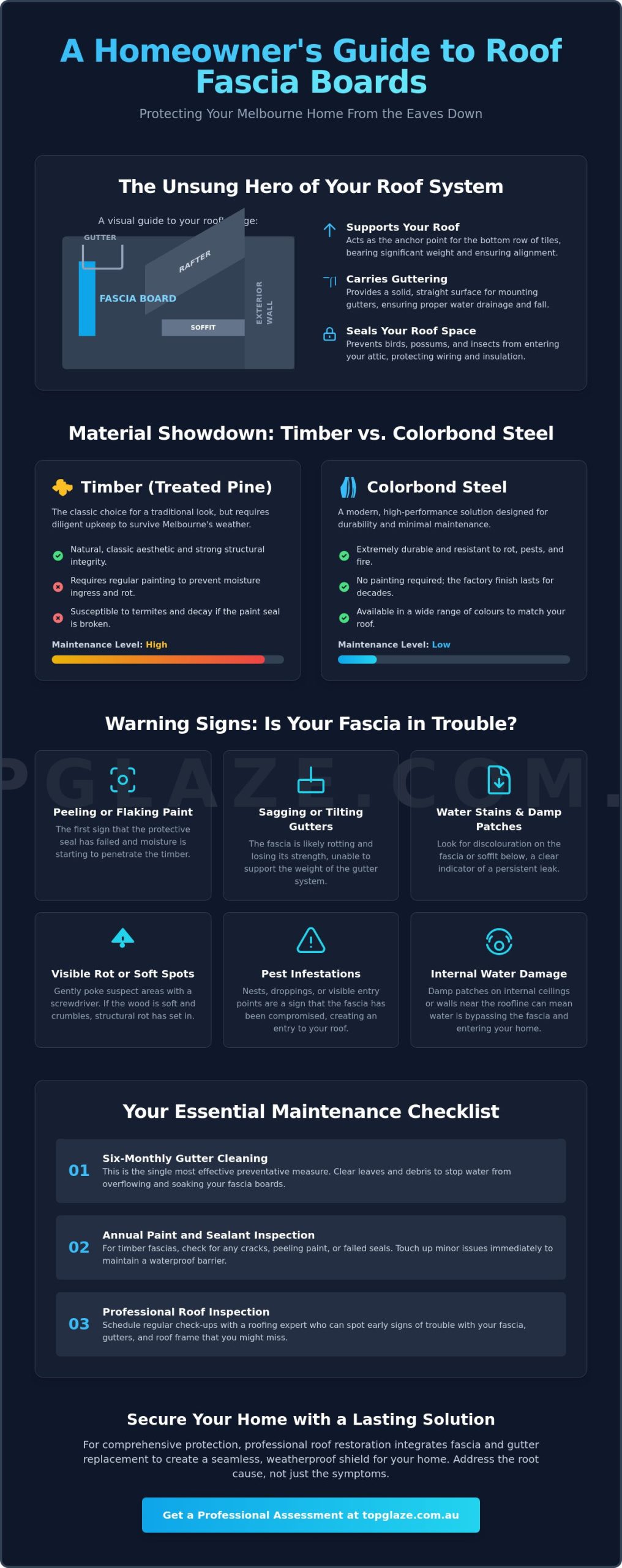
A fascia board is the long, straight board that runs along the lower edge of your roof. It’s fixed directly to the ends of the roof rafters and usually supports the bottom row of tiles while carrying all the guttering. In the broader context of Fascia (architecture), it serves as the finishing edge or “face” of your home’s eaves. Most Melbourne homeowners don’t notice them until something goes wrong, yet they’re one of the hardest-working components of your entire property.
It’s more than just a decorative piece of timber or metal. While it certainly gives your home a clean, finished look, its functional duties are much more critical. It acts as a primary seal for your roof space, preventing birds, rodents, and other pests from making a home in your ceiling. Without a sturdy fascia board, your roof structure is left exposed to the harsh Victorian wind and rain, which can lead to timber rot and expensive structural repairs. Understanding the critical relationship between your roof and fascia is the first step toward keeping your home dry and structurally sound.
Fascia vs. Soffit: Understanding the Difference
Think of the fascia and soffit as an “L” shape at the edge of your roof. The fascia is the vertical face that you see when looking at the house from the street. The soffit is the horizontal board that spans the gap between the fascia and the exterior wall. They work as a team. While the fascia holds the gutters, the soffit often contains vents that allow your roof space to breathe. If you’re inspecting one for damage, you’ll almost always need to check the other, as moisture trapped in the soffit quickly spreads to the fascia.
The Crucial Link Between Fascia and Gutters
During a typical Melbourne downpour, your gutters can become incredibly heavy. A standard gutter filled with water and debris weighs significantly more than most homeowners realise. The fascia board is the structural foundation that bears this entire load. If the fascia is weakened by rot or poor installation, the gutters will begin to sag or tilt forward. This doesn’t just look untidy; it ruins the “fall” of the gutter, causing water to pool and overflow rather than flowing toward the downpipes. A strong, well-maintained fascia ensures your drainage system operates exactly as it was designed to.
Choosing the Right Fascia Board Material for Australian Homes
Melbourne’s climate is notoriously fickle. One day it’s scorching UV rays, the next it’s a heavy coastal downpour. This volatility makes choosing the right fascia board material a decision about long-term protection rather than just simple aesthetics. While traditional homes often rely on timber, modern restorations are increasingly turning to metal and composite alternatives to combat the specific challenges of the Victorian environment.
The material you select dictates how much time and money you’ll spend on maintenance over the next twenty years. When you are learning How to Spot Fascia Board Damage, you’ll often find that the material itself was the primary vulnerability. Here is a breakdown of the most common options available for Australian rooflines:
- Timber: The classic choice that offers structural strength and a traditional finish.
- Metal (Colorbond): A high-performance steel option that is pre-painted and exceptionally durable.
- Composite (WPC): Made from a blend of wood fibres and plastic, offering the look of timber without the rot.
- uPVC: A budget-friendly, lightweight alternative, though it can be prone to thermal expansion in high-heat areas.
Timber Fascias: Natural Beauty vs. Maintenance
In most Melbourne suburbs, H3 treated pine is the industry standard for timber eaves. The “H3” rating means the wood is treated for external use above ground, making it resistant to termites and moderate decay. However, timber is a living material. It expands and contracts with the seasons. To keep a timber fascia board healthy, you must maintain a high-quality paint seal. Once the paint cracks or peels, moisture enters the grain, leading to the structural rot that eventually compromises your gutters. If you’re looking for a premium finish, hardwoods like Merbau are stunning but require even more frequent oiling to prevent silvering and splitting.
Metal and Colorbond Fascia Systems
Many local homeowners are opting for Colorbond steel systems during a roof restoration to eliminate the painting cycle entirely. Metal fascias are engineered to withstand the harsh Australian sun without fading or warping. They are non-combustible, which is a significant advantage for homes in areas with specific Bushfire Attack Level (BAL) requirements. If your existing timber boards are still structurally sound but look weathered, metal fascia covers can be installed directly over them. This provides a fresh, modern look while shielding the underlying timber from further rain damage. It’s a practical, “set and forget” solution for those who want to remove homeowner anxiety regarding future repairs.
How to Spot Fascia Board Damage Before It Becomes a Crisis
Identifying early warning signs is the best way to maintain your home’s structural integrity and your own peace of mind. Most homeowners only look at their eaves when a gutter overflows, but a proactive ten-minute walk around your property can save you thousands in the long run. When you inspect your fascia board, you aren’t just looking for cosmetic flaws; you’re looking for the first breaches in your home’s weatherproofing. Catching these issues early prevents the anxiety of dealing with major structural repairs later.
Start by looking for peeling, cracking, or bubbling paint. In Melbourne’s high-moisture environment, paint acts as a protective skin. Once that skin is compromised, the timber underneath begins to absorb water like a sponge. Look for these specific indicators during your inspection:
- Bubbling or flaking paint: This suggests moisture is already trapped behind the surface.
- Tilting gutters: If your gutters appear to be pulling away from the roofline, the timber may be too soft to hold the brackets.
- Crumbled corners: Check the joints where two boards meet, as these are often the first places rot takes hold.
- Pest entry points: If birds or possums are nesting in your eaves, they’ve likely found a soft spot in the wood to exploit.
You can perform a simple “Screwdriver Test” to confirm your suspicions. Safely use a ladder to reach a suspect area and gently probe the timber with a flat-head screwdriver. If the wood feels spongy or the tool sinks in with little resistance, you’ve identified a pocket of rot that needs professional attention. A healthy fascia board should be firm and offer solid resistance to the touch.
The Hidden Danger of Dry Rot
Dry rot is particularly deceptive because the timber can look perfectly fine on the surface while the internal structure is being hollowed out by fungi. This type of decay thrives in poorly ventilated spaces and can spread rapidly from the fascia into the rafter tails. Catching this early is vital. Replacing a section of fascia is a straightforward task, but once the rot migrates to the rafters, you’re looking at a much more complex and expensive structural restoration. Our seasoned experts often find that addressing dry rot immediately is the most cost-effective way to protect your home’s skeleton.
Water Stains and Mould Growth
Take a close look at the underside of your eaves. If you see dark “tide marks” or streaks of mould, it’s a clear sign that water is tracking back behind the gutter and soaking into the boards. This moisture doesn’t just stay outside. Over time, dampness in the fascia can travel through the wall cavity, leading to mould growth on your internal ceilings or walls. Addressing these stains now prevents a small gutter issue from becoming a significant health and safety concern inside your home. For a deeper look at how your entire roofline works together, our ultimate guide to roof and fascia home protection covers the warning signs and long-term maintenance strategies in detail.
How to Maintain Your Fascia Boards: A Homeowner’s Checklist
Maintaining your roofline isn’t just about curb appeal. It’s about structural preservation. Regular upkeep ensures your fascia board remains a solid foundation for your gutters and a permanent barrier against the elements. A little attention twice a year can effectively double the lifespan of your timber eaves, saving you from the stress of a major repair later. By being proactive, you move from reacting to crises to managing your home with the calm certainty of a seasoned homeowner.
Step 1: Clear the Gutters and Downpipes
Blocked gutters are the leading cause of fascia rot in Victoria. When leaves, twigs, and silt build up, they trap moisture directly against the timber face. During a heavy Melbourne storm, this water overflows and tracks back behind the board. We recommend flushing your gutters with a hose every six months. This allows you to check for “pooling” areas where the fall might be incorrect. If water sits in the gutter rather than flowing to the downpipe, it creates a constant damp environment that eventually eats through even the best paint seal.
Step 2: Surface Inspection and Cleaning
If you live near the coast or the Mornington Peninsula, salt spray can accelerate the breakdown of paint and metal coatings. Wiping down your boards with a damp cloth once a year removes these corrosive deposits. For timber, a fresh seal every five to seven years is essential for longevity. Look for hairline cracks in the paint; these are the primary entry points for moisture. You should also ensure the “drip edge”, the part of the roof that directs water into the gutter, is clear. If the seal between the roof tiles and the fascia has a gap, water can bypass the gutter entirely and soak into your rafters.
Step 3: Professional Assessment
There comes a point where a visual check from the ground isn’t enough to guarantee safety. A professional assessment is vital if you notice persistent dampness or if your home is over twenty years old. A licensed contractor will inspect the “sarking”, the protective layer under your tiles, and the first row of tiles to ensure the entire system is watertight. If you’re concerned about the state of your eaves, Book a comprehensive roof and fascia inspection with Top Glaze today.
Our seasoned team has seen every type of roof damage Melbourne can offer, and we have a proven method for resolving issues before they become structural crises. For total peace of mind, consider how a professional roof restoration can secure your home’s exterior for the long term. We believe in transparency and value, ensuring you feel informed and respected throughout the entire process.
Professional Fascia Replacement and Roof Restoration in Melbourne
Replacing a damaged fascia board is rarely as simple as unscrewing a few brackets and swapping a piece of timber. Because the board supports the weight of your bottom tiles, a professional replacement usually involves carefully removing that first row of tiles to gain access to the rafter ends. This ensures the new board is fixed securely to the structure without compromising the roof’s waterproof seal. At Top Glaze, we’ve spent 30 years perfecting this process, ensuring that every home we touch is left stronger and more secure than we found it.
Our approach integrates fascia repair with full roof restoration. We don’t believe in quick fixes that only last a season. Instead, we look at the entire roof system to ensure that moisture ingress is stopped at the source. This comprehensive method removes the anxiety of recurring leaks and provides the long-term stability every Melbourne homeowner deserves. We speak with the calm certainty of experts who have resolved every possible roofing challenge across the Victorian suburbs.
Why DIY Fascia Repair is Often a Temporary Fix
DIY repairs often fail because they address the symptom rather than the cause. Slapping wood filler over rot is like putting a bandage on a structural fracture; it simply won’t stop the underlying fungal growth. Professional installers ensure the new boards are perfectly levelled to facilitate proper drainage and prevent future pooling. Working at heights also carries significant risks that require professional scaffolding and safety gear. We’ve seen many “weekend projects” turn into expensive rescues, so it’s always best to rely on a seasoned expert from the start.
Combining Fascia Work with Gutter Replacement
There’s a distinct cost-efficiency in upgrading your entire drainage system at once. Since the gutters must be removed to replace the fascia board, it’s the ideal moment to install a modern Colorbond system. We can match your new fascia colour to your existing tiles or metal sheets, creating a seamless and polished look that enhances your home’s value. Top Glaze organises the entire process from the initial professional assessment to the final clean-up, leaving you with nothing to do but enjoy the peace of mind that comes with a job well done.
The Top Glaze Guarantee
We take pride in our status as a pillar of the local roofing industry. Every project is handled by licensed roofing specialists who understand the unique challenges of the Victorian climate. Our 10-year warranty on both workmanship and materials is a staple of our service, providing you with a foundation of trust and proven results. Get a free, no-obligation quote for your fascia and guttering needs.
Secure Your Roofline for the Years Ahead
Your fascia board is more than a simple finishing touch; it’s a structural necessity that keeps your home dry and pest-free. By choosing durable materials and committing to regular maintenance, you prevent minor moisture issues from escalating into major structural rot. Identifying damage early is the key to avoiding high repair costs and protecting your property’s value in the unpredictable Victorian climate.
For over 30 years, our team of fully licensed and insured Victorian tradespeople has helped homeowners maintain safe and secure rooflines. We back every residential project with a 10-year warranty, giving you the peace of mind that comes with proven local expertise. Don’t wait for the next heavy downpour to reveal a problem that could have been solved today. Our methodical approach ensures every detail is checked, from the sarking to the gutter fall.
Protect your home with a professional fascia and gutter assessment from Top Glaze. Taking this simple step now ensures your home remains a safe haven for your family for many years to come.
Frequently Asked Questions
How much does it cost to replace fascia boards in Melbourne?
The cost depends on the total linear metres required and the material you choose, such as traditional timber or modern Colorbond steel. Other factors include the height of your eaves and whether our team needs to remove the first row of tiles to access the rafters. We provide comprehensive assessments to ensure you receive an accurate quote tailored to your home’s specific layout and structural needs.
Can I just put a metal fascia cover over my rotting timber?
You should never install a metal cover over timber that is already rotting. Doing so traps moisture against the wood, which accelerates the decay and can eventually spread the rot to your roof rafters. The correct approach is to remove the damaged timber entirely before installing a new fascia board or protective cover. This method ensures your home’s structural integrity remains intact for the long term.
How long do timber fascia boards typically last?
A well-maintained timber fascia board can last between 20 and 40 years in the Melbourne climate. Its longevity depends heavily on how often it’s painted and the condition of your guttering system. If gutters are allowed to overflow regularly, the lifespan of the timber will be significantly reduced. Choosing high-quality primed treated pine and keeping up with five-yearly painting cycles are the best ways to ensure maximum durability.
Do I need to remove my gutters to fix the fascia board?
Yes, your gutters must be removed to access and replace the fascia. Since the gutter brackets are screwed directly into the face of the board, it’s impossible to swap the timber without taking the drainage system down first. This is often an excellent time to upgrade to modern guttering, as the labour for removal and reinstallation is already part of the process. It’s a logical way to refresh your entire roofline.
What is the best wood for fascia boards in Australia?
H3 primed treated pine is the most common and practical choice for Australian homes. The H3 rating means the timber is chemically treated to resist rot and termites in outdoor, above-ground applications. For those seeking a premium look, hardwoods like Merbau are also popular due to their natural durability and resistance to the elements. Regardless of the species, ensuring the wood is properly sealed and painted is what truly guarantees its performance.
Will a rotting fascia board cause my roof to leak?
A rotting fascia doesn’t usually cause a leak in the centre of your roof, but it does allow water into your eaves and wall cavities. When the board softens, gutters sag and overflow, which can lead to water tracking back into your ceiling or down the internal walls. This moisture ingress can cause significant damage to your plaster and insulation if it isn’t addressed quickly. It’s a secondary issue that leads to primary structural problems.
How do I know if I need a fascia repair or a full replacement?
You need a full replacement if the rot has spread across more than a small, localised area. If only a few centimetres of a single board are soft, a professional repair might be possible. However, if the timber is spongy near the gutter brackets or the damage is widespread, replacing the entire length is the only way to ensure the gutters remain secure. A thorough inspection will determine which path offers the best value.
Does home insurance cover fascia board rot?
Most home insurance policies don’t cover fascia rot because it’s classified as a maintenance issue rather than sudden, accidental damage. Insurers expect homeowners to keep their roof and eaves in good repair through regular painting and gutter cleaning. If a storm causes a branch to fall and smash your fascia, you might be covered, but gradual decay from age and weather is typically an out-of-pocket expense. It’s best to check your specific policy details.


