

Your roof’s pointing isn’t just a decorative finish; it’s the primary flexible seal standing between a dry lounge room and a heavy Melbourne downpour. While many people overlook the ridge capping, failing to recognise the early signs of damaged roof pointing is often the root cause of expensive internal water damage. It’s completely normal to feel a bit of anxiety when you look up at your tiles, especially if you aren’t sure whether you’re seeing natural ageing or a structural failure waiting to happen.
We understand that roofing terminology can feel like a different language, and the fear of being misled by an unreliable tradie is real. Whether you’re confused about the difference between bedding and pointing or just want to know if that crack is serious, you deserve clear answers. In this article, we’ll strip away the jargon to show you exactly what to look for on your roof. We’ll cover everything from visible cracks to loose debris in your gutters, giving you the tools to identify issues before they lead to a full roof restoration.
Key Takeaways
- Understand that roof pointing acts as a flexible seal for your ridge caps, providing a critical line of defence against Melbourne’s unpredictable weather.
- Learn how to spot the early signs of damaged roof pointing, including visible cracks along the ridge line and mortar debris found in your gutters.
- Discover the hidden risks of ignoring cracked mortar, which can cause ridge caps to loosen and lead to costly internal leaks.
- Recognise when your roof requires a simple repoint versus a more intensive rebedding to maintain its long term stability.
- Gain the confidence to identify roofing issues yourself and know exactly when it is time to seek a professional assessment.
What is Roof Pointing and Why is it Critical for Your Home?
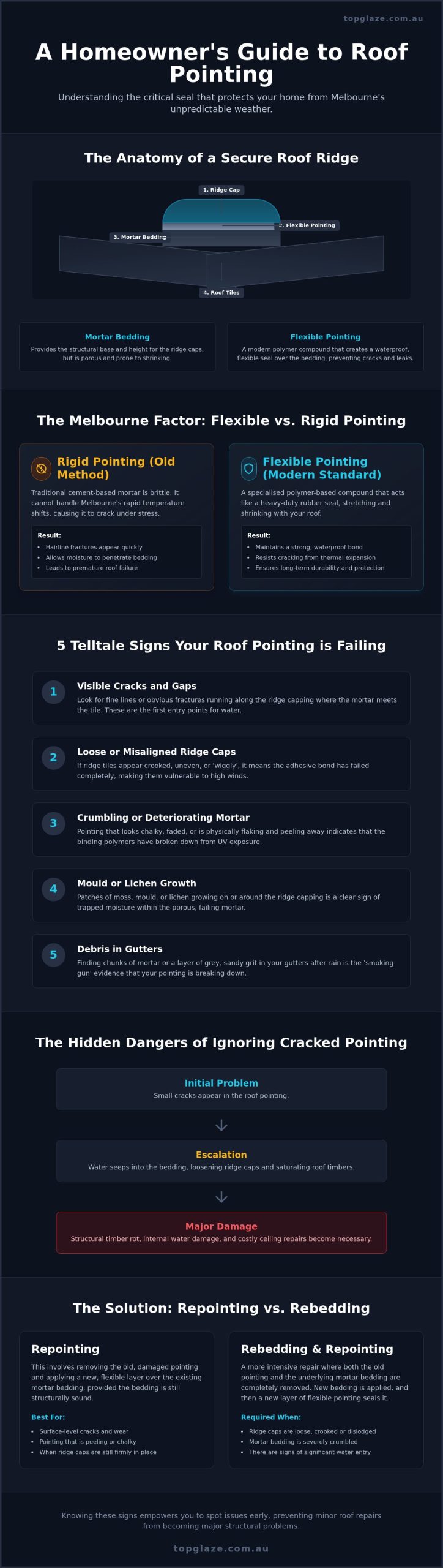
Roof pointing is the final, protective layer applied over the mortar bedding that holds your ridge capping in place. If you think of your roof as a suit of armour, the pointing is the sealant in the joints that keeps the moisture out. Historically, this was done with a simple sand and cement mix, but modern standards have evolved significantly. Today, we use specialised polymer-based compounds designed to create a waterproof and airtight bond. This layer is critical because it ensures your ridge caps don’t just sit on the roof but are actually fused to the tiles, preventing them from shifting during the high wind gusts often seen across Melbourne’s suburbs.
The Anatomy of a Tiled Roof Ridge
The ridge of your roof is its most vulnerable point because it’s where two slopes meet at the highest peak. To seal this gap, we use ridge capping tiles. These are first set into a thick layer of “bedding” mortar, which provides the structural height and level. However, bedding is porous and prone to shrinking. That’s where pointing comes in. It acts as a secondary skin that covers the bedding entirely. Without this airtight seal, water can seep into the mortar, eventually reaching the timber battens and rafters underneath. This leads to rot and structural instability that is far more expensive to fix than a simple repointing job.
Flexible vs. Rigid Pointing: The Melbourne Factor
Melbourne is famous for having four seasons in one day, and your roof bears the brunt of these rapid temperature shifts. In the past, rigid cement pointing was the only option. The problem is that cement doesn’t move. When your roof tiles expand in the 40-degree summer heat and contract during a frosty winter morning, rigid mortar simply snaps. This creates the first signs of damaged roof pointing, usually appearing as hairline fractures that quickly widen and allow moisture to penetrate the bedding.
Modern flexible pointing is a polymer-based compound that behaves more like a heavy-duty rubber seal than a rock. It has the elastic properties required to stretch and shrink alongside your home’s natural movements without losing its bond. Flexible pointing is the industry standard for durability and weatherproofing in 2026. By choosing a flexible compound, you’re ensuring that the ridge capping remains secure even during the most volatile Victorian weather cycles. It’s a simple upgrade that provides long-term peace of mind and prevents the early signs of damaged roof pointing from turning into a major structural headache.
5 Telltale Signs of Damaged Roof Pointing You Can Spot Early
Identifying the early signs of damaged roof pointing is the best way to avoid a major repair bill down the track. You don’t need to be a qualified roofer to spot trouble; you just need to know where to look. Most major issues reveal themselves through small, visible clues that an observant homeowner can spot from the safety of the garden. By catching these problems while they are small, you protect the structural integrity of your home and maintain its street appeal.
There are five primary indicators that your pointing is reaching the end of its functional life:
- Visible fractures: Look for gaps or cracks running along the ridge capping lines where the mortar meets the tile.
- Physical movement: Ridge tiles that appear crooked, misaligned, or ‘wiggly’ suggest the adhesive bond has failed completely.
- Deteriorating compound: Pointing that looks faded, chalky, or is physically peeling away from the tile usually means the polymers have broken down.
- Biological growth: Patches of mould or lichen concentrated around the ridge and hip tiles often indicate trapped moisture within the mortar.
- Debris: Finding chunks of mortar or sandy grit on the ground around your home’s perimeter after a storm.
Inspecting Your Gutters for Mortar Debris
If you find a layer of grey, sandy grit or small chunks of mortar in your gutters, it is a ‘smoking gun’ for pointing failure. As the old bedding and pointing break down, they wash into the gutter system with every rainfall. This doesn’t just leave your ridge caps vulnerable; it also creates heavy blockages that can lead to gutter overflows and internal water damage. We often find that homes requiring repointing also benefit from our specialised guttering and leaf guard solutions to prevent these debris-related backups in the future.
The ‘Binocular Test’ for Safe Inspection
Safety is our priority, and we never recommend homeowners climb onto their own roofs. Instead, use a pair of binoculars to perform a ground-level inspection from the lawn. You can easily distinguish between harmless hairline fractures and structural mortar loss with a bit of magnification. Pay close attention to the ‘weep holes’, which are small gaps designed to let moisture escape from the ridge. If these are blocked by debris or failing pointing, moisture will stay trapped against your roof’s timber frame. Spotting these signs of damaged roof pointing early allows you to organise a professional assessment before the next big storm hits.
The Hidden Dangers of Ignoring Cracked Ridge Capping
A small crack in your roof’s mortar might seem like a minor cosmetic flaw, but it is actually a breach in your home’s primary line of defence. Water is persistent. Through a process called capillary action, moisture can be sucked into even the tiniest hairline fractures. Once inside, it saturates the bedding mortar, which then holds that moisture against your tiles and timber frame. Overlooking the early signs of damaged roof pointing can lead to a domino effect of repairs that extend far beyond the roofline.
In Melbourne, we often face violent storm fronts with high wind speeds. If the adhesive bond of your pointing is broken, your ridge caps are no longer securely fastened to the roof. They essentially become heavy projectiles held in place only by their own weight. During a severe gale, these tiles can lift and slide, creating massive openings for rain to pour into your ceiling space or, worse, falling off the roof entirely and posing a safety risk to anyone below. Beyond weather concerns, these gaps are an open invitation for local pests. Rats and possums are experts at finding loose ridge caps and exploiting the opening to turn your cosy roof cavity into their new nest.
Structural Decay and Timber Rot
The most expensive damage often happens where you can’t see it. When water bypasses failing pointing, it begins to soak into the timber battens and trusses that support your roof. Timber is resilient, but constant exposure to dampness leads to wet rot. This weakens the “bones” of your home, potentially causing the roofline to sag or dip. There is a massive financial gap between a proactive repointing job and the thousands of dollars required for structural timber replacement. By the time you notice the roof looks uneven, the structural integrity of the trusses may already be compromised. Regular maintenance ensures these timbers stay dry and strong for decades.
Internal Damage to Your Home’s Interior
Once the signs of damaged roof pointing become obvious inside your home, the situation has usually reached a critical point. You might notice a faint, musty smell in certain rooms or see the first yellowed water stains appearing on your ceiling. It’s a common misconception that a leak will appear directly under the hole in the roof; in reality, water often travels down beams and drips onto the plasterwork metres away from the source. This moisture causes cornices to crack and plasterboard to swell, leading to expensive interior repainting and repairs. Your roof pointing is the first line of defence for your home’s plasterwork and insulation, keeping your living spaces dry and your cooling bills manageable.
Repointing vs. Rebedding: Which One Does Your Roof Need?
Once you have identified the signs of damaged roof pointing, the next logical step is determining whether your roof needs a surface-level refresh or a complete structural reset. Think of bedding as the foundation of a house and pointing as the waterproof seal on the exterior. If the foundation is solid, a fresh seal works wonders. However, if the foundation is crumbling, no amount of pointing will keep the structure stable. At Top Glaze, we never guess. We always perform a thorough physical assessment of the underlying mortar before recommending a solution, ensuring you don’t pay for a full rebed if a professional repoint is all that’s required.
When a Simple Repoint is Enough
A simple repoint is appropriate when the original sand-and-cement bedding remains firmly attached to the tiles and the roof’s frame. Over time, the outer layer of pointing naturally weathers due to UV exposure and heavy rain. If the mortar underneath is still hard and hasn’t started to crack away from the tile, we can apply a fresh layer of modern flexible pointing compound directly over the top. This creates a new, elastic skin that protects the bedding from the elements. A professional repointing job using high-quality materials is designed to last for a decade or more, providing a reliable barrier against the volatile Melbourne weather.
Signs You Require Full Rebedding
Rebedding becomes necessary when the structural foundation of the ridge has failed. If you can physically move a ridge tile with your hand, or if you see visible gaps where the mortar has ‘drifted’ or shrunk away, the bond is broken. In many older Melbourne homes, the original bedding has effectively turned to dust, losing all its adhesive properties and structural strength. During a rebed, we remove all the old, brittle mortar, clean the tiles, and reset them in a fresh bed of cement.
For modern safety standards, we often incorporate a mechanical fix alongside the new bedding. This ensures that even in the most extreme Victorian storms, your ridge capping remains physically anchored to the roof frame. If your roof is showing these advanced signs of damaged roof pointing and structural failure, it is best to book a professional roof restoration assessment to secure your home’s future and prevent further decay.
Professional Roof Restoration: The Top Glaze Roofing Systems Advantage
Attempting to fix your own roof might seem like a cost-saving measure, but it’s often a recipe for disaster. Climbing onto a double-storey home without professional safety gear is dangerous, and amateur “patch” jobs usually hide the signs of damaged roof pointing rather than fixing the underlying cause. Our team at Top Glaze Roofing Systems has seen countless DIY attempts where silicone or cheap hardware-store mortar was used, only to trap moisture inside and accelerate timber rot. True peace of mind comes from a systematic approach that addresses the entire roof structure.
We believe a comprehensive roof restoration is always superior to patchwork repairs. Our proven process begins with a high-pressure clean to remove decades of moss and lichen, followed by a meticulous assessment of every ridge cap. We don’t just point over the top of old problems. If the bedding is failing, we reset the tiles in fresh mortar before applying a premium, Australian-made flexible compound. This methodical approach is why Top Glaze Roofing Systems can confidently offer a 10-year warranty on our residential projects, ensuring your home remains watertight for the long haul.
30 Years of Melbourne Roofing Expertise
With over 30 years of experience in Melbourne, we understand the suburb-specific challenges your roof faces. Whether it’s the salt-laden air of the bayside suburbs or the extreme temperature swings in the outer east, we’ve encountered every roofing scenario imaginable. Because we’re a local fixture, Top Glaze Roofing Systems only use high-quality flexible compounds specifically formulated for the Australian climate. These materials won’t bake and crack in the summer sun. We also take pride in our “neighbourly” service, which means we never leave a mess behind. When we finish a job, your property is spotless and your gutters are completely clear of any mortar debris.
Organise a Professional Roof Health Check
You can expect total transparency when you book an assessment with us. We provide a detailed, no-obligation report on the current state of your tiles, bedding, and pointing. Instead of high-pressure sales tactics, we offer seasoned advice on what’s essential for your home’s safety and what can wait. This clear communication ensures you aren’t left guessing about the health of your ridge capping. If you’ve noticed any signs of damaged roof pointing or simply want the certainty that your roof is ready for the next storm season, we’re here to help. Book your professional roof inspection with Top Glaze Roofing Systems today to secure your home’s future.
Secure Your Home Against the Elements
Protecting your Melbourne property starts with a vigilant eye on the ridge line. By identifying the early signs of damaged roof pointing, you can prevent minor fractures from evolving into structural timber decay or internal ceiling damage. Whether you have spotted mortar grit in your gutters or noticed a few loose ridge tiles, taking action now ensures your home remains dry and secure through every volatile Victorian storm season.
You don’t have to tackle these roofing concerns alone. As fully licensed and insured specialists with over 30 years of local experience, Top Glaze Roofing Systems provides the seasoned authority you need to make informed decisions. Every residential project we undertake is backed by a 10-year warranty, giving you genuine peace of mind and removing the anxiety of hidden leaks. Don’t leave your roof’s integrity to chance. Get a Professional Roof Assessment from Top Glaze Roofing Systems today and let us help you safeguard your most valuable asset.
Frequently Asked Questions
How long should roof pointing last on a Melbourne home?
High-quality flexible pointing typically lasts between 10 and 15 years on a Melbourne home before it requires a professional refresh. Factors such as direct sun exposure, proximity to the coast, and the quality of the initial application play a major role in its lifespan. Older cement-based pointing often fails much sooner because it cannot handle the thermal expansion of the roof. Regular inspections help you spot the early signs of damaged roof pointing before the seal fails completely.
Can I repoint my own roof tiles if I have the right compound?
We strongly advise against DIY repointing due to the significant safety risks and the technical precision required for a waterproof finish. Walking on a roof requires specialised equipment to prevent tile breakage and dangerous falls. Additionally, if the bedding underneath is crumbling, simply applying pointing over the top won’t fix the structural issue. The expert teams at Top Glaze Roofing Systems ensure the compound is trowelled correctly to create an airtight seal that stands up to volatile Victorian storms.
Will damaged roof pointing cause my insurance claim to be rejected?
Yes, many insurance companies will reject a claim for internal water damage if they determine the cause was poor roof maintenance. Insurers generally view failing mortar as a wear-and-tear issue rather than accidental damage. If an assessor finds obvious signs of damaged roof pointing that were neglected, they may argue that the leak was preventable. Keeping your roof in good repair is essential for ensuring your policy remains valid when you need it most.
Does the colour of the pointing compound have to match my tiles?
The colour of the pointing is purely an aesthetic choice and does not affect the structural performance of the seal. Most Melbourne homeowners choose a colour that closely matches their roof tiles for a seamless, professional finish. Modern flexible compounds come in a wide variety of pre-mixed shades to suit terracotta, concrete, and painted tiles. Choosing a matching colour helps maintain your home’s street appeal and can even improve its overall market value.
Is it normal for new roof pointing to have small hairline cracks?
No, modern flexible pointing should not develop hairline cracks if it has been applied correctly. Unlike old sand-and-cement mortar, flexible compounds are designed to expand and contract with the temperature. If you notice cracks in relatively new pointing, it may indicate that the compound was applied too thinly or that the underlying bedding is shifting excessively. A professional assessment can determine if these cracks are superficial or a sign of a deeper structural problem.
How much does it typically cost to repoint a standard tiled roof?
The cost of repointing varies based on the size of your roof, the pitch, and the current condition of the bedding mortar. Every home is unique, so Top Glaze Roofing Systems provides a personalised on-site assessment to determine exactly what is required for your property. Factors like the amount of ridge capping and ease of access will influence the final quote. Investing in professional repointing is a cost-effective way to prevent the thousands of dollars in damage caused by structural leaks.
Can roof pointing be done in rainy weather?
Roof pointing cannot be applied during rainy weather as the compound requires a dry surface to bond correctly. If rain hits the pointing before it has skinned over, the material can wash away or fail to cure, compromising the waterproof seal. Our team monitors Melbourne’s weather closely to ensure we perform the work during a suitable dry window. This patience ensures the pointing sets firmly and provides the long-lasting protection your home deserves.
What is the difference between mortar and flexible pointing?
Traditional mortar is a rigid mix of sand and cement that provides the structural base for ridge tiles. Flexible pointing is a polymer-based compound applied over that mortar to create a waterproof, elastic seal. While mortar is prone to cracking as your house moves, flexible pointing stretches without breaking. This modern material is now the industry standard because it handles Melbourne’s temperature swings much better than the old, brittle cement-only methods used in the past.


