

What if the very thing you think is saving your home’s kerb appeal is actually stripping years off its life? It is easy to see why many Melbourne homeowners feel the urge to grab a high-pressure hose after a damp winter. Seeing thick moss and lichen take over your tiles is frustrating, and you naturally want your home to look its best. However, before you start the engine, you need to know if is pressure washing a roof a bad idea for your specific property.
We understand that you want a clean, beautiful home without the anxiety of hidden structural damage. While high-pressure blasting offers a quick fix, it often creates more problems than it solves, from forcing water into your ceiling to stripping away protective coatings. You deserve clear, honest advice that protects your investment rather than putting it at risk. We have seen firsthand how the wrong approach can lead to expensive repairs that were entirely avoidable.
In this article, you will discover the genuine risks of traditional pressure cleaning and learn about the professional, safe alternatives that keep your roof protected. We will look at how Melbourne’s volatile weather affects your tiles and how a restorative approach can ensure your roof remains leak-free and looking like new for years to come.
Key Takeaways
- Understand why is pressure washing a roof a bad idea for most Melbourne homes, as high-pressure water can strip protective coatings and compromise structural integrity.
- Learn how high-pressure jets can force water under tiles and into your roof cavity, leading to costly internal damage and mould growth.
- Discover the benefits of “soft washing,” a low-pressure method that uses specialised treatments to eradicate moss and lichen at the root without damaging the substrate.
- See why a comprehensive roof restoration, including re-sealing and re-coating, offers a permanent solution compared to the temporary aesthetic fix of a simple wash.
- Recognise the importance of a professional inspection to identify cracked tiles or loose ridge capping before any cleaning begins to ensure your home remains watertight.
The Short Answer: Is Pressure Washing Actually Bad for Your Roof?
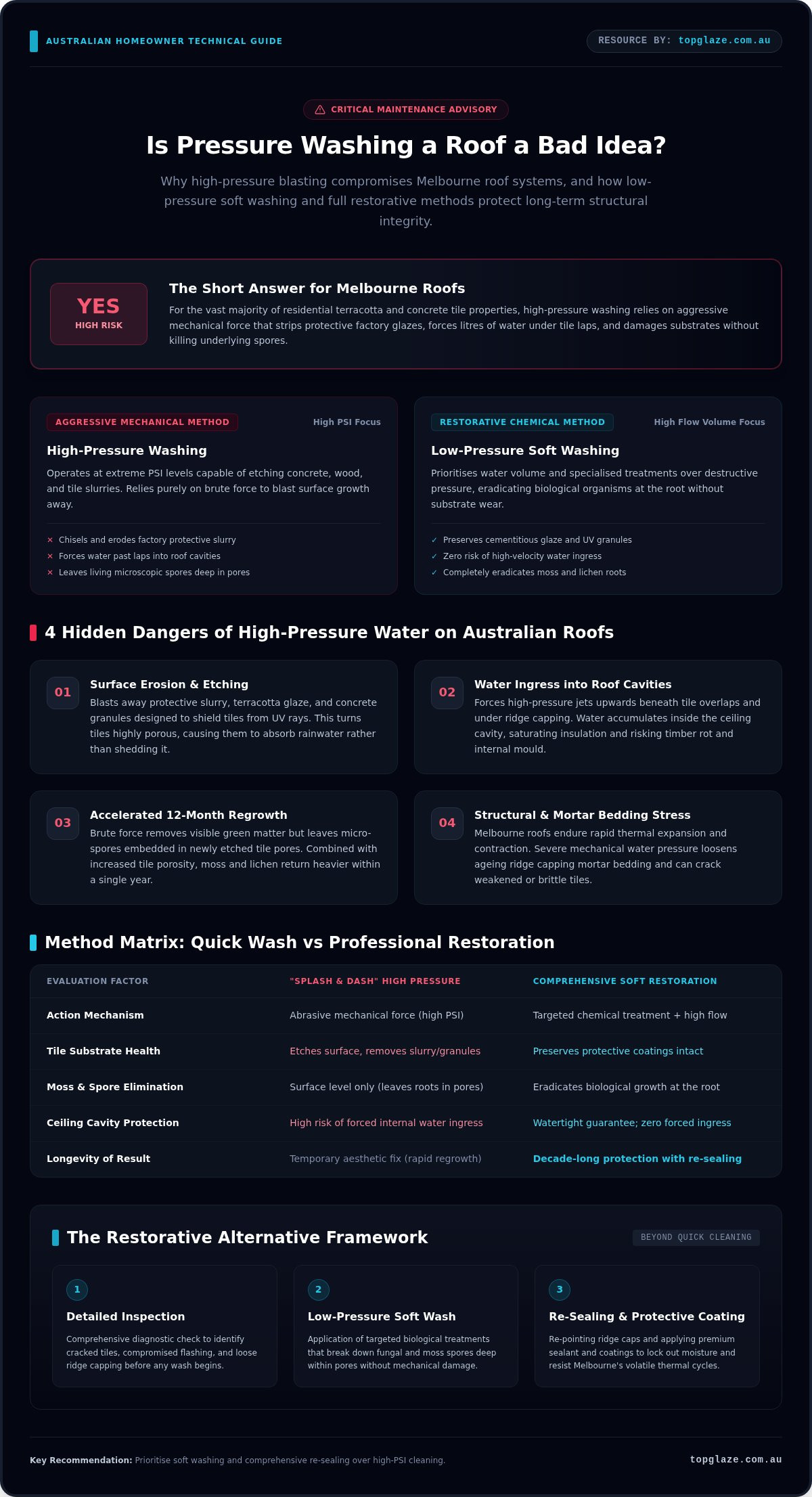
For the vast majority of residential properties in Melbourne, the short answer is yes. If you are wondering is pressure washing a roof a bad idea, you must consider the sheer force being applied to your home’s first line of defence. While a high-pressure hose might make your tiles look like new in a few hours, it often does so at the cost of the roof’s long-term health. High-pressure washing relies on mechanical force to blast away dirt, which is inherently aggressive and frequently destructive to aged substrates.
The Temptation of the “Quick Clean”
The draw of pressure washing lies in instant gratification. Homeowners naturally want to see unsightly moss and lichen disappear quickly to restore their home’s appearance. There is a persistent misconception that more power automatically leads to a more thorough clean. This belief is often exploited by “splash and dash” operators who use high-pressure equipment to finish jobs as fast as possible. These operators rarely have the 30 years of local experience required to understand how different tile types react to stress. A cheap, high-pressure clean can lead to several immediate issues:
- Surface Erosion: Blasting away the protective slurry or glaze on concrete and terracotta tiles.
- Water Ingress: Forcing litres of water under the tile laps and into your ceiling cavity.
- Premature Regrowth: Removing the visible moss but leaving the microscopic spores deep within the tile pores.
Pressure vs. Flow: What Really Matters
Understanding the difference between pressure and flow is essential for any homeowner. Pressure is measured in Pounds per Square Inch (PSI), and many commercial machines operate at levels high enough to etch concrete or wood. When exploring various roof cleaning methods, you will find that professional roofers actually prioritise water volume, or flow, over extreme pressure. This allows for a thorough rinse without the chiselling effect of high PSI. Soft washing is a low-pressure chemical treatment that uses specialised solutions to safely eradicate biological growth at the root.
Maintaining kerb appeal should never come at the expense of structural integrity. In our local climate, roofs must endure rapid thermal expansion and contraction. If a high-pressure wash makes your tiles porous, they will soak up water like a sponge during a winter storm, leading to internal dampness and timber rot. Choosing a professional roof restoration melbourne service ensures that cleaning is just the first step in a process that includes re-sealing and protecting your home for the next decade.
4 Hidden Dangers of High-Pressure Water on Australian Roof Systems
While the immediate result of a pressure clean might look impressive, the physical toll on your home’s structure is often severe. Many residents ask is pressure washing a roof a bad idea because they see neighbours doing it, yet they don’t see the microscopic damage occurring beneath the surface. In Melbourne, where residential roofs are predominantly terracotta or concrete tile, the risks are specific and potentially very expensive to rectify. High-pressure jets can strip away decades of protection in a single afternoon.
Damage to Tiles and Protective Coatings
Terracotta and concrete tiles rely on a factory-applied glaze or cementitious slurry to remain watertight. High-pressure water acts like an abrasive, physically “etching” the surface of the tile. This makes the material significantly more porous, allowing it to absorb moisture rather than shedding it. Once the surface is etched, moss and lichen find it much easier to take root, often resulting in heavier regrowth within just 12 months.
For those with older concrete tiles, the loss of protective granules is a permanent blow to the roof’s lifespan. These granules are designed to protect the tile from harsh UV rays and heavy rain; once they are blasted into the gutters, the underlying concrete begins to degrade rapidly. We have found that roof tile roofing requires a far more nuanced approach to ensure the structural integrity of the tile isn’t compromised by brute force.
Compromising the Roof Cavity and Sarking
Standard residential roofs are designed to shed water that flows downwards. High-pressure cleaning often involves spraying water at angles that force it upwards, directly through the laps and joins of the tiles. This water bypasses your tiles and hits the sarking, which is the protective foil or paper layer beneath. Even the Asphalt Roofing Manufacturers Association recommendations advise against high-pressure methods due to the risk of material degradation, a warning that is just as relevant for Australian tile systems.
If the sarking is aged or becomes torn by the pressure, water enters the roof cavity. This creates a hidden environment for mould growth and can lead to ceiling plaster damage or, in severe cases, electrical hazards if water contacts light fittings or wiring. Damaged sarking also loses its ability to manage condensation, leading to long-term timber rot in your trusses. If you’re concerned about the state of your tiles, a professional roof assessment is the safest way to identify issues before they become emergencies.
Pressure Washing vs Soft Washing: Which Method Actually Works?
Deciding between these two methods is often where homeowners feel most conflicted. When you are weighing up if is pressure washing a roof a bad idea, it’s helpful to look at the mechanics of each approach. High-pressure washing relies on brute mechanical force to tear organic growth off the surface. In contrast, soft washing uses a low-pressure application of specialised biocides to kill the growth at its source. One is a physical assault on your tiles; the other is a targeted treatment designed to sanitise the substrate.
For Melbourne’s common terracotta tiles, this distinction is vital. Terracotta is surprisingly delicate once it reaches a certain age. While high-pressure jets can easily crack these tiles or strip their protective finish, soft washing gently treats the surface. It’s particularly effective against stubborn lichen and black algae, which are notorious for thriving in our damp winters and hot summers. Because the pressure remains low, there is virtually no risk of the water ingress issues that plague high-pressure jobs.
The Soft Washing Advantage
Think of pressure washing like shaving a weed; it removes the visible part but leaves the root intact. Soft washing is more like a professional garden treatment that eradicates the plant entirely. The biocides used by experts penetrate the porous surface of the tile to kill the gametophytes, which are the roots of the lichen. This is why soft washing results typically last four to six times longer than a standard pressure clean. You aren’t just cleaning the roof; you’re sterilising it.
Safety extends beyond the tiles to your entire property. Professional soft washing includes rigorous protocols to protect your garden and gutters. We ensure that any runoff is neutralised or diverted, preventing damage to your prized roses or lawn. It’s a methodical process that prioritises the long-term health of your home’s exterior over a fast, aggressive finish.
When (If Ever) is Pressure Used?
There are very specific, limited instances where a degree of pressure is appropriate, but it’s never the “blasting” seen in DIY videos. Controlled pressure is sometimes used by specialists to rinse away dead organic matter after a biocide has done its work. However, this is done with professional variable-pressure gear that allows the operator to dial down the force to safe levels, usually under 300 PSI.
This level of precision is why only a qualified roofing contractor should handle this equipment. A DIY machine from the local hardware store often has one setting: high. Without the ability to fine-tune the pressure and flow, a weekend project can quickly turn into a ceiling-replacement nightmare. Our team uses seasoned judgment to determine exactly what your specific roof needs, ensuring we never cross the line from cleaning to causing damage.
Professional Alternatives: How to Clean Your Roof Without Causing Damage
If you have concluded that is pressure washing a roof a bad idea, you are likely looking for a safer way to restore your home’s appearance. The professional approach is methodical and prioritises the structural envelope of the building. Instead of relying on brute force, we use a multi-step process that starts with a thorough assessment and ends with a roof that is both clean and secure. This ensures your home remains protected from the elements while achieving that like-new appearance.
The Inspection-First Approach
A professional cleaning service must never start with a hose. We begin by identifying cracked tiles, loose ridge capping, and compromised bedding. Cleaning a damaged roof is a recipe for disaster; any pre-existing cracks act as funnels for water to enter your home. During this phase, we also look for “porous” tiles. If a tile has lost its integrity, no amount of cleaning will fix the underlying issue. In these cases, we advise on the necessary steps to ensure the roof remains watertight before any aesthetic work begins. Checking the integrity of flexible pointing and traditional mortar bedding is a standard part of our 30-year local experience in Melbourne.
Once the roof is deemed safe, we manually remove large moss clumps. This prevents debris from immediately clogging your downpipes. After the bulk of the organic matter is gone, we apply professional-grade, eco-friendly moss inhibitors. These treatments neutralise spores without damaging your tiles or the environment. It is also essential to thoroughly check your roof gutter systems after the process is complete to ensure no leftover silt or moss is obstructing water flow.
Safe Maintenance for Melbourne Homes
Prevention is always more cost-effective than a major overhaul. Keeping overhanging trees trimmed is a simple way to reduce the shade and moisture that promote moss growth. Regular maintenance of your gutters also prevents debris from building up on the lower tiles, which is often where lichen starts to spread. Timely roof repairs melbourne can prevent small leaks from becoming major structural issues during Victoria’s unpredictable storms. If your roof is showing signs of age or heavy growth, book a professional roof inspection today to protect your home’s future.
Beyond Cleaning: Why Comprehensive Roof Restoration Beats a Quick Wash
While we have established why is pressure washing a roof a bad idea when done in isolation, it’s important to understand where cleaning fits into a proper maintenance cycle. For a professional roof restoration melbourne, cleaning is merely the preparatory stage. It’s similar to sanding a deck before staining; the clean surface is necessary for the protective layers to bond correctly. A standalone wash leaves your tiles exposed and porous, whereas a restoration seals the envelope of your home against the elements.
The Restoration Process Explained
A full restoration goes far beyond simple aesthetics. Once the roof has been safely cleared of organic growth, we address the structural weak points that a cleaning crew would ignore. This involves replacing any cracked tiles and re-pointing the ridge capping with modern flexible compounds that move with your home. These compounds are essential for Melbourne’s expansive clay soils, which cause buildings to shift slightly between seasons.
The final stage is the application of a high-quality sealant and protective coating. This coating is the most effective way to prevent the return of moss and lichen. By creating a non-porous, UV-resistant barrier, we ensure that moisture cannot penetrate the tile. Without this protective layer, a cleaned tile remains a damp, hospitable environment where spores will inevitably take root again within months. Restoration transforms a vulnerable surface into a durable shield.
Investing in Peace of Mind
When you compare the cost of frequent cleaning to a one-time restoration, the long-term value is undeniable. A simple wash is a temporary aesthetic fix that often needs repeating every few years. In contrast, a restoration provides a lasting solution that significantly improves your property’s kerb value. It’s a strategic investment in your home’s infrastructure that pays dividends in both street appeal and structural security.
For Melbourne families, the greatest benefit is the removal of homeowner anxiety. Our restorations come with a 10-year warranty on residential projects, providing a level of security that a “splash and dash” cleaning service cannot match. This guarantee is backed by over 30 years of local experience and licensed workmanship. To get a clear picture of your roof’s health and explore your options, Book a free roof inspection with Top Glaze today. We provide the honest, expert advice you need to protect your home for the next decade.
Protecting Your Melbourne Home for the Long Term
Your roof is your home’s first line of defence against the unpredictable Victorian weather. While the appeal of a quick clean is understandable, the reality is that for most residential properties, is pressure washing a roof a bad idea due to the risk of permanent tile damage and internal leaks. Choosing a professional restoration over a temporary wash ensures your home remains watertight and beautiful for years to come.
At Top Glaze, we bring over 30 years of local Melbourne experience to every project. Our fully licensed and insured roofing specialists don’t just clean; we restore your roof’s structural integrity. With a 10-year warranty on all residential restorations, you can enjoy absolute peace of mind knowing your investment is protected by seasoned experts who understand our local climate.
Don’t leave your home’s safety to chance with aggressive cleaning methods. Get a Free Professional Roof Assessment from Top Glaze to discover the right solution for your tiles. We are here to help you make the best decision for your home’s future.
Frequently Asked Questions
Can I pressure wash my roof myself if I use a lower setting?
It is generally not recommended to attempt this yourself. Consumer-grade machines often lack the sophisticated variable-pressure controls found in professional equipment. Even on a lower setting, inconsistent pressure can still etch tiles or force water into your ceiling. Additionally, Victorian safety regulations classify any work over two metres as high-risk. Without proper fall-prevention gear and training, you are risking both your personal safety and the structural integrity of your home.
Does pressure washing a roof cause leaks inside the house?
Yes, this is one of the most common causes of internal water damage. Most residential roofs are designed to shed water that flows downwards. High-pressure jets often force water upwards through tile joins and laps, bypassing the tiles entirely. This saturates your insulation and can lead to ceiling plaster damage or electrical short circuits. Understanding that is pressure washing a roof a bad idea is the first step toward avoiding these expensive internal repairs.
How much does it cost to professionally clean a roof in Melbourne?
Professional costs in Melbourne depend on several factors, including the total surface area, the pitch of the roof, and the severity of the moss buildup. Because every home is different, we don’t provide a one-size-fits-all price. Instead, we conduct a thorough assessment to determine the roof’s condition. This ensures you aren’t just paying for a wash, but for a service that considers the long-term health and safety of your specific property.
Will pressure washing void my roof warranty or home insurance?
Yes, it is highly likely. Many prominent Australian tile and metal manufacturers explicitly state that high-pressure blasting will compromise their product warranties. If a leak occurs because you used a pressure washer, your home insurance provider may also reject the claim, citing it as preventable damage. Professionals use approved soft-washing methods that align with manufacturer guidelines, ensuring your warranties remain intact and your home stays fully covered by your insurance policy.
How often should a Melbourne roof be cleaned or inspected?
We suggest having your roof professionally inspected every three to five years to catch minor issues early. While you might wonder is pressure washing a roof a bad idea for regular maintenance, a simple inspection is often all that is needed. This allows us to check the state of your pointing and bedding before problems arise. Cleaning frequency varies based on local tree coverage and moisture levels, but proactive inspections are the best way to prevent leaks.
Is soft washing safe for my pets and garden plants?
When handled by experienced specialists, soft washing is perfectly safe for your household. We use eco-friendly, professional-grade biocides that are specifically designed to target moss and lichen without harming your garden. Our team follows a strict safety protocol, which includes pre-wetting your plants and ensuring all runoff is safely diverted or neutralised. This ensures your pets and landscaping remain completely unaffected while your roof receives a deep, restorative clean.
What is the best time of year to clean or restore a roof in Victoria?
Late spring and early autumn are the most effective times for roof work in Victoria. During these months, the weather is stable enough to allow treatments to work effectively without the interference of heavy winter downpours. It also avoids the extreme heat of a Melbourne summer, which can cause cleaning solutions to evaporate too quickly. Planning your maintenance during these milder windows ensures the best results for your tiles and the safety of the crew.
Can pressure washing damage my solar panels or gutters?
Absolutely. High-pressure water can easily crack the tempered glass on solar panels or degrade the seals around electrical inverters, leading to system failure. The process also blasts a significant amount of heavy debris, silt, and moss directly into your guttering system. This can lead to immediate blockages that cause water to overflow into your eaves or down your walls, potentially causing fascia rot and internal dampness if the system is not cleared immediately.


