

The cheapest gutter guard option can cost more over time if it doesn’t suit your roof or the debris around your home. The cost to install gutter guards in Melbourne depends on factors such as gutter length, roof access, storeys, roof complexity and mesh material, so an exact price is provided after a quote request.
Comparing a DIY kit with professional installation means weighing the upfront outlay against future cleaning and the work needed to fit the guards securely. In Melbourne, the right choice also depends on local conditions, including the leaves and other debris your gutters collect.
This guide explains what affects installation costs, how DIY and professional options compare, and what to consider when choosing gutter guards for your property. Guards can reduce the amount of debris entering gutters, but they do not remove the need for periodic inspection and maintenance.
Key Takeaways
- Compare quotes by what they include, not just the total: mesh type, gutter preparation, fitting and roof access all affect value.
- DIY kits can reduce upfront material costs, but working at height and fitting guards correctly are important considerations.
- Gutter guards can reduce debris build-up, but they don’t remove the need for periodic inspection and cleaning.
- Match the mesh opening and material to the debris around your home, roof layout and local conditions.
- Check that gutters are in sound condition before installation, as guards won’t fix damaged gutters, poor falls or underground blockages.
How much do gutter guards cost?
The cost to install gutter guards in Melbourne varies with the home, roof and guard system. The main pricing differences come from the amount of guttering, mesh selection, access and preparation required before fitting.
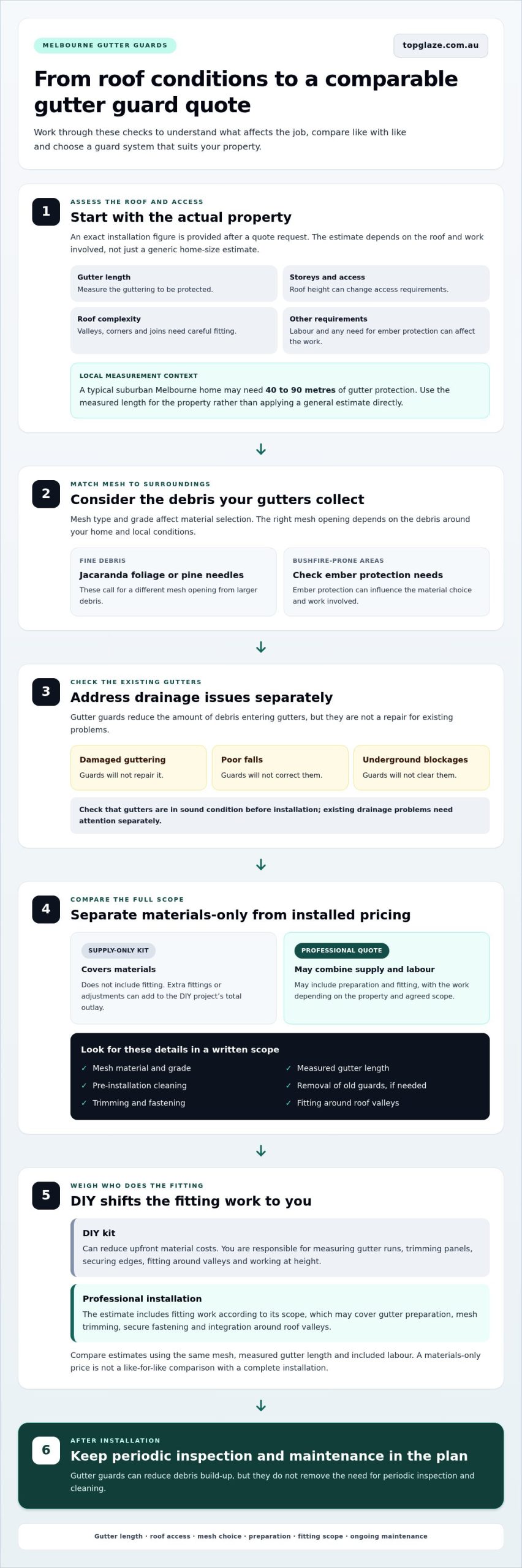
Your quote should reflect the actual roof, rather than a generic home-size estimate. Gutter length, storeys, roof complexity, labour and any need for ember protection all influence the work. The exact figure for your case is provided in a quote.
Typical Australian Installation Costs
Broad installation estimates cover homes and guard types that can differ considerably, so they are only a starting point. Your roof’s size and layout determine how closely a general figure matches the work involved.
For example, a compact roof with simple gutter runs needs a different amount of material and fitting than a larger home with several roof sections. Australian estimates also distinguish supply-only materials from professional installation. Compare the work included, not just the headline figure.
Factors Affecting Installed Costs
Installed costs depend on the materials, gutter length, labour and access required for the property. Understanding each factor helps you assess whether an estimate reflects your roof.
Mesh type and grade affect material selection, while roof height and storeys can change access requirements. Valleys, corners and joins need careful fitting. The debris around your home matters too: fine leaves, such as jacaranda foliage or pine needles, call for a different mesh opening from larger debris. In bushfire-prone areas, ember protection can also influence material choice.
Gutter condition is another consideration. Guards will not repair damaged guttering, correct poor falls or clear an underground blockage, so existing drainage problems need attention separately.
Supply and Installation Costs
Professional supply and installation combines the guard material with the labour needed to prepare and fit it. Separating those elements matters when comparing a complete job with a materials-only price.
A supply-only kit does not include fitting. A professional quote may cover preparation, trimming, fastening and integration around roof valleys. Request a written scope that identifies the mesh material and grade, pre-installation cleaning, removal of old guards if needed, and the work included. This makes estimates easier to compare.
Single-storey homes and double-storey or complex-roof homes can involve different access and fitting demands. The cost to install gutter guards in Melbourne reflects those property-specific conditions, not just the length of mesh. Whether a particular standard or building requirement applies depends on the property and work involved. In bushfire-prone locations, ember protection is another material consideration.
Professional Installation vs DIY: Which Is More Cost-Effective?
DIY can reduce labour costs, while professional fitting includes work beyond supplying the guard. Compare the full scope, material and roof access before deciding which option offers better value.
Installed Quotes and Supply-Only Prices
A supply-only price covers materials, while an installed quote may also include preparation and fitting. This distinction helps homeowners avoid comparing unlike options.
For example, a mesh kit’s price does not account for measuring each gutter run, trimming panels, securing edges or working around roof valleys. Those tasks take time and affect the finished fit. A professional estimate may include labour and supply, so check its scope alongside the material specification.
That material figure is not a like-for-like comparison with a complete installation. Mesh type and roof layout affect what you need, while extra fittings or adjustments can add to a DIY project’s total outlay.
Melbourne estimates also need context: a typical suburban home here may need 40 to 90 metres of gutter protection to accurately reflect the true cost to install gutter guards Melbourne properties require. That length can shape a materials estimate, but it must be based on local requirements. Compare the measured gutter length and work included, rather than applying general estimates directly.
Professional Installation Prices
Professional installation pricing combines the selected system with labour and the conditions of the roof. Understanding those components helps you assess what an installed estimate covers.
A Melbourne estimate can vary with gutter length, mesh material, roof type and storeys. Ember protection can also affect system selection and the work involved.
Material choice affects supply costs too. These material estimates are not installed prices.
Homeowners considering DIY should also account for working at height and achieving a secure, suitable fit. Professional installation includes the fitting work in the estimate; with DIY, those tasks are your responsibility. Roof access, valleys and the type of debris can all affect how straightforward the job is.
Compare estimates by matching the mesh, measured gutter length and included labour. A professional gutter guard fitting from Top Glaze Roofing Systems can help homeowners assess the installed option against a supply-only kit.
What professional installation includes
A professional gutter guard installation covers preparation, mesh fitting and secure finishing, not just attaching panels. Knowing the work involved helps you compare it with a DIY installation.
Installation Tasks
Professional installation includes preparing the gutters and fitting mesh to suit the roof. These tasks matter because debris left behind or poorly secured edges can undermine the intended protection.
The gutters should be fully cleaned before guards go on. Installers then trim and fasten the mesh securely, integrating it with the roof and valleys. Colour-matched mesh can help the finished guard sit neatly against the home. The mesh material and grade should suit the debris collected around the property.
Aluminium mesh is one material option; the right choice depends on the roof and local conditions. A durable fit also depends on careful trimming around joins, valleys and gutter corners. Those details can be easy to overlook in a DIY job, especially where roof access is awkward.
Professional installation should include experienced, insured installers and a warranty covering both product and workmanship. A written scope helps show whether the quoted work covers cleaning, supply, fitting and roof integration. Without those details, two estimates may describe different jobs.
Timing varies with the property: a typical single-storey installation in Victoria takes about one day. A double-storey or complex-roof installation typically takes one to two days. Roof shape, access and the work required affect how long fitting takes.
Hiring an Installer
Hiring an installer means agreeing on the materials, preparation and fitting work before installation begins. A clear written quote matters because it lets you understand what work is included.
Check that the written scope identifies the mesh material and grade, pre-installation cleaning, and how the system integrates with the roof and valleys. It should also set out the product and workmanship warranty and safe work practices. These specifics help you compare the proposed installation with a DIY kit on more than its upfront materials cost.
Roof work takes place at height, so safe access is central to the job. WorkSafe Victoria advises maintaining three points of contact on a ladder. Its guidance is relevant when considering the safety demands of reaching gutters, particularly on double-storey or complex roofs.
A DIY installation may suit a homeowner who can safely access the gutters and fit the mesh accurately. Professional fitting brings cleaning, trimming, fastening and roof integration into one coordinated job. If the roof has valleys or difficult access, those details can make the difference between a tidy fit and exposed gaps.
Weather can also affect when roof work is practical. Agreeing on the scope in writing before work starts gives everyone a clear reference for materials, preparation and finishing. It also makes it easier to see whether the installation includes the tasks needed for your particular roof.
Potential savings on gutter cleaning
Gutter guards can reduce the debris entering gutters, but they do not eliminate maintenance. Their value depends on how often your home needs cleaning, the cleaning cost, and the ongoing care the guards still require.
This is a useful comparison, not a guaranteed saving: gutters with guards still need periodic inspection and cleaning.
Payback depends on the difference between your previous cleaning costs and the maintenance needed after installation. This shows why your own cleaning history matters more than a broad payback claim.
Some estimates say most homeowners recover installation costs within 2 to 3 years. The contrast highlights how strongly the outcome depends on actual cleaning frequency, costs and the maintenance guards still need.
Before installation, gutters need to be cleared so leaves and other debris are not trapped beneath the guard. The condition of the gutter matters too: guards will not repair damage or correct poor falls.
That initial clean is part of the total ownership calculation. If your estimate treats gutter cleaning and guard installation separately, include both when comparing the upfront outlay with future maintenance. A blocked gutter left untreated can still overflow, creating a risk of water damage around the roofline.
After fitting, inspect the guards periodically and clear debris that accumulates on the surface or around corners. Mesh can let water through while catching leaves, but the trapped material still needs attention. Check that water can flow freely and that outlets remain clear.
Keep a simple record of each cleaning: the date, work completed and amount paid. After installation, compare the same details with your earlier records. This gives you a practical view of whether gutter cleaning has become less frequent, while recognising that seasonal debris and the roof’s condition can change the maintenance required.
Choosing gutter guards for Melbourne conditions
Choose gutter guards to match the debris around your home, the roof design and local exposure. In Melbourne, mesh opening and material matter: the wrong combination can let fine leaves through or make upkeep harder. Start with what collects in your gutters, then consider the roof and any bushfire exposure before choosing a system.
Mesh guards filter debris while allowing water to flow through. A 2 mm opening is recommended for fine material such as jacaranda leaves or pine needles. A 4 mm opening suits general leaf protection and larger debris. Matching the opening to nearby trees helps narrow the options, rather than selecting mesh by appearance alone.
Material affects how a guard responds to Melbourne weather. Aluminium is described as durable, shape-retaining and corrosion-resistant for local conditions. Poly guards are presented as an economical option for suburban Melbourne homes. Plastic and poly options may suit some properties, while roof layout and debris type should guide the final choice.
Heavy rainfall makes water flow an important consideration. High-quality guards can withstand heavy rainfall, but they do not correct poor falls, damaged gutters or underground blockages. If water already pools in a gutter, address that issue before selecting a cover. A guard works as a debris filter, not as a repair for faulty drainage.
Bushfire exposure changes the material decision. In bushfire-prone areas, non-combustible metal mesh is advised instead of foam or poly guards. Steel ember mesh is described as meeting AS 3959 for bushfire ember protection. The Country Fire Authority also recommends keeping gutters clear of leaves and twigs, so guards don’t remove the need for maintenance.
Consider access and roof height alongside mesh choice. A steep or multi-level roof can make later inspection more difficult, even when a guard is fitted. Think about where fine leaves collect, whether valleys direct debris towards the gutters, and whether the mesh can be inspected and cleared safely. These details help match protection to the whole roof, not just its gutter edges.
For a Melbourne home under jacaranda trees, a 2 mm mesh opening may address fine leaf debris; a home collecting larger leaves may suit 4 mm mesh. Bushfire exposure calls for a separate material consideration. Use these factors to compare suitable options, then discuss gutter guard options for your roof.
Top Glaze Roofing Systems: Roof Restoration
Top Glaze Roofing Systems helps homeowners address roofing and guttering issues that affect a gutter guard project. If gutters are damaged or water is not draining properly, resolve those problems before fitting guards. Gutter guards will not fix damaged gutters, poor falls or underground blockages.
For gutter and fascia concerns, Top Glaze Roofing Systems provides Guttering & Fascia services. Roof Repairs can address roof issues, while Roof Restoration or Roof Replacement may suit broader roof needs. The right option depends on the condition of your roof and guttering, not simply the guard you plan to install.
For guidance on your roof or guttering, contact Top Glaze Roofing Systems.
Make the next decision with confidence
Before choosing a gutter guard, consider whether the roof and drainage are ready for one. The cost to install gutter guards in Melbourne is only part of the decision; a sound roof and well-functioning gutters help you plan work in the right order. If you have noticed roof or gutter problems, address those first rather than expecting a guard to solve them.
Top Glaze Roofing Systems offers Roof Repairs, Roof Restoration and Roof Replacement for residential roofing needs. The right service depends on whether you are dealing with a localised issue or broader roof concerns. Taking that wider view can help you choose a practical next step to protect your home.
For guidance on your roof, gutters or the work they may need, contact Top Glaze Roofing Systems. A considered plan can help you move forward with greater confidence.
Frequently Asked Questions
So, what’s the actual cost?
There’s no single cost for every Melbourne home; the exact price depends on your case and is given in a quote after a quote request. Gutter length, roof height, access, layout, mesh material and ember-protection needs all shape the estimate. Start by identifying which gutter runs collect debris and whether roof or drainage issues need attention before guards are fitted.
What’s included in the price?
The quote scope determines what the fixed price includes. It should distinguish the guard material and grade from labour, gutter preparation and fitting. It should also say whether old guards are removed and how the mesh is finished around roof valleys and joins. This detail helps you compare estimates accurately, rather than treating a supply-only figure as equivalent to a complete installation.
What is the price per metre for gutter guard supply and installation in Melbourne?
There isn’t one per-metre figure that applies to every Melbourne roof. The price depends on the mesh material, gutter length, roof design, storeys and access, as well as whether ember protection is needed. Supply-only material costs are different from a fitted price. The exact figure for your case is provided in a quote after a quote request.
What factors affect gutter guard installation prices in Melbourne?
The main factors are the amount of guttering, mesh type, roof complexity, storeys and access. For example, a roof with several valleys needs more careful integration than a straightforward gutter run. Fine leaves can also influence the mesh opening selected, while bushfire exposure may affect material choice. Together, these details determine the product and labour needed for the property.
How do costs compare for mesh, aluminium, foam and brush gutter guards in Australia?
Material choice affects supply costs, but suitability matters as much as the initial outlay. Aluminium mesh is described as durable and corrosion-resistant for Melbourne conditions. Poly mesh is an economical option for some suburban homes. Foam and brush guards are other product types, while mesh openings can be selected to suit fine leaves or larger debris. Compare materials against your roof and local conditions.
Do Melbourne gutter guard quotes include cleaning, repairs and removal of old guards?
The quote’s stated scope determines which tasks are included, so do not assume they are automatically covered. Pre-installation cleaning clears leaves and debris before the new guard is fitted. Repairs address existing gutter damage, while removing old guards is a separate task to identify in the work description. A clear written scope shows which preparation and removal tasks form part of the quoted job.
Are there additional costs for double-storey homes, steep roofs or difficult access in Melbourne?
Roof height, steepness and difficult access can affect the labour and equipment required, so they influence the installation estimate. A double-storey home or roof with awkward gutter runs presents different access conditions from a single-storey home. Roof complexity can also mean more detailed fitting around valleys and joins. The quote should reflect the property’s actual layout and access needs.
What are the benefits and drawbacks of DIY gutter guard installation versus hiring a professional?
DIY lets you buy materials without paying for professional fitting, but measuring, trimming and securing mesh become your responsibility. Working at height also carries safety risks. WorkSafe Victoria advises maintaining three points of contact on a ladder. Professional installation includes fitting and preparation, while DIY may suit homeowners able to access their roof safely and complete the work accurately.


